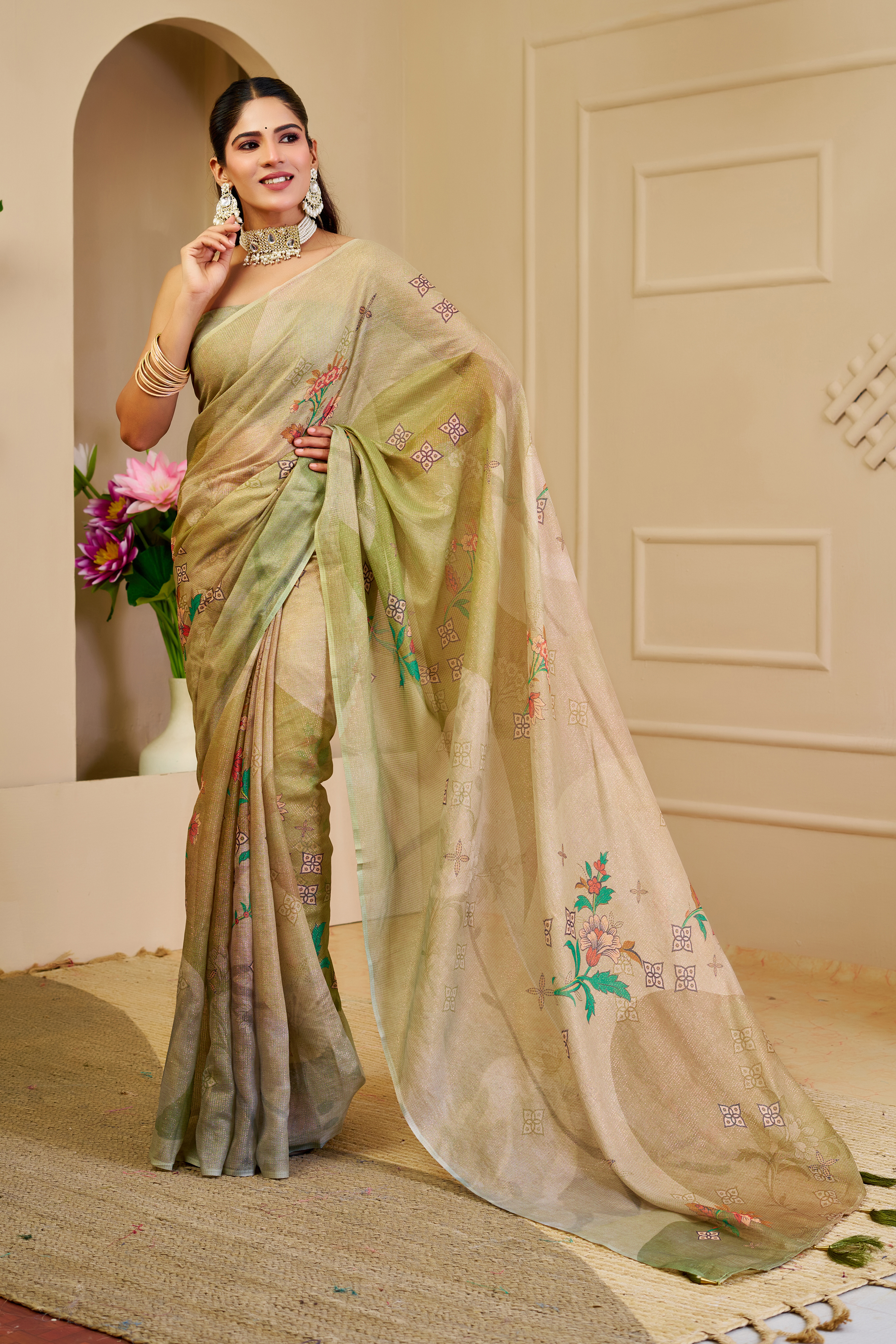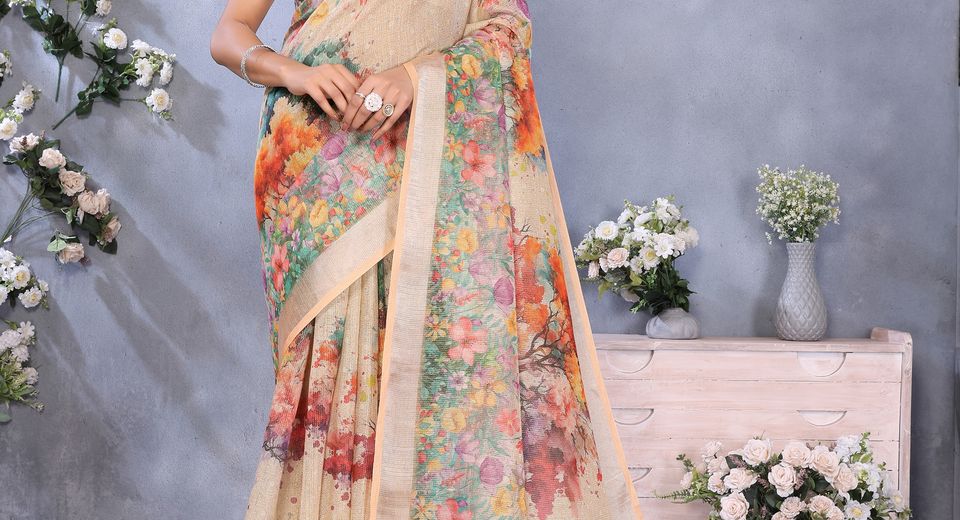
A Punjabi Wedding Reception Look When You Dislike Sequins can still feel grand, festive and unmistakably celebratory. Visual richness can come from Banarasi silk, zari, velvet, resham embroidery, gota patti, pearls and an excellent silhouette rather than reflective embellishment. For a reception, the most successful outfit usually combines one substantial textile, one detailed surface technique and one strong accessory story.
Sequins are popular because they catch moving light, but they're not the only way to create impact in photographs or under reception hall lighting. A deep jewel tone, a structured dupatta, antique-gold embroidery and layered jewellery often appear more dimensional than a fully glittered outfit. The approach also makes dressing more comfortable for guests who find sequins scratchy, overly bright or visually busy.
A Punjabi Wedding Reception Look When You Dislike Sequins Starts with the Venue
A reception outfit should match the venue's scale, lighting and expected formality before colour and accessories are chosen. A hotel ballroom calls for more surface detail and structure than a daytime lawn reception, while a family banquet may suit a lighter kurta set with a dramatic dupatta.
Evening lighting changes how fabrics read. Direct camera flash makes mirror work and high-shine satin look very bright, while velvet, silk and matte embroidery retain their colour and depth. Warm ballroom lighting brings out maroon, rust, emerald and antique gold; cool white lighting makes pink, silver, icy blue and wine appear sharper.
- For a formal hotel reception: choose a floor-length Anarkali, silk lehenga or velvet blouse with dense zari or resham embroidery.
- For a large family celebration: use a richly coloured lehenga or sharara with a substantial dupatta and statement earrings.
- For a semi-formal reception: select a Chanderi, Vichitra silk or embroidered kurta set, then add elevated jewellery and footwear.
- For extensive dancing: prioritise a manageable hem, secure dupatta pins and a blouse that allows arm movement.
A Punjabi Wedding Reception Look When You Dislike Sequins becomes more polished when the outfit has a clear focal point. Choose the focal point before buying accessories: the neckline, dupatta border, skirt hem, embroidered jacket or jewellery can carry the visual drama. Keeping the remaining elements quieter prevents the absence of sequins from becoming the story.
Which Fabrics Suit a Punjabi Wedding Reception Look When You Dislike Sequins?
Banarasi silk, velvet, Chanderi, Vichitra silk and brocade create a luxurious reception finish without relying on sequins. These fabrics use weave, weight, texture and controlled sheen to give an outfit depth.
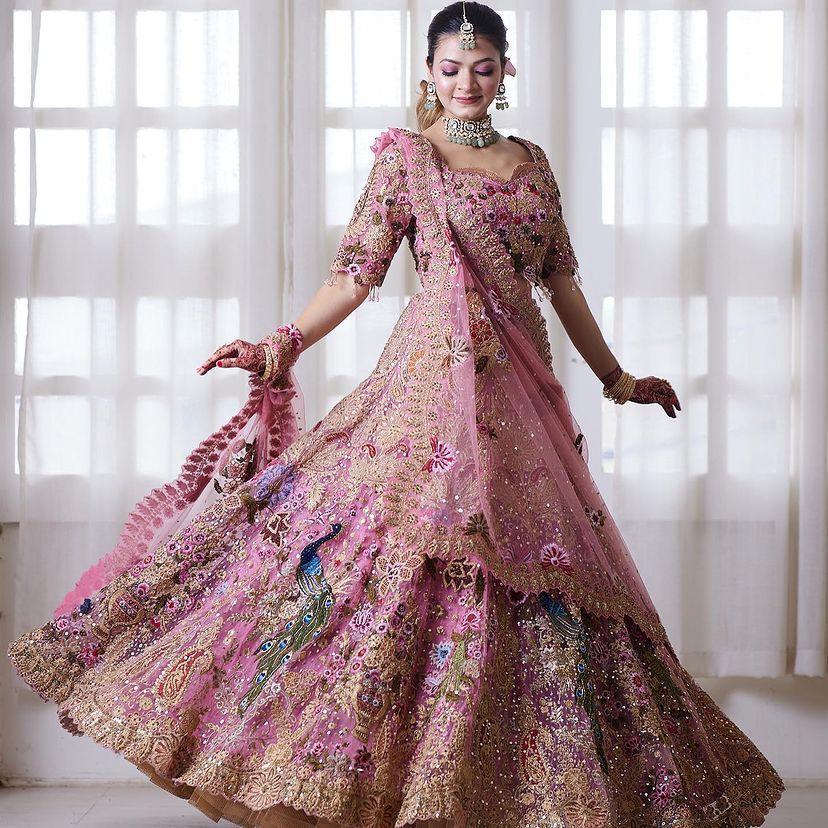
Banarasi silk and brocade
Banarasi silk works especially well when you want ornament to come from the textile itself. Woven zari motifs, buta patterns and a firm drape give a lehenga or dupatta a ceremonial appearance. Banarasi silk can be heavy, so pair a substantial skirt with a lighter blouse or dupatta if comfort matters.
Brocade is useful for a blouse, jacket or border because the woven pattern remains visible without needing additional embellishment. A plain silk skirt with a brocade blouse creates contrast and leaves room for a necklace or jhumka to stand out.
Velvet and Vichitra silk
Velvet absorbs light and gives jewel tones a saturated, deep finish. A velvet blouse, short jacket or border works better for most guests than a full velvet lehenga, which can feel heavy during prolonged wear. Emerald, burgundy, navy and plum velvet photograph particularly well in winter receptions.
Vichitra silk has a soft, slightly lustrous surface that supports embroidery without looking aggressively reflective. Elegant Beige Vichitra Silk Embroidered Kurta Set for Women shows how a neutral base can look formal when the embroidery, cut and dupatta are given enough visual presence.
Chanderi and organza
Chanderi is a good choice when you want lightness, transparency and a refined woven texture. Chanderi silk or cotton-silk can look too delicate on its own for a large evening reception, so add a wide embroidered border, a structured blouse or antique-gold jewellery. Maroon Viscose Chanderi Silk Embroidered Kurta Set for Women offers an useful direction for a guest who wants a dressed-up kurta silhouette rather than a lehenga.
Organza and tissue can add shape to a dupatta without adding heavy surface decoration. A plain organza dupatta with a four-inch zari border can create more movement and presence than a heavily scattered sequin layer.
How Can a Punjabi Wedding Reception Look When You Dislike Sequins Use Colour?
Deep colour, tonal contrast and one controlled metallic accent can replace the visual brightness that sequins usually provide. Select a saturated base colour, then use embroidery or accessories in a related shade rather than adding many competing colours.
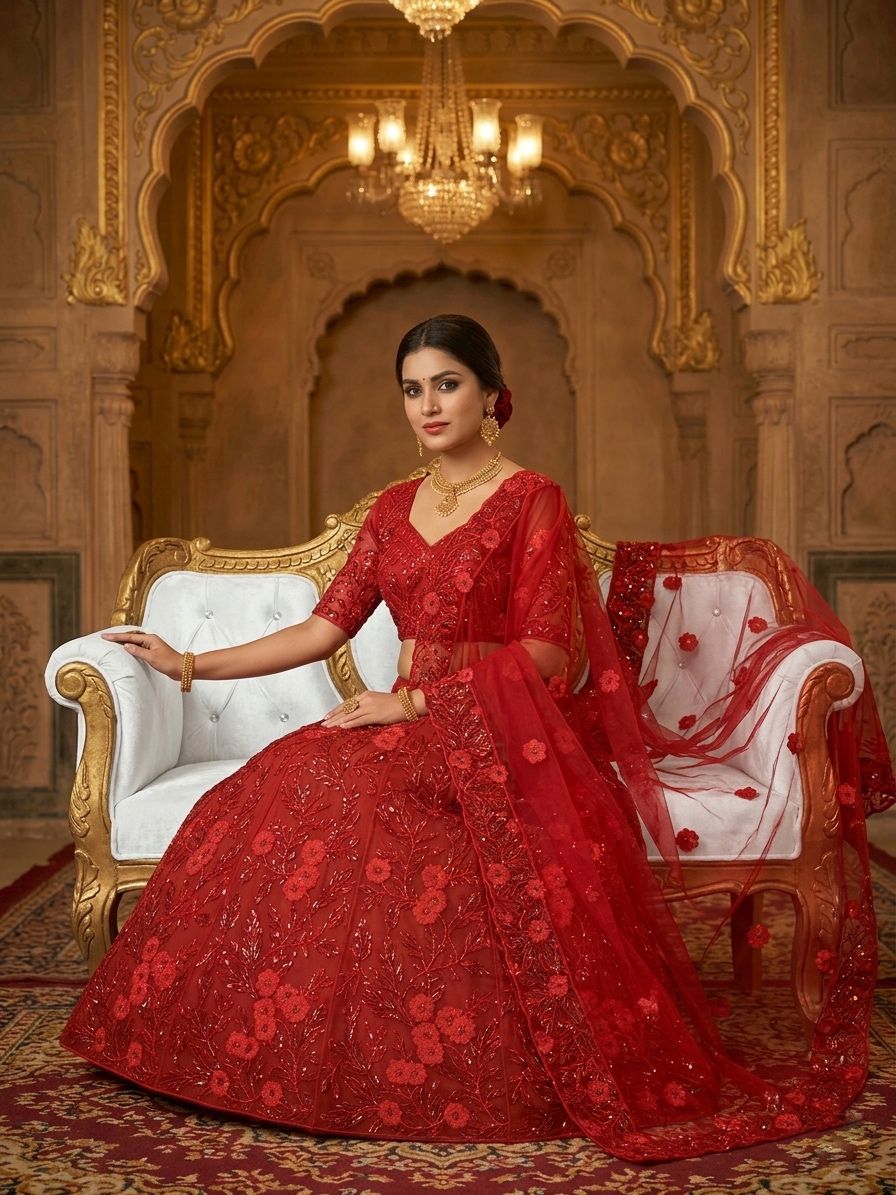
Emerald with antique gold is a classic reception combination because green provides depth and gold adds warmth. Maroon with dull gold looks traditional without becoming bridal in the same way as bright red. Navy with silver zari feels modern, while rani pink with rose gold creates a softer festive effect.
- Emerald and antique gold: suitable for velvet, silk and formal Anarkali silhouettes.
- Wine and muted copper: flattering in warm reception lighting and easy to pair with brown or gold footwear.
- Ivory and maroon: effective for a kurta set, with maroon embroidery preventing the neutral base from looking plain.
- Rust and pink: gives a Punjabi outfit warmth without depending on glitter.
- Plum and champagne: creates a softer evening palette for guests who prefer understated glamour.
Use metallic colour with restraint. Antique gold zari on a neckline and border is enough to connect a plain fabric to the jewellery. If the blouse, skirt, dupatta and accessories all contain metallic contrast, the outfit can become as visually busy as a sequin-heavy design.
Which Embroidery Works in a Punjabi Wedding Reception Look When You Dislike Sequins?
Zari, resham, gota patti, aari work, thread embroidery, pearls and cutdana can provide occasion-level detail without covering the garment in sequins. The best technique depends on whether you want structure, softness, tradition or texture.
Zari is the most direct substitute for sparkle because metallic thread catches light in a controlled way. Gold zari borders on a dupatta or skirt create a clean outline that photographs well. Antique zari is less reflective than bright silver zari and works especially well with maroon, green, rust and beige.
Resham embroidery gives colour rather than shine. Floral resham motifs in tonal pink, burgundy or green can make a lehenga feel elaborate while remaining soft and wearable. Aari work is useful for fine floral detailing, but dense aari embroidery can add weight, so check the garment's total construction before choosing it for an all-night event.
Gota patti has a distinctly festive Punjabi character because narrow metallic ribbons create geometric petals, leaves and borders. Gota patti looks strongest when the motif has breathing space. Pearls can soften metallic embroidery, while cutdana brings tiny points of light without the uniform glitter of sequins.
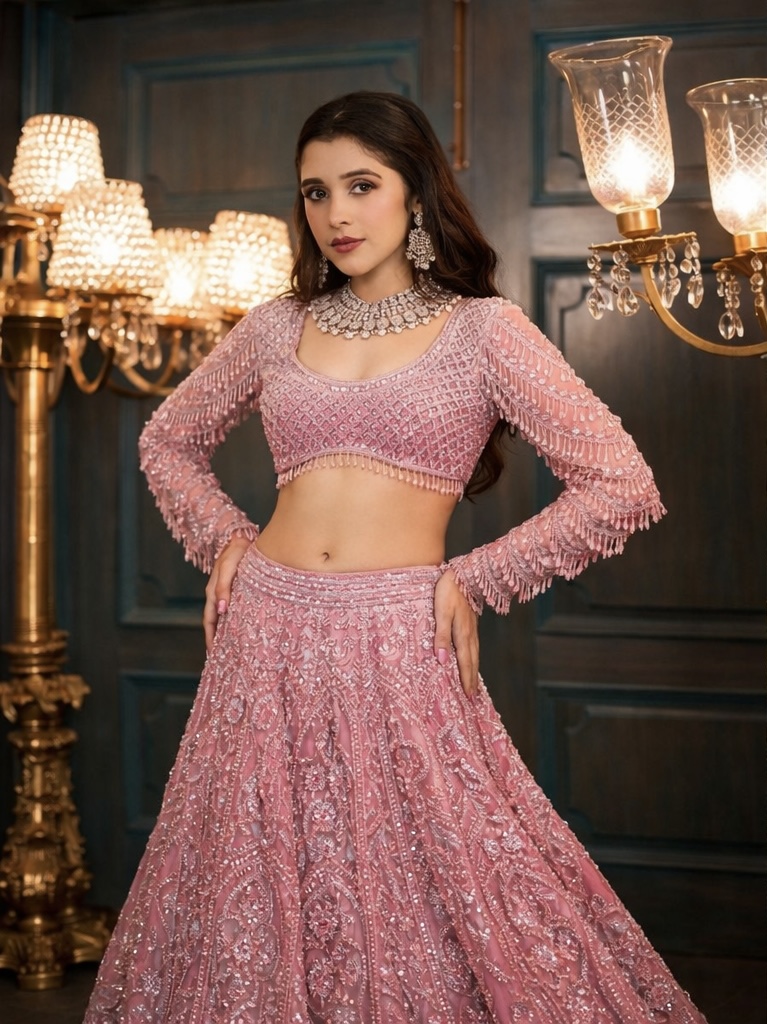
Red Butterfly Net Sequins Lehenga Set Wedding Wear and Pink Bridal Sequins Lehenga Set with Heavy Flare represent high-shine styling. These designs also clarify what to avoid: when the surface is doing all the work, the silhouette and fabric can become secondary. For a non-sequin alternative, keep the flare or net volume and replace the surface with woven silk, velvet, zari or concentrated embroidery.
How Should a Punjabi Wedding Reception Look When You Dislike Sequins Be Silhouetted?
A reception-ready silhouette needs proportion, movement and a deliberate finishing layer, not necessarily heavy embellishment. A long skirt gains formality from flare and border, an Anarkali gains presence from length and drape, and a kurta set gains occasion value from fabric and accessories.
Lehenga proportions
A non-sequin lehenga benefits from a wide hem border, structured waistband and a blouse with a defined neckline. A four- to six-inch border can make a plain skirt look finished, while a shaped blouse prevents the outfit from feeling like a simple festive set. A dupatta with a contrasting or tonal border gives the upper half enough detail.
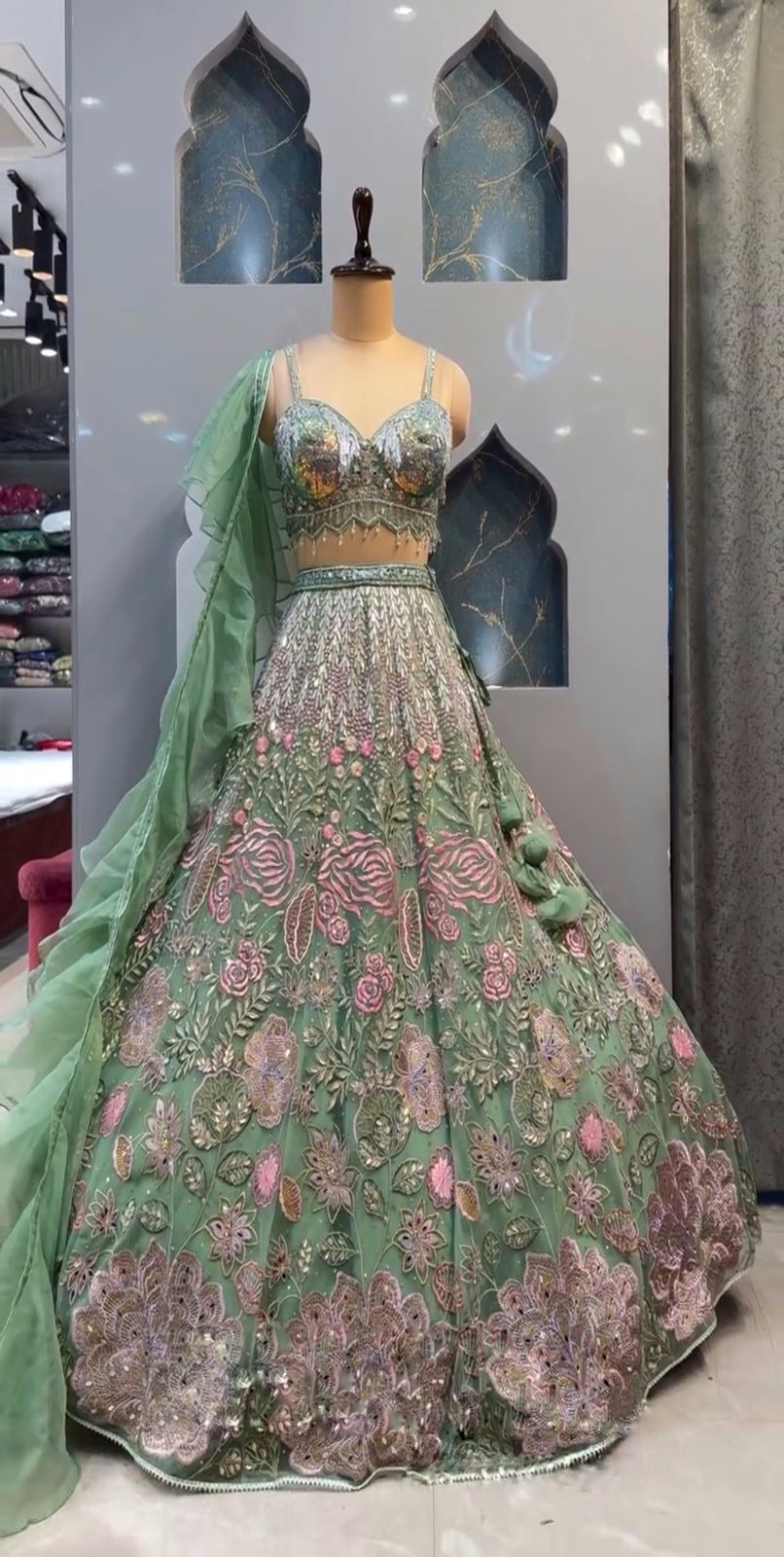
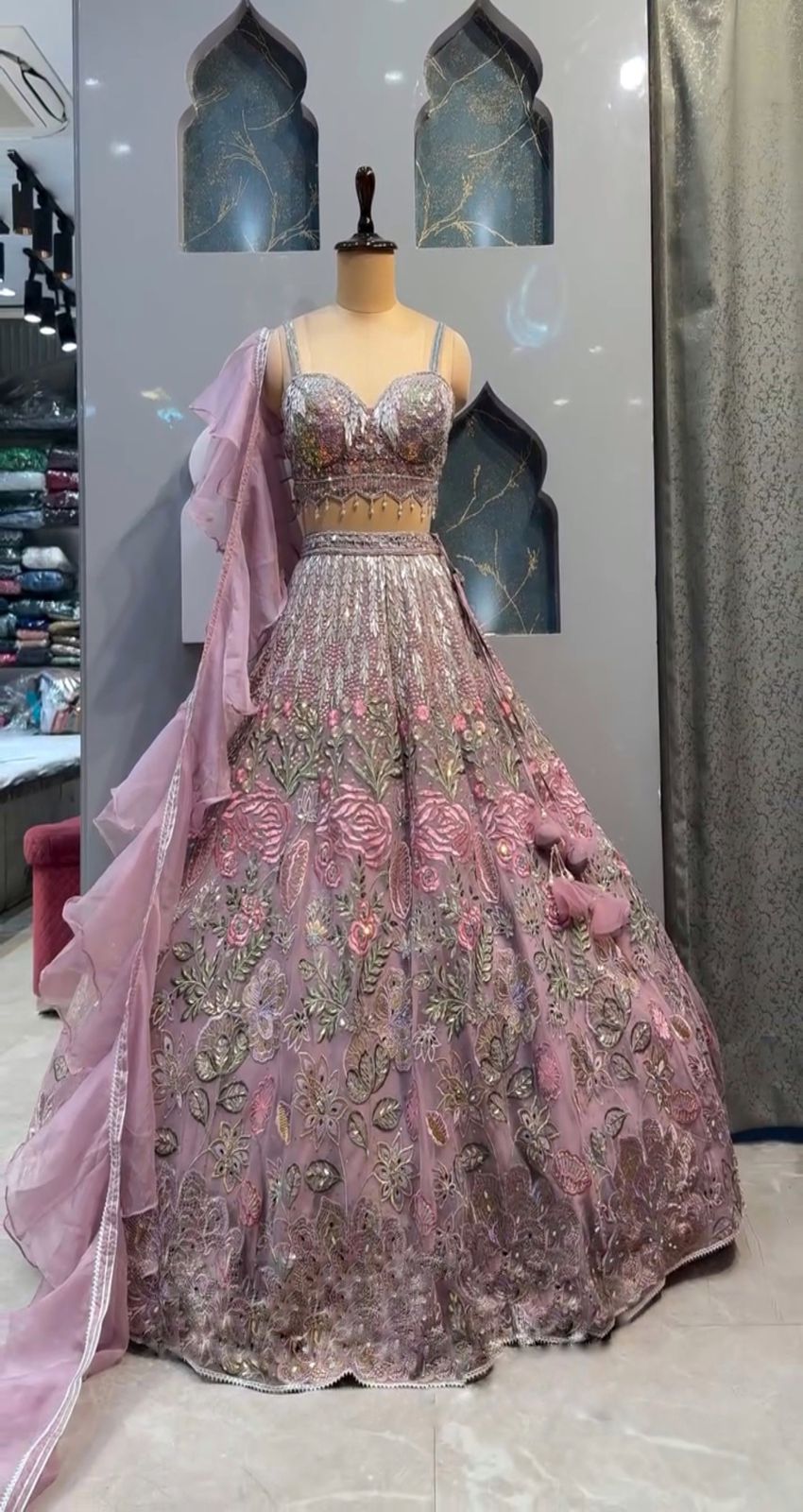
Pink Chinon Silk Sequins Embroidered Lehenga Set Sale and Green Chinon Silk Sequins Embroidered Lehenga Set show how Chinon silk and coordinated colour are often used in festive lehenga construction. If you dislike sequins, look for the same fluid skirt movement in silk, brocade or embroidered georgette, with zari or threadwork replacing the sequin surface.
Anarkali proportions
An Anarkali looks formal when the flare begins at a flattering point, the hem has enough weight to hold its shape and the dupatta is styled with intention. Dark Green Sequins Anarkali Suit Set with Dupatta | Varnavi illustrates the familiar dark-green, floor-length direction; a non-sequin version can use velvet, Chanderi or Vichitra silk with a zari neckline and embroidered hem.
For a tall or fuller silhouette, a long vertical embroidered panel can create visual length. For a petite frame, a narrower border and a lighter dupatta may prevent the garment from overwhelming the body. Tailoring the sleeve length and shoulder width often improves the final result more than adding extra embellishment.
Kurta and sharara sets
A kurta with sharara trousers brings movement and comfort while remaining festive. Choose a kurta that ends at the mid-thigh or below the knee, depending on the sharara volume, and use a bordered dupatta to connect the separate pieces. A fitted inner layer under a sheer dupatta can also make a lighter outfit look more formal.
How Should Jewellery Complete a Punjabi Wedding Reception Look When You Dislike Sequins?
Jewellery should supply controlled focus and texture rather than compensate with excessive shine. Select one prominent piece, such as a choker, rani haar, maang tikka or oversized jhumka, and let the remaining accessories support it.
Polki and kundan jewellery bring depth through uncut stones, gold settings and irregular surfaces. Antique-gold jhumkas suit zari and gota patti, while pearls soften a strongly coloured outfit. A choker works well with a wide or open neckline; a longer necklace is more balanced with a high neckline or a simple blouse.
Keep the metal consistent wherever possible. Antique gold earrings, bangles and embroidered borders create cohesion, while mixing bright silver, rose gold and yellow gold can make a non-sequin outfit look accidentally disjointed. A single contrasting stone colour, such as emerald with maroon or ruby with beige, is usually enough.
Hair and makeup also affect the amount of perceived ornament. A sleek bun exposes jhumkas and a neckline, while soft waves suit a lighter dupatta. Warm bronze or copper eye makeup echoes antique zari without turning the face into another glittering surface. A deeper lip in berry, brick or rose can provide the contrast that sequins would otherwise create near the face.
What Practical Details Improve a Punjabi Wedding Reception Look When You Dislike Sequins?
Comfort, fit and secure styling determine whether a reception outfit remains understated after four or five hours. Check the garment's lining, hem weight, closure quality, sleeve mobility and dupatta length before the event.
A lined blouse prevents embroidery or rough zari from irritating the skin. Cotton or soft-viscose lining is generally more comfortable than unlined synthetic backing during a crowded reception. Test the blouse by raising both arms, sitting down and reaching forward; restricted movement becomes especially inconvenient during photographs and dancing.
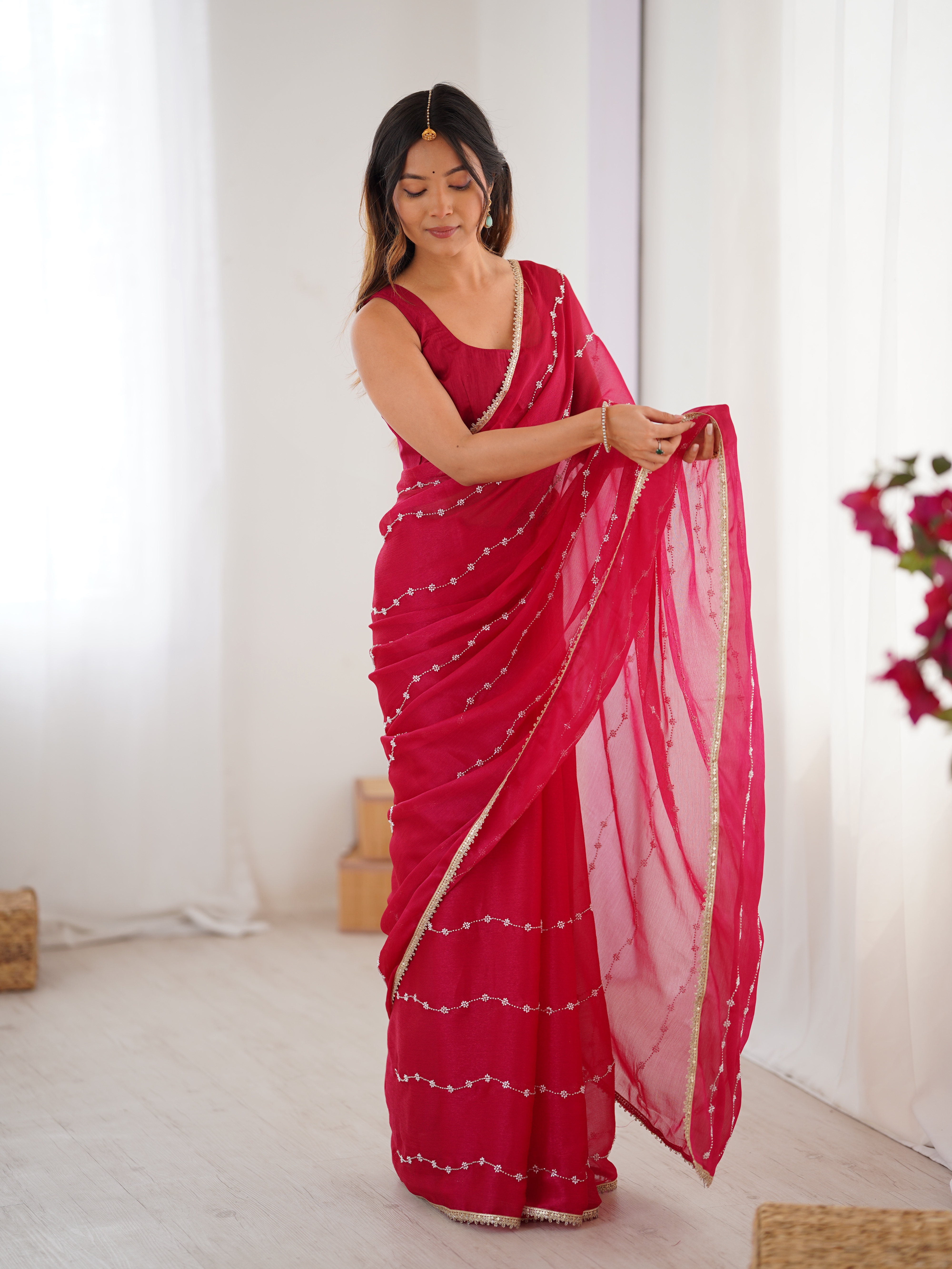
Secure a dupatta at the shoulder and waist with small safety pins hidden beneath the border. A dupatta for a reception generally works best when it's approximately 2.4 to 2.7 metres long, although a heavily bordered or double-width style may need more careful placement. Carry two spare pins, fashion tape and a small thread kit in a pouch.
Inspect the hem against your footwear before the event. A lehenga hem that grazes the floor can catch on steps, while a shorter hem may look awkward with flat shoes. Wear the actual reception footwear during the final fitting and leave approximately 1 to 1.5 centimetres of clearance if dancing or walking outdoors is likely.
Care also matters after the reception. Air silk, velvet and embroidered garments away from direct sunlight, then store them in a breathable cotton cover. Avoid folding zari against rough plastic, and never iron velvet or embellished areas directly; use low steam from the reverse side or a professional cleaner familiar with Indian occasion wear.
A Punjabi Wedding Reception Look When You Dislike Sequins can be memorable because it has a stronger visual idea than sparkle alone. Let the fabric provide depth, let the colour establish mood, let embroidery define the festive detail and let jewellery finish the composition. The result feels celebratory without asking you to wear an embellishment you already know you'll dislike.
Common Questions About a Punjabi Wedding Reception Look Without Sequins
What can I wear to a Punjabi wedding reception if I dislike sequins?
Choose Banarasi silk, velvet, Chanderi, Vichitra silk or brocade with zari, resham, gota patti or pearl embroidery. A structured lehenga, floor-length Anarkali or embroidered kurta set can look formal without any sequins.
Which colours work best for a non-sequin Punjabi reception outfit?
Emerald, maroon, wine, rust, navy, plum and deep pink work particularly well for evening receptions. Pair one saturated base colour with antique gold, muted copper or restrained silver rather than using several metallic shades.
How can I make a plain lehenga look suitable for a reception?
Add a four- to six-inch embroidered or zari hem border, a well-fitted blouse and a bordered dupatta. Statement earrings or a single choker can provide focus without covering the garment in glitter.
Is velvet suitable for an Indian wedding reception?
Velvet is suitable for an evening or winter reception, especially as a blouse, jacket, border or Anarkali panel. A full velvet lehenga can become heavy, so check the lining, weight and ease of movement before buying one.
What jewellery looks best with a non-sequin lehenga?
Polki, kundan, antique-gold jhumkas, pearls and a single choker work well with silk, zari and thread embroidery. Choose one prominent jewellery piece and keep the remaining accessories coordinated rather than equally dramatic.
How do I keep a reception dupatta in place while dancing?
Pin the dupatta at the shoulder and waist beneath the border, then test the arrangement by walking, sitting and raising both arms. Carry spare safety pins and choose a manageable length if dancing or moving between indoor and outdoor areas is expected.