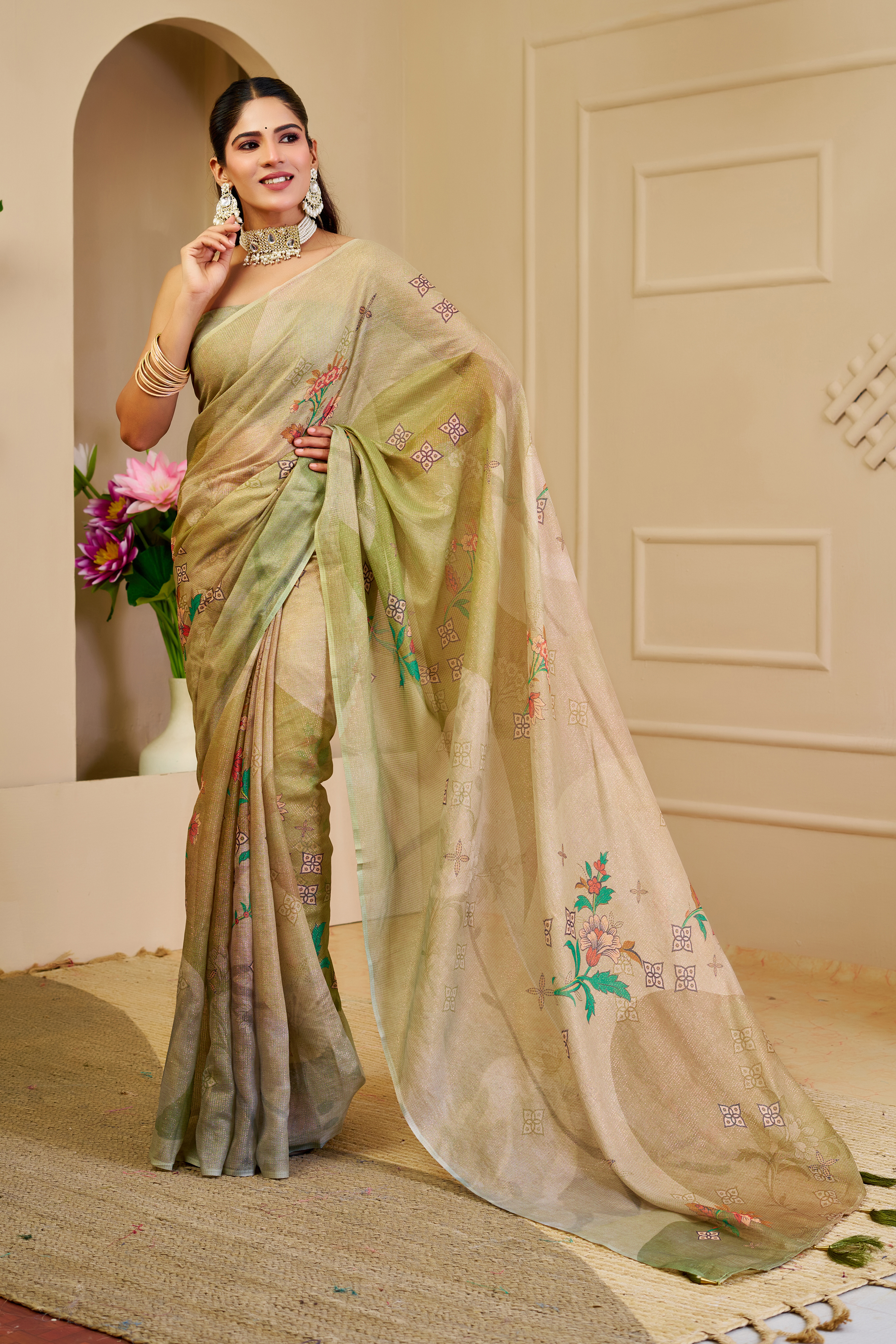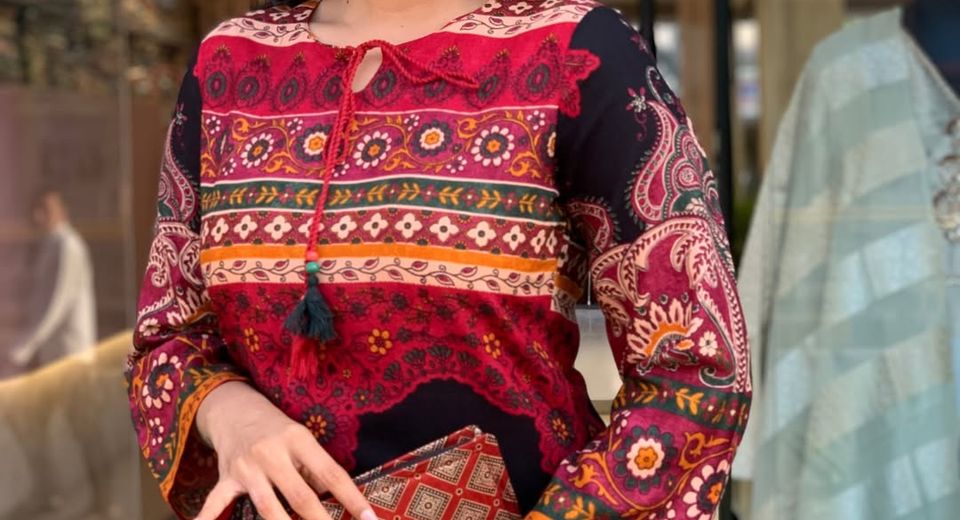
A mother daughter ethnic outfit without identical prints can look more considered, comfortable and personal than two copies of the same garment. The strongest pairings share one or two visual details-such as a colour, border, textile or jewellery tone-while allowing each person to wear a silhouette and print scale that suits her age, height and sense of style.
Coordinated dressing isn't the same as uniform dressing. A mother may prefer the drape and elegance of a saree, while a daughter may feel more at ease in a lehenga, salwar suit or co-ord set. The outfits can still belong together when their relationship is planned deliberately.
A Mother Daughter Ethnic Outfit Without Identical Prints: Why Choose Different Patterns?
Different patterns allow a mother and daughter to look connected while preserving individual comfort, proportion and personality.
Wearing the exact same print can create practical problems. A large floral motif may look balanced across a six-yard saree but crowded on a short kurta. A dense geometric pattern may suit a structured blouse yet overwhelm a smaller frame. Identical garments can also make both outfits appear flat in photographs because there's no contrast between them.
Complementary dressing creates a clearer visual relationship. One person can wear the main print while the other picks up a secondary colour from that print. One outfit can carry zari or embroidery while the other uses a quieter woven border. The result feels intentional without suggesting that either person has borrowed the other person's clothes.
Different garments also make more sense for different schedules. A mother attending a long wedding ceremony may value the adjustable drape of a saree, while a daughter moving between rituals may prefer a lehenga with a secure waistband or a kurta-pant set. Matching their needs is more useful than matching every motif.
How Does a Mother Daughter Ethnic Outfit Without Identical Prints Use Colour?
Choose one dominant colour, one supporting colour and one neutral before selecting garments for both people.
An useful three-part colour plan works as follows:
- Dominant colour: Choose the shade that should be most visible in photographs, such as teal, mauve, black, mustard or ivory.
- Supporting colour: Select a shade that appears in a border, pallu, blouse, dupatta or accessory on the second outfit.
- Neutral: Add beige, taupe, cream, charcoal or soft gold to prevent the pairing from becoming visually busy.
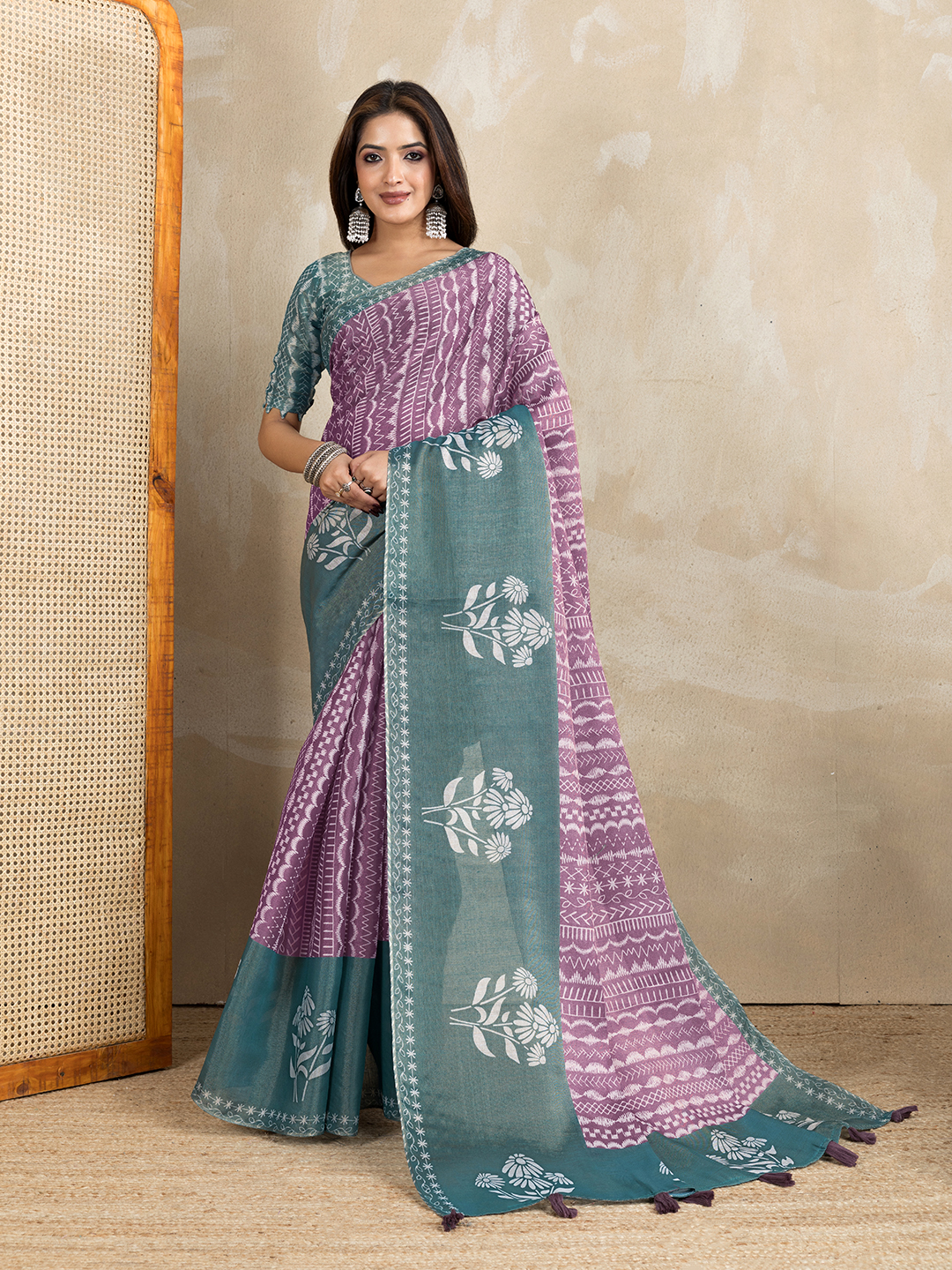
The Mauve Cotton Saree with Teal Floral Pallu and Ethnic Prints can establish a mauve-and-teal palette for the mother. A daughter could wear a teal kurta with mauve trousers, or a neutral lehenga with teal earrings and a mauve dupatta. The daughter doesn't need the same floral pallu because the colour relationship already makes the two looks read as a pair.
A black-and-multicolour combination offers another adaptable route. The Black Chanderi Cotton Saree with Multicolor Geometric Print can be paired with a daughter's solid jewel-toned sharara or a black kurta featuring only one accent colour from the saree. Limiting the daughter's outfit to one or two colours from the geometric print keeps the pairing connected without adding competing motifs.
Colour intensity should also be balanced. A saturated fuchsia outfit beside another saturated red outfit may look disconnected even if both are festive. Pairing one vivid garment with a muted beige, taupe or ivory garment gives the eye a resting point and makes the shared accent easier to notice.
Which Fabrics Suit a Mother Daughter Ethnic Outfit Without Identical Prints?
Fabrics work well together when their finish and visual weight are compatible, even when their prints are different.
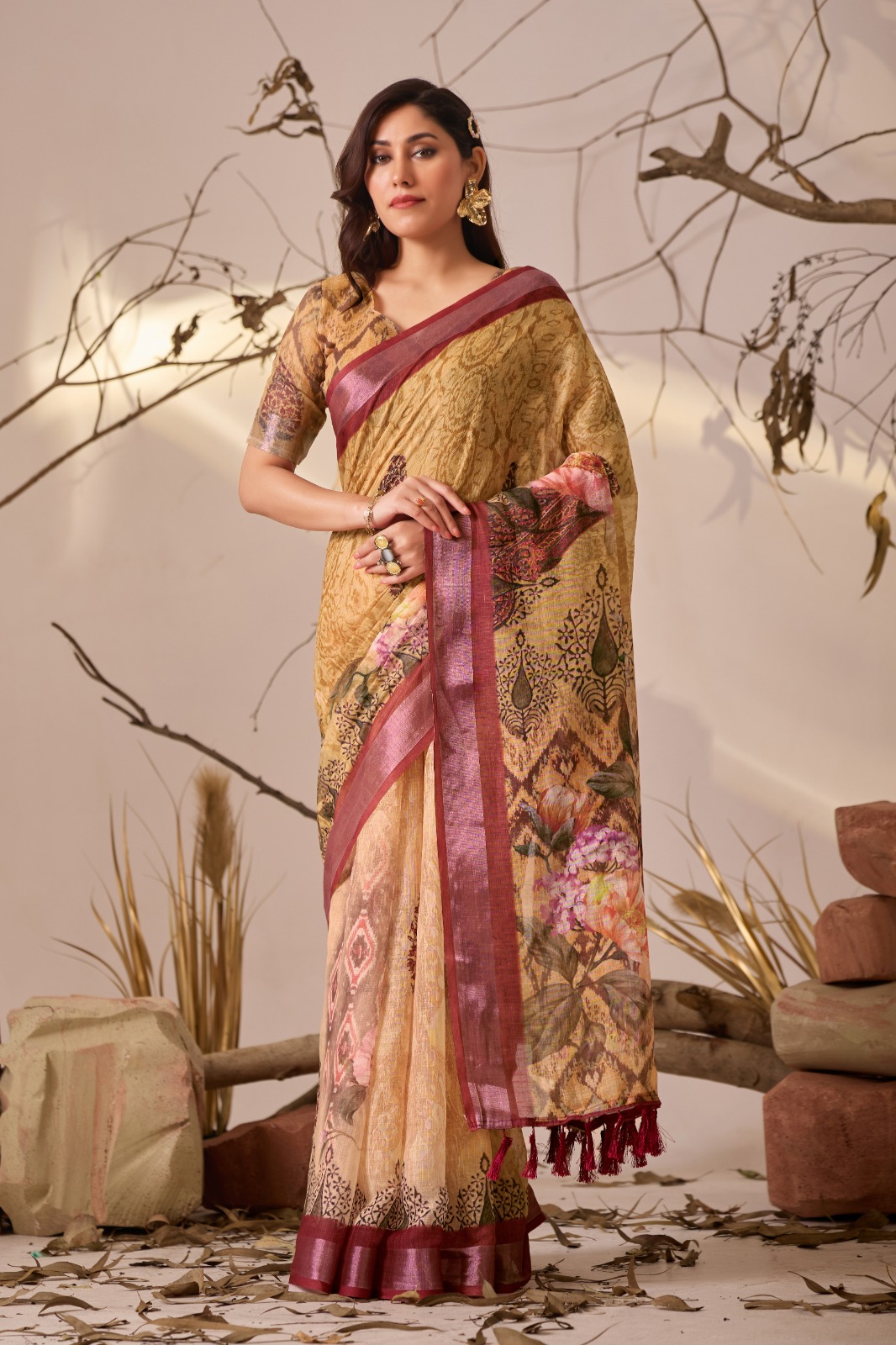
Fabric choice affects how coordinated outfits move, photograph and feel during a long celebration. Lightweight cotton, rayon and linen cotton are practical for daytime events because they breathe well and usually need fewer adjustments. Silk, Chanderi and embellished fabrics bring more structure and sheen for evening functions, but they should be balanced with a simpler garment so the overall pairing doesn't become heavy.
The D1003 Beige Floral Printed Rayon Kurta Pant Co-Ord Set provides a soft, lightweight printed base. A mother wearing a solid beige or ivory saree with a narrow coloured border can coordinate with the set through the neutral shade, while leaving the floral motif exclusive to the daughter's outfit.
The Beige Printed Rayon Co Ord Set for Women Online can also serve as the calmer half of a pairing. A printed beige co-ord can sit beside a mother's coloured saree, embroidered salwar suit or textured silk blouse without creating print overload. Beige is especially useful when the family event includes bright décor, flowers and warm indoor lighting.
For a polished evening combination, the Modern Taupe Vichitra Silk Embroidered Co-Ord Set for Women can be paired with a saree in champagne, dusty rose or muted bronze. Taupe bridges warm gold jewellery and cooler pastel colours. The embroidered co-ord should be balanced with a saree that has a restrained border rather than another heavily ornamented surface.
Material care should influence the decision. Rayon and linen cotton generally need gentle washing or dry cleaning according to the care label, while silk and zari garments should be stored folded in breathable cotton rather than plastic. Choosing fabrics that both wearers can maintain easily prevents a beautiful pairing from becoming impractical after the event.
How Should a Mother Daughter Ethnic Outfit Without Identical Prints Use Silhouettes?
Silhouettes should reflect individual comfort while sharing a visible design cue such as sleeve shape, waist placement, border width or neckline detail.
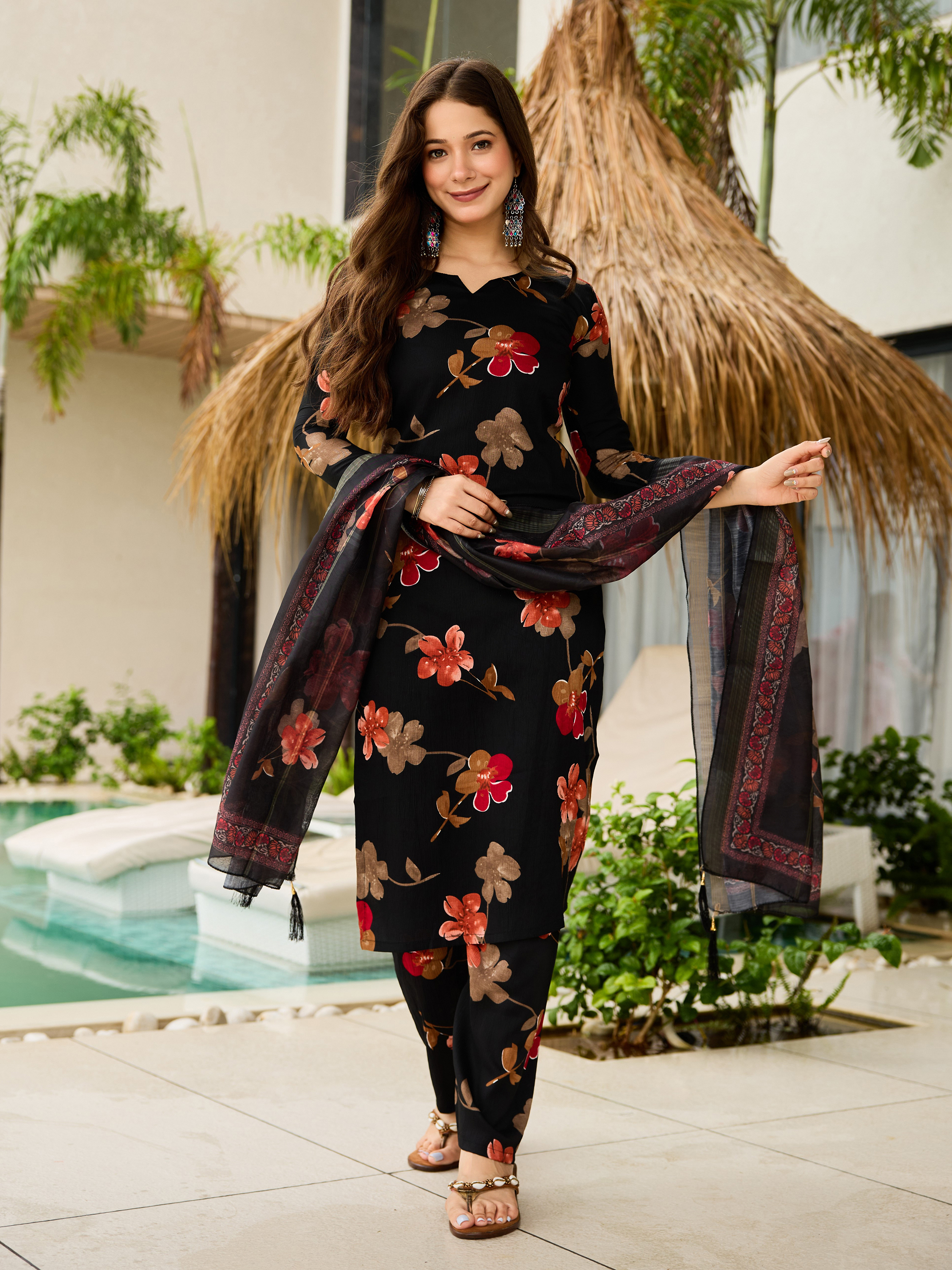
A saree and lehenga are naturally complementary because their structures are different but equally festive. A mother can wear a saree with a defined blouse, while the daughter chooses a lehenga with a similar blouse colour. Matching the sleeve length or neckline piping creates a subtle link that doesn't depend on print.
A saree and co-ord set create a more contemporary contrast. A draped saree gives movement and vertical lines, while a kurta-pant or embroidered co-ord gives a clean, tailored shape. Keep one element shared: the same metallic finish, a related sleeve, a similar hem border or a common accent colour.
A salwar suit and sharara can also be paired effectively. The mother may choose a straight kurta with a printed dupatta, while the daughter wears a sharara in the dupatta's plain base colour. Repeating the dupatta border on the daughter's waistband or earrings is enough to establish continuity.
Proportion deserves attention. A large print looks more balanced on a long saree or full skirt because the motif has space to breathe. Smaller prints, scattered motifs and narrow borders tend to work better on short kurtas, cropped jackets and children's garments. Adjusting scale preserves the design language while respecting each wearer's frame.
The Printed Rayon Co Ord Set for Women Online | Varnavi illustrates how a coordinated set can provide a clean shape beside a more fluid saree. The name contains the brand reference, so it should be treated as a product title rather than repeated as a general styling phrase.
Can a Mother Daughter Ethnic Outfit Without Identical Prints Mix Patterns?
Different prints look intentional when they share at least one element of scale, colour family, motif style or spacing.
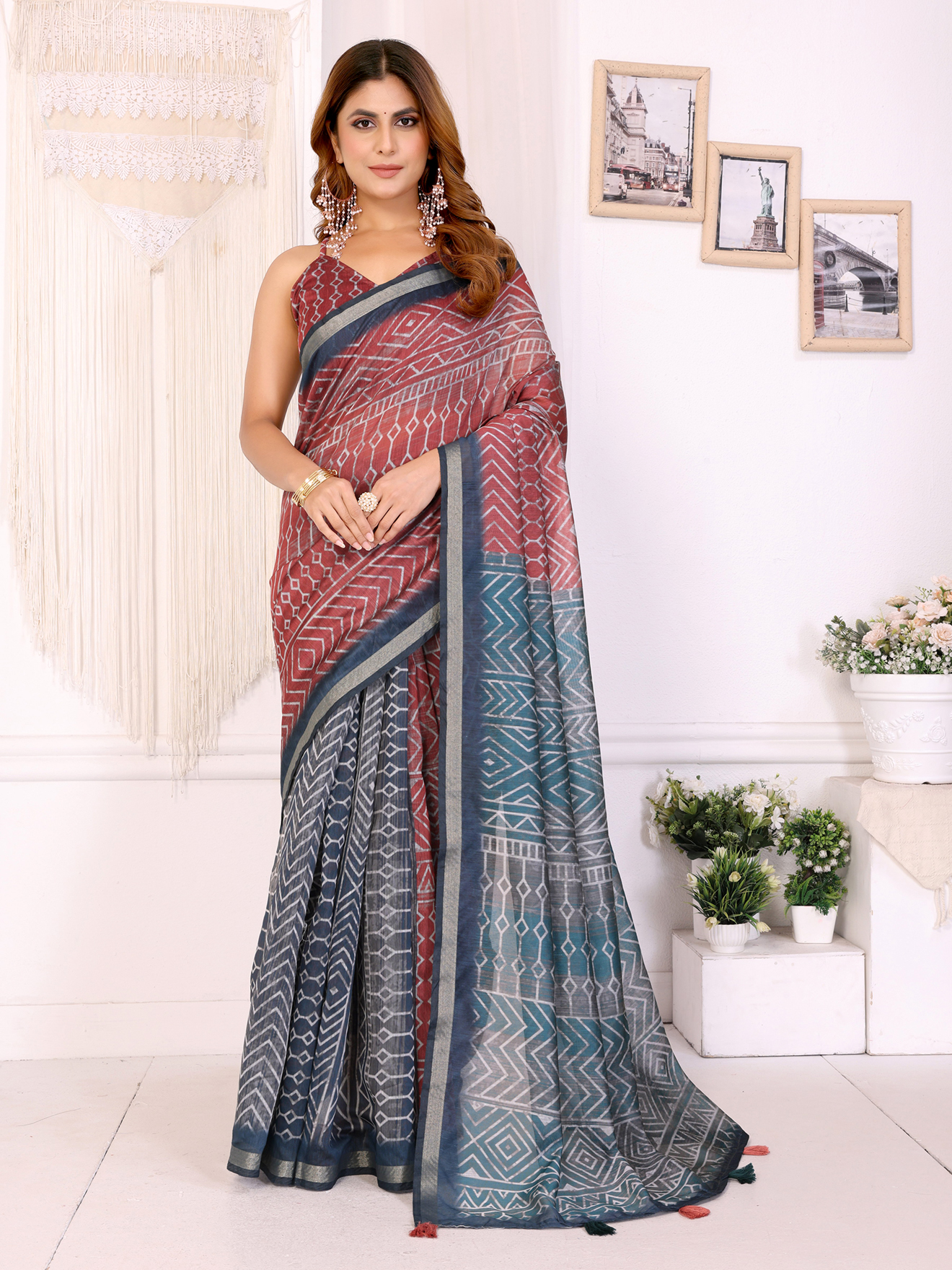
Print scale is the easiest place to begin. Pair one large floral print with a small floral or solid garment rather than adding a second large floral. Pairing a dense geometric print with an unprinted embroidered outfit creates contrast, while two dense geometric patterns may compete from a distance.
Motif character matters as well. A traditional floral print can sit comfortably beside a small paisley, but a highly realistic tropical print may not relate to a formal woven border. The relationship doesn't need to be literal; it needs to feel visually compatible.
The Multicolor Printed Linen Cotton Saree with Woven Border demonstrates how a woven border can coordinate with another garment even when the surface prints differ. A daughter could wear a plain linen or cotton outfit in one border colour, with woven earrings or a slim embroidered belt echoing the saree's texture.
The Multicolor Printed Butter Silk Lehenga Choli Set can become the more decorative outfit in a pairing. A mother could choose a solid saree with a small zari border, using one colour from the lehenga in the blouse or dupatta. The daughter retains the multicolour print, while the mother brings visual calm.
When both outfits contain prints, leave one surface quieter. A printed saree with a solid blouse can sit beside a printed kurta with plain trousers. Alternatively, a printed lehenga can be paired with a mother's solid saree that carries only a patterned blouse border. The rule is simple: don't give every garment equal visual competition.
Which Accessories Complete a Mother Daughter Ethnic Outfit Without Identical Prints?
Accessories create a shared look most effectively when both outfits repeat one small detail rather than every accessory.
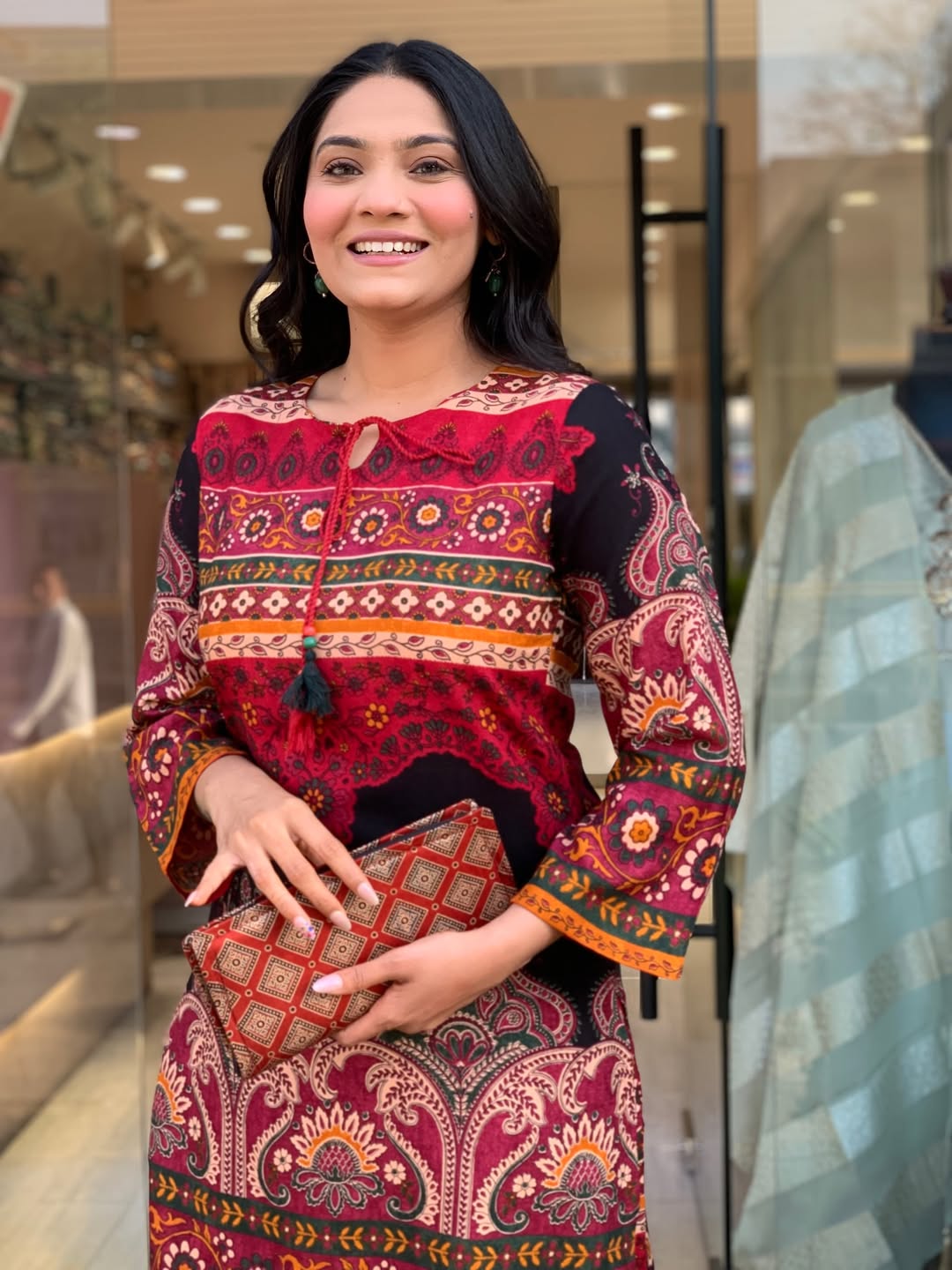
Gold jewellery is a natural common thread for festive Indian dressing, but matching gold alone can feel predictable. Consider repeating one of these details:
- A similar jhumka shape in different sizes.
- The same bangle colour with different quantities.
- A shared stone colour, such as teal, ruby, pearl or emerald green.
- Metallic sandals in gold, antique gold or bronze.
- A matching hair flower, gajra or small fabric bow for a heritage ceremony.
- Related potli bags, clutches or embroidered belts rather than identical handbags.
Jewellery scale should follow the garment. A heavily printed or embroidered outfit usually needs fewer competing accessories. A plain saree can support a larger necklace or statement earrings. If both outfits already contain zari, metallic footwear and bright jewellery may make photographs appear overly reflective, particularly under indoor lighting.
Footwear should be practical as well as attractive. A Haldi ceremony may involve turmeric, outdoor movement and uneven ground, so low wedges, embellished flats or secure sandals are more sensible than delicate heels. A wedding reception allows more structured footwear, provided the wearer can stand and walk comfortably for several hours.
Makeup and hair can provide another quiet connection. Similar braid decoration, a shared lip-colour family or matching bindi tones can link the outfits without making the styling look staged. Keep the finish personal: a mother may prefer a classic low bun, while a daughter may choose loose waves or a braided half-up style.
Where Can a Mother Daughter Ethnic Outfit Without Identical Prints Be Worn?
Match fabric weight, colour intensity and practicality to the ceremony rather than using one pairing for every event.
Haldi ceremony
Bright cotton, rayon, linen cotton and washable blends are suitable for a Haldi ceremony because turmeric and outdoor activity can stain delicate garments.
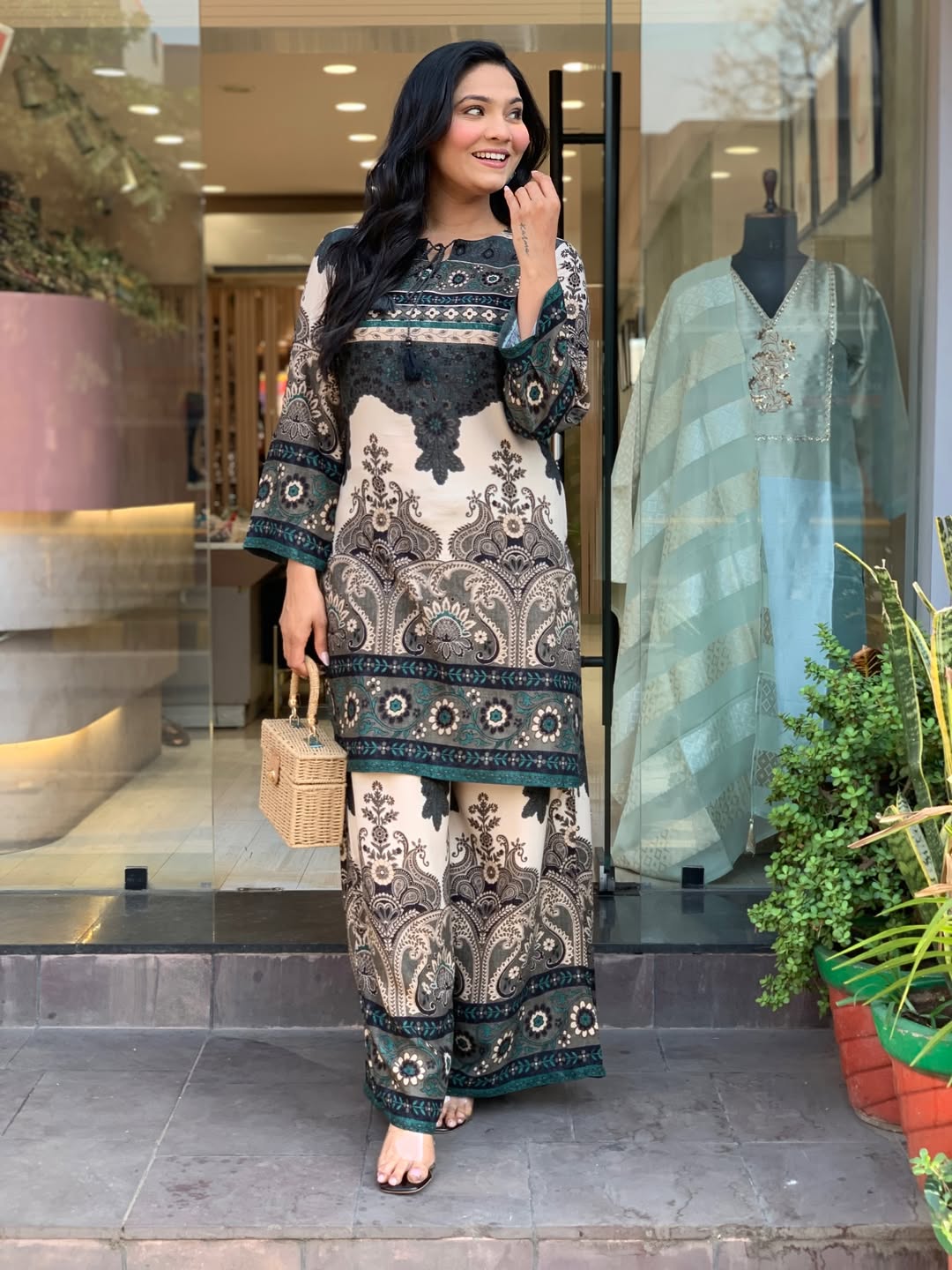
A daughter can wear the D1003 Beige Floral Printed Rayon Kurta Pant Co-Ord Set while her mother chooses a yellow, beige or teal cotton saree with a simple border. The floral print remains distinct, and the shared warm palette photographs well in daylight. Avoid long trains, fragile embellishment and difficult-to-clean fabrics.
Wedding ceremony
A wedding ceremony supports richer textiles such as Banarasi silk, Kanjeevaram, Chanderi silk or embroidered silk, provided both garments allow comfortable movement.
A mother can wear a Chanderi or silk saree with a restrained zari border while her daughter wears the Multicolor Printed Butter Silk Lehenga Choli Set. Repeating one lehenga colour in the saree blouse creates a family connection without copying the print. For a classic temple wedding, gold jewellery and secure footwear are more practical than oversized accessories that require constant adjustment.
Reception or evening celebration
Evening events suit structured silhouettes, deeper colours and controlled shine.
The Modern Taupe Vichitra Silk Embroidered Co-Ord Set for Women can work for a daughter or mother when paired with a saree in a related neutral. A contrasting outfit can use the same metallic finish in its clutch or earrings. Keep the number of reflective elements limited so flash photography doesn't flatten the details.
Family photographs
Family photographs look most cohesive when outfits share a colour temperature and differ in print scale.
Warm ivory, beige, mauve, teal and muted gold tend to photograph smoothly together under mixed indoor lighting. Very small high-contrast patterns can create visual shimmer in photographs, so a solid blouse, plain dupatta or larger-spaced print is often preferable for the calmer outfit.
How Do You Plan a Mother Daughter Ethnic Outfit Without Identical Prints?
Plan the pairing from one anchor garment, then select the second outfit by repeating only two or three design details.
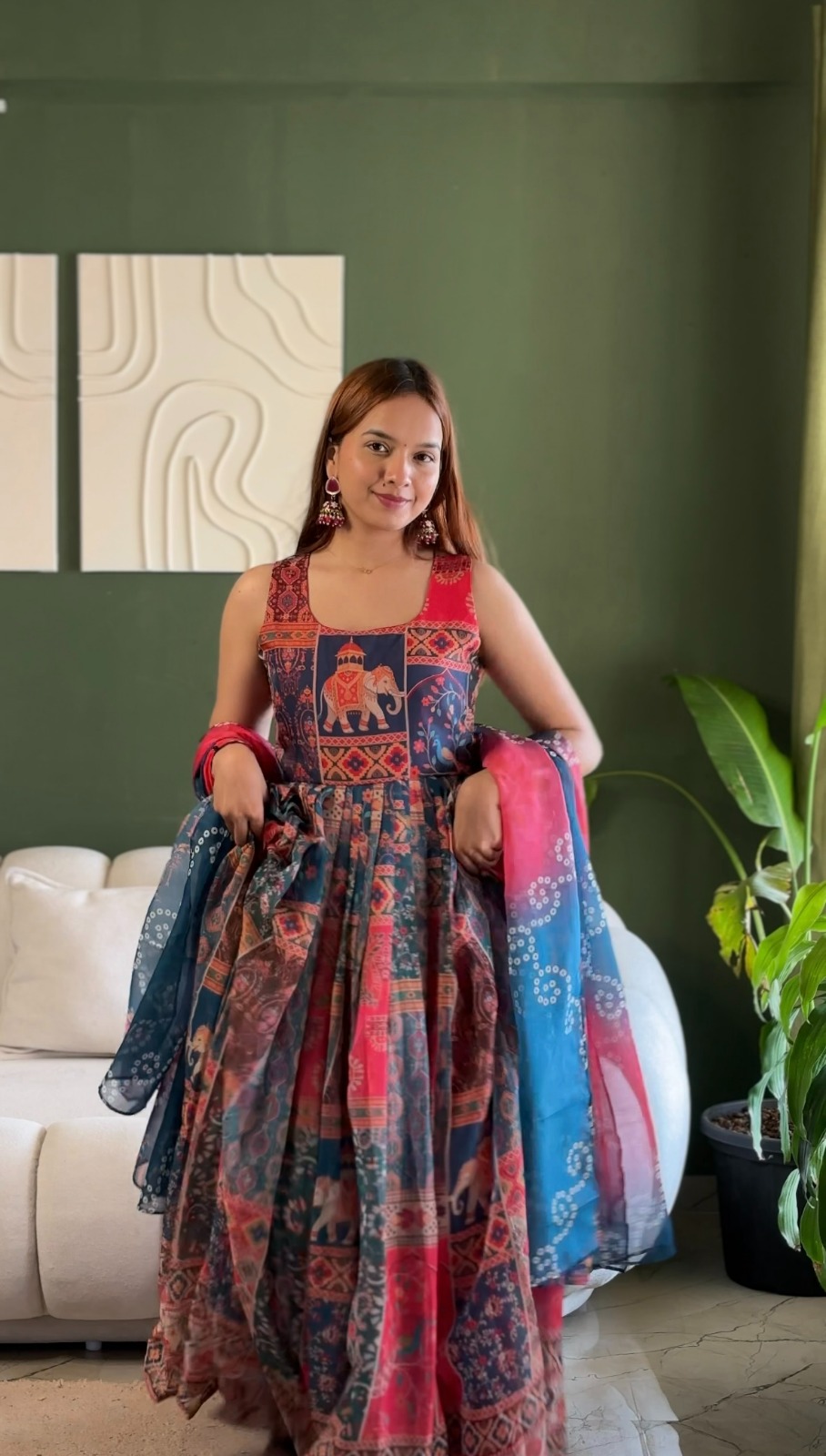
- Choose the anchor: Start with the saree, lehenga or printed set that has the strongest pattern or most distinctive colour.
- Identify its supporting shades: Note the colours in the border, pallu, embroidery or smallest motifs.
- Select a different silhouette: Choose a co-ord, salwar suit, sharara, saree or lehenga that suits the second wearer's comfort.
- Repeat two details: Use a shared colour and either a shared fabric finish, border width, sleeve shape or jewellery tone.
- Check the full look together: Stand several steps apart and take a daylight photograph. Remove one accessory if both outfits appear equally busy.
A short trial before the event can reveal problems that a mirror doesn't show. Walk, sit, raise both arms and check whether the dupatta, pallu or waistband stays secure. A coordinated outfit succeeds when the wearers can participate in the celebration rather than constantly managing their clothes.
The most reliable goal is visual kinship, not duplication. When colour, proportion, fabric and accessories are selected with care, a mother and daughter can look unmistakably connected while wearing garments that genuinely belong to each of them.
Common Questions About Mother-Daughter Outfits Without Matching Prints
How can a mother and daughter match outfits without wearing the same print?
Share one dominant colour and one smaller detail, such as a border, fabric finish, sleeve shape or jewellery tone. A printed saree can be paired with a solid lehenga, kurta or co-ord that picks up one shade from the saree.
Can a mother wear a saree while her daughter wears a lehenga?
Yes, a saree and lehenga make a naturally balanced pairing because their silhouettes are different but equally festive. Coordinate the blouse colour, border, embroidery or accessories instead of repeating the full print.
Which colours work well for coordinated mother-daughter ethnic wear?
Mauve and teal, beige and floral accents, black and jewel tones, ivory and gold, and taupe with dusty rose are versatile combinations. Use one neutral to keep two printed or embellished outfits from looking too busy.
How do you mix two different ethnic prints without clashing?
Keep at least one element consistent, such as colour family, motif style or print scale. Pair a large floral with a solid or small-scale pattern, and avoid placing two dense high-contrast prints together.
What should a mother and daughter wear for a Haldi ceremony?
Cotton, rayon, linen cotton and washable blends are practical for a Haldi ceremony because turmeric and outdoor movement can stain delicate clothing. Secure sandals, lighter embellishment and easy-to-manage dupattas also make the outfits more comfortable.
How can coordinated ethnic outfits look good in family photographs?
Use related colour temperatures and vary the print scale so the outfits read as a group without merging visually. Daylight photographs usually show colour accurately, while indoor flash makes excessive zari and metallic accessories appear overly reflective.