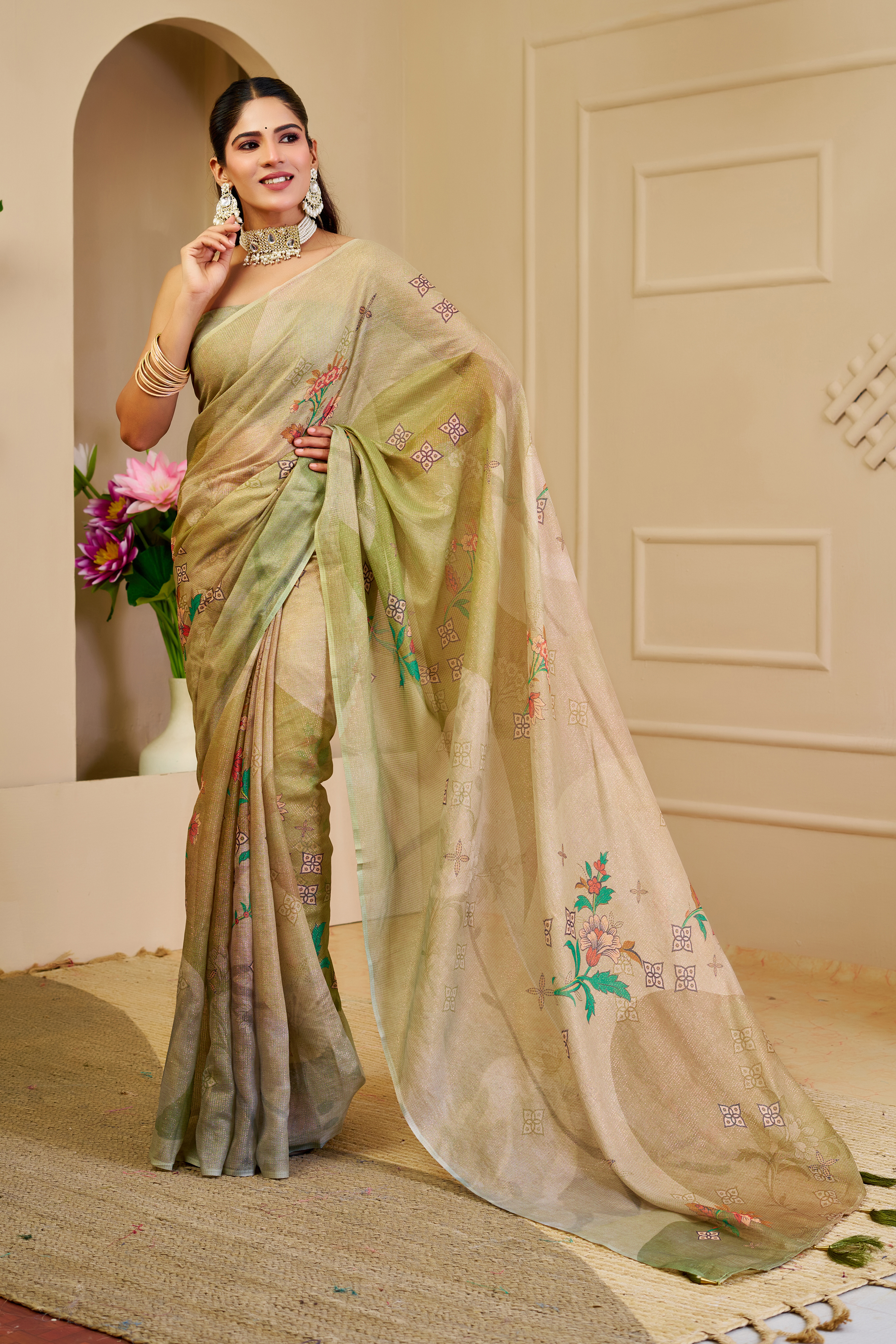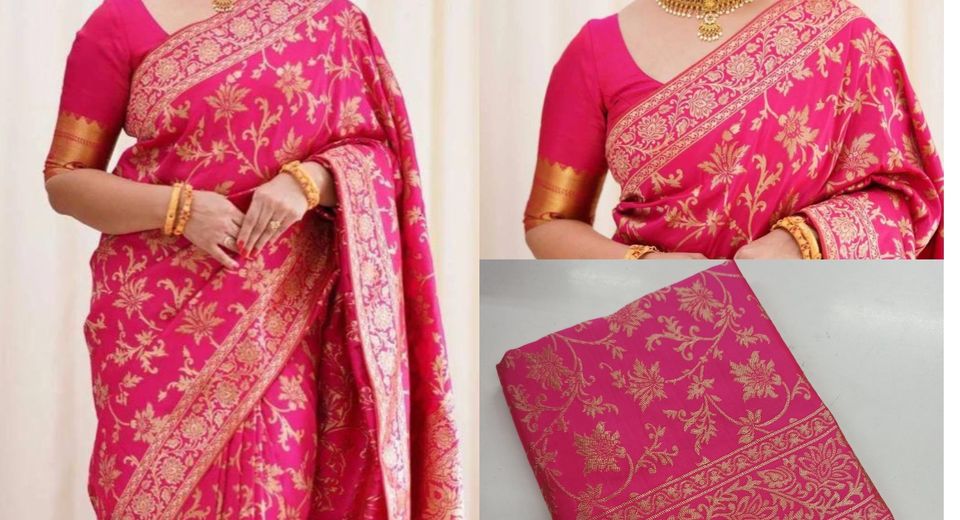
A Konkani wedding saree look with comfortable jewellery can feel traditional without leaving you with aching ears, a slipping necklace or an overloaded waist. The most reliable approach is to coordinate three practical decisions: choose a saree with manageable weight, build a secure drape, and limit jewellery to pieces that frame the face and neckline without competing with the zari. Konkani weddings differ across Goa, coastal Karnataka, Maharashtra and Kerala, so styling should respect family customs while allowing movement through rituals, meals, photographs and dancing.
A Konkani wedding saree look with comfortable jewellery begins with colour and weave
A strong Konkani wedding saree look usually depends on rich colour, a defined border and jewellery with a warm metallic finish. Maroon, wine, rani pink, coral and navy create different moods, while gold zari immediately gives a saree ceremonial presence. A bride may follow a family-prescribed colour or weave, whereas a wedding guest can use the same colour logic in a lighter, less ornate combination.
Banarasi silk works especially well when the saree needs to look festive in indoor mandap lighting and outdoor photographs. Gold zari catches small amounts of light, while a jacquard border creates structure even when the pallu is folded over the shoulder. A saree with a clear border also makes pleat alignment easier, which matters when the outfit must stay neat for several hours.
The Maroon Banarasi Soft Silk Saree with Golden Zari Border gives a classic bridal direction without requiring a heavily embroidered blouse. The Wine Banarasi Soft Silk Saree With Golden Zari Border is a deeper, evening-friendly alternative. Both colours pair naturally with antique gold, polished yellow gold or kundan-inspired accents, but the jewellery should not repeat every motif in the border.
How does a Konkani wedding saree look with comfortable jewellery choose the right fabric?
Choose a soft silk, lichi silk or controlled-drape fabric when comfort matters more than maximum volume. Saree weight, surface friction, border stiffness and attached embellishments affect comfort more than the fibre name alone. A manageable saree allows the wearer to sit cross-legged, walk between ceremony spaces and adjust the pallu without repeatedly asking for help.
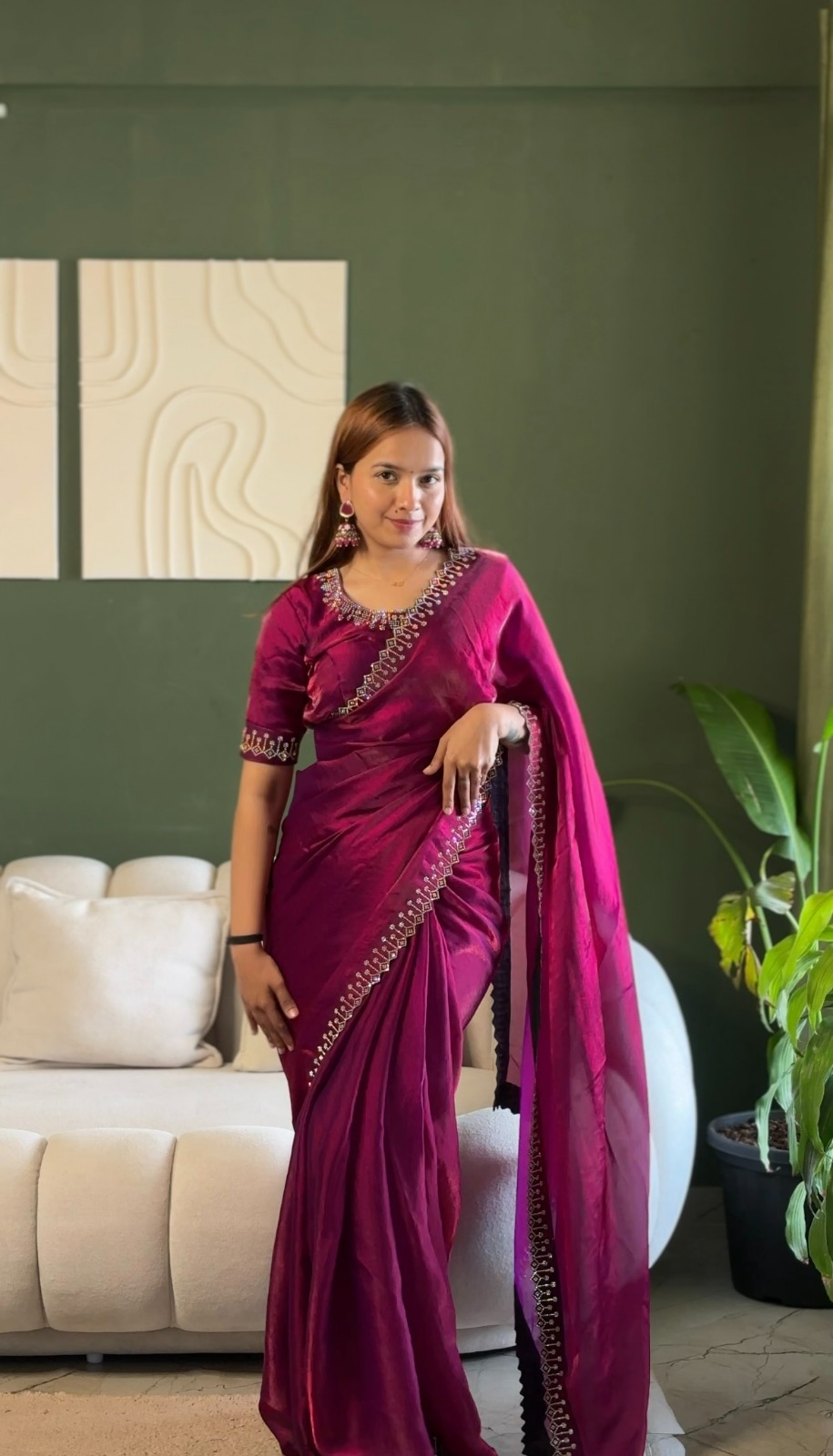
A Konkani wedding saree look with comfortable jewellery for long ceremonies
Banarasi soft silk offers an useful middle ground between formal shine and practical handling. Maroon Banarasi Lichi Silk Saree With Zari Work has a celebratory surface and works with a simple blouse because the weave provides visual richness. Rani Pink Banarasi Lichi Silk Saree with Zari Work brings more brightness to daytime functions and looks balanced with gold-toned jewellery that has a slim profile.
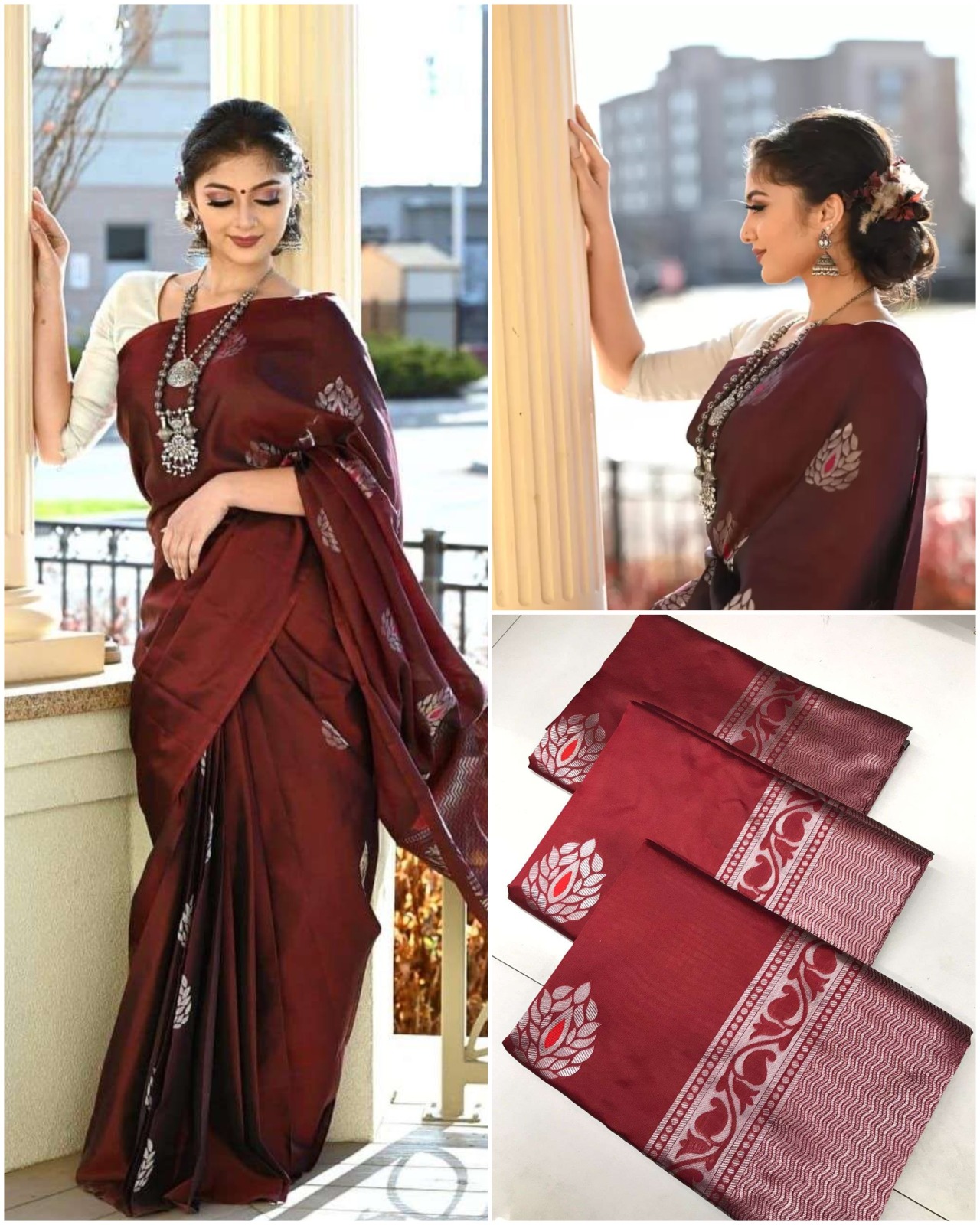
Lichi silk can be a good choice when you want a silk-like finish with a drape that doesn't feel as rigid as a heavily starched ceremonial weave. Maroon Soft Lichi Silk Saree with Silver Zari & Jacquard Border changes the styling direction: silver zari suits oxidised silver, white stones or two-tone jewellery better than a fully yellow-gold set. Choosing jewellery that follows the saree's metallic colour prevents the outfit from looking visually divided.
When should a Konkani wedding saree look with comfortable jewellery use a ready-to-wear saree?
A ready-to-wear saree can be practical for a guest, a reception or a ceremony with frequent movement because stitched pleats reduce the risk of uneven folding. Coral Floral Paisley Chinnon Ready To Wear Saree by Varnavi gives a lighter, more contemporary route than a classic silk saree. Pairing a printed or fluid saree with restrained jewellery keeps the outfit festive without making every element compete for attention.
Check the waist fastening, pleat position and pallu length before wearing a ready-to-wear saree at a wedding. A trial at home for at least 30 minutes reveals whether the waistband digs in, whether the pleats pull when sitting and whether the pallu stays over the shoulder. A small safety pin hidden at the waist and one at the shoulder can improve security without changing the silhouette.
How can a Konkani wedding saree look with comfortable jewellery avoid excessive weight?
A comfortable jewellery plan uses one focal piece, one face-framing element and a few secure finishing details. The focal piece may be a short necklace, a longer haram or statement earrings, but wearing all three at maximum size often causes weight, tangling and visual congestion. Select jewellery according to the ceremony length rather than assuming that bridal styling requires every available ornament.
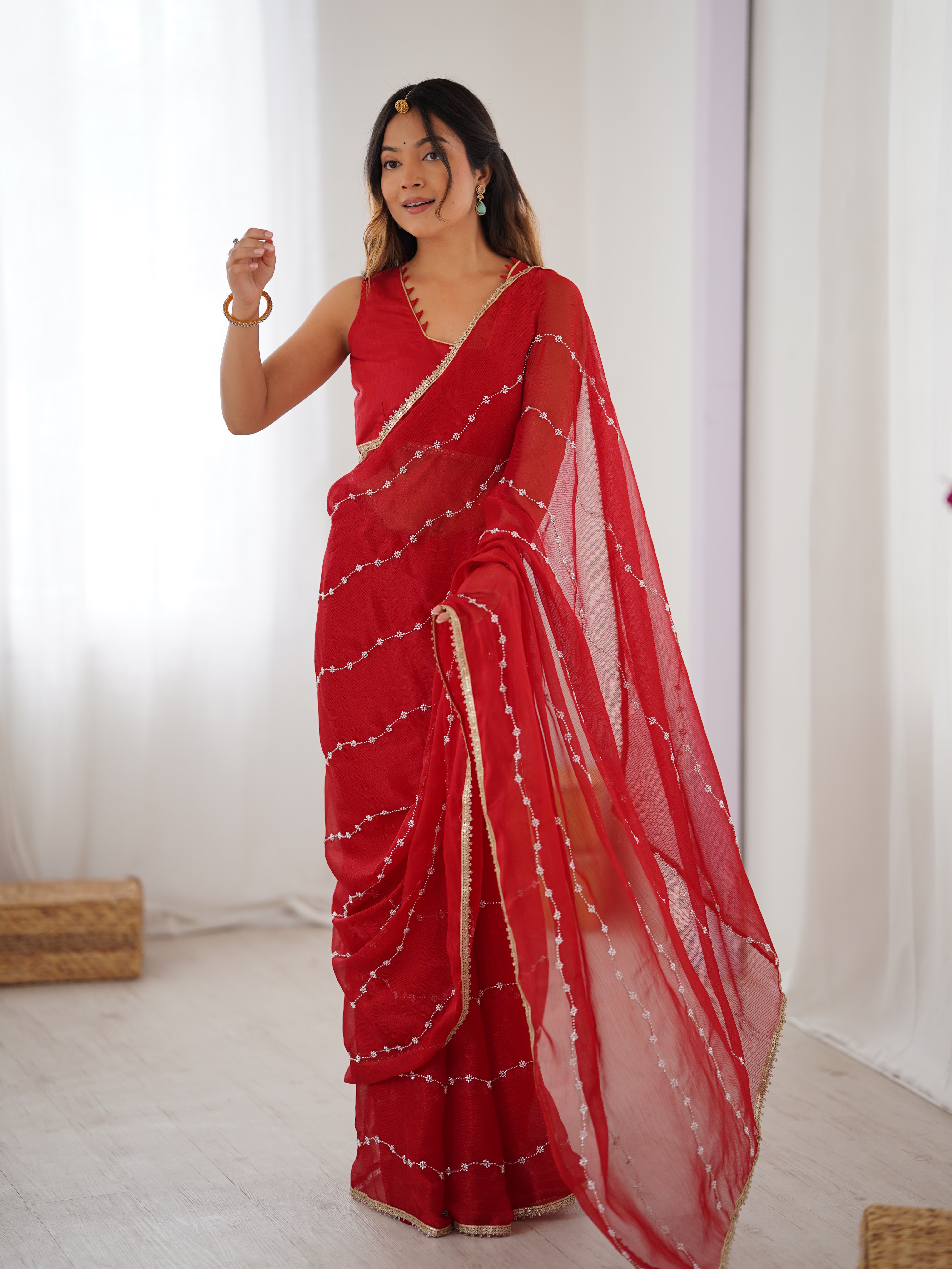
Earrings for a comfortable Konkani wedding saree look
Lightweight jhumkas, small chandbalis or stud-and-drop earrings are safer for a five-hour wedding than very large pieces with weak hooks. Earrings should sit securely without pulling the earlobe downward when the head turns. Silicone backs, screw backs or an earring support chain can distribute weight and reduce the chance of losing a piece during greetings and photographs.
For a saree with a wide zari border, medium earrings usually create a cleaner proportion than oversized shoulder-grazing designs. A maroon or wine saree can take antique gold or ruby-toned details, while a navy saree benefits from gold, pearl or clear-stone accents. A coral saree generally looks fresher with delicate gold, rose-gold or pearl elements rather than a dense antique set.
Necklaces that support a comfortable Konkani wedding saree look
A short necklace that rests flat above the blouse neckline is generally more comfortable than a long, heavy necklace that swings into the pleats. A lightweight chain with a pendant, a slim kasu-style necklace or a moderate choker can provide the classic focal point without pressing into the collarbone. Test the clasp in the blouse you'll actually wear because a high neckline changes the available space.
Use a longer necklace only when the blouse has a simple, open neckline and the saree border isn't already heavily patterned. The necklace should fall on fabric rather than directly on skin when possible; fabric reduces friction and prevents the pendant from repeatedly catching on the saree. A small extension chain also allows breathing room after a large wedding meal.
Small accessories in a Konkani wedding saree look with comfortable jewellery
Two to four bangles on each wrist are often easier to manage than a solid stack, especially when the wearer must hold a puja plate, adjust a child's clothing or eat comfortably. Glass bangles provide colour, while one slim metal bangle on each side can connect the jewellery to the saree border. Choose bangles that don't slide over the hand when the wrist bends.
A maang tikka, hair ornament or small nose ring should be optional rather than compulsory. A lightweight tikka secured with two bobby pins is less distracting than a heavy chain pulling at the hair parting. A clip-on nose ring can be considered for photographs, but it should be removed if pressure or pinching begins; comfort is more important than maintaining an accessory for the entire day.
How should a Konkani wedding saree look with comfortable jewellery coordinate blouse and zari?
Match the blouse to either the dominant saree colour or the metallic work, then allow one accessory colour to provide contrast. A matching blouse creates a continuous column of colour, while a metallic blouse highlights the border and makes the jewellery feel intentional. The best choice depends on whether the saree, blouse or jewellery is meant to lead the outfit.
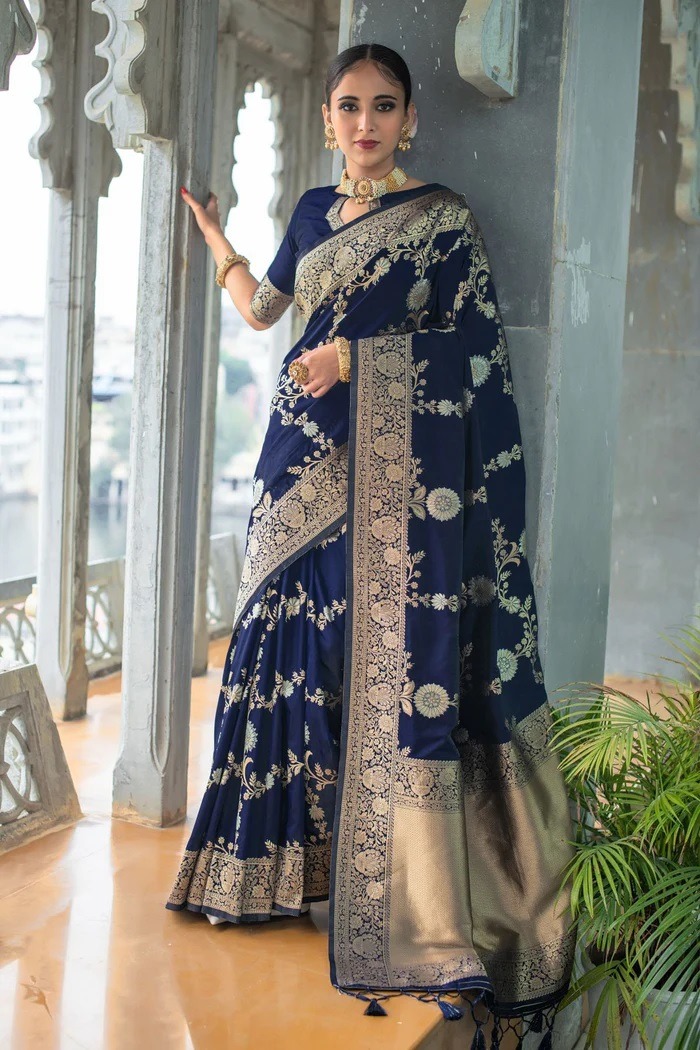
Maroon and wine sarees pair smoothly with marigold gold, muted beige, deep green and antique gold. Rani pink looks polished with a same-family pink blouse, a gold blouse or a restrained green accent. Navy blue can support a gold jacquard blouse, a pale pink blouse or a deeper blue blouse, but using several bright contrast colours can make the final look less cohesive.
Navy Blue Banarasi Silk Saree With Gold Jacquard Work already contains a strong pattern language, so a plain blouse and medium gold earrings may be more effective than a heavily embroidered neckline. Pink Gold Zari Banarasi Lichi Silk Saree With Blouse is useful when the blouse needs to be coordinated from the start. A pre-matched blouse also reduces last-minute alterations that can affect sleeve comfort and neckline placement.
How does a Konkani wedding saree look with comfortable jewellery stay secure?
A secure saree drape needs a well-fitted petticoat, correctly placed pleats and discreet pins at points that carry tension. The petticoat should sit firmly at the natural waist without restricting breathing, and the saree should be tucked evenly before pleating. A drawstring that's too loose causes downward movement, while a drawstring that's too tight can become uncomfortable during sitting.
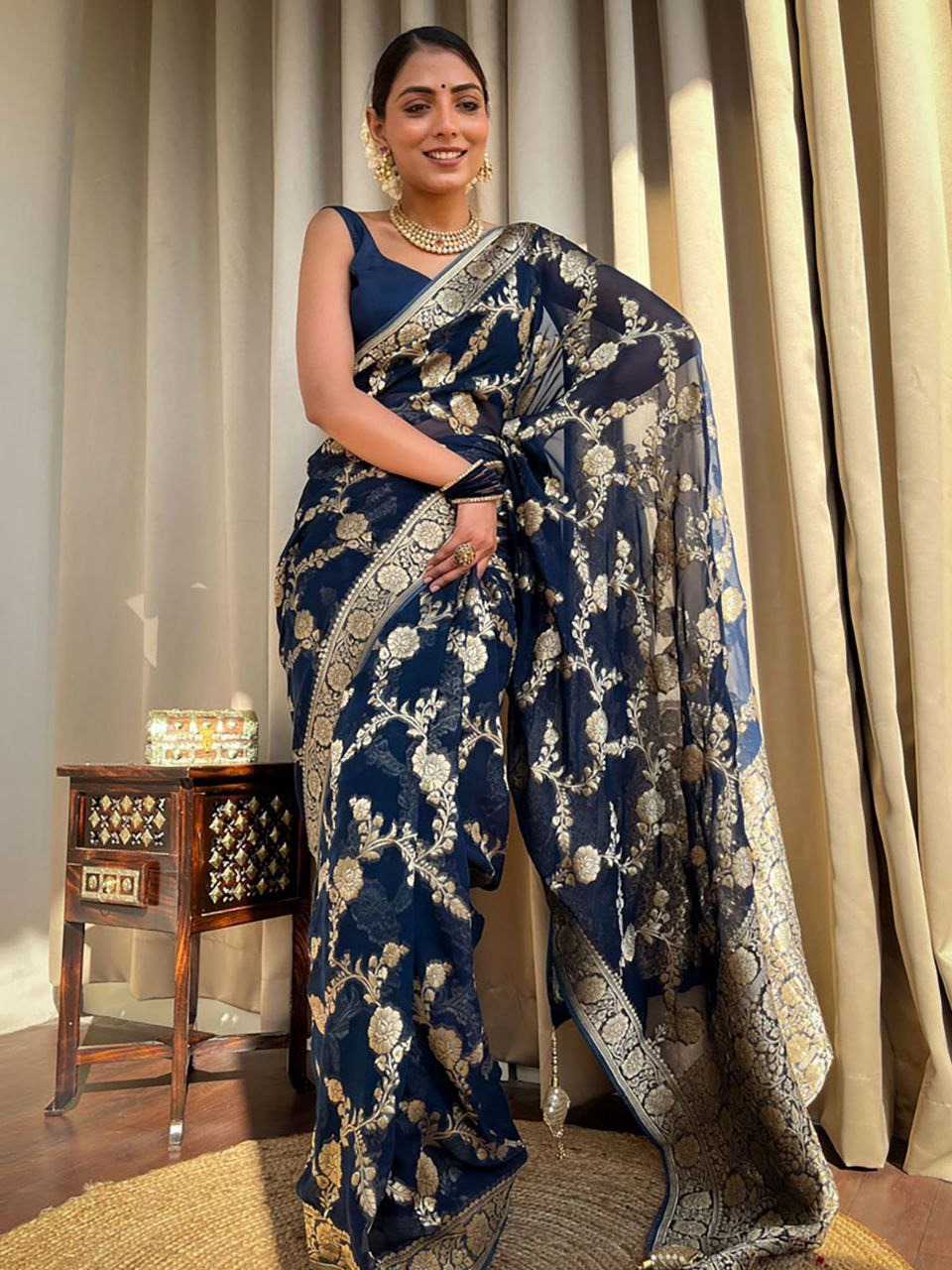
Make five to seven front pleats of similar width and press or finger-fold them before inserting the safety pin. Pinning the pleats near the waist, rather than only at the shoulder, keeps the front stable when walking. The pallu should reach approximately the lower calf or ankle depending on the drape; an excessively long pallu catches on footwear and furniture.
Use small, rust-resistant safety pins with a protective cap, and place pins from the inside wherever possible. One pin at the shoulder and one hidden pin near the blouse side seam are usually enough for a light pallu. Heavy borders may need a second shoulder pin, but too many pins can create visible bumps and damage delicate silk.
Wear the complete outfit once before the wedding, including footwear, blouse, jewellery and hairstyle. Sit for 10 minutes, walk up stairs if relevant, raise both arms and take a few photographs. This trial identifies a tight blouse armhole, a slipping pallu, uncomfortable earrings or a necklace clasp that presses into the neck before the ceremony begins.
Where can you shop for a Konkani wedding saree look with comfortable jewellery on a budget?
A practical budget depends on fabric, zari density, blouse inclusion and whether the saree is ready to wear, not only on the word "wedding" in the description. Compare the total outfit cost, including blouse stitching, fall and edging, alterations, jewellery and footwear. A lower-priced saree can require more tailoring, while a saree with an included blouse may reduce preparation costs.
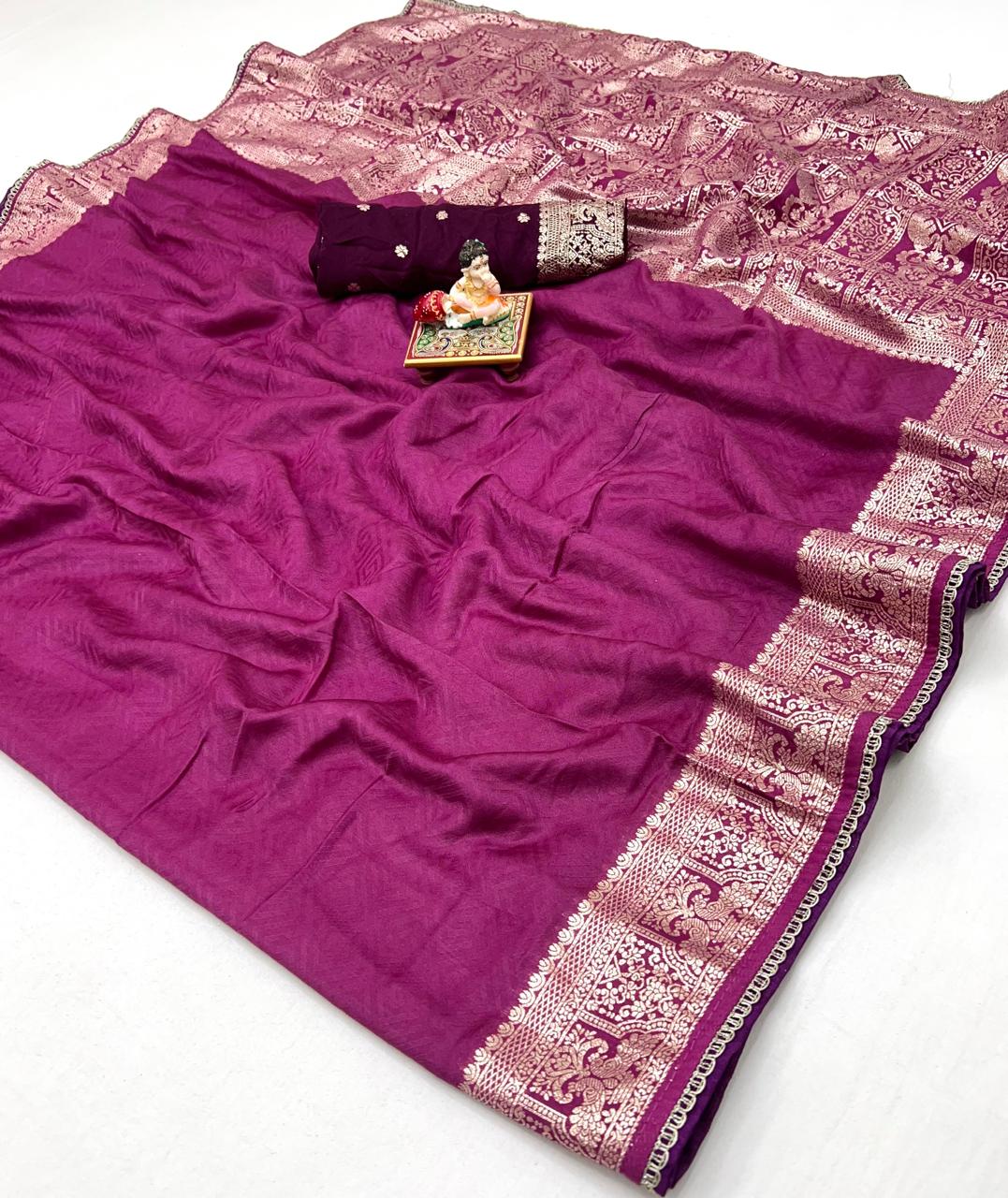
Sarees from Rs 1000 to Rs 1500 can suit a daytime guest outfit when the jewellery and blouse provide the ceremonial finish. Sarees Under 20% Off and Sarees Under 10% Off may be useful for comparing modest reductions without choosing solely on discount percentage. Check the final price, fabric description, border details and blouse information before deciding.
For larger promotions, Sarees Flat 60% Off and Sarees Flat 50% Off can widen the choice of colours and weaves, but a discount should not replace checking measurements and return conditions. For a wedding outfit, allow at least 10 to 14 days for blouse stitching and alterations when possible. Ordering earlier also gives time to test the drape and replace uncomfortable jewellery.
How should you finish a Konkani wedding saree look with comfortable jewellery?
Finish the outfit by editing rather than adding: one defined saree border, one comfortable focal jewellery piece, a secure drape and a blouse that permits arm movement create a complete look. Hair can be worn in a low bun, braided style or controlled half-up arrangement, depending on family custom and the ceremony. Fresh flowers, especially jasmine, can add tradition without adding weight to the outfit.
Keep makeup durable but breathable for a long day. Waterproof kajal or eyeliner, a comfortable lipstick and a small touch-up pouch are more useful than a very heavy base that becomes uncomfortable in coastal humidity. Wear the footwear during the trial so the saree hem can be adjusted safely before the wedding.
The most successful Konkani wedding styling allows the wearer to participate fully. If a necklace must be removed to eat, earrings cause pain after an hour or the pleats prevent sitting comfortably, the outfit needs editing. Heritage elegance becomes more convincing when the wearer can move naturally through every ritual, greeting and photograph.
Common Questions About a Comfortable Konkani Wedding Saree Look
What jewellery goes well with a Konkani wedding saree?
Gold-toned jhumkas, a moderate short necklace, slim bangles and a lightweight maang tikka work well with a Konkani wedding saree. Match yellow gold with gold zari and choose silver or two-tone jewellery when the saree has silver zari.
How can I make wedding saree jewellery more comfortable?
Choose medium-weight earrings with silicone or screw backs, a necklace that lies flat, and a limited number of bangles. Test every piece with the blouse and saree for at least 30 minutes before the wedding.
Which saree colours suit a Konkani wedding?
Maroon, wine, rani pink, coral and navy are versatile choices for a Konkani wedding saree. Gold zari works naturally with maroon and wine, while silver zari or white stones can complement cooler metallic details.
How do I stop a silk saree from slipping during wedding rituals?
Wear a correctly fitted petticoat, make five to seven even pleats and secure the pleats at the waist. Add one shoulder pin and one discreet side pin, then test the full drape while sitting and walking.
Can I wear a ready-to-wear saree to a Konkani wedding?
Yes, a ready-to-wear saree can work well for a guest or reception when the pleats and waistband fit securely. Trial the saree with footwear and jewellery for at least 30 minutes before the event.
How many jewellery pieces should I wear with a Banarasi saree?
Three to five coordinated pieces are usually enough: earrings, one necklace, bangles and an optional hair or forehead ornament. A Banarasi saree already has visual richness, so moderate jewellery often looks more polished than a complete heavy set.