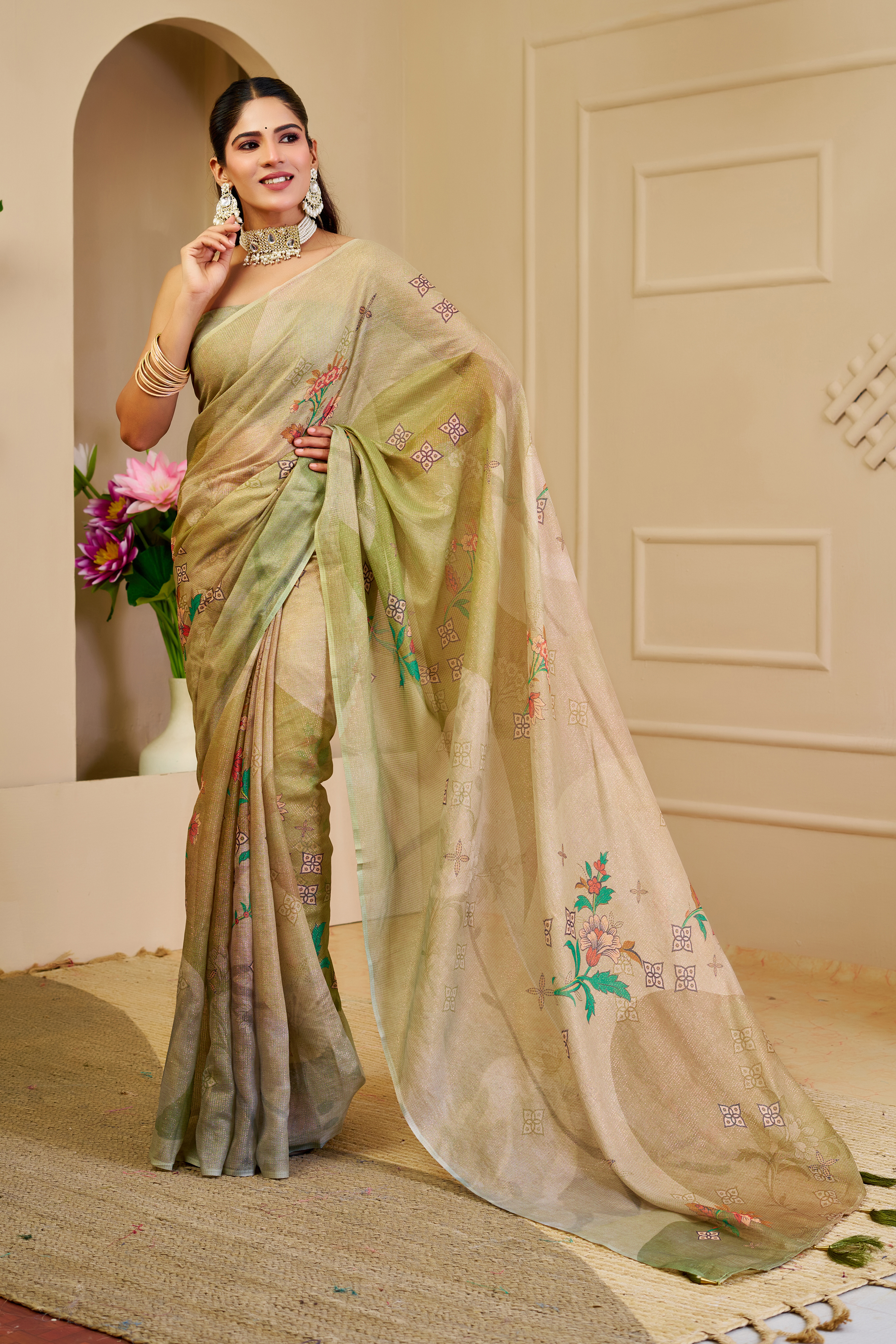
A Kashmiri Wanwun Gathering Outfit With Practical Winter Layers needs to handle two realities at once: a festive family celebration and genuine cold-weather movement. Wanwun refers to the traditional Kashmiri practice of women singing together during wedding celebrations, often while guests sit, stand, eat and move between rooms. A suitable outfit should therefore look ceremonial without becoming stiff, reveal rich Indian textile details without trapping heat, and remain comfortable through several hours of music and hospitality.
The most reliable formula combines a jewel-toned kurta or Anarkali, a straight or softly flared lower half, a warm inner layer, a substantial dupatta and shoes that can manage cold floors. Colour can carry the Kashmiri mood through rust, mustard, ivory, taupe, deep green or berry shades, while zari, jacquard, embroidery and tonal texture provide the celebratory finish.
What should a Kashmiri Wanwun gathering outfit include?
A Kashmiri Wanwun gathering outfit should include a festive Indian base, one insulating layer, a secure dupatta and comfortable footwear. The base garment can be a kurta set, Anarkali or coordinated kurta-and-palazzo outfit, depending on how formal the family function will be.
Choose a base layer that allows the body to move freely. A long-sleeved kurta over a thin cotton or thermal camisole is more practical than a sleeveless blouse under a heavy shawl if the event involves singing, serving food or sitting on the floor. A calf-length or ankle-length silhouette also protects the legs from drafts without creating excess fabric around the feet.
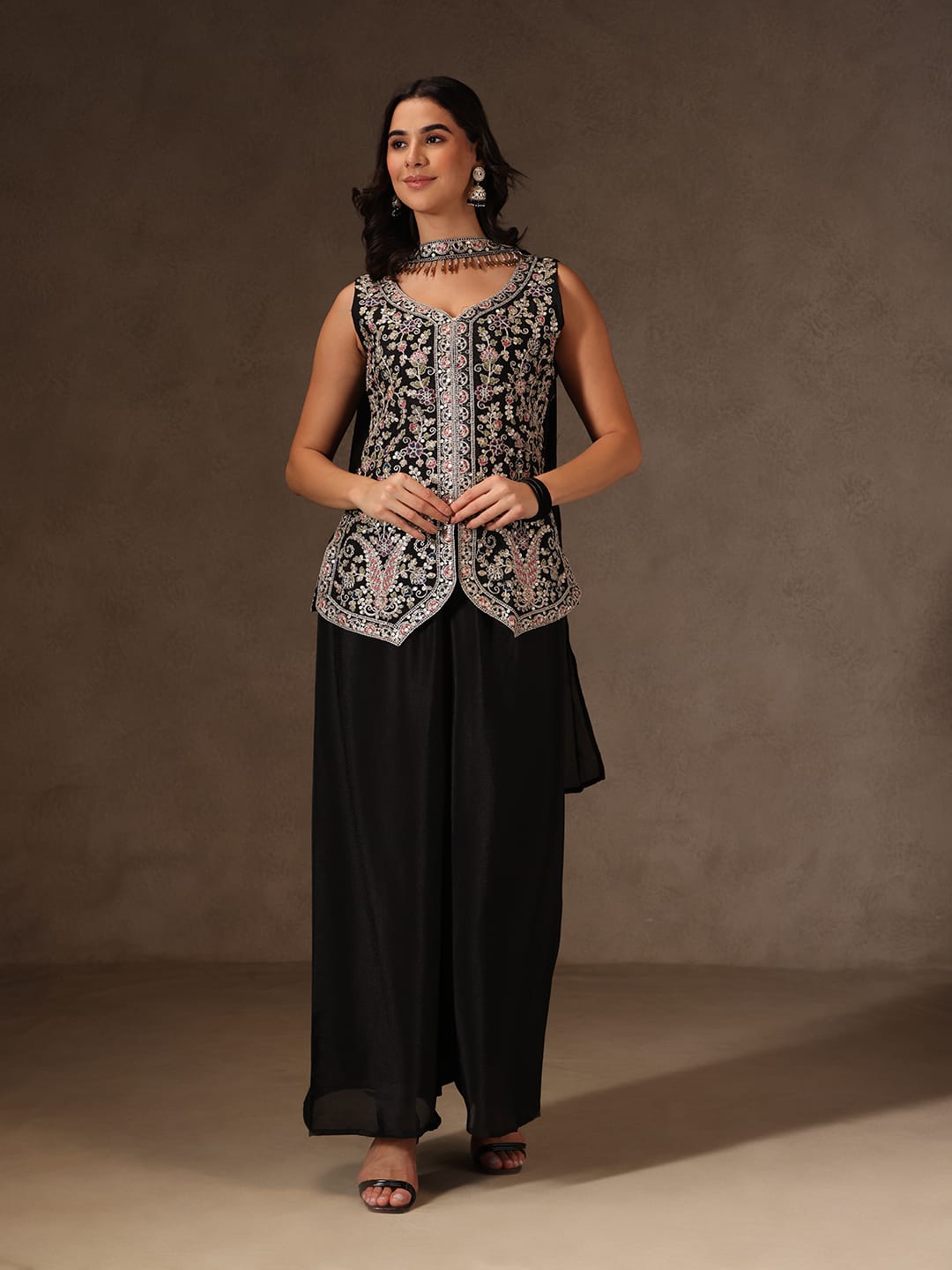
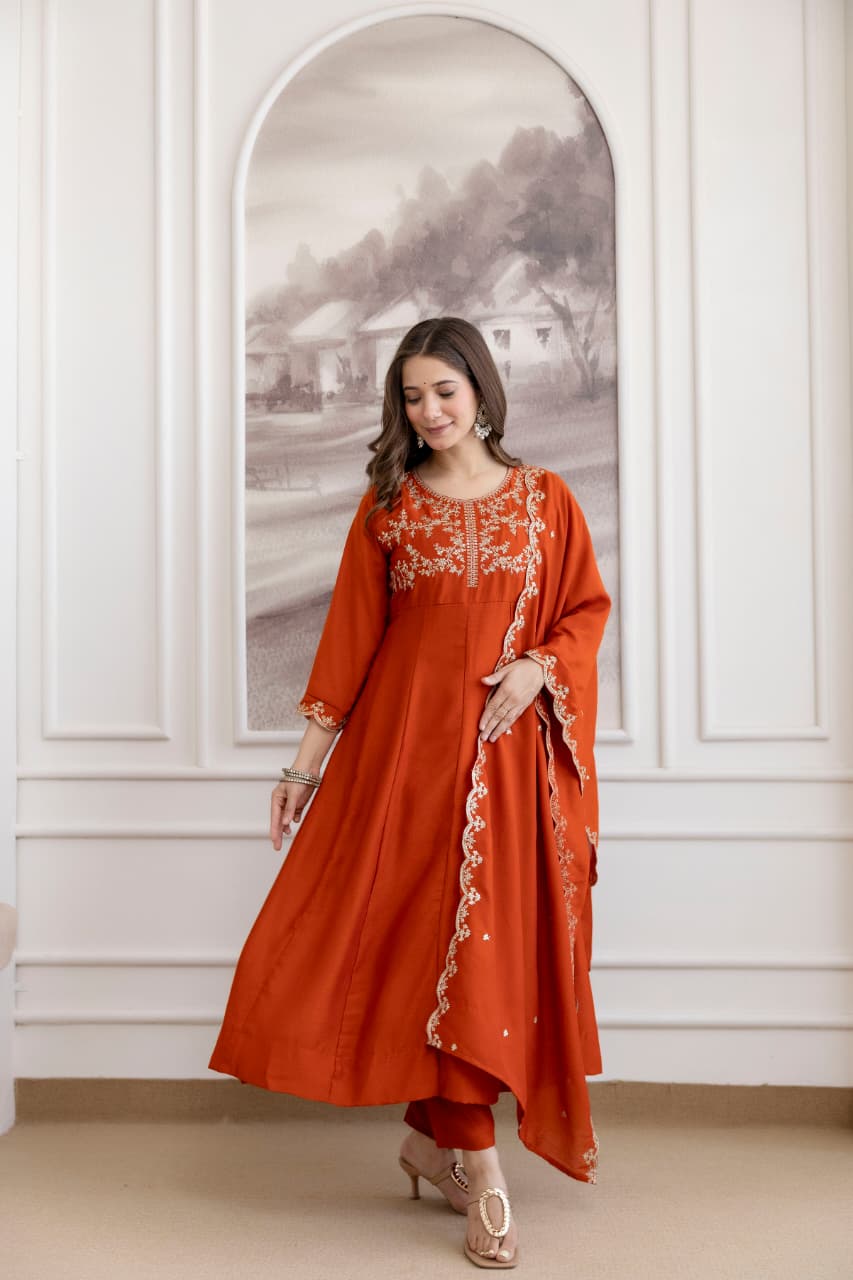
Vichitra silk works well for a festive base because its slightly structured surface supports embroidery and photographs neatly. The Rust Orange Vichitra Silk Embroidered Kurta Pant Set offers an useful example of a coordinated silhouette: the warm rust shade feels autumnal, while the pant construction gives more freedom than a narrow churidar. The Rust Orange Embroidered Vichitra Silk Kurta Set Online provides another way to use the same colour family when a time-honoured kurta-set proportion feels more appropriate.
For a softer, lighter appearance, the Rust Orange Chanderi Silk Embroidered Kurta Set for Women combines the glow of rust with the fine, airy character associated with Chanderi. Chanderi can feel less bulky than dense brocade, which makes it valuable when a wool shawl or quilted coat will be added over the top.
Which colours suit a Kashmiri family Wanwun function?
Rust, mustard, ivory, wine, forest green and muted taupe suit a Kashmiri family Wanwun function because these shades echo autumn landscapes, saffron, spices, walnut wood and winter textiles. Colour choice should also reflect the time of day and the lighting inside the gathering space.
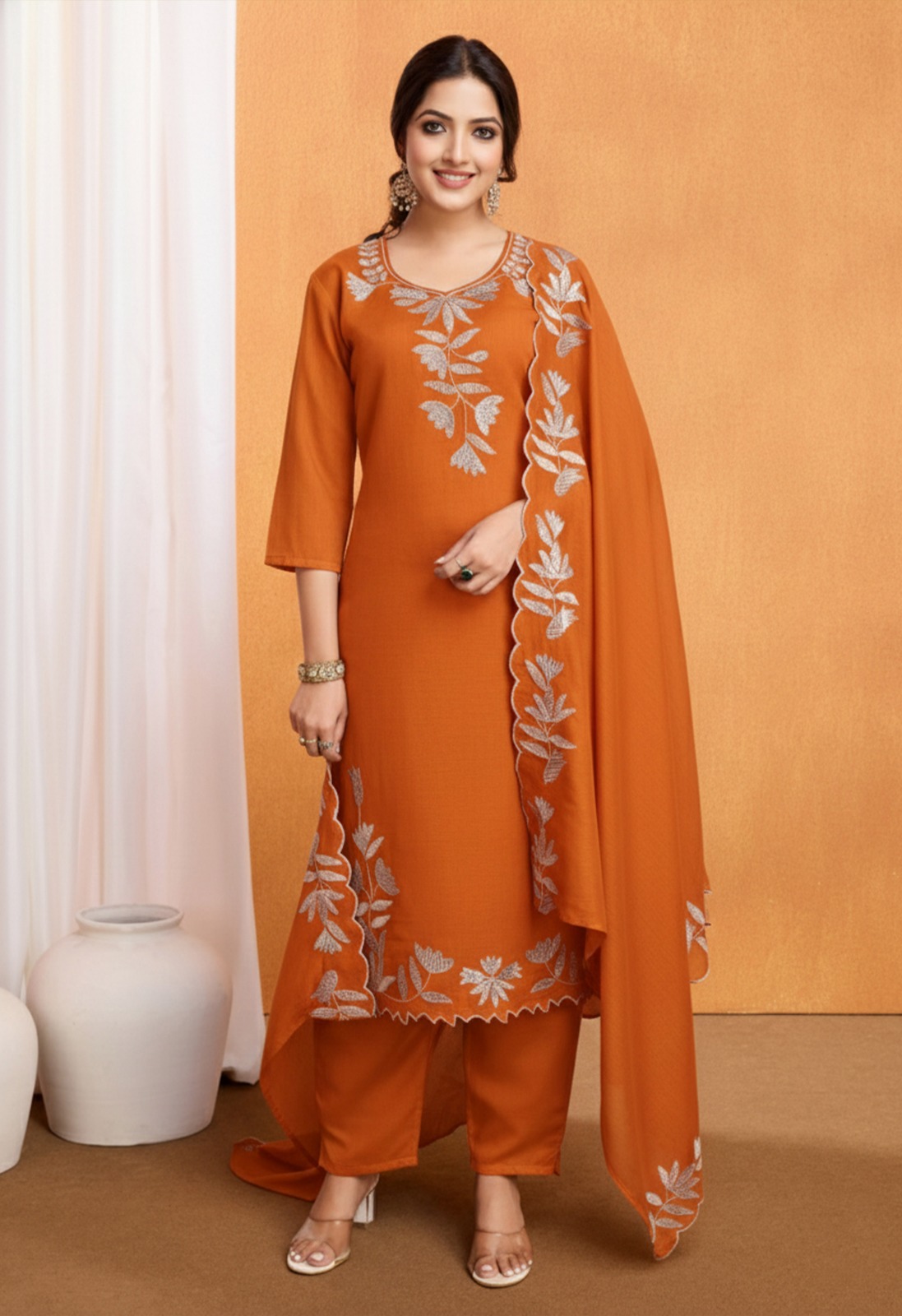
Rust orange is especially effective for daytime and early-evening functions because it looks warm in natural light and remains visible in indoor photographs. Mustard creates a similarly festive effect but has a brighter, more celebratory quality. The Mustard Silk Embroidered Kurti Palazzo Dupatta Set can support a relaxed family-function look because the palazzo shape creates airflow and the matching dupatta keeps the outfit visually complete.
Ivory becomes more formal when paired with gold-toned embroidery, pearl accessories or a deep-coloured shawl. The Ivory Anarkali Suit With Sequin Zari Embroidery And Dupatta demonstrates how an ivory base can carry ceremony without relying on a bright colour. Zari catches warm indoor lighting, while the Anarkali shape creates movement when the wearer walks or joins a group photograph.
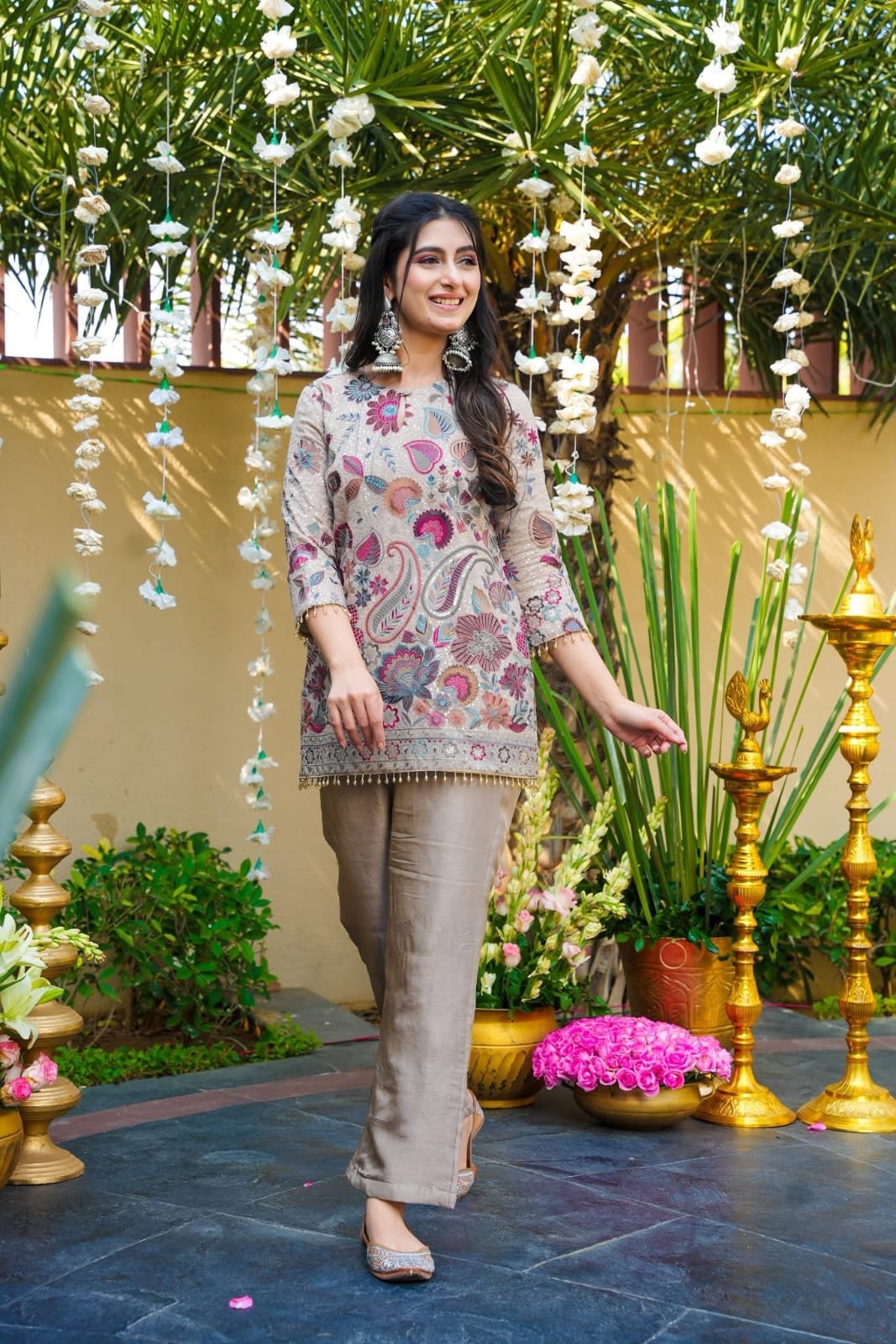
Taupe is useful for guests who prefer understated dressing. The Modern Taupe Vichitra Silk Embroidered Co-Ord Set for Women can be warmed with a rust shawl, maroon potli bag or antique-gold earrings. A neutral base also lets one strong accessory, such as a Kashmiri-style embroidered shawl, become the focal point without making the complete outfit visually crowded.
How can you add warmth without making ethnic wear bulky?
You can add warmth without bulk by using thin, breathable layers close to the body and reserving thicker insulation for the outermost layer. A cotton thermal top, fitted full-sleeved blouse or fine merino vest usually performs better beneath a kurta than a thick sweater with raised seams.
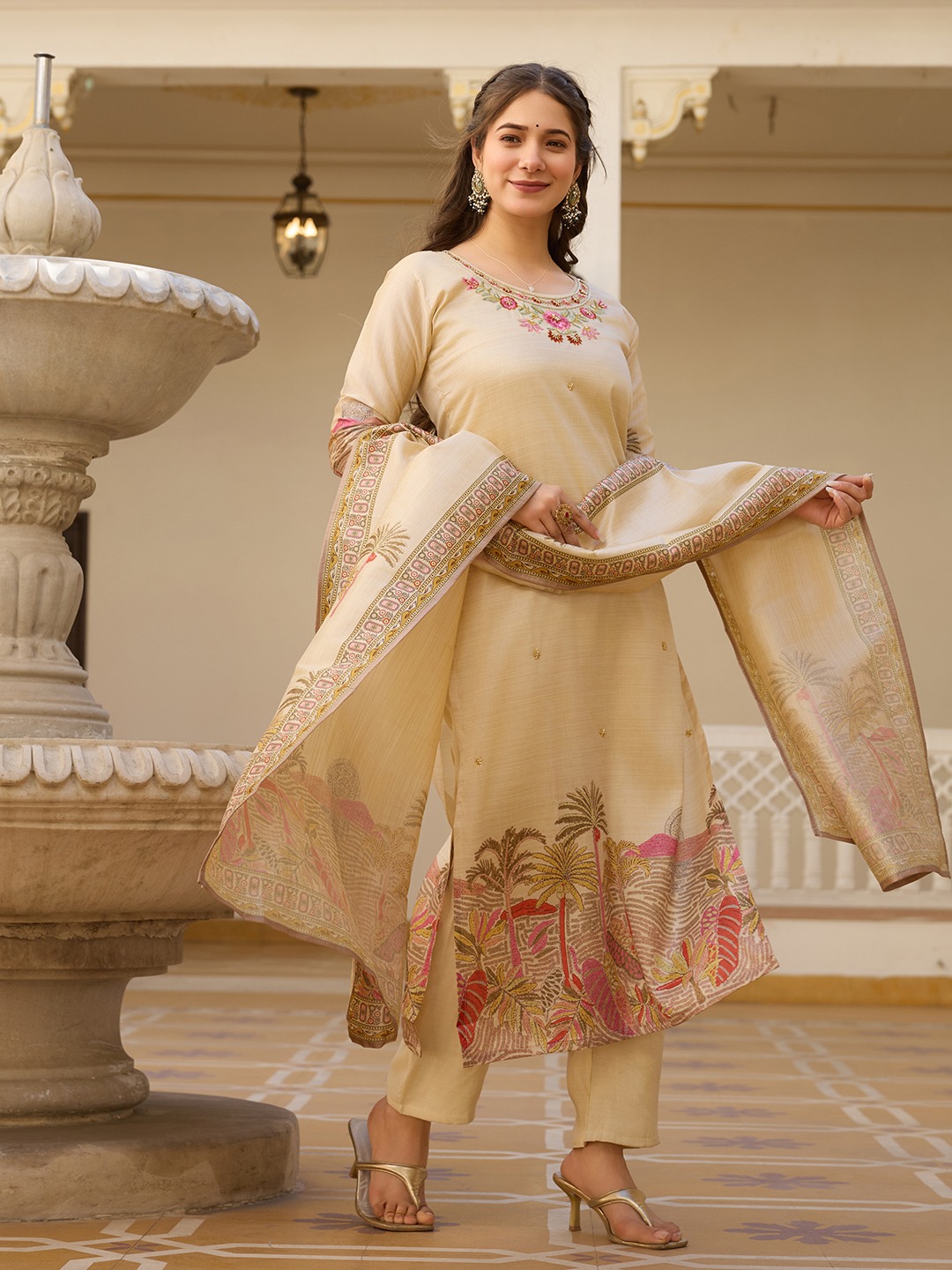
Build the layers from the inside out
Start with a smooth inner layer in cotton, modal or lightweight wool. The inner garment should have a low neckline and close-fitting sleeves if the kurta has a narrow armhole. Avoid high collars beneath embroidered necklines because the collar can bunch under the kurta and compete with the neckline detail.
Add the kurta or Anarkali as the visible foundation. For particularly cold venues, a slim sleeveless quilted jacket can sit beneath a large dupatta, but the jacket should end above the widest part of the hip if the outer garment is fitted. A long cardigan works best with a straight kurta or co-ordinated set rather than a heavily flared Anarkali.
Finish with a wool shawl, pashmina-style wrap or lined stole. Drape one end over the opposite shoulder and secure the centre with a discreet brooch or safety pin. This arrangement leaves both hands available for greeting relatives, holding a cup of kahwa or joining a group activity. A shawl that's approximately 70 to 80 centimetres wide brings coverage while remaining easier to manage than an oversized blanket wrap.
Protect the feet and hands
Cold floors can make a beautiful outfit uncomfortable within minutes, so footwear and socks deserve the same attention as the kurta. Wear thin wool-blend socks with closed-toe juttis, low block-heel pumps or ankle boots that disappear beneath the trouser or Anarkali hem. Avoid footwear with a slippery leather sole if the gathering includes a courtyard, tiled entrance or snow-damp walkway.
Gloves are rarely necessary indoors, but a small embroidered potli or structured clutch can hold hand cream, tissues and a compact pair of foldable flats. Keep the bag light because a Wanwun gathering often involves standing, sitting and moving between rooms rather than remaining at a formal dining table.
Which silhouettes work best for singing, sitting and moving?
Relaxed kurta sets, palazzo suits and moderately flared Anarkalis work best for singing, sitting and moving at a Wanwun gathering. These silhouettes allow the knees and hips to move freely while preserving a dressed-up appearance.
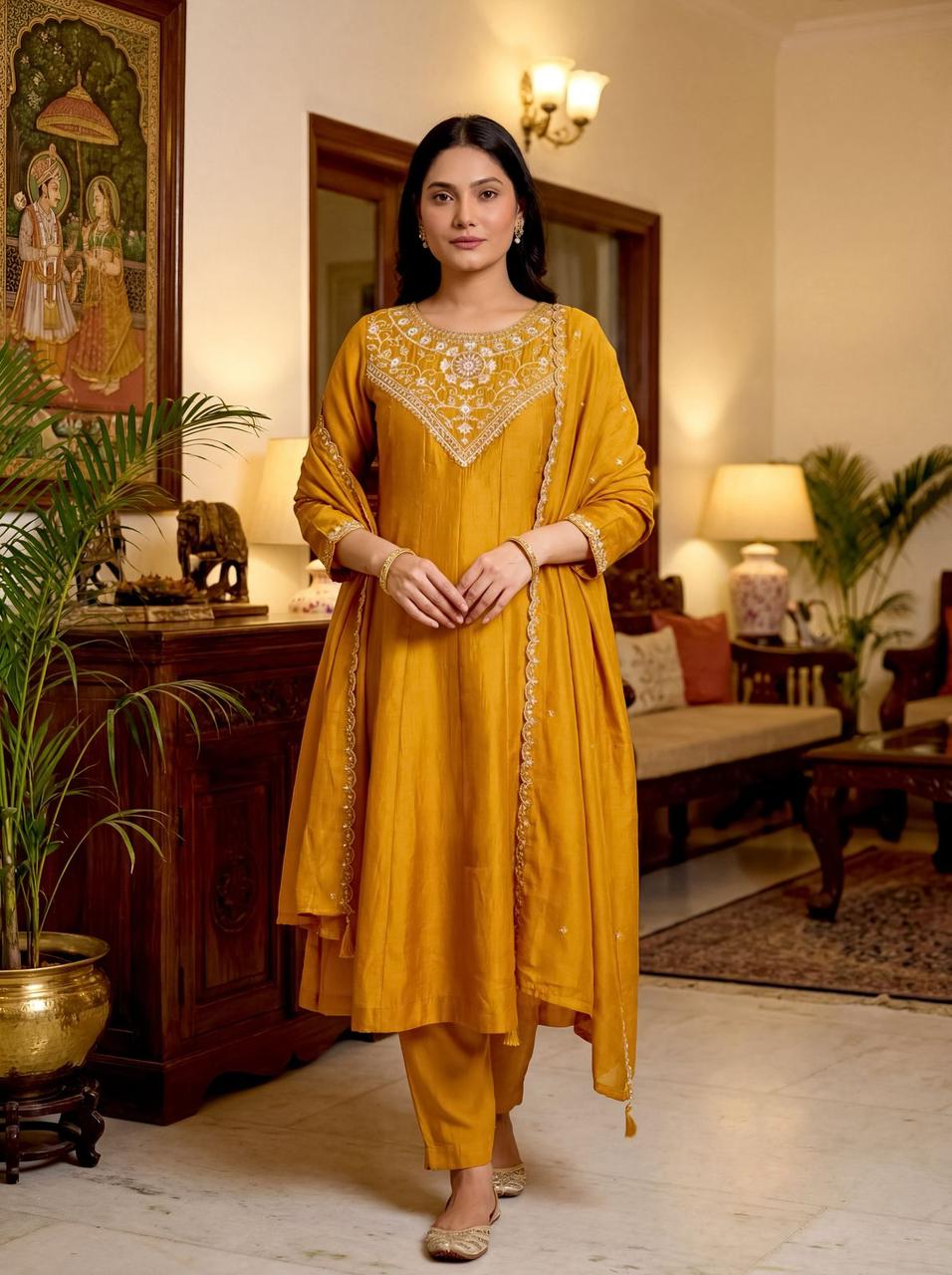
A straight kurta with cigarette pants looks polished and occupies less space when several family members sit together. A palazzo gives more ease around the legs, especially when paired with a shorter kurta or tunic. The Mustard Yellow Jacquard Kurta Set with Embroidery & Dupatta is an example of a look that can feel festive without requiring a wide skirt or a heavy underskirt.
An Anarkali creates a graceful outline for photographs, but the flare should be practical. A moderate flare that begins below the waist is easier to manage on stairs and around chairs than a very full floor-length skirt. Check the hem with the shoes you plan to wear; a gap of roughly 1 to 2 centimetres above the floor reduces the chance of stepping on the fabric.
Co-ord sets can look contemporary while remaining appropriate for a family function. A coordinated top and trouser combination is especially useful when the weather changes during the day because a shawl or jacket can be removed without disturbing the proportions. The Modern Taupe Vichitra Silk Embroidered Co-Ord Set for Women suits this approach when paired with a contrasting embroidered wrap.
How should embroidery, zari and accessories be balanced?
Embroidery and zari should be balanced with one dominant accessory rather than layered at equal intensity across the entire outfit. If the kurta already has dense sequin or zari work, choose earrings and a shawl with texture but limited sparkle.
Zari is a metallic thread or metal-like decorative element used to create luminous motifs, borders and surface patterns. Zari can look especially striking against ivory, rust and mustard, but heavy zari can also catch on wool layers. Place a smooth cotton or silk lining inside a jacket or shawl where it will rub against dense embroidery.
Choose earrings according to the neckline. Jhumkas or medium chandbalis complement a round or V-shaped kurta neckline, while long earrings may be enough for a heavily decorated Anarkali. A maang tikka is suitable for a wedding-related Wanwun event when the family dress code is formal, but it's not essential for a smaller home gathering.
Use Kashmiri references with restraint. A paisley motif, embroidered shawl, deep wine accent or small silver pendant can suggest regional context without turning the outfit into a costume. Cultural appreciation is stronger when the styling remains comfortable, respectful and appropriate to the family hosting the function.
How do you style a Kashmiri Wanwun gathering outfit for different venues?
You should style a Kashmiri Wanwun gathering outfit differently for a heated home, a draughty community hall and an outdoor or partially covered venue. Venue temperature, seating and walking surfaces affect the right fabric and layer combination.
For a heated home
A heated home usually requires one light inner layer and a detachable shawl rather than a coat. Chanderi silk, Vichitra silk or jacquard can provide enough visual richness without overheating the wearer once guests gather in a small room.
Choose juttis or soft closed-toe flats if shoes must be removed at the entrance. A compact brooch keeps the dupatta from falling into serving dishes, and a slim waist belt can subtly define a straight kurta without restricting breathing.
For a community hall
A community hall often needs a thermal inner layer, a full dupatta and a medium-weight shawl because large rooms can remain cold even when many guests are present. Select a fabric with enough structure to hold its shape under a wrap, and carry a second pin so the dupatta can be secured at the shoulder and waist.
Choose a palazzo or relaxed trouser when the seating is low or floor-based. A narrow trouser may pull at the knee during prolonged sitting, while a wide palazzo can become inconvenient if the hem is too long.
For an outdoor or semi-open gathering
An outdoor or semi-open gathering requires a wind-resistant outer layer, warm socks and a hem that stays clear of damp ground. Wear a lined long coat over the kurta, then add the decorative shawl after reaching the warmer seating area so the shawl remains clean and presentable.
Deep rust, mustard and ivory photograph well against winter greenery and stone surroundings. The Mustard Silk Embroidered Kurti Palazzo Dupatta Set can be made more weather-ready with a long wool coat in camel or chocolate brown, while the Rust Orange Chanderi Silk Embroidered Kurta Set for Women can be paired with a heavier shawl to compensate for Chanderi's lighter hand.
How should you prepare the outfit before the Wanwun function?
You should prepare the outfit at least one day before the Wanwun function by checking the fit, securing the layers and testing the complete look while sitting and walking. Preparation prevents common winter problems such as visible thermals, slipping dupattas and hems that catch under shoes.
Try the kurta, inner layer, trousers or palazzo, dupatta, shawl and footwear together. Sit on a low chair or cushion for five minutes to check whether the waistband, sleeves or hem feels restrictive.
Steam silk and synthetic-blend garments from the reverse side at a safe temperature, or use a garment steamer several centimetres away from embroidery. Direct high heat can flatten texture, mark zari or create a shine on dark fabric.
Pack two small safety pins, fashion tape, tissues and a spare hair tie. These items solve most minor draping and movement problems without adding weight to the bag.
Keep the outfit on a broad hanger and store the shawl folded over acid-free tissue if possible. Do not hang a heavily embellished dupatta from a narrow wire hanger because concentrated weight can distort the fabric.
After the function, air the garments away from direct sunlight before storing them. Dry-clean heavily embroidered silk only when necessary, and follow the care label because Vichitra silk, Chanderi silk and jacquard may respond differently to moisture and heat.
A thoughtful combination of colour, movement and insulation makes winter dressing feel intentional rather than improvised. The strongest look will allow the wearer to listen to Wanwun songs, greet relatives, sit comfortably and appear polished in photographs from the first welcome to the final cup of kahwa.
Practical Questions About Dressing for a Winter Kashmiri Wanwun
What should women wear to a Kashmiri Wanwun gathering in winter?
Women can wear a festive kurta set, Anarkali or palazzo suit with a thin thermal or cotton inner layer, closed-toe footwear and a warm shawl. Rust, mustard, ivory, taupe, wine and forest green work well for a family function.
Can I wear an Anarkali to a Wanwun gathering?
Yes, an Anarkali is suitable for a Wanwun gathering when the flare is moderate and the hem does not drag. Choose a length that works with closed-toe shoes and add a warm inner layer or shawl for cold venues.
How do I layer ethnic wear without hiding the embroidery?
Use a thin fitted inner layer underneath the kurta and place the thickest insulation on top as a shawl, coat or wrap. Keep the front neckline and main embroidered panel visible, and secure the outer layer at one shoulder rather than covering the entire garment.
Which fabrics are suitable for a winter family function?
Vichitra silk, jacquard and lined silk blends provide structure and a festive appearance, while Chanderi silk works well with a warmer shawl because it is comparatively light. Cotton or fine wool is practical for the layer closest to the skin.
What footwear is best for a winter Wanwun function?
Closed-toe juttis, low block heels, ankle boots or cushioned flats are practical choices for cold floors and outdoor movement. Wear thin wool-blend socks if the shoe shape allows, and avoid slippery soles on wet or tiled entrances.
How can I keep a dupatta secure during a family gathering?
Pin the dupatta at the shoulder and use a second discreet pin near the waist if you expect to sit, sing or move frequently. A lightweight brooch can secure the fabric attractively while keeping both hands free.