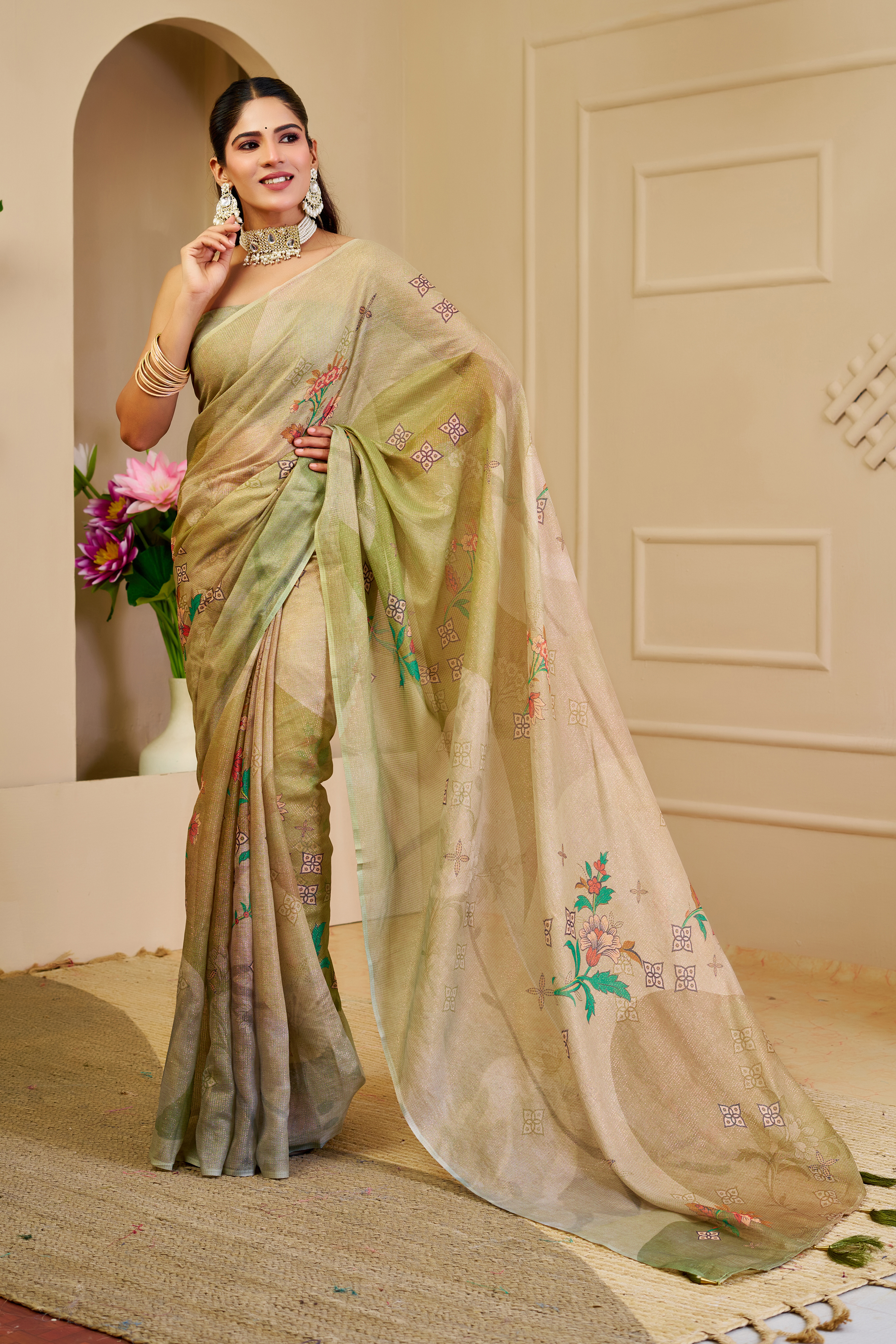
A girls sharara outfit for a family sangeet needs to do more than look festive in photographs. It should allow a child to sit on the floor, climb steps, join a dance performance and remain comfortable through several hours of music and mingling. The most reliable choice combines a soft inner layer, a secure waistband, lightweight embellishment and colours that suit the lighting of a decorated evening venue.
Sharara sets work particularly well for a family sangeet because the wide-legged trousers create movement without the constant adjustment required by a long skirt. A short kurti, anarkali-style top or peplum blouse gives the outfit a traditional silhouette, while a dupatta can be pinned securely or left out for younger children. The final look depends less on the number of decorations and more on proportion, fabric weight and practical finishing.
What makes a sharara outfit suitable for a family sangeet?
A sharara outfit is suitable for a family sangeet when the trousers permit easy movement, the top stays in place and the embellishment doesn't scratch or add excessive weight. These three checks matter more than matching every accessory to the outfit.
A sangeet usually involves movement that a formal dinner doesn't. Children may rehearse a dance, sit cross-legged during rituals, walk between indoor and outdoor spaces and spend time near bright stage lights. A sharara with a flexible waistband and a hem that stays above the floor is therefore safer and more comfortable than a very long, heavily layered design.
Look for a top that ends around the hip or upper thigh rather than one that reaches the ankle. A shorter top shows the flare of the sharara and reduces the chance of stepping on the hem. For a younger child, a side zip or back opening should be easy for an adult to operate, while older girls may prefer a more structured neckline and a dupatta styled over one shoulder.
Embellishment also deserves a close inspection. Mirror work, zari and sequins can look beautiful under sangeet lighting, but rough backing or exposed thread can irritate the arms and waist. Run a hand over the inside seams before buying, and check that metallic details are firmly attached rather than loosely hanging.
How should you choose the fabric and fit?
Choose a breathable, light-to-medium-weight fabric with a secure waistband and enough room at the hips for sitting and dancing. Fabric choice affects comfort, fall, photographs and how easily the outfit can be cared for after the event.
Fabrics for warm indoor venues
Cotton, cotton silk, Chanderi silk and lightweight georgette are useful choices for a crowded sangeet held in a warm hall. Chanderi silk has a crisp, airy hand and a subtle sheen that photographs well without feeling as dense as brocade. Cotton-based fabrics absorb some moisture and are easier to wear for children who become warm while dancing.
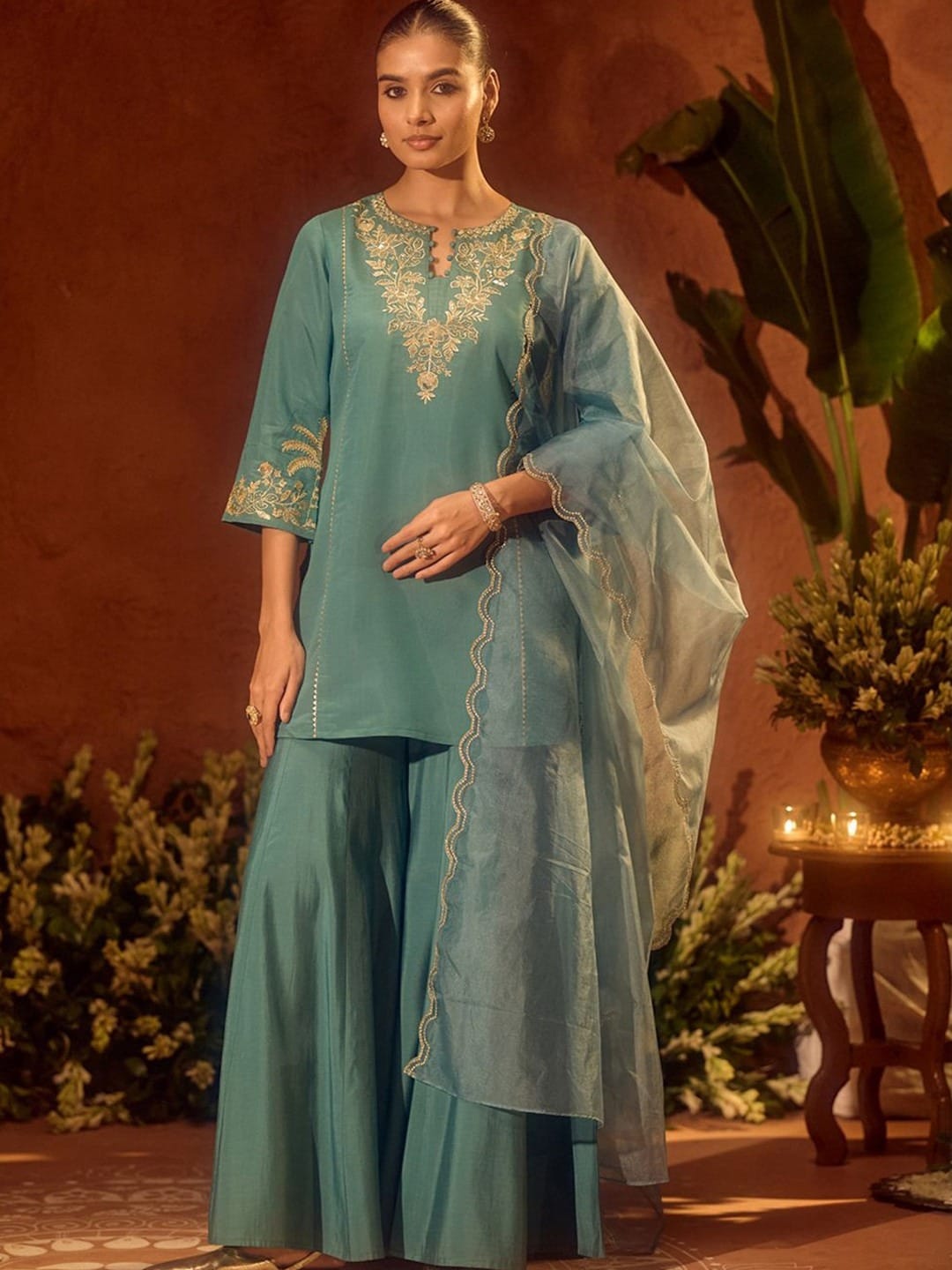
The Pastel Blue Chanderi Silk Embroidered Sarara Set for Women illustrates why a translucent, lightly structured fabric can suit a festive family gathering. Although the product is labelled for women, its colour and fabric provide an useful styling reference for an older girl when the size and proportions are appropriate. A cotton lining beneath Chanderi silk can improve comfort and reduce transparency.
Georgette creates a fluid fall and works well for a dupatta, but a very slippery georgette layer can slide from a child's shoulder. A concealed shoulder tack, a small safety pin placed from the inside or a pre-pleated drape can keep the fabric controlled without making the outfit look stiff.
Fabrics for cooler evenings
Silk blends, velvet trims and lined tissue fabrics can work for an evening sangeet in a cooler season, but heavy brocade and dense velvet should be used sparingly. A child may tolerate a richly decorated yoke but feel uncomfortable in trousers covered with thick embroidery.
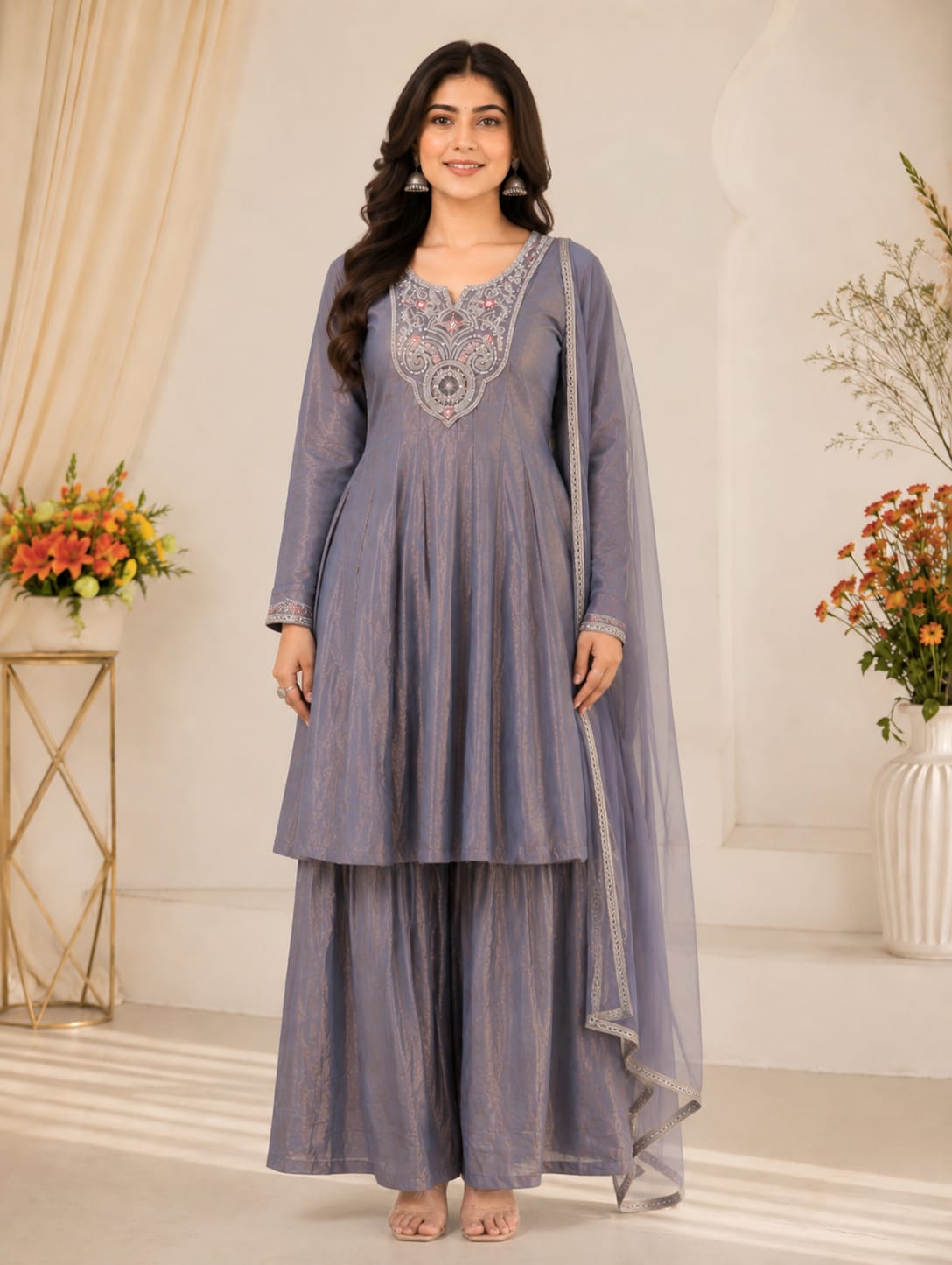
The Grey Fandy Silk Sarara Set with Embroidery and Dupatta demonstrates how a deeper neutral can provide a dressier base for an evening event. Grey can be softened with rose, lilac or silver accessories, while a lighter inner lining prevents the fabric from feeling too heavy against the skin.
Checking the fit
Measure the child's chest, waist, hip and full height instead of relying only on age labels. A sharara waistband should sit securely without digging in, and the hem should clear the floor by roughly 2 to 4 centimetres when the child is wearing the intended footwear.
Allow modest ease around the hips and thighs so the fabric doesn't pull when the child sits or climbs stairs. Excessive extra length isn't a substitute for a good fit because bunching at the ankle can cause trips. If alterations are needed, shortening the hem and adjusting the waistband are usually more useful than changing the flare.
Which colours work for a girls sharara outfit for a family sangeet?
Pastels, jewel tones and warm neutrals all work for a girls sharara outfit for a family sangeet, provided the colour is balanced with the venue lighting and the child's comfort. A single dominant colour with one metallic or contrasting accent usually looks more polished than several competing shades.
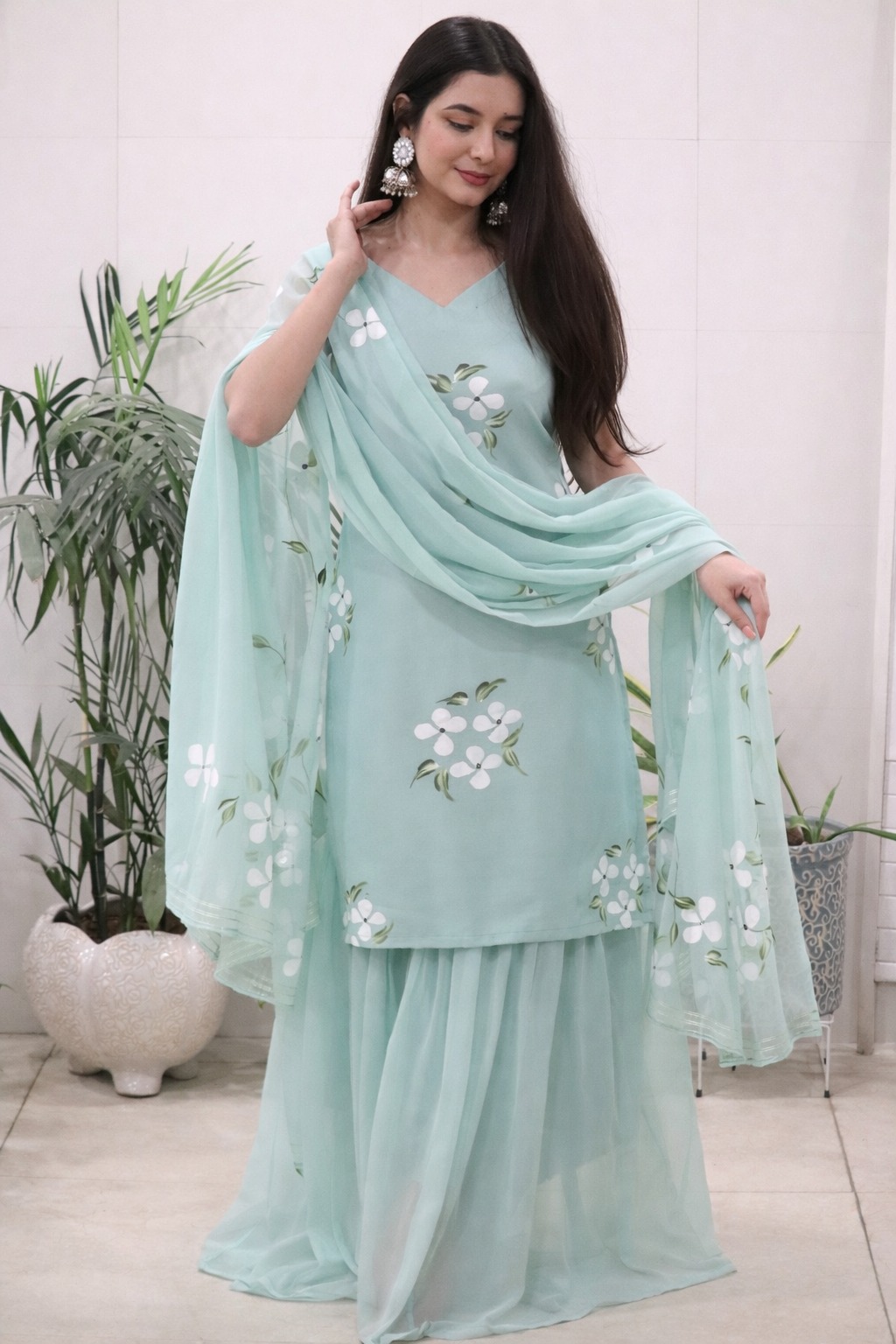
Pastel pink, mint, lavender and powder blue suit daytime ceremonies and softly lit indoor venues. Pastels also make mirror work and silver zari visible without creating a visually heavy outfit. The Elegant Mint Green Handpainted Sharara Set with Dupatta shows how a fresh green base can carry a festive look when the artwork supplies the decoration.
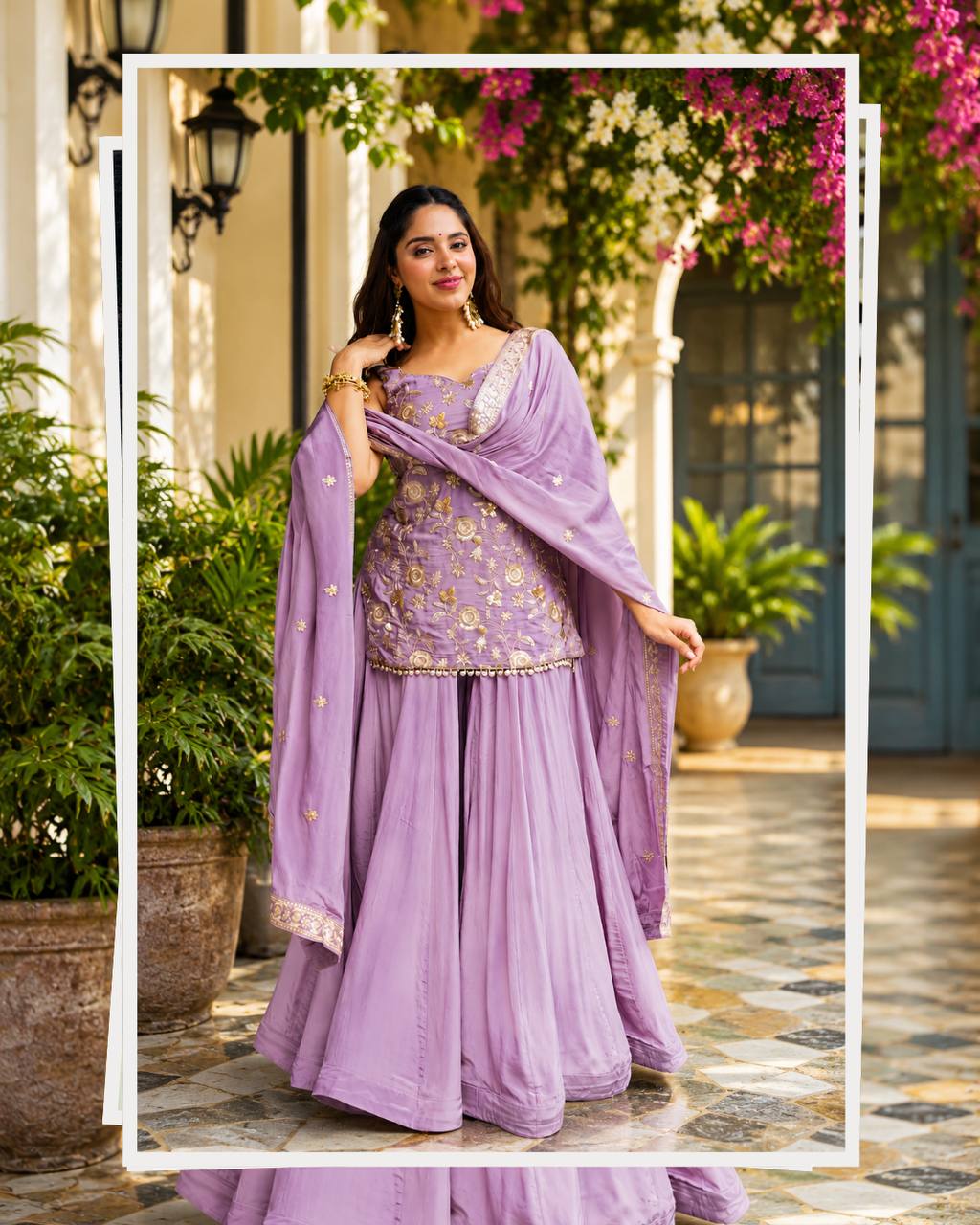
Lavender is particularly useful when the family palette includes pink, lilac or silver. The Lavender Zari Sequins Sarara 3 Piece Suit Set | Varnavi offers a reference for combining a cool pastel base with metallic detail. The look can be made more youthful with a white hair ribbon, pearl studs or silver sandals rather than adding more sequins.
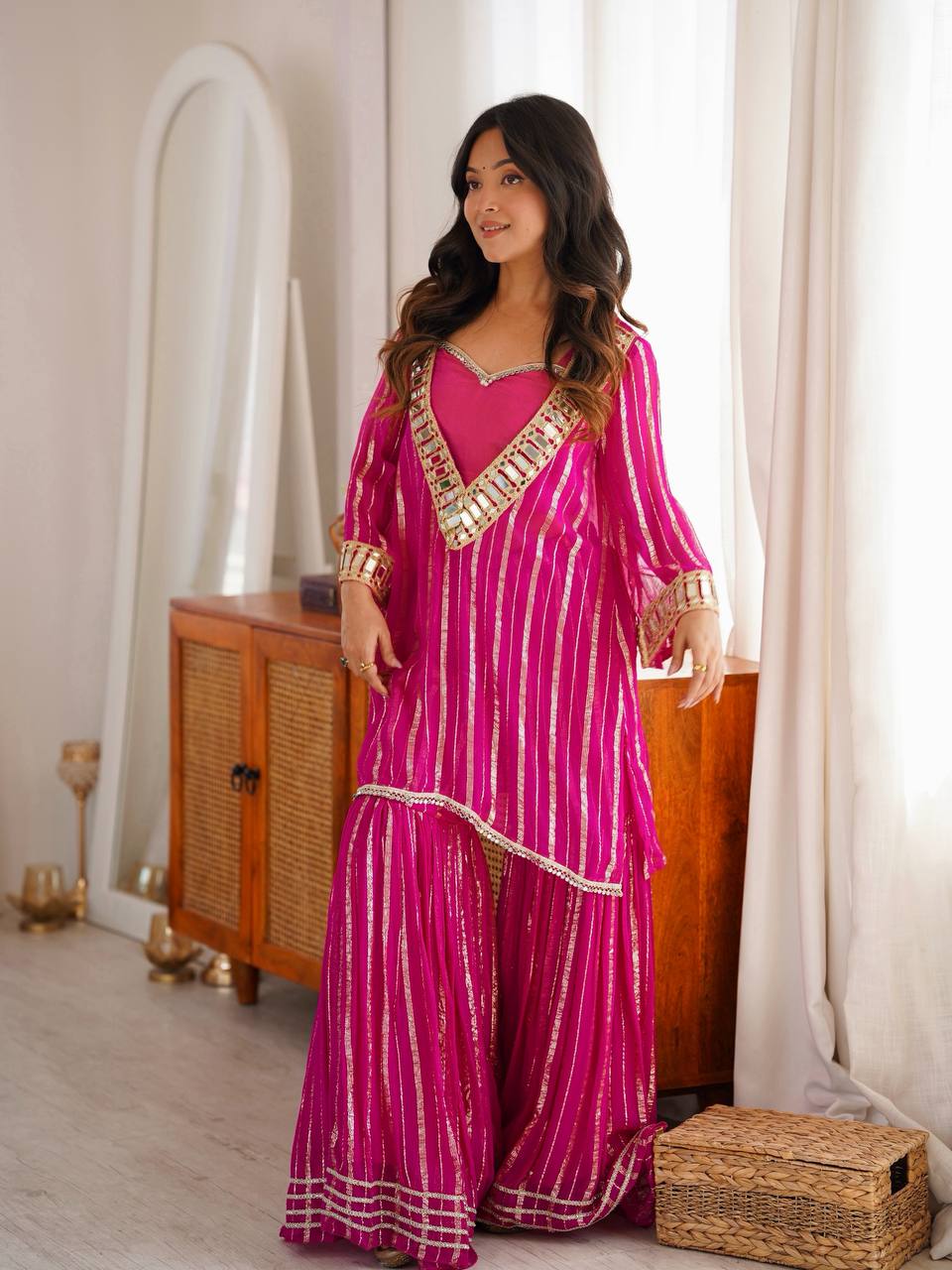
Pink and coral create a cheerful appearance for a dance-focused celebration. The Pink Mirror Work Zari Sharara Suit Set Online - Varnavi provides an example of a brighter combination in which mirror work catches stage light. With a strong pink outfit, keep the footwear and hair accessories simple so the face remains the focus.
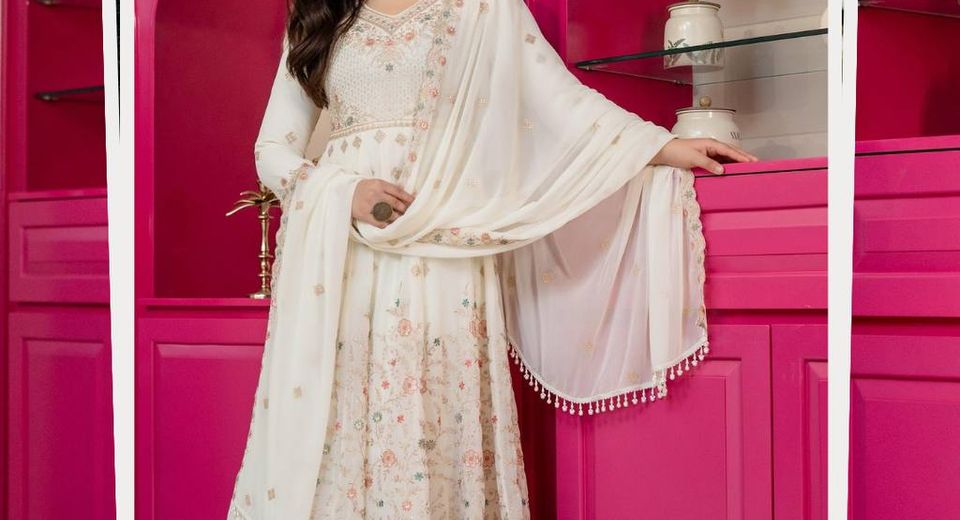
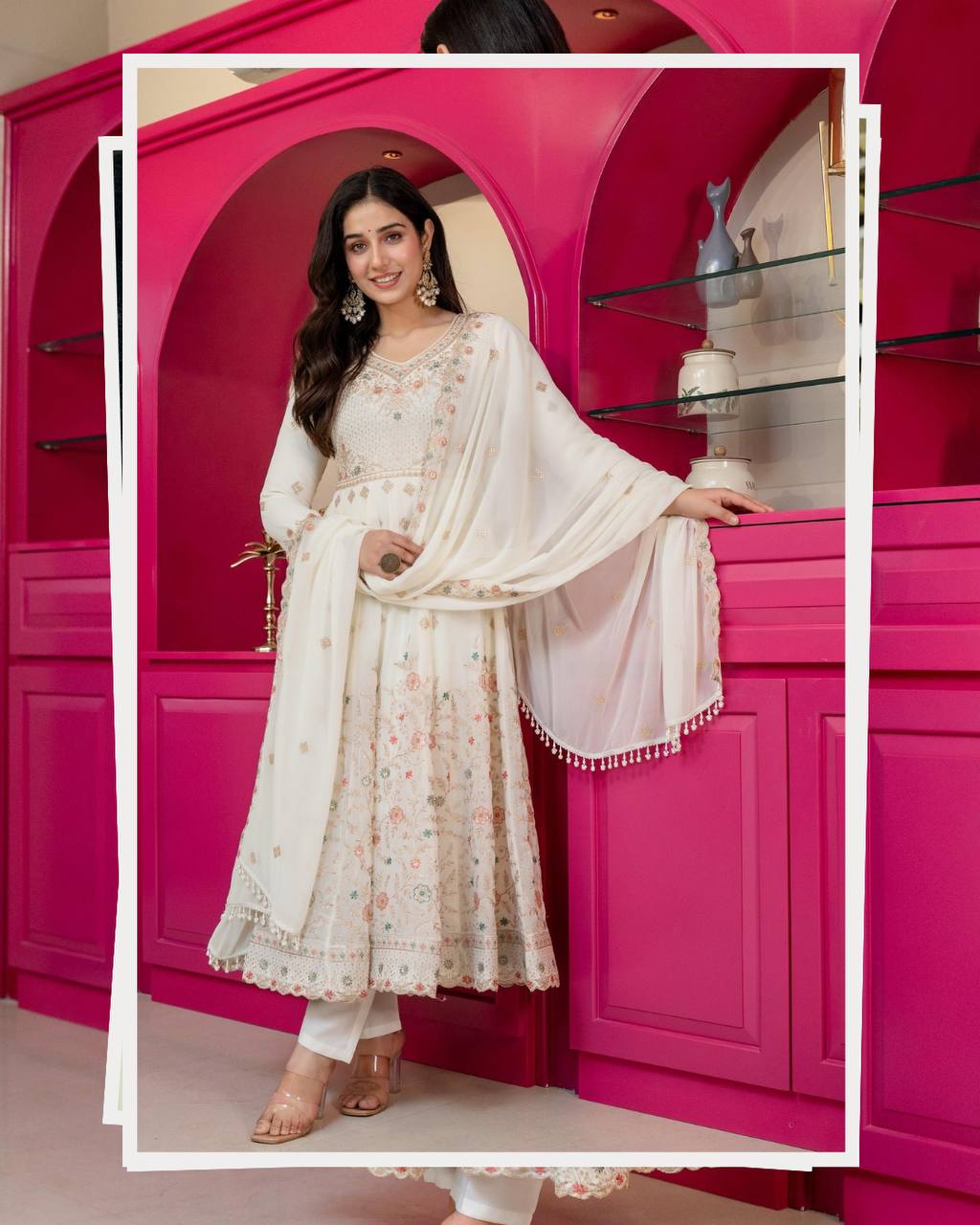
Ivory, cream and champagne are elegant but need practical handling. Cream shades show food stains, turmeric and dust quickly, so they're better for a child who can manage careful eating or for a shorter ceremony. The Ivory Anarkali Suit With Sequin Zari Embroidery And Dupatta gives a softer neutral direction, especially when paired with blush, gold or pale green accessories.
Red and deep maroon can be lovely, but some families reserve those colours for the bride or close bridal party. When the sangeet has a coordinated dress code, ask about the palette before selecting a saturated shade. A child's outfit can remain festive with rose pink, plum, teal or mustard without competing with the bride's clothing.
How can you style the dupatta safely for dancing?
A pinned shoulder drape or a compact front-wrapped dupatta is the safest styling choice for a child who will dance at a sangeet. A loose, floor-length dupatta can catch on chairs, footwear and other dancers.
For girls under about eight years old, a dupatta is optional if the outfit already has a decorated top. If a dupatta is included, fold it lengthwise, place it over one shoulder and secure it at the shoulder seam with a concealed pin. A second discreet pin at the waist can stop the fabric from swinging forward during movement.
Older girls may prefer a classic one-shoulder drape with the front edge kept above the knees. Pre-pleating the fabric at home saves time at the venue and produces a cleaner silhouette in photographs. Avoid placing pins directly against the neck or under the arm, where friction is most likely.
An anarkali-style top may need less draping because its volume already creates a complete silhouette. The Cream Embroidered Silk Anarkali Suit Set with Sarara | Varnavi is an useful example of how a long, flowing top can be paired with wide trousers. When adapting the idea for a girl, confirm that the top doesn't reach the floor and that the lining is soft.
Which accessories complete the look without overdoing it?
Small earrings, one comfortable bracelet, a secure hair accessory and practical footwear are enough to complete a girl's sangeet outfit. Accessories should echo the outfit's embroidery rather than repeat every decorative element.
For mirror work or silver zari, choose pearl, crystal or silver-toned accessories. Gold zari works naturally with warm gold studs, a slim bangle or a small potli bag. Avoid long necklaces for young children because chains can catch during play and may feel uncomfortable under a dupatta.
Footwear should have a closed or secure upper, a non-slip sole and a low heel or flat profile. Embellished juttis, cushioned sandals and soft slip-ons are more suitable than high wedges. Test the shoes indoors for at least 20 minutes before the event, preferably with the same socks or tights the child will wear.
Hair styling should also account for movement. A braid, low bun or half-up style secured with fabric-covered elastics will usually last longer than loose curls. Flowers can be added to a braid, but fresh flowers should be checked for pollen and strong fragrance if the child has sensitive skin.
A small crossbody potli or wristlet can hold tissues and a hair tie, but children performing on stage should not carry a bag. Keep essentials with an accompanying adult and leave both hands free for dancing.
How do you prepare the outfit before the event?
Prepare the outfit at least one day before the sangeet by checking fit, seams, closures, footwear and the condition of every embellishment. Early preparation prevents last-minute problems that can't be solved at the venue.
Try on the complete outfit with the final shoes and hairstyle. Ask the child to sit on the floor, raise both arms, walk quickly and turn around. These simple movements reveal whether the waistband slips, the sleeves restrict motion or the trouser hem catches under the foot.
Keep a small emergency kit containing safety pins, a needle and thread, double-sided fashion tape, stain-removal wipes, blister plasters and a spare hair tie. Pack a thin cotton camisole or slip if the top feels scratchy. A lightweight cardigan or shawl can be useful if the venue is strongly air-conditioned.
don't iron sequins, mirror work or metallic zari directly with a hot iron. Turn the garment inside out, use a pressing cloth and select a low temperature suitable for the base fabric. Steam from a distance only when the care label permits it, because excess heat and moisture can loosen adhesive-backed decoration.
If a cream or pale outfit is selected, carry a clean cotton cloth rather than rubbing a stain aggressively. Blot food or drink from the surface and follow the garment's care instructions after the event. Professional dry cleaning is safer for heavily embellished silk, while washable cotton blends may tolerate gentle hand washing in cool water.
How can one outfit work for the whole family sangeet?
One outfit can work for the full family sangeet when the styling is designed around the child's schedule rather than a single photograph. A flexible sharara base can move from a daytime family gathering to an evening dance segment with small changes in accessories.
For a daytime function, pair a pastel sharara with minimal jewellery, flat juttis and a simple braid. Before the dance performance, add a lightweight dupatta pin, a small bindi if the child is comfortable wearing one and a decorative hair clip. These changes create a more finished stage look without requiring a second outfit.
For an evening event, a deeper colour or metallic border can provide definition under artificial light. The Pastel Blue Chanderi Silk Embroidered Sarara Set for Women can be styled with silver details for a cool evening palette, while the Elegant Mint Green Handpainted Sharara Set with Dupatta can be warmed with gold-toned hair accessories.
Family coordination doesn't require identical clothing. A girl can share one colour with a parent's Banarasi silk saree, Kanjeevaram border or zari blouse while keeping her own silhouette playful and comfortable. Coordinated accents, such as matching pink, ivory or mint, look more natural than duplicating the exact embroidery.
The best final test is simple: the child should be able to smile, sit, walk and dance without repeatedly adjusting the outfit. When breathable fabric, secure construction and restrained accessories are handled first, a sharara becomes festive clothing that supports the celebration instead of distracting from it.
Common Questions About Choosing a Girls’ Sharara for a Family Sangeet
What should a girl wear to a family sangeet?
A girl can wear a sharara set, lehenga, anarkali or salwar suit to a family sangeet. A sharara is especially practical because its wide-legged trousers allow easier movement while a short kurti or anarkali top keeps the outfit festive and comfortable.
How do I choose the right size sharara for a child?
Measure the child's chest, waist, hip and height, then compare those measurements with the seller's size chart. The waistband should stay secure without digging in, and the hem should sit about 2 to 4 centimetres above the floor with the intended footwear.
Is a dupatta safe for a young girl at a sangeet?
A dupatta can be safe when it is short or folded, securely pinned at the shoulder and kept away from the floor. For younger children or active dancers, leaving out the dupatta is often the most comfortable option.
Which fabric is best for a girls sharara outfit for a family sangeet?
Cotton, cotton silk, Chanderi silk and lightweight georgette are practical choices for most indoor sangeets. Select a lined fabric with soft seams, and avoid very heavy brocade or dense embellishment if the child will dance for long periods.
Can a girl wear pastel colours to an evening sangeet?
Pastel colours work well for an evening sangeet when they include reflective details such as zari, sequins or mirror work. Lavender, mint, ivory and pastel blue can look defined under stage lighting when paired with suitable silver or gold accessories.
What shoes go best with a girls’ sharara for a wedding event?
Flat juttis, cushioned sandals or secure slip-on shoes work best with a girls' sharara. Choose a non-slip sole and test the footwear before the event; high heels and loose shoes are less suitable for dancing and stairs.