Bihu brings music, dancing, visits and long hours of movement, so festive clothing needs to look beautiful without becoming difficult to wear. A Bihu Celebration Outfit for Teenagers Exploring Assamese Weaves can combine the spirit of the mekhela chador with fabrics, colours and drapes that feel manageable for a young wearer. The result should show respect for Assamese textile traditions while allowing room for personal style, comfortable footwear and energetic celebrations.
Assam has three major Bihu festivals, each connected with a different seasonal rhythm. Rongali or Bohag Bihu in April is the celebration most people associate with new beginnings, husori performances, dancing and bright traditional clothing. Kongali Bihu and Bhogali or Magh Bihu have different agricultural and ceremonial contexts. The styling ideas below focus mainly on Rongali Bihu, while the textile knowledge applies more broadly.
What makes a Bihu outfit recognisably Assamese?
A recognisably Assamese Bihu outfit usually includes the mekhela chador, Assamese silk or cotton, red-and-white colour references, and woven motifs associated with local culture. The mekhela is the lower wrap, while the chador is the upper cloth draped over the shoulder and torso. Together, the two pieces create the traditional silhouette worn by many Assamese women and girls.
Muga silk, known for its naturally warm golden colour, is one of Assam's best-known textiles. Pat silk has a smooth, pale appearance, while eri silk has a softer, slightly textured character and is often valued for its warmth. Handloom cotton offers a lighter choice for daytime gatherings and humid weather. Each fabric behaves differently: silk has more lustre and structure, whereas cotton is generally easier to move in and maintain.
Traditional Assamese weaving also uses motifs that carry visible meaning. The jaapi, a conical Assamese hat, appears in regional design vocabulary. Floral forms, birds, geometric borders and the khorika motif can appear in woven textiles. The gamusa, a rectangular cloth traditionally associated with Assamese identity and hospitality, typically features a white ground with red woven borders or motifs. A narrow red-and-white accent can therefore communicate a Bihu reference without requiring a fully traditional ensemble.
Teenagers don't need to reproduce every formal element to dress thoughtfully. A saree with a red border, a woven blouse, a gamusa-inspired stole or Assamese jewellery can provide a clear cultural connection. The strongest outfit usually has one or two deliberate references rather than many unrelated embellishments.
A Bihu Celebration Outfit for Teenagers Exploring Assamese Weaves
A Bihu Celebration Outfit for Teenagers Exploring Assamese Weaves works best when the base garment is breathable, the drape is secured, and the styling includes one identifiable Assamese detail. A lightweight saree, short-sleeved blouse and flat footwear can be more practical than a heavily layered outfit for a celebration involving dancing and outdoor movement.

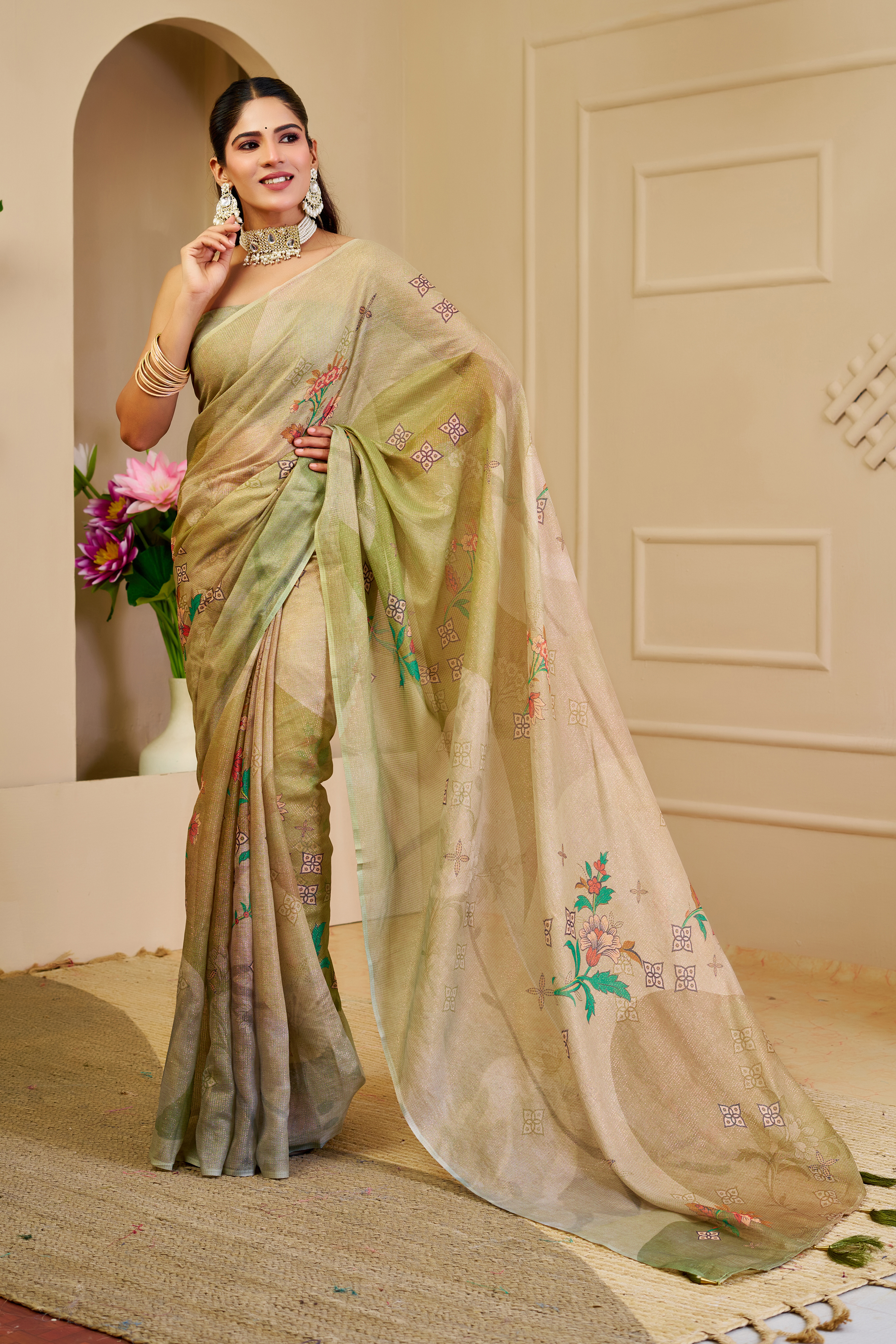
A teenager wearing a saree for the first time can choose a pre-pleated or firmly pinned drape. Cotton sarees are often easier for beginners because they don't slide as much as very smooth silk. A saree with a defined zari border can still look festive without requiring a heavily embellished blouse. The Pastel Floral Tissue Handloom Cotton Saree with Zari Weaves, for example, gives a softer colour direction for a daytime Bihu gathering while retaining handloom texture and festive shine.
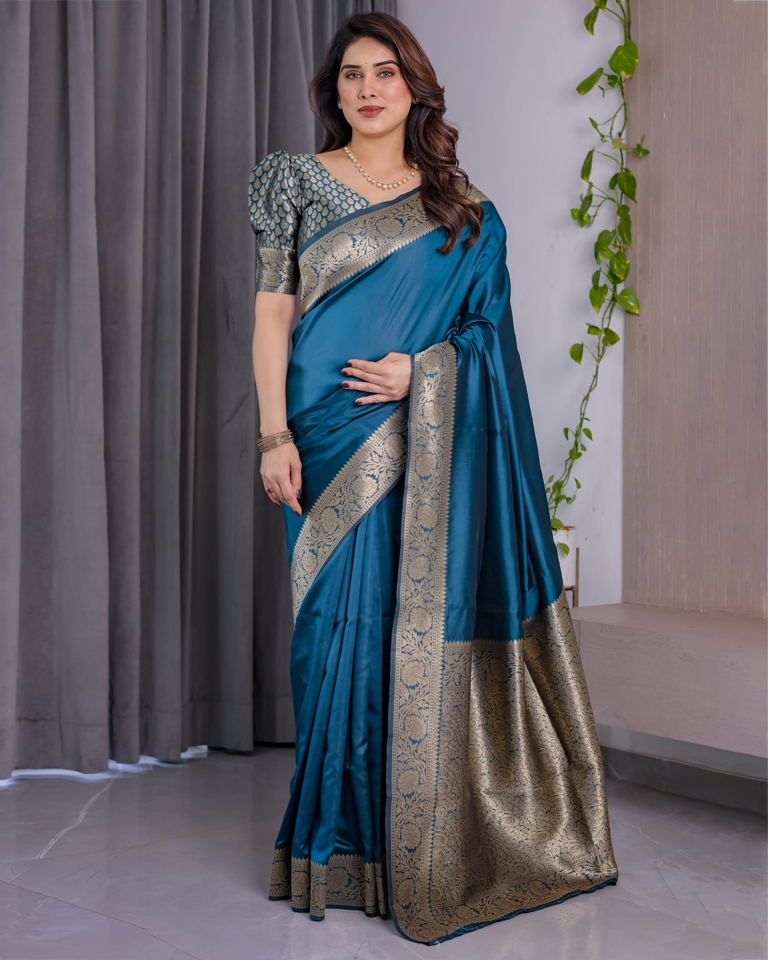
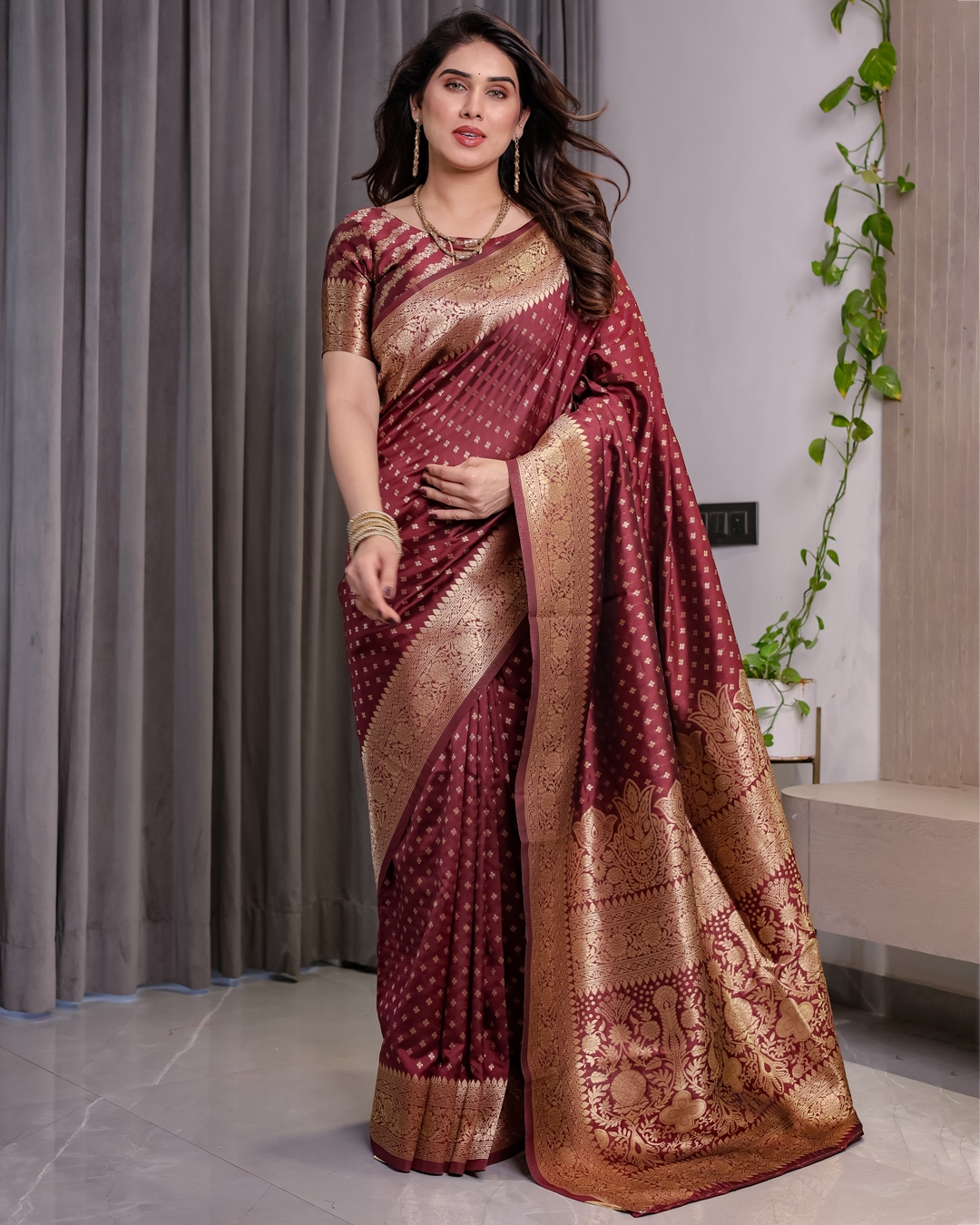
Teal and red create different moods. The Teal Blue Banarasi Soft Silk Saree With Golden Zari Border gives a cool jewel-toned base with visible gold contrast, while the Maroon Banarasi Soft Silk Saree with Golden Zari Border creates a deeper, more traditional-looking palette. Neither Banarasi silk saree is an Assamese weave, so both should be described as modern festive interpretations rather than authentic mekhela chador substitutes. Pairing either saree with a blouse in red, cream or muted gold can introduce a Bihu colour connection.
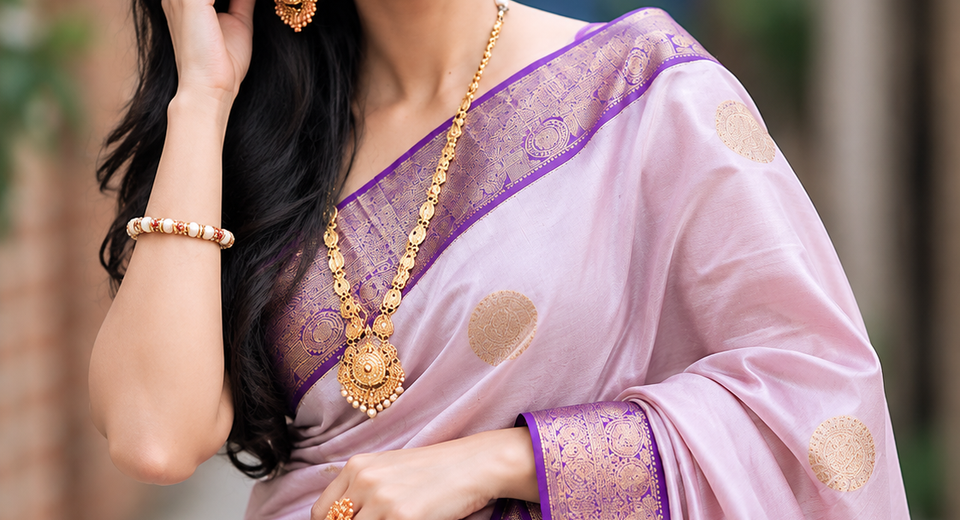
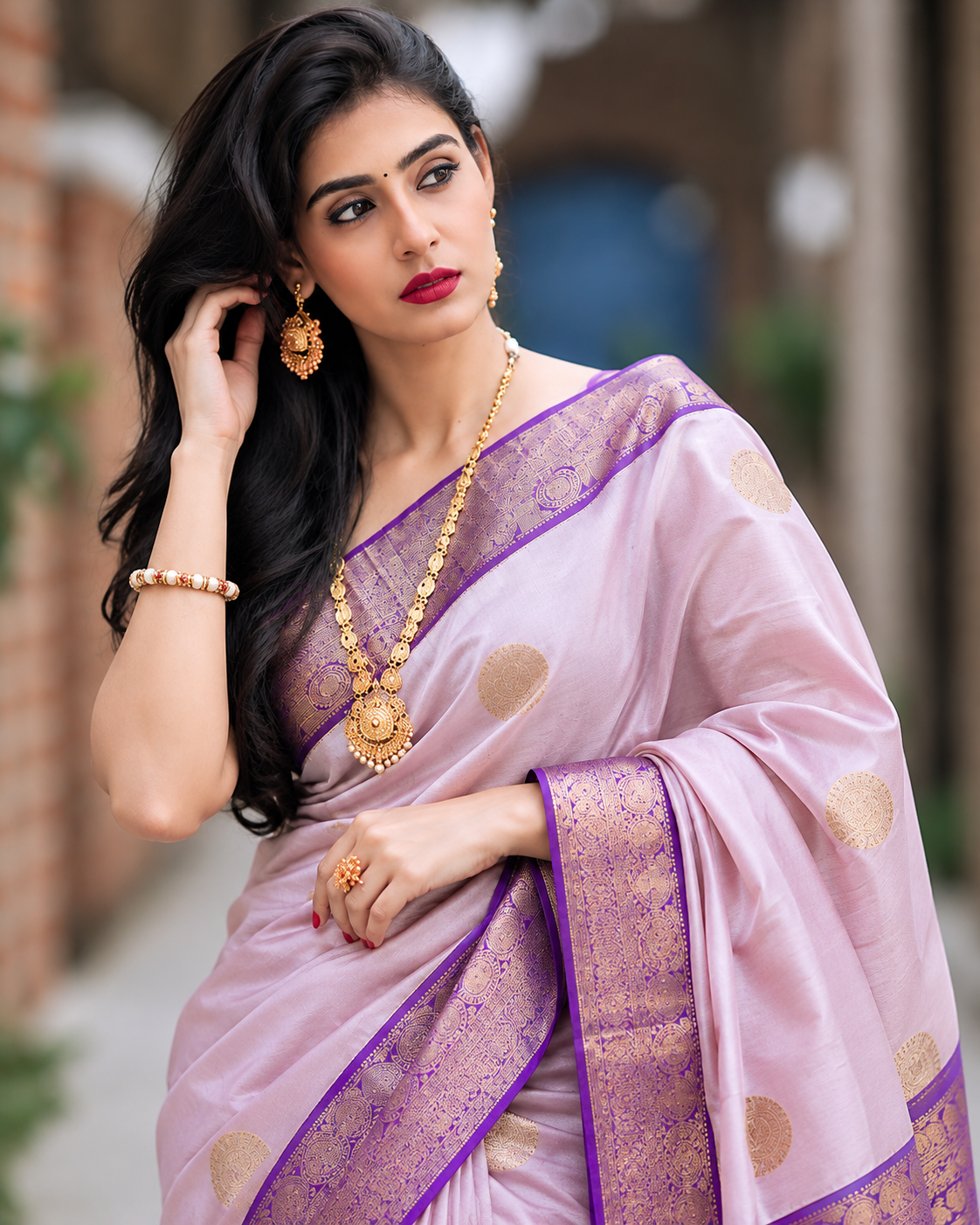
A teenager who prefers a lighter, more understated look can choose beige, purple or coral accessories around a plain saree. The Beige Purple Banarasi Soft Silk Saree with Zari Border provides a gentle contrast between warm beige and cooler purple. A red gamusa-inspired stole, small red earrings or a narrow woven hair ribbon can bring the outfit closer to the visual language of Rongali Bihu without making the styling costume-like.
Which fabrics are practical for a Bihu celebration?
Cotton is usually the most practical fabric for a daytime Bihu celebration because cotton allows airflow, absorbs some moisture and feels less slippery during movement. Lightweight silk can work well for evening events, but a teenager should test the drape, blouse fit and petticoat before the celebration rather than wearing the outfit for the first time on the day.
Handloom cotton has small variations in texture and weave that are part of its character. The Pastel Floral Tissue Handloom Cotton Saree with Zari Weaves combines a cotton base with tissue-like brightness and zari detail, making it suitable for someone who wants a festive finish without the weight of dense embroidery. A cotton saree can also be folded more casually for travel, although zari areas still need protection from snagging.
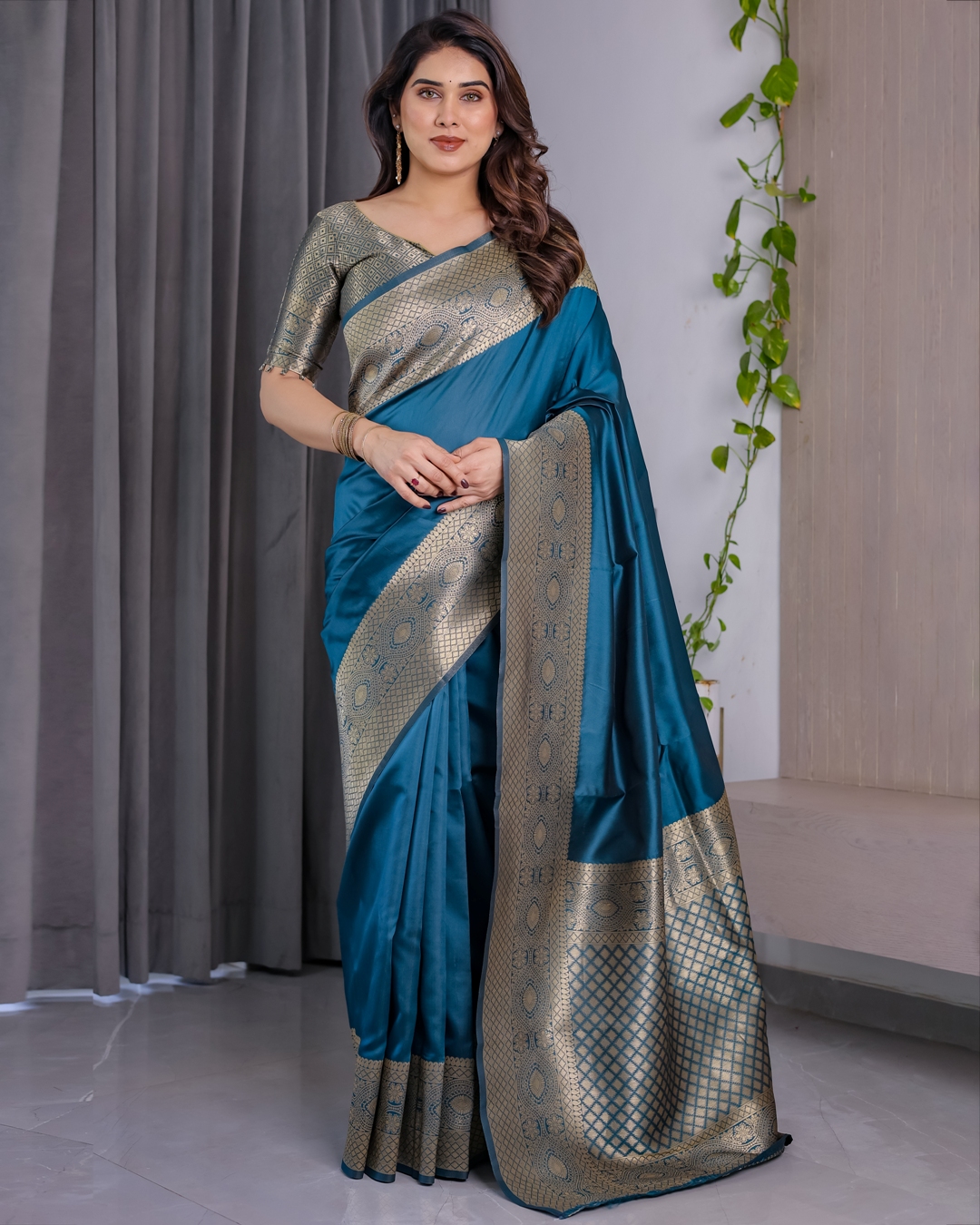
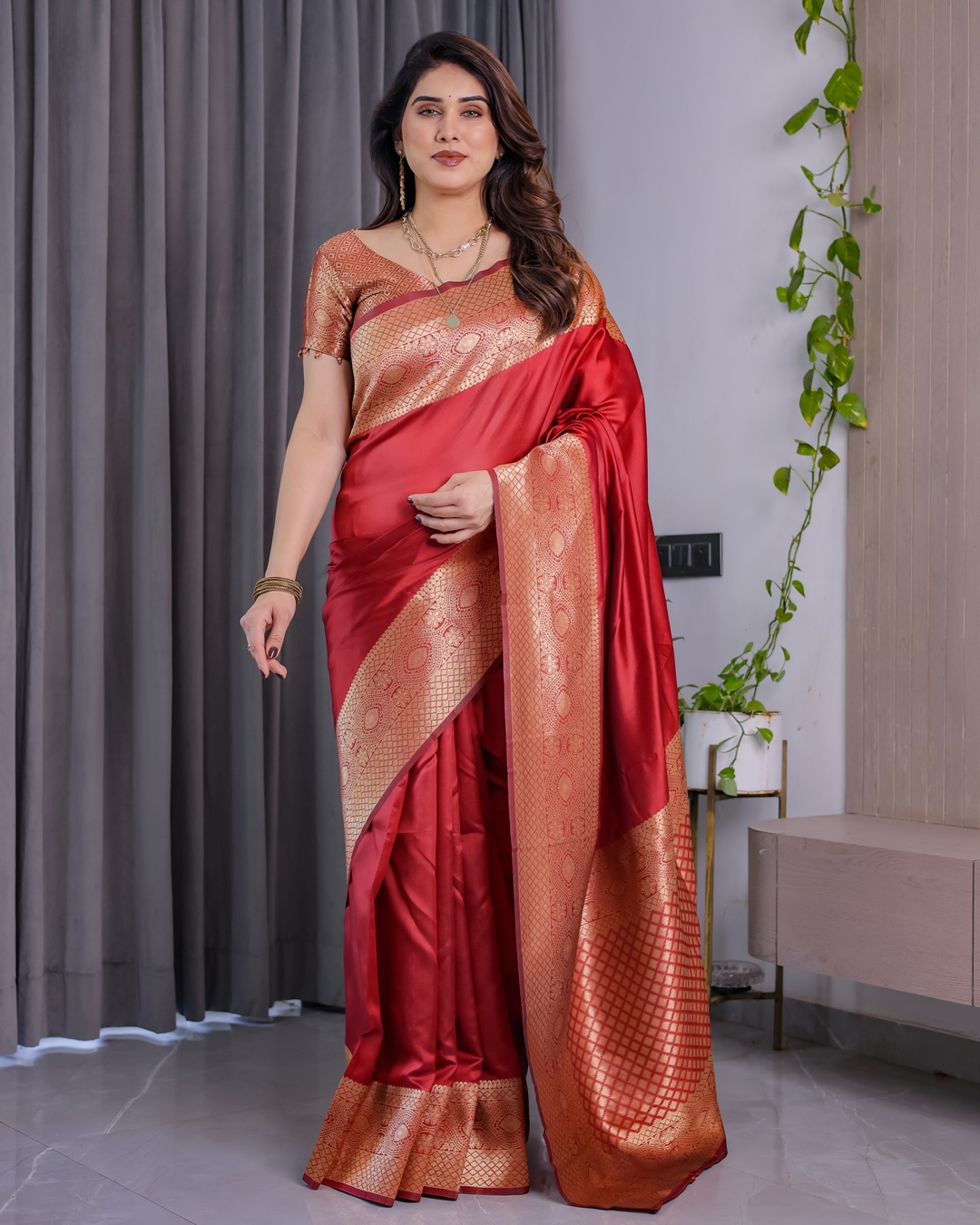
Banarasi soft silk gives structure and sheen, which can make pleats look neat in photographs. The Teal Blue Banarasi Silk Saree with Jacquard Zari Border has a patterned zari border that can become the main visual feature of the outfit. The Red Banarasi Soft Silk Saree with Jacquard Zari Border brings a stronger festive statement and works especially well with an ivory, cream or gold blouse.
Fabric weight matters more than many first-time saree wearers expect. A heavy saree can pull on the waist after several hours, while a very slippery saree can loosen at the shoulder. For a teenager attending a full-day programme, a lighter saree, a cotton underskirt with a firm waistband and secure shoulder pins can make a greater difference than extra jewellery.
How should a teenager style a saree for Bihu?
A teenager should style a Bihu saree with a secure waist, five to seven front pleats, a firmly pinned pallu and footwear chosen before the final length is adjusted. These practical steps prevent the saree from dragging, loosening or restricting movement during dancing and walking.
Choose a movement-friendly drape
The lower edge should sit just above the floor when the wearer is standing in the intended footwear. A cotton petticoat or a well-fitted underskirt gives the saree a stable base. Safety pins should be placed horizontally through the waistband area and discreetly at the shoulder; excessive pinning can damage delicate zari or create uncomfortable pressure.
A shorter pallu can be useful for a teenager participating in dancing or group activities. The pallu can be pleated and pinned at the shoulder rather than left loose. If the saree is especially slippery, a little hidden pin near the waist can keep the pleats aligned. The wearer should sit, climb stairs and walk briskly in the perfect outfit before leaving home.
Keep the blouse youthful without losing the cultural link
A simple blouse in red, ivory, cream, gold or the saree's dominant colour allows woven borders to remain visible. A round neck, modest square neck or short sleeves can suit a school or family celebration. A blouse made from cotton, raw silk or a fabric with a similar weight to the saree usually sits more neatly than a very thin synthetic blouse.
Small accessories can communicate the Assamese reference clearly. A gamusa-inspired scarf, red-and-white bangles, a traditional Assamese-style necklace, a jaapi motif brooch or a red ribbon in a braid can be more meaningful than stacking generic festive jewellery. Fresh flowers, especially white or red varieties, can add softness to a braid or low bun without competing with the saree border.
How can colour and motifs express Bihu without looking costume-like?
Use one dominant colour, one supporting colour and one Assamese-inspired detail to create a balanced Bihu outfit. Red and white are the clearest traditional reference, but teal, maroon, purple, beige and pastel shades can also work when the accessories provide a deliberate cultural cue.
Red represents a strong visual connection with the gamusa and many festive Assamese textiles. Red doesn't need to cover the entire outfit. A red blouse with a pale saree, a red border with an ivory blouse or red earrings with a teal saree can be enough. The Maroon Banarasi Soft Silk Saree with Golden Zari Border already has a deep red family of colour, so cream accessories can prevent the look from becoming visually heavy.
Gold zari can echo the warm lustre associated with Muga silk, but zari itself doesn't make a saree Assamese. The distinction matters because Banarasi weaving belongs to a different regional textile tradition. Wearing the Teal Blue Banarasi Soft Silk Saree With Golden Zari Border for Bihu can be a respectful contemporary choice when the wearer understands that the outfit is inspired styling, not an authentic Assamese weave.
Motifs should have enough space to be seen. If the saree has an elaborate jacquard border, keep the blouse and jewellery relatively calm. If the saree is plain, a woven stole, motif earrings or an Assamese-style necklace can supply the visual interest. This approach also makes the outfit easier to repeat for other celebrations.
What should teenagers wear for different Bihu settings?
Daytime outdoor Bihu events call for lighter fabrics and secure styling, while evening cultural programmes can accommodate richer silk, zari and deeper colours. The venue, weather and expected movement should guide the outfit more strongly than photographs or trend-based styling.
For a school or college cultural programme, a cotton saree, comfortable blouse and flat sandals are sensible. The Pastel Floral Tissue Handloom Cotton Saree with Zari Weaves can suit this setting when paired with minimal jewellery and a pinned pallu. A low braid, small earrings and a compact crossbody bag keep the appearance festive but practical.
For a family Bohag Bihu gathering, soft silk can offer a more polished appearance. The Beige Purple Banarasi Soft Silk Saree with Zari Border works with a cream blouse and red-and-white accessories, while the Red Banarasi Soft Silk Saree with Jacquard Zari Border can be balanced with a plain blouse and understated gold-toned jewellery.
For an evening stage performance or formal cultural event, richer colour and stronger border contrast are appropriate. The Teal Blue Banarasi Silk Saree with Jacquard Zari Border can be styled with a structured blouse and a neatly pleated pallu. The wearer should still check that the saree doesn't catch on stage steps, chairs or dance movements.
How should Assamese-inspired festive sarees be cared for?
A festive saree should be aired after wearing, stored folded in breathable cotton and kept away from direct sunlight and moisture. Zari and silk require gentler handling than everyday cotton, especially around folds, pins and jewellery contact points.
Remove safety pins carefully instead of pulling them through the cloth. Let perspiration and perfume dry before folding the saree. Do not spray perfume directly onto silk, zari or a handloom border because alcohol and moisture can affect colour and surface finish over time.
Fold silk sarees along different crease lines every few months to reduce permanent pressure marks. Unfolding the saree occasionally allows the fabric to breathe. Muslin or unbleached cotton wrapping is preferable to plastic for longer storage, because plastic can trap humidity and contribute to musty odours or fabric damage.
Read the care label before washing any saree. Dry cleaning is generally safer for Banarasi soft silk and substantial zari work, while some cotton sarees may be hand-washable with cold water and a mild detergent. A small hidden-area test should be performed before attempting home washing, particularly when the saree has contrasting red borders or multiple dyed colours.
Building a Bihu wardrobe with cultural awareness
A thoughtful Bihu wardrobe can include both authentic regional garments and up-to-date Indian festive pieces, provided the differences are acknowledged. A mekhela chador made from Muga silk, Pat silk, eri silk or Assamese handloom cotton represents a direct connection to Assamese dress, while a Banarasi saree styled with Assamese-inspired accessories represents a cross-regional interpretation.
Teenagers can learn more by asking who made the textile, which fibre was used, how the motif was developed and whether the garment is handwoven or powerloom-produced. Those questions turn clothing into a way of understanding craft rather than treating regional design as a surface trend. Buying fewer pieces with clear fabric information and wearing them repeatedly is also more responsible than purchasing a new outfit for every event.
A Bihu Celebration Outfit for Teenagers Exploring Assamese Weaves should finally feel wearable, informed and personal. A secure drape, breathable fabric and comfortable shoes support participation, while a red-and-white accent, Assamese motif or gamusa-inspired detail signals the festival connection. When styling choices are backed by textile knowledge, festive dressing becomes a form of appreciation rather than decoration alone.
Common Questions About Teenagers’ Bihu Outfits and Assamese Weaves
What is a traditional Assamese outfit for Bihu?
The traditional Assamese outfit for women and girls is the mekhela chador, usually made from Muga silk, Pat silk, eri silk or cotton. The lower mekhela and upper chador are often decorated with regional motifs, woven borders and colours associated with Assamese textile culture.
Can a teenager wear a saree instead of a mekhela chador for Bihu?
Yes, a teenager can wear a saree for Bihu, especially for a school, family or cultural event. A red-and-white accessory, gamusa-inspired detail or Assamese-style jewellery can connect the saree to the festival, although a Banarasi saree should not be described as an authentic Assamese weave.
Which fabric is most comfortable for a daytime Bihu celebration?
Lightweight cotton is usually the most comfortable option for a daytime Bihu celebration because it is breathable and easier to move in. Soft silk can work for formal or evening events, but the wearer should test the drape and secure the pleats before the celebration.
How can a teenager keep a saree secure while dancing at Bihu?
A teenager can keep a saree secure by using a well-fitted underskirt, five to seven firm pleats, a pinned shoulder drape and flat footwear. The complete outfit should be tested while walking, sitting and climbing stairs before the event.
What colours are suitable for a Bihu outfit?
Red and white provide the clearest visual connection with the gamusa, but teal, maroon, beige, purple and pastel shades are also suitable. One red or white accent can establish the Bihu reference without requiring an entirely red-and-white outfit.
How should a silk or zari saree be stored after Bihu?
A silk or zari saree should be aired, folded along changing crease lines and wrapped in breathable cotton away from sunlight and moisture. Remove pins gently, avoid direct perfume and use professional dry cleaning when the care label recommends it.