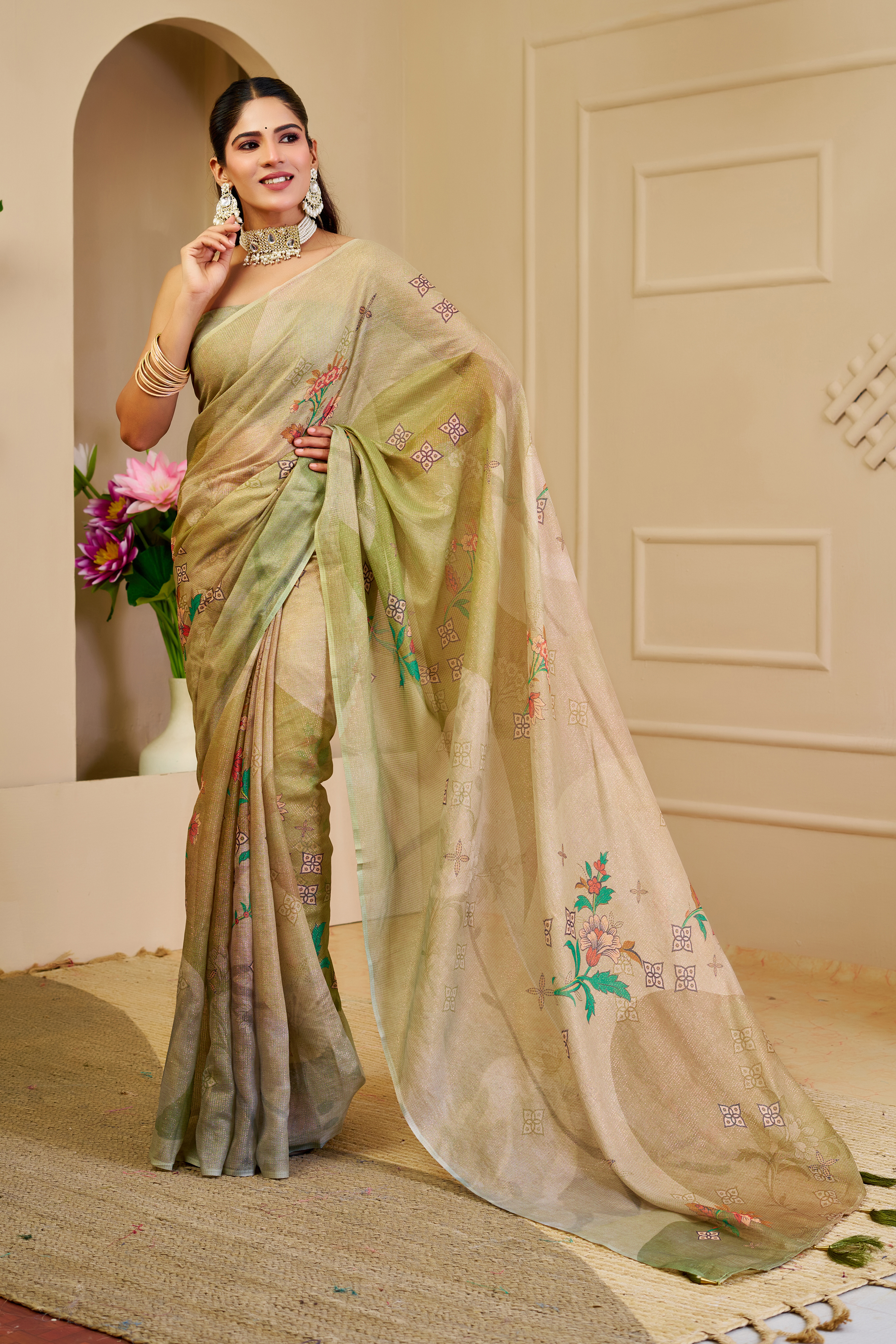
A Bengali Bou Bhat reception brings together a formal wedding meal, extended family photographs and several hours of conversation, greeting and movement. Choosing A Bengali Bou Bhat Reception Saree for Family Guests therefore involves more than selecting a festive colour. The saree needs an appropriate level of richness, a manageable drape and enough comfort for sitting at a dining table, standing in a receiving line and helping the family host guests.
Banarasi silk is a dependable choice because zari gives the outfit ceremony-ready detail while the structured weave usually holds pleats well. A deep maroon, rani pink, teal blue or coral red saree can look celebratory without resembling the bride's more heavily embellished ensemble. The most successful guest look combines one strong textile feature with restrained styling everywhere else.
A Bengali Bou Bhat Reception Saree for Family Guests: What makes it suitable?
A suitable Bou Bhat saree is festive, recognisably Indian, comfortable for a long reception and distinct from the bride's principal wedding outfit. Family guests should generally choose a refined silk, soft silk or dressy lightweight saree with a visible border rather than an extremely heavy bridal drape.
Bou Bhat traditionally follows the wedding and is associated with the bride's first formal meal at her new home. In contemporary celebrations, the event may take place in a banquet hall, restaurant or decorated family venue. Clothing can consequently range from a traditional Banarasi silk saree to a lighter georgette saree, but the look should still acknowledge the Bengali setting through colour, gold detail, a classic blouse or carefully chosen jewellery.
Family guests occupy a visible position in the event. A mother, aunt, sister, cousin or sister-in-law may appear in group portraits, welcome relatives and move between dining and stage areas. A saree with a stable pallu and moderate weight is more useful than a dramatic style that needs constant adjustment.
How formal should a family guest's saree be?
A family guest's saree should look more polished than everyday festive wear but less elaborate than the bride's reception or wedding saree. Medium-width zari borders, an all-over but not excessively dense pattern and a well-finished blouse create the right level of formality for most Bou Bhat receptions.
Reception Sarees Under 2000 can be a practical place to compare colour and border options when several relatives need coordinated outfits. A family member who has a hosting role may choose a stronger border, while a younger cousin can select a lighter saree with a simpler blouse and smaller accessories.
A Bengali Bou Bhat Reception Saree for Family Guests: Which fabric works best?
Banarasi soft silk works especially well for a long reception because it offers a festive silk appearance with a comparatively manageable fall and drape. Georgette is lighter and easier for extended standing, while heavier pure silk may feel more formal but can demand stronger pleat-setting and more careful pinning.

Banarasi silk commonly features woven zari motifs or borders that catch light without requiring additional surface embroidery. Zari refers to metallic thread used in textile ornamentation; gold zari is particularly compatible with Bengali wedding jewellery and warm-toned décor. A woven border also tends to photograph clearly at the waist and pallu.
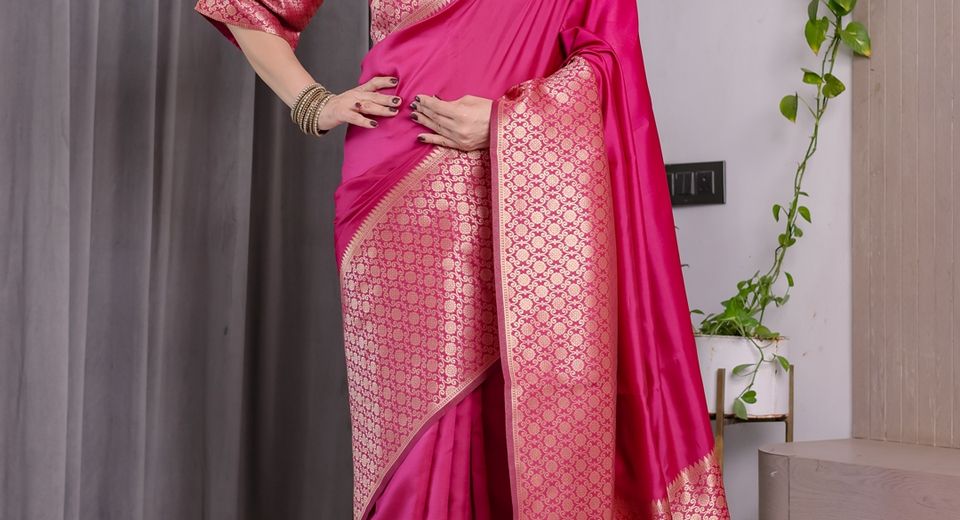
Maroon Banarasi Soft Silk Saree With Golden Zari Border demonstrates why a single rich border can be enough to create a formal guest outfit. Maroon works with antique gold jewellery, pearl accents and neutral makeup. Rani Pink Banarasi Soft Silk Saree With Golden Zari Borders brings a brighter alternative for daytime or brightly lit indoor receptions.
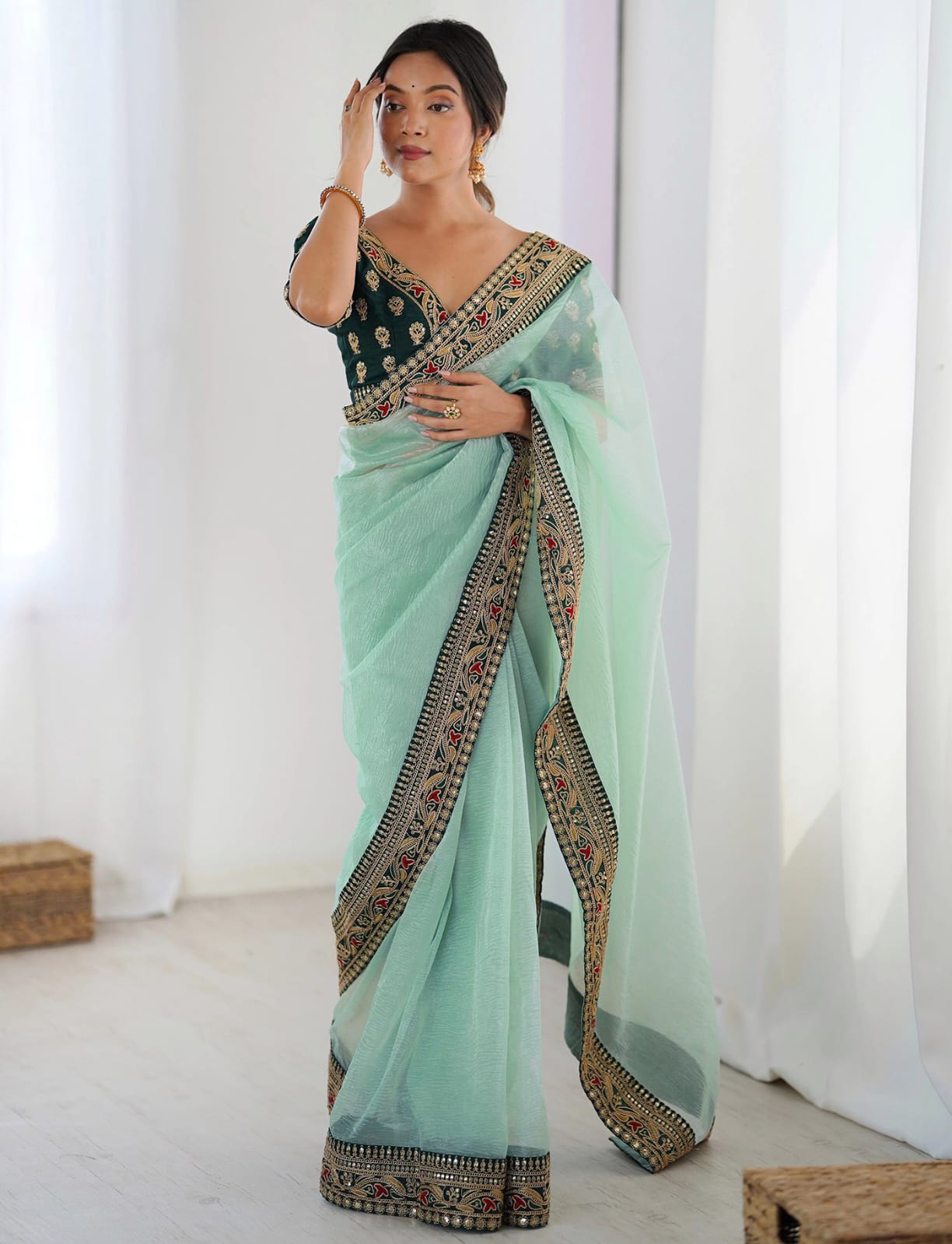
Teal blue provides contrast when many relatives are wearing red, maroon or pink. Teal Blue Banarasi Soft Silk Saree With Elegant Zari Border can be styled with a gold blouse for a classic result or a matching teal blouse for a quieter, more contemporary line. Coral red is warmer and livelier; Coral Red Banarasi Soft Silk Saree With Golden Zari Borders suits family photographs where a clear colour presence helps the wearer stand out.
When is georgette a better choice than silk?
Georgette is a better choice than silk when the reception involves extensive standing, warm weather, frequent travel or a wearer who dislikes structured drapes. Georgette usually feels lighter and forms softer pleats, although the fluid pallu may require more careful pinning during movement.
Pink Georgette Sarees can work for a younger family guest or an afternoon Bou Bhat, especially when the blouse has a neat neckline and the jewellery remains balanced. Party Wear Sarees are another useful reference point for lightweight reception dressing, but very high-shine embellishment should be avoided if the event has a strongly heritage Bengali dress code.
A Bengali Bou Bhat Reception Saree for Family Guests: How should colour be chosen?
Guests should choose a saturated colour with controlled embellishment and avoid copying the bride's exact wedding palette, blouse design or signature drape. Maroon, teal blue, coral red, muted pink and jewel-toned green can look ceremonial while remaining clearly guest-appropriate.
Red is culturally important in Bengali weddings, but guests don't need to avoid it entirely. A red saree with a defined border and modest jewellery is acceptable when the bride is wearing a different shade, a heavily embellished reception lehenga or a distinct designer silhouette. Red Banarasi Silk Sarees for Weddings Under 1100 can be useful for comparing accessible red options, while Red Banarasi Silk Saree With Rich Golden Zari Floral Border has a stronger time-honoured presence and is best paired with an uncomplicated blouse.
Rani pink photographs brightly and brings a youthful quality to family groups. Maroon appears deeper under warm indoor lighting and works well for evening receptions. Teal blue adds visual separation from a predominantly red wedding décor scheme. Coral red flatters warm complexions and looks lively in daylight, while gold zari links all four palettes back to classic festive dressing.
What colours are safest for photographs?
Maroon, rani pink, teal blue and coral red are dependable photograph-friendly colours because they retain visible contrast against cream, gold, floral and neutral backgrounds. Highly pale beige may disappear against banquet décor, while fluorescent shades can reflect unwanted colour onto the face.
Colour should also be considered alongside the lighting. Warm yellow lighting deepens maroon and red, while cool white lighting makes teal and pink appear sharper. A guest attending both daytime rituals and an evening reception can use a colour with medium-to-high saturation and select makeup that remains natural in both conditions.
A Bengali Bou Bhat Reception Saree for Family Guests: How should the blouse and pallu be styled?
A family guest can make a saree look polished by giving the blouse a clean fit, placing the pallu securely and keeping the silhouette easy to move in. A short-sleeved, elbow-sleeved or modest three-quarter-sleeved blouse works for most Bou Bhat settings, depending on personal comfort and family dress expectations.
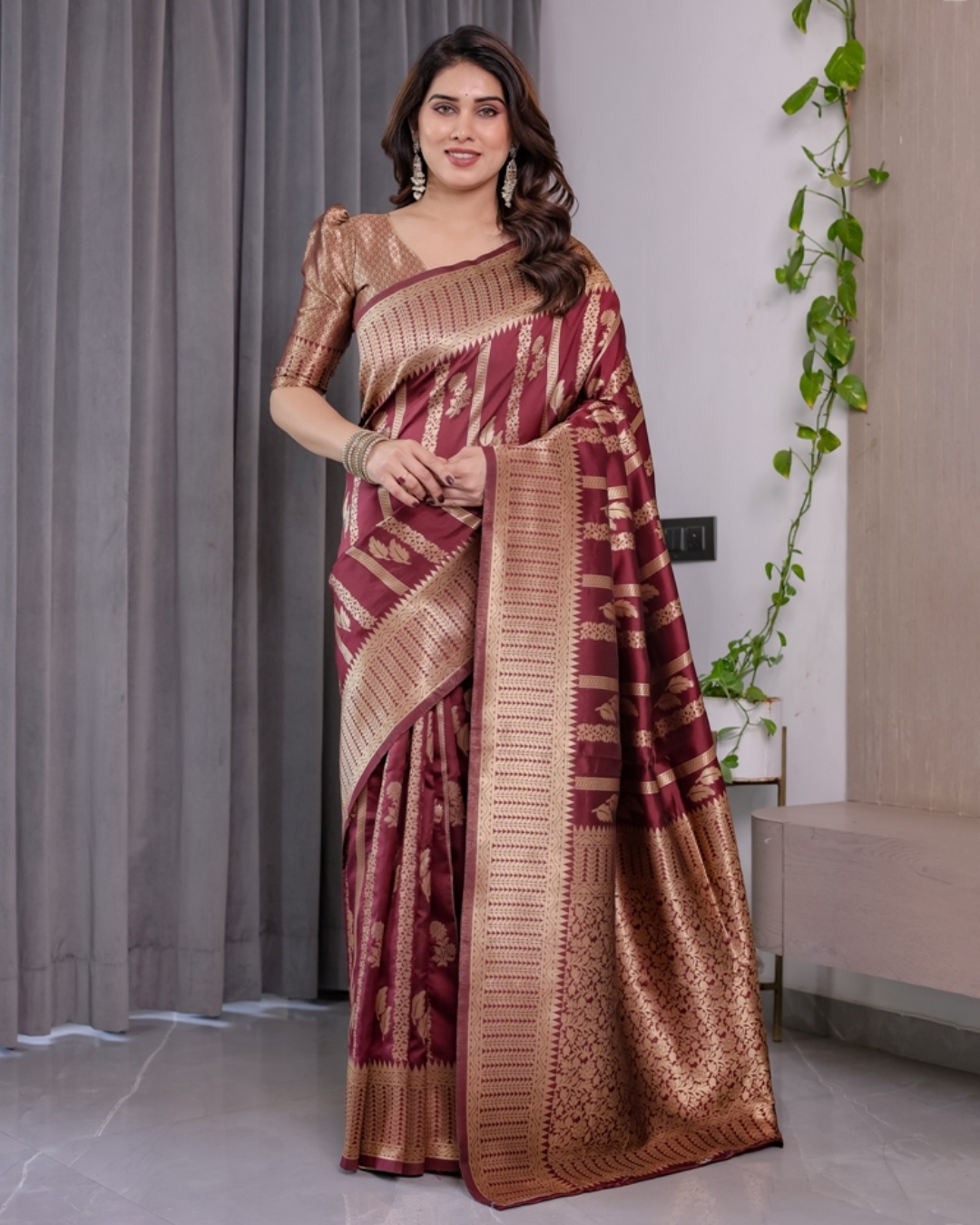
A gold blouse creates continuity with zari, but a matching blouse can look more modern and make the saree colour the main focus. A maroon saree with a muted gold blouse feels classic; a teal saree with a teal blouse looks streamlined; a rani pink saree with a deeper pink blouse creates tonal depth without extra embroidery.
Set the pallu with five to seven pleats and pin it near the shoulder after checking that the length reaches below the hip. A pallu that ends too high can look unfinished, while an excessively long pallu may catch on chairs and serving counters. Two discreet safety pins, one at the shoulder and one near the waist, are usually sufficient when the saree has been pleated properly.
For a more recognisably Bengali finish, wear the pallu over the left shoulder in a broad, open fall and keep the front pleats crisp. The classic Bengali drape with a wider pallu can be beautiful, but it needs a trial run because the additional fabric can become inconvenient in crowded spaces. Guests helping with food service or children may prefer a standard pleated drape with a firmly pinned pallu.
A Bengali Bou Bhat Reception Saree for Family Guests: Which accessories complete it?
Gold-toned jewellery, pearls and one carefully selected statement piece complete a family guest's saree without making the outfit bridal. The correct amount depends on the saree's zari density, the blouse neckline and the wearer's role at the reception.
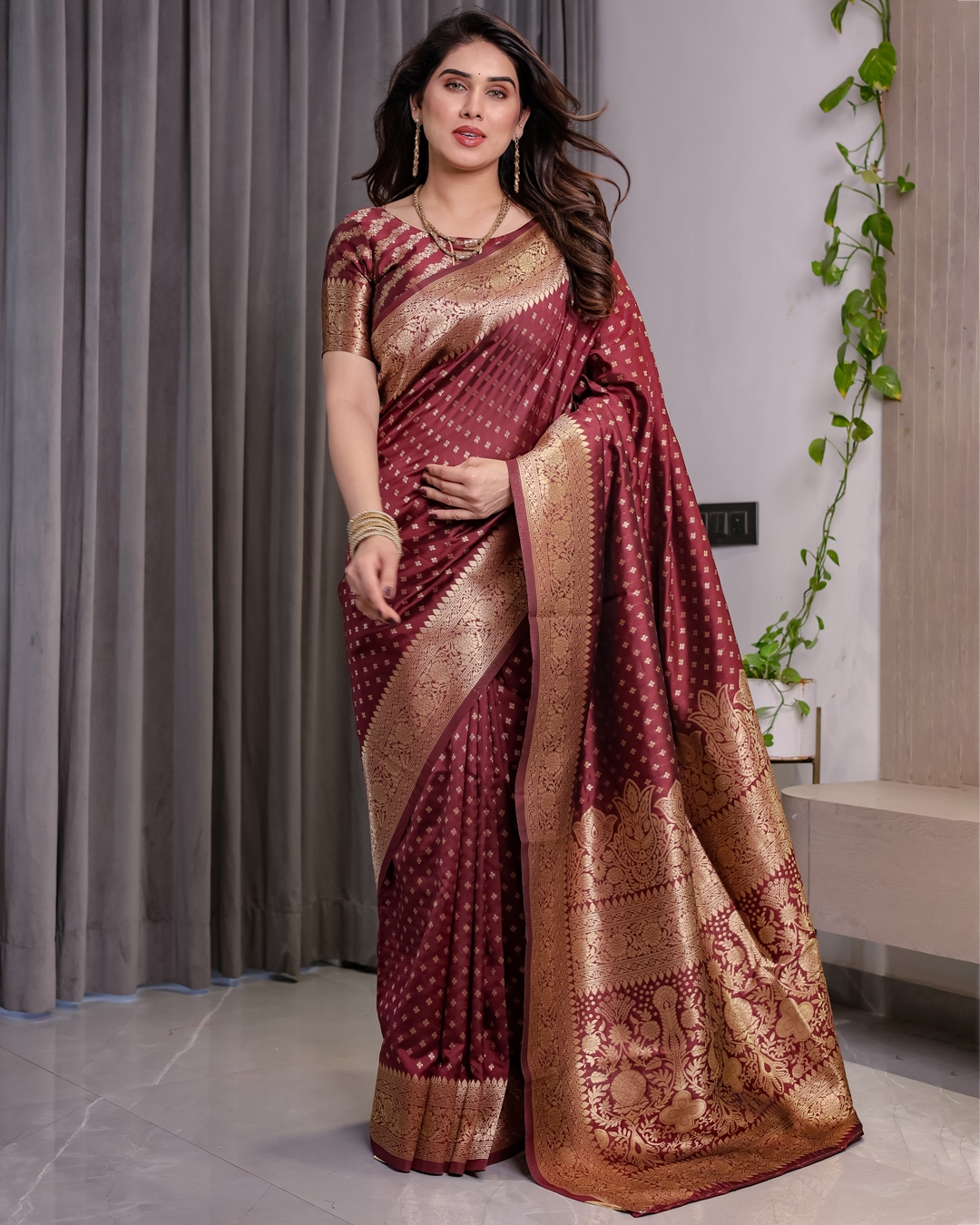
A medium gold necklace with jhumkas or chandbalis is enough for a saree with a prominent zari border. If the saree has a simpler border, a longer necklace, bangle stack or small waist belt can supply additional interest. Avoid wearing every matching piece at once because dense jewellery, heavy zari and ornate makeup can make a guest outfit visually compete with the bride.
Comfortable footwear matters as much as jewellery. A block heel between 1.5 and 2.5 inches gives height without the instability of a narrow stiletto. Cushioned sandals or embellished juttis are useful when the venue has polished floors, grass paths or a long distance between the entrance and dining area.
A small structured handbag keeps essentials accessible without disturbing the saree. Carry safety pins, compact powder, lipstick, tissues and a spare hair tie. A large shoulder bag can pull at the pallu and leave visible creases across the shoulder.
A Bengali Bou Bhat Reception Saree for Family Guests: How can comfort and care be planned?
Comfort improves when the saree is tested before the reception, the blouse allows full arm movement and the drape is secured at stress points. Wear the complete outfit at home for 30 minutes, sit on a dining chair, walk up stairs and raise both arms before deciding that the styling is ready.

Mothers and older relatives often benefit from a medium-weight silk saree, a secure pallu and a blouse with a slightly longer sleeve. Younger relatives who will dance, assist children or move between rooms may prefer soft silk or georgette with fewer accessories. A reception saree should support the wearer's actual responsibilities rather than imitate a static studio photograph.
Store silk sarees folded with the zari turned inward to reduce direct abrasion. Refold a saree every few months so that permanent creases don't develop along the same lines. Air the saree in shade after wearing it, avoid spraying perfume directly on the fabric and use professional dry cleaning when the care label recommends it.
don't machine-wash Banarasi silk or use strong detergent at home. Zari can lose lustre through friction, chemicals or excessive heat. Keep the saree in a breathable cotton or muslin cover rather than sealed plastic, and store it away from damp walls and direct sunlight.
How early should the outfit be prepared?
The complete saree outfit should be tested at least three days before the Bou Bhat, while blouse alterations should be completed one to two weeks earlier whenever possible. Early preparation leaves time to correct sleeve tightness, replace weak hooks, adjust the petticoat waist and practise the drape.
Check the petticoat length because a petticoat that's too short can expose the ankles, while one that's too long can make walking unsafe. Match the petticoat colour closely to the saree, particularly with lighter georgette. A cotton or satin petticoat with a firm drawstring gives better support than a loose elastic waist for a long reception.
A thoughtful Bou Bhat guest outfit doesn't require the heaviest saree in the wardrobe. A well-fitted blouse, secure pleats, an appropriate colour and comfortable footwear allow family guests to participate fully while still looking festive. Banarasi silk, zari borders and Bengali-inspired draping provide tradition; measured jewellery and practical preparation provide ease.
Common Questions About A Bengali Bou Bhat Reception Saree for Family Guests
What is the best saree fabric for a Bengali Bou Bhat reception guest?
Banarasi soft silk is a strong choice because it looks festive, holds pleats well and works with gold jewellery. Georgette is more suitable when the wearer expects extensive standing, warm weather or frequent movement.
Can a wedding guest wear a red saree to a Bengali Bou Bhat?
Yes, a guest can wear red when the saree does not copy the bride's exact colour, embellishment or blouse design. A defined zari border and restrained jewellery keep a red saree formal without making it appear bridal.
How should a guest drape a saree for a long reception?
Use five to seven front pleats, pin the pallu at the shoulder and secure a second point near the waist if the fabric is fluid. A standard pleated drape is usually easier to manage than a very wide open pallu when the guest will walk, dine or help with children.
Is Banarasi silk too heavy for a family guest at Bou Bhat?
Banarasi soft silk is generally more manageable than very heavy bridal silk, but comfort depends on the weave, border and lining. Try sitting, walking and raising both arms in the complete outfit before the event.
What jewellery should be worn with a Banarasi saree at a Bengali reception?
A medium gold necklace with jhumkas or chandbalis is sufficient for a saree with a prominent zari border. Add bangles or a longer necklace only when the saree and blouse are relatively simple.
How should a Banarasi saree be stored after the reception?
Air the saree in the shade, fold it with the zari turned inward and store it in a breathable cotton or muslin cover. Avoid machine washing, direct perfume, strong detergent, sealed plastic and prolonged sunlight.