When an Ethnic Co Ord Set Looks Polished Instead of Too Casual depends on a handful of visible decisions: the fabric must hold its shape, the proportions must look intentional, and the accessories must complete rather than compete with the outfit. A matching kurta and trouser can work for a relaxed lunch, a work celebration or a festive gathering, but the same set can appear unfinished when the textile is too thin, the trousers pool at the ankle or the styling stops at flat sandals.
The useful distinction isn't whether a co-ord set is comfortable. Comfort is one of its strengths. The question is whether the outfit contains enough structure and finish for the setting. Fabric density, seam quality, colour depth, footwear, jewellery and grooming collectively determine that impression.
When an Ethnic Co Ord Set Looks Polished Instead of Too Casual
An ethnic co-ord looks polished when its fabric, fit, colour and finishing appear deliberately coordinated from head to toe. Matching separates alone don't create refinement; a crisp neckline, controlled volume, clean hems and considered accessories do.
For example, a fluid rayon set with a relaxed top and palazzo trousers may be ideal for travel or a daytime errand. The same silhouette can look more elevated when the rayon has a substantial fall, the top has a shaped shoulder, the neckline is neatly finished and the trousers end above the floor rather than dragging beneath the foot. Small construction details change how the entire outfit is read.
Polish also comes from visual restraint. One embroidered element, one strong print or one statement accessory usually has more impact than several competing details. A set with zari at the neckline may need only small earrings, while a plain silk kurta can support a larger necklace or an embroidered jacket.
Fabric weight creates the first impression
Fabric weight is the fastest way to distinguish a refined ethnic co-ord from a very casual one. Medium-weight textiles generally hold seams, pleats and hems more cleanly than thin, clingy materials.
Banarasi silk, Vichitra silk, Chanderi, linen cotton and structured rayon each create a different level of formality. Banarasi silk usually reads festive because of its woven sheen and zari work. Vichitra silk has a smooth surface and graceful drape that can make a kurta-and-pant combination feel suitable for an evening gathering. Chanderi offers a lighter, more translucent finish and works especially well for daytime celebrations when paired with a lining and precise tailoring.
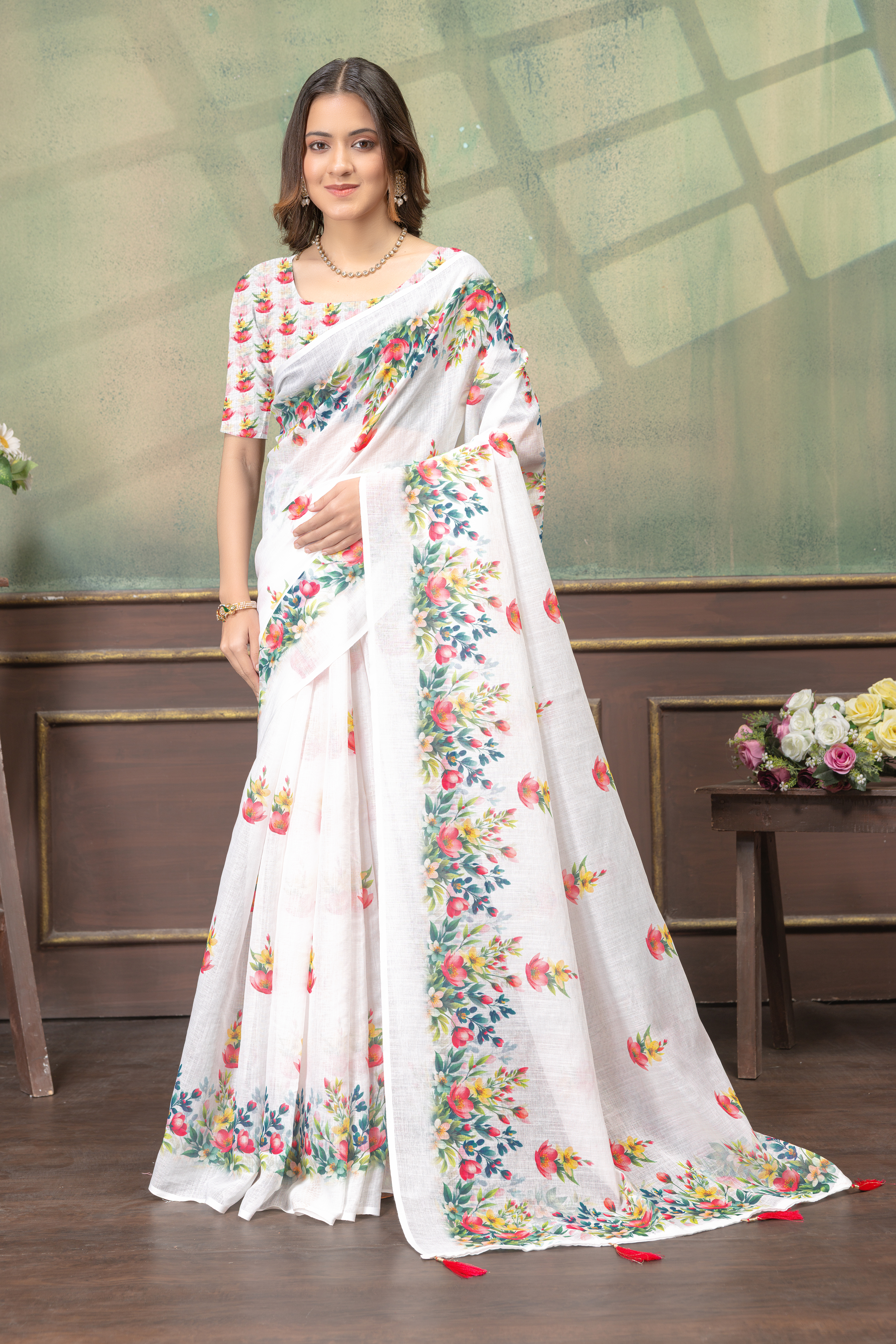
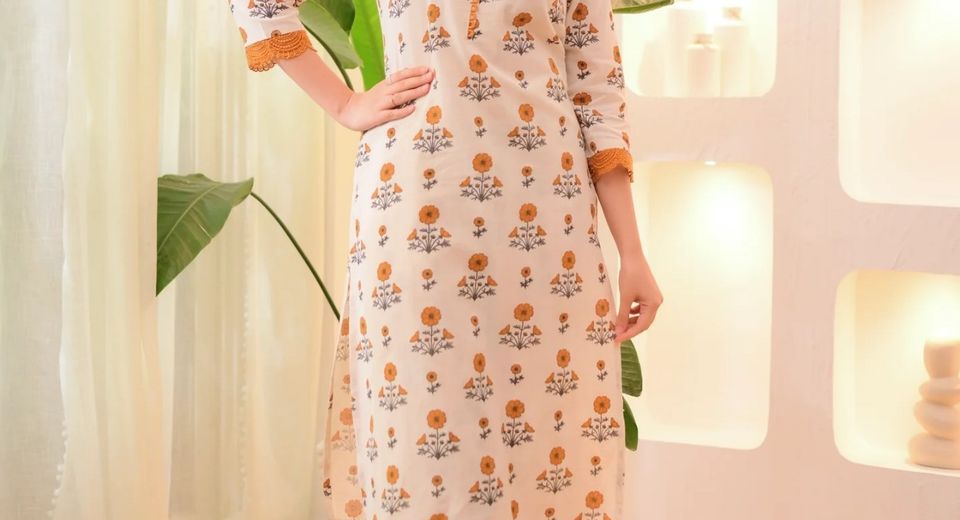
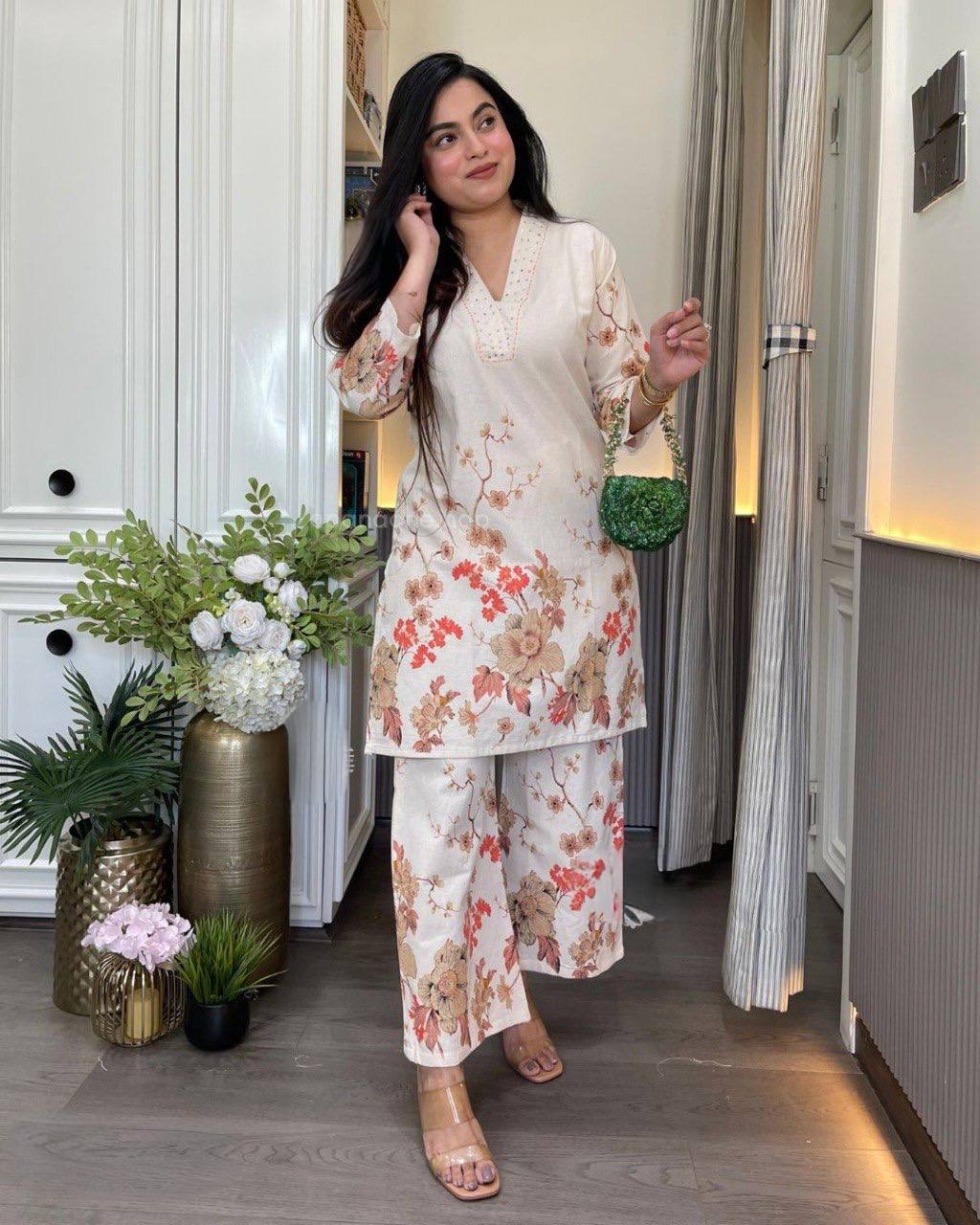
Linen cotton has a dry, breathable texture that suits warm-weather dressing, but the weave must be pressed carefully because deep creases can make a look seem informal. Ivory Floral Linen Cotton Co-Ord Set for Women from Varnavi demonstrates why print scale matters: a floral pattern can remain elegant when the background is calm, the palette is limited and the garment is properly steamed.
Rayon isn't automatically casual. A substantial rayon with a controlled fall can look polished, especially in a dark colour or an Ajrakh print. Navy Blue Ajrakh Printed Rayon Top Palazzo Set Women shows how a traditional surface pattern can give a relaxed silhouette more visual authority. The key is to inspect opacity, drape and recovery after sitting, not merely the fibre name.
How to judge fabric before buying
Check the fabric before buying by holding the garment against light, scrunching a small section and inspecting the underside of embroidery. These simple tests reveal transparency, crease behaviour and loose-thread problems.
A polished co-ord should have fresh finishing around the bust, armhole and trouser waist. A lining is especially useful when the outer fabric is light or when embroidery has a rough reverse side. For a daytime event, linen cotton, Chanderi and matte silk can look fresh without appearing overdressed. For dinner or a festive function, Vichitra silk, Banarasi silk, velvet accents or zari details provide more evening presence.
Fit and proportion prevent a relaxed silhouette from looking unfinished
Fit creates polish when the garment follows the body without pulling and leaves intentional ease where movement is needed. A co-ord doesn't need to be tight; it needs controlled volume.
The shoulder seam should sit close to the natural shoulder edge, the armhole should allow movement without exposing excess fabric, and the kurta should fall smoothly over the bust and hip. Trouser waistbands should lie flat when seated, while palazzo legs should open from the hip rather than collapse into irregular folds. These checks matter more than choosing a smaller size.
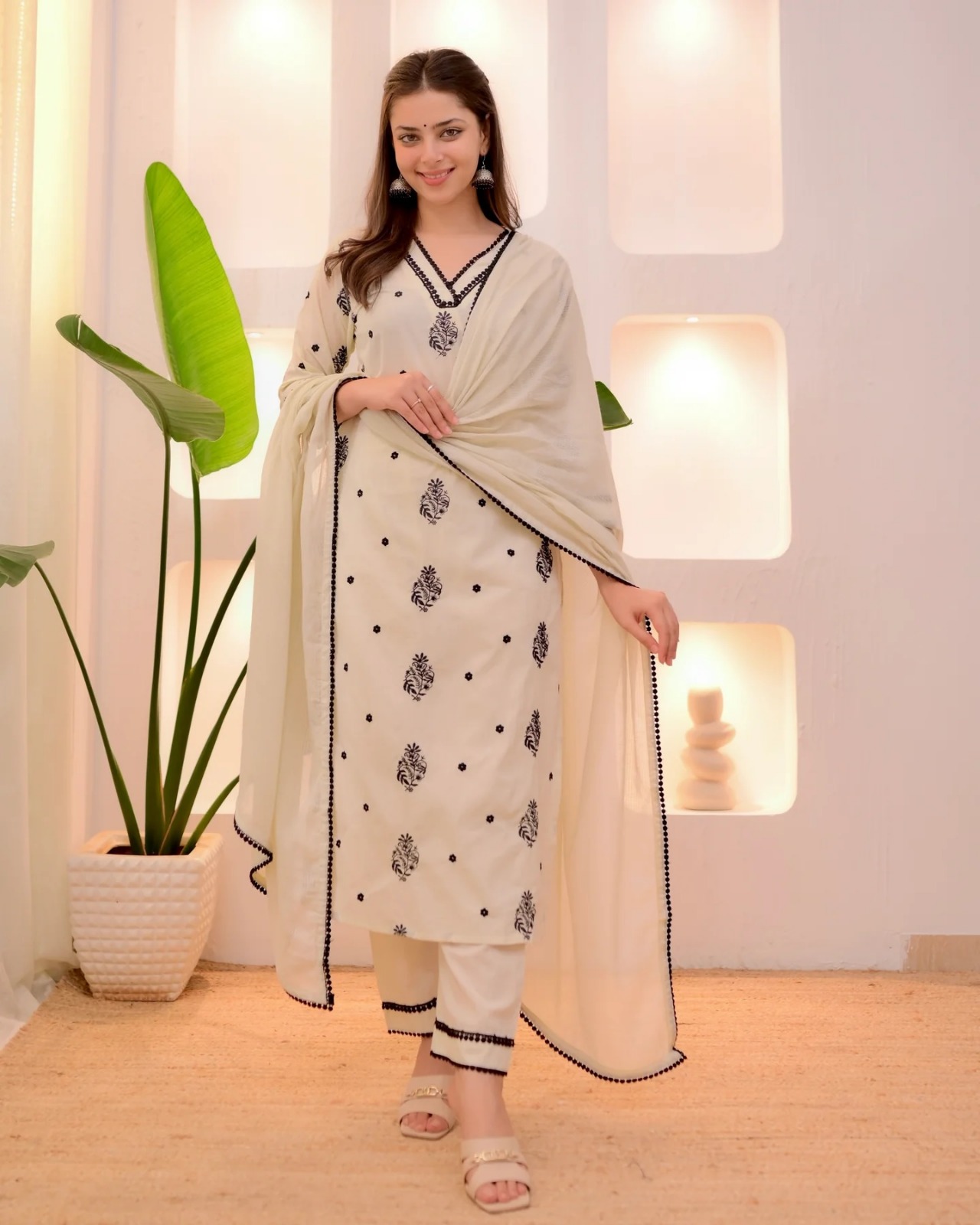
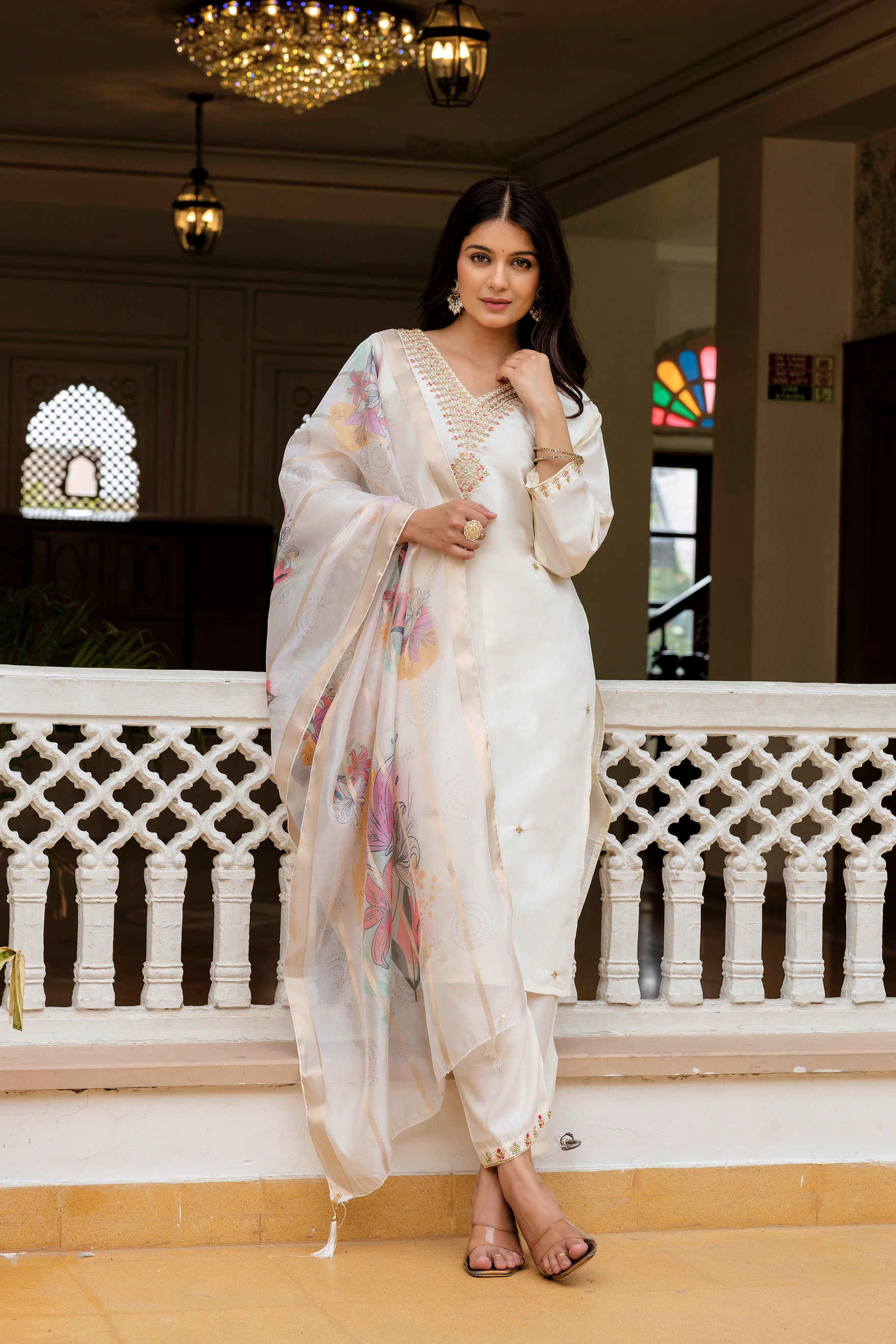
Proportion is particularly important with crop tops, long jackets and wide-leg trousers. A shorter top usually looks balanced with a high-rise bottom. A long straight kurta works well with narrow pants, while an expansive palazzo needs either a shorter top or a jacket with clear vertical lines. Cream Embroidered Silk Kurta Pant Ethnic Co-ord Set uses the kurta-and-pant relationship to create a more streamlined outline than a very wide three-piece silhouette.
Length also signals occasion. Trousers that finish 2 to 4 centimetres above the floor keep footwear visible and prevent the outfit from looking careless. A cropped palazzo can feel contemporary, but an uneven hem or excess pooling can make even expensive fabric appear casual. A tailor can often improve the appearance of a co-ord by correcting sleeve length, trouser break and side-seam balance.
Colour coordination should look intentional, not overworked
Polished colour coordination usually comes from one dominant shade, one supporting neutral and a controlled accent. The approach keeps a matching set visually clear while allowing jewellery, shoes or a dupatta to add dimension.
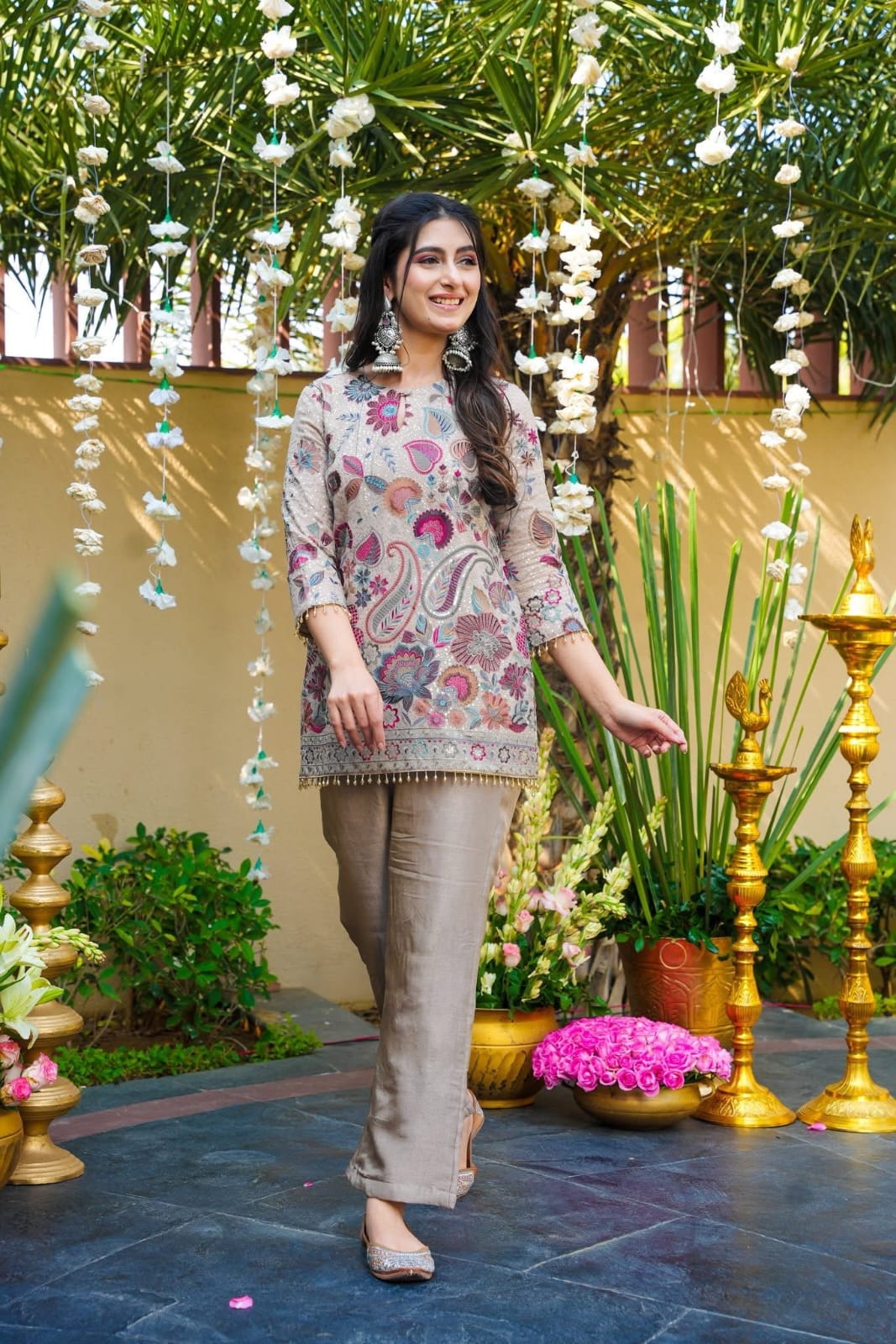
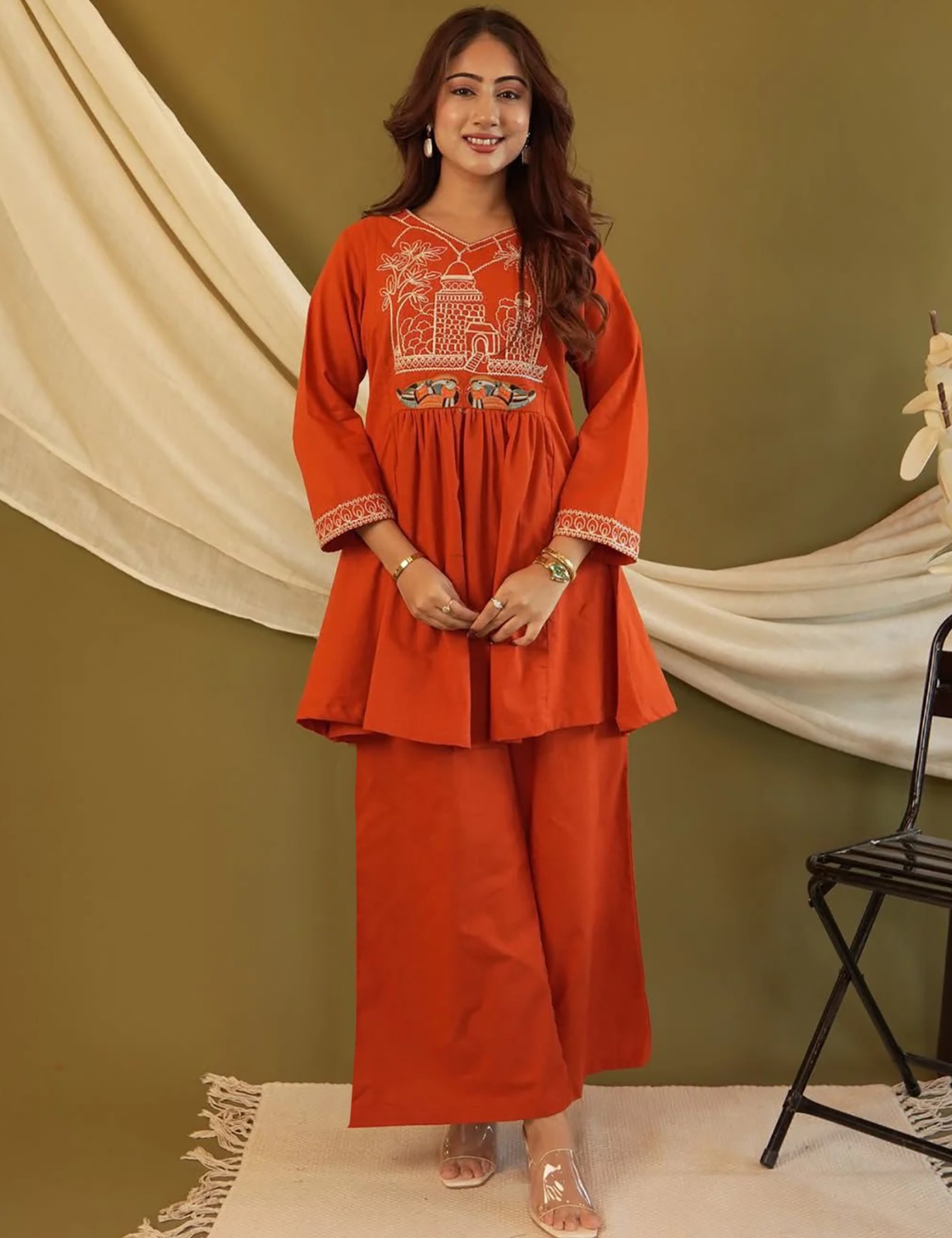
Rust orange can look sophisticated when balanced with antique gold, tan, ivory or deep brown. Stylish Rust Orange Ethnic Co-Ord Set for Women gives an example of a saturated warm shade that can carry the outfit without needing a heavily embellished dupatta. Taupe, ivory, navy and wine are similarly versatile because their depth gives prints or embroidery room to stand out.
Modern Taupe Vichitra Silk Embroidered Co-Ord Set for Women illustrates how a muted base can make embroidery look more deliberate. Refined Wine Ethnic Kurti Set with Dupatta uses the opposite strategy: a deeper colour creates richness, while the dupatta adds a second layer and a clear vertical line.
Use contrast with purpose. Gold accessories can warm rust, wine and ivory. Silver or oxidised metal can sharpen navy, black and cool taupe. Mixing bright gold, colourful stones, a loud print and metallic footwear in one outfit often removes the sense of editing that makes an ethnic co-ord feel refined.
Layering adds occasion value when the lines remain clean
A layer elevates an ethnic co-ord when it adds structure, texture or length without hiding the main silhouette. The best layers have a clear relationship with the neckline, sleeve and hem of the base set.
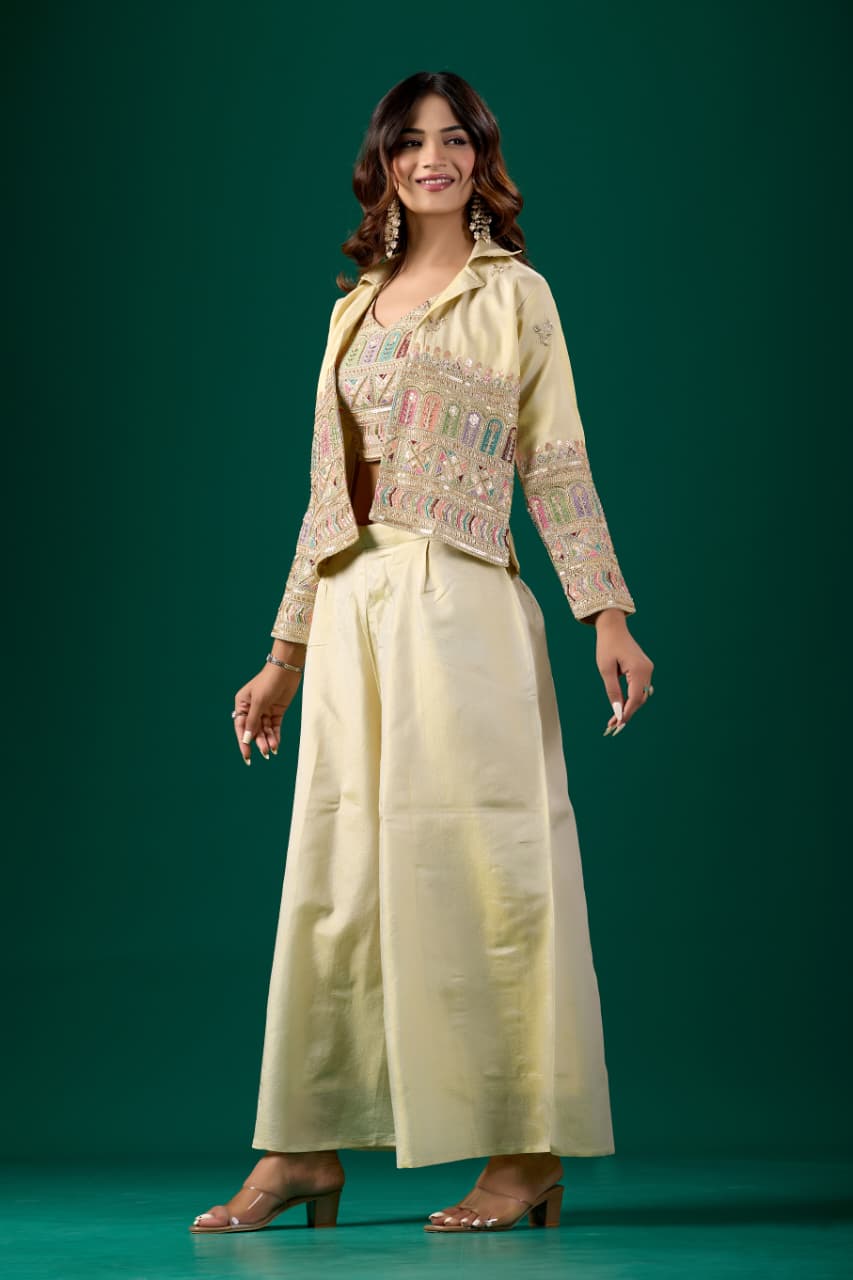
A short embroidered jacket can sharpen a plain crop top and palazzo combination. A lightweight dupatta can add movement to a straight kurta and pant set. A longline jacket can create a formal vertical shape, but it should not end at an awkward point across the widest part of the hip. Women's Embroidered Crop Top & Jacket Palazzo Set | Varnavi demonstrates how a coordinated jacket can make a wide-leg outfit feel event-ready rather than lounge-like.
Dupatta placement also changes the message of an outfit. Draping a dupatta over one shoulder creates a longer line and exposes the kurta front. Wearing a dupatta around both shoulders gives more classic coverage and works well for family functions. A narrow, neatly pleated drape looks more formal than a loose fabric loop that obscures the neckline and embroidery.
Layering should account for climate. Cotton voile, Chanderi and light organza are more practical for a warm Haldi ceremony than a heavy velvet jacket. Silk or a lined embroidered jacket is better suited to an evening reception or an air-conditioned banquet hall.
Accessories and footwear finish the outfit
Accessories make an ethnic co-ord look polished when they echo one existing detail, such as the embroidery metal, print colour or fabric sheen. A coordinated finish doesn't require a complete jewellery set.
For a simple kurta and pant set, choose one focal accessory: medium jhumkas, a structured potli, a cuff or a short necklace. If the neckline already contains zari or dense embroidery, earrings and a ring may be enough. With a plain neckline, a necklace can provide the missing point of focus without making the outfit look busy.
Footwear should support the hemline. Block-heel sandals, embroidered juttis, pointed mules and clean leather kolhapuris can all work, provided the shoes are in good condition and the trousers don't drag. A low heel of 3 to 5 centimetres can improve the line of palazzo trousers while remaining practical for standing and walking.
Bags should have enough structure to balance soft fabric. A small potli suits festive dressing, while a compact top-handle bag or a neat shoulder bag works better for a professional event. Oversized canvas totes can clash with silk or embroidery because the difference in structure makes the outfit feel accidental.
Stylish Black Kurta Pant Dupatta Set with White Embroidery benefits from restrained accessories because the white embroidery already creates contrast against the black base. Silver jhumkas, black or metallic sandals and a small structured bag would preserve the set's graphic quality without introducing a competing colour story.
Small finishing details make the biggest difference
Steam the kurta, trousers, jacket and dupatta before wearing them, and allow 10 to 15 minutes for the fabric to cool and settle. Pressing directly over zari or embroidery can flatten texture or create shine, so use a pressing cloth and work from the reverse side when the care label permits.
Check the neckline for foundation-garment visibility, secure loose dupatta edges, remove temporary tacking stitches and inspect pockets for bulky objects. A visible bra strap, phone-shaped bulge or twisted trouser waistband can make a carefully chosen set look less refined within seconds.
Hair and makeup also influence the final impression. A clean low bun, smooth ponytail or neatly defined natural texture gives a sharper frame to the neckline than visibly unbrushed hair. Makeup doesn't need to be heavy; even skin, groomed brows and a defined lip or kajal can make daytime ethnic dressing feel complete.
Care after wearing protects the features that create polish. Air the garment for several hours before storing it, empty pockets, fold embroidered pieces with a soft cotton layer and avoid hanging heavy silk or embellished garments on thin wire hangers. Follow the care label, particularly for Vichitra silk, zari, printed rayon and lined garments.
Match the co-ord to the setting
An ethnic co-ord looks appropriate when its textile, embellishment and accessories match the formality of the event. The same set can move between settings when the styling changes, but the base garment still needs to suit the occasion.
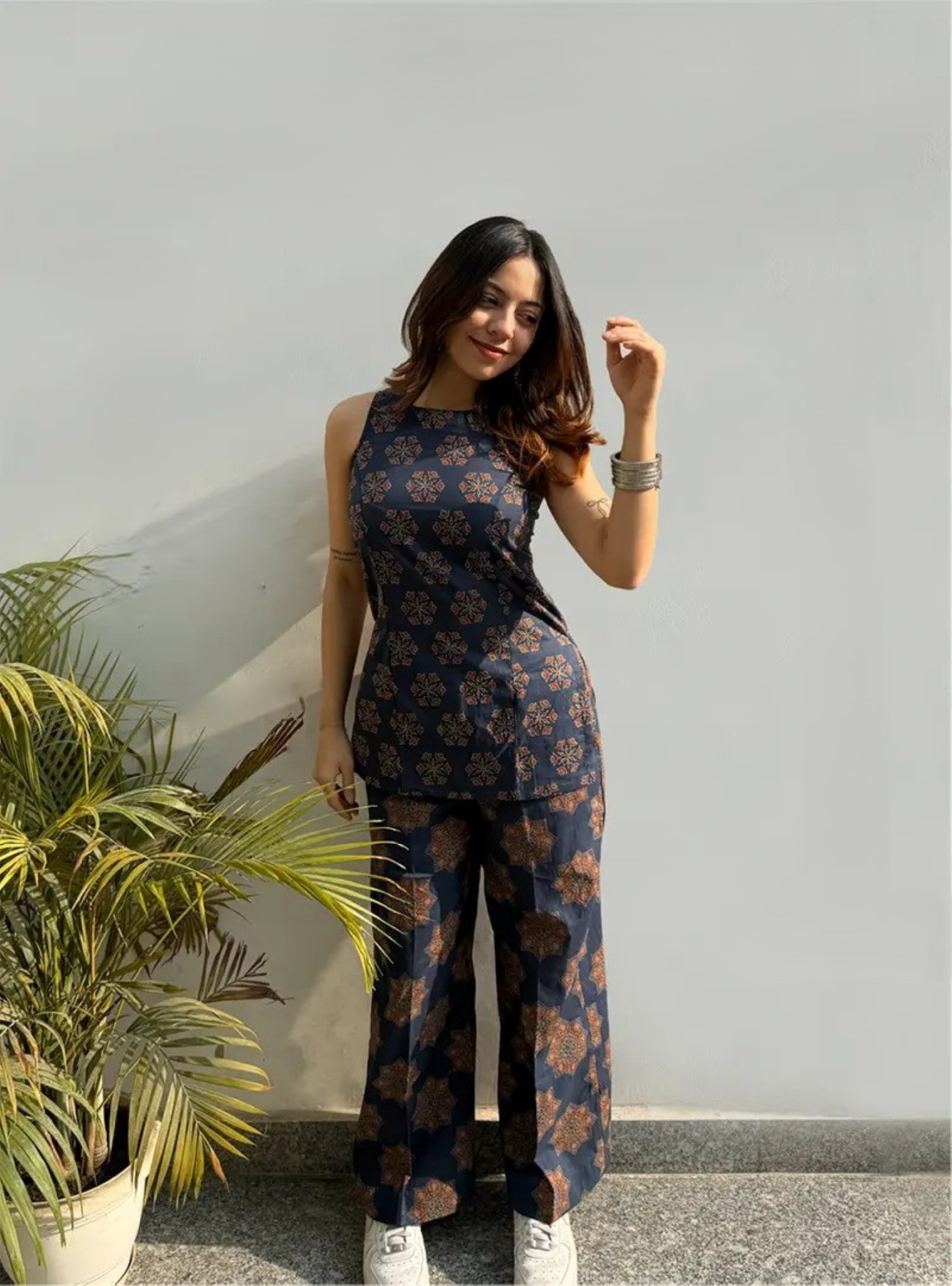
For office celebrations, choose a restrained print, matte fabric, modest neckline and closed or low-profile footwear. Taupe, navy, ivory and muted rust work well because they look considered without competing with a professional environment. Keep jewellery to one or two pieces and carry a structured bag.
For a lunch, select breathable linen cotton, Chanderi or rayon with a comfortable cut. Add juttis, small hoops or a delicate pendant, and let the print provide the visual interest. A full necklace, high shine and heavy embellishment can feel excessive under bright daylight.
For a festive evening, silk, embroidery, zari and deeper colours provide suitable richness. Add a lined jacket or carefully draped dupatta, then choose one metallic accent in gold, antique gold or silver. For a Haldi ceremony, washable or easy-care fabrics, secure footwear and light layers are more practical than fragile heavy embellishment.
The final test is movement. Sit, walk, raise both arms and check the outfit in natural light before leaving home. A polished co-ord should retain its shape after ordinary movement, because elegance that survives real life is more useful than an outfit that looks perfect only when standing still.
Common Questions About Making Ethnic Co-Ords Look Refined
How can I make an ethnic co-ord set look less casual?
Choose a medium-weight fabric, ensure the trousers are properly hemmed and add one structured accessory. Steam every piece, wear polished footwear and keep jewellery coordinated with the embroidery or print.
Can a rayon ethnic co-ord set look suitable for a festive event?
Yes, a rayon co-ord can suit a festive event when the fabric is opaque, the print is distinctive and the fit is tailored. An Ajrakh print, dark palette, embroidered detail, metallic earrings and a neat dupatta can provide enough occasion value.
Which fabric makes an ethnic co-ord look most formal?
Vichitra silk, Banarasi silk and well-finished embroidered silk generally look more formal than thin jersey or flimsy synthetic fabric. Chanderi and linen cotton can also look elegant for daytime events when they are lined, pressed and precisely tailored.
What footwear works best with a kurta and palazzo co-ord?
Block heels, embroidered juttis, pointed mules and clean leather kolhapolis work well with kurta and palazzo co-ords. Keep the trouser hem 2 to 4 centimetres above the floor so the footwear remains visible and the fabric does not drag.
How should jewellery be chosen for an embroidered ethnic co-ord?
Match jewellery to the embroidery metal, neckline and colour palette rather than wearing a complete set automatically. Dense zari or embroidery usually needs only earrings and a ring, while a plain neckline can support a necklace or cuff.
Can an ethnic co-ord be worn to the office?
An ethnic co-ord can work for the office when it has a modest neckline, controlled volume, limited embellishment and a restrained colour palette. Pair the set with low-profile footwear, a structured bag and minimal jewellery for a professional finish.