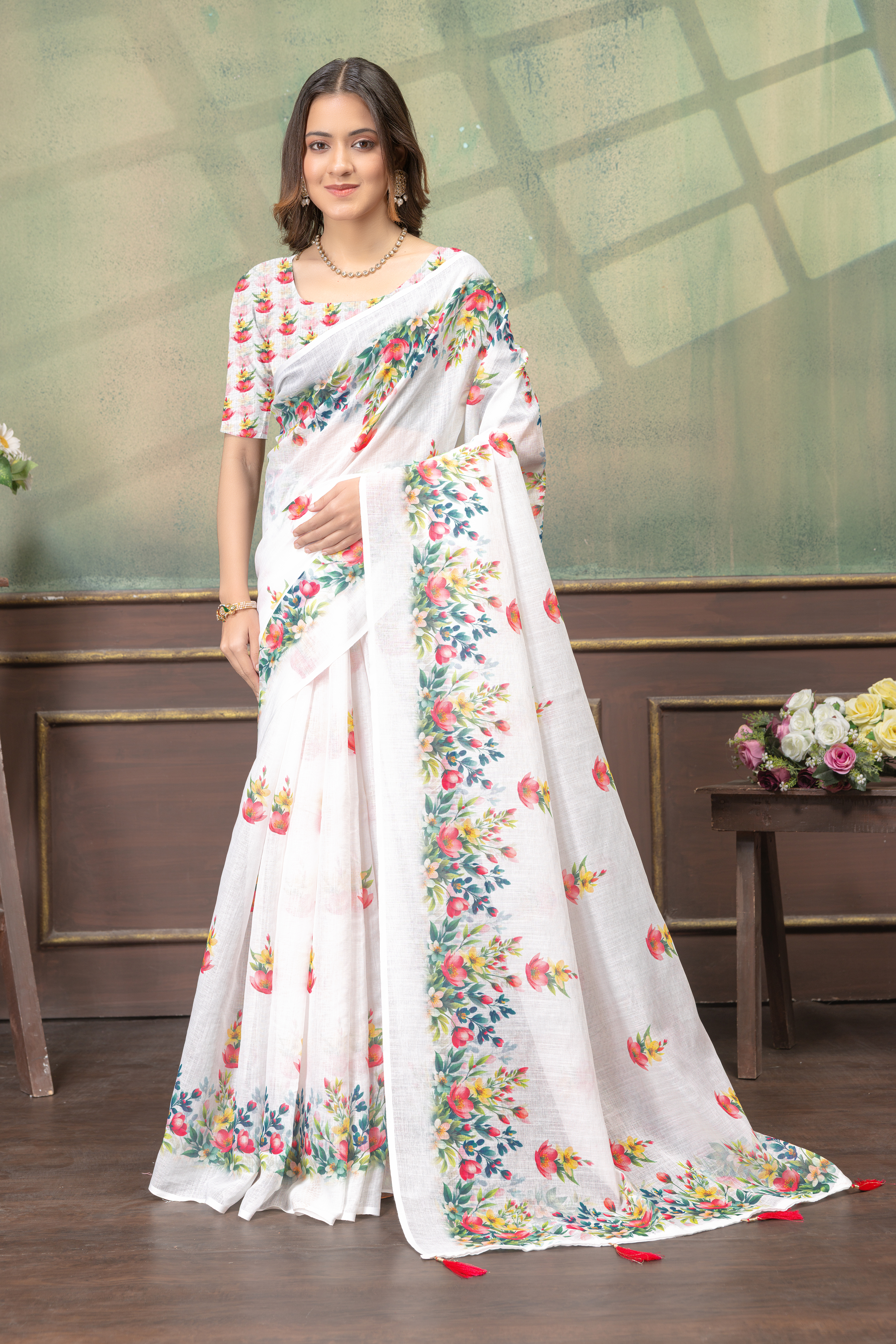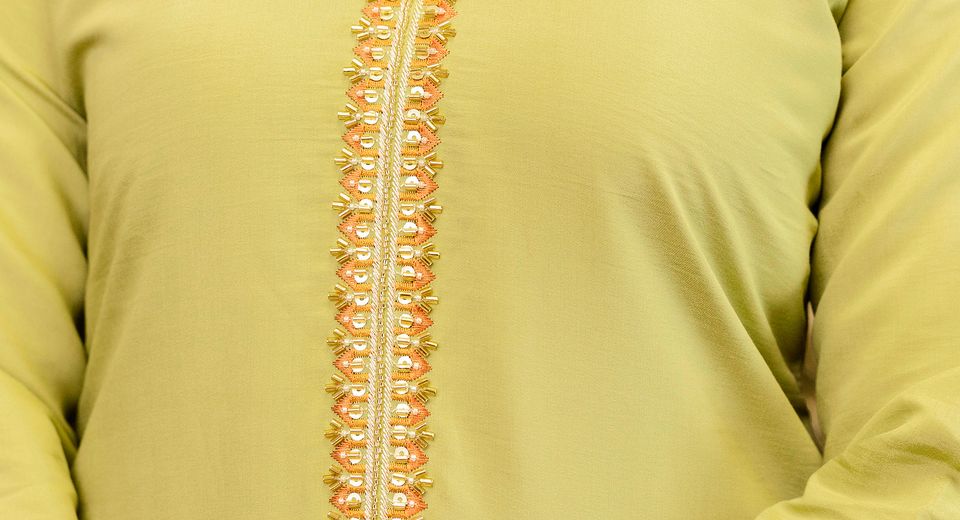
Kurtis With Pockets That Keep Their Shape solve a minor but persistent dressing problem: carrying a phone, keys or cards without making the front of a kurti look pulled or uneven. The result depends on more than the presence of a pocket. Fabric weight, pocket depth, seam reinforcement, opening direction and the placement of the pocket all find whether a pocket remains flat after repeated use. A well-designed salwar suit can therefore be both bright and practical, provided the pocket is treated as part of the garment structure rather than an afterthought.
This guide explains how to judge pocket construction, which fabrics and silhouettes perform reliably, how much weight a kurti pocket should carry, and how to maintain the garment after washing. The same checks are useful when comparing a straight kurta set, an A-line kurti pant set or a three-piece salwar suit with a dupatta.
Why Kurtis With Pockets That Keep Their Shape Need More Than a Deep Pocket
A deep pocket alone doesn't prevent distortion; a stable pocket needs suitable fabric, a firm opening and support from the side seam or waist area. A pocket that hangs below the hip can pull the kurti sideways when filled, while a shallow pocket may force a phone to sit partly outside the garment.
The pocket bag is the fabric pouch hidden inside the garment. If the pocket bag is much lighter than the kurti fabric, the pouch can stretch or curl even when the outer kurti still looks crisp. Cotton poplin, medium-weight woven cotton, cotton blends and other firm fabrics generally form more stable pocket bags than very thin, slippery materials.
The pocket opening also matters. A vertical side-seam opening usually distributes the load along the side seam and is less visually prominent. A slanted opening can be easier to reach but needs accurate stitching at both ends. A patch pocket is visible and can become a design feature, although the top edge needs reinforcement if it will hold a phone regularly.
- Look for: neatly finished edges, even topstitching and a pocket bag that feels substantial rather than flimsy.
- Check the opening: the hand should enter without forcing the side seam apart.
- Assess the load: a pocket for a phone and keys needs stronger construction than a pocket intended for a handkerchief.
- Inspect the hem: a straight, level hem suggests that the pocket isn't pulling the garment off balance when empty.
Which Fabrics Hold a Kurti Pocket Most Reliably?
Medium-weight woven cotton and structured cotton blends usually hold a kurti pocket most reliably because they resist stretching and recover their shape after normal movement. Fabric choice should match the intended use, because a fabric that feels comfortable in hot weather may not provide enough support for a heavy phone.
Cotton for frequent washing
Cotton is a practical choice for daily salwar suits because it breathes well and can tolerate regular laundering when washed correctly. A medium-weight cotton kurti tends to keep a side pocket flatter than a very lightweight voile or gauze. Shrinkage must still be considered: pre-washed or shrinkage-controlled cotton is less likely to make the pocket bag twist after the first wash.
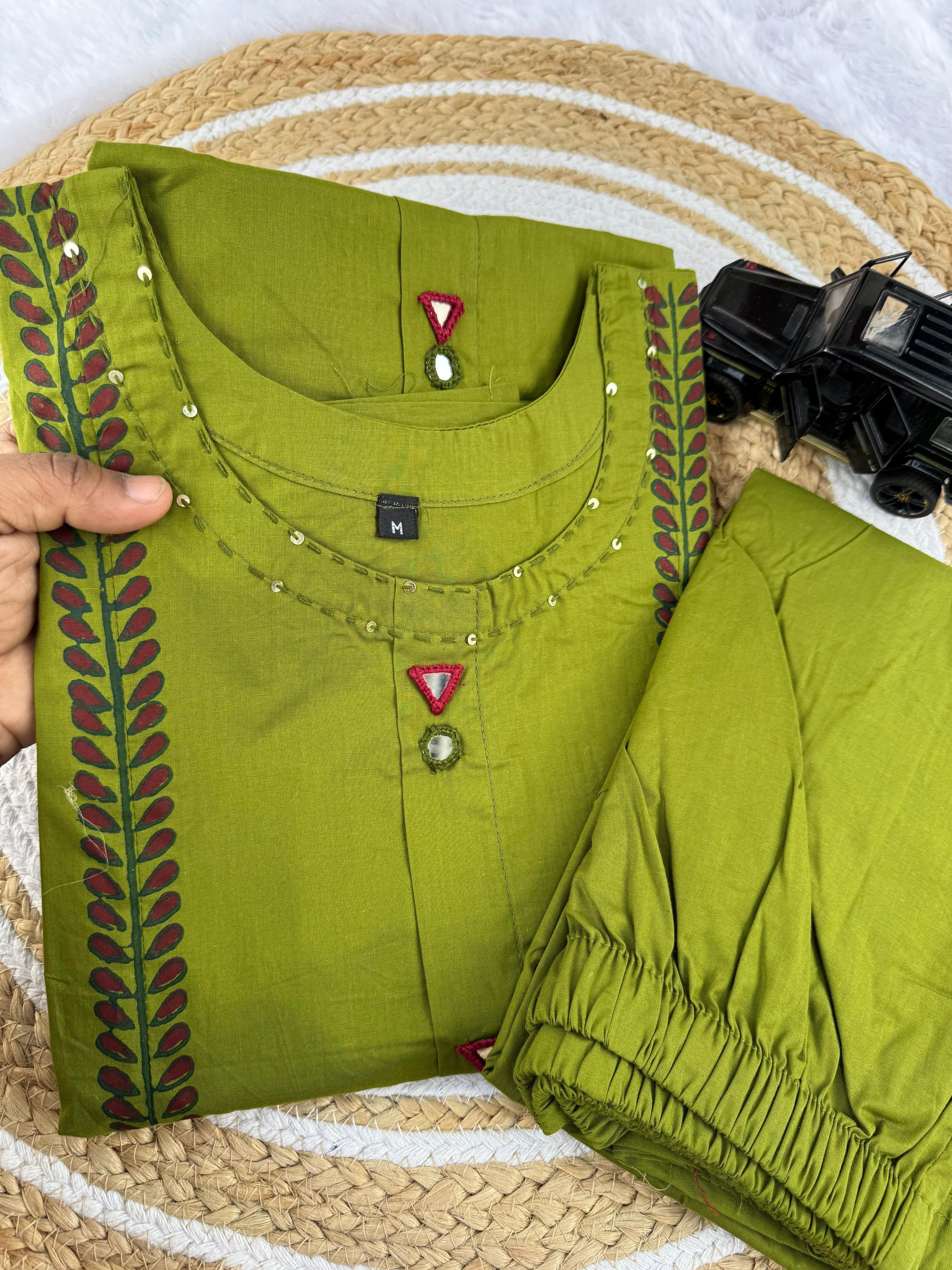
The Designer Cotton A-Line Kurti Pant Set with Mirror Work demonstrates why surface decoration and construction should be assessed separately. Mirror work can add visual interest to an A-line silhouette, but pocket stability still depends on the weave, seam finish and lining around the pocket area. A buyer should confirm the pocket details rather than assume that embroidery or embellishment strengthens the pocket.
Silk-look and fluid fabrics
Roman silk and other fluid fabrics create a dressier fall, but they require a carefully supported pocket because loose fabric can show the outline of the contents. The Designer Roman Silk Kurti Set with Jacquard Dupatta is an example of a richer occasion-oriented silhouette where pocket placement should remain discreet and the carried load should be light.
Jacquard, zari and dense woven designs can add body, but decorative richness doesn't automatically mean that the garment can carry a large phone or a set of keys. A pocket placed near a seam or reinforced at the opening is more dependable than a pocket cut into an unsupported fluid panel.
Which Kurti Silhouette Keeps a Pocket Looking Neat?
A straight kurti with a side-seam pocket generally keeps the cleanest pocket line because the garment falls vertically and the side seam supports the pocket opening. A relaxed A-line can also work well, while a heavily flared Anarkali needs careful placement to stop the pocket from swinging away from the body.
Straight kurtis
Straight silhouettes suit pocket placement around the upper hip, where the hand can reach the opening without lifting the hem. The Designer Cream Straight Kurti Set with Dupatta and the Vertical Cotton Straight Kurta Set with Dupatta illustrate two useful references for comparing vertical lines, visual balance and dupatta styling. A pocket is easiest to disguise when its opening follows the side seam and the print or weave doesn't break abruptly around it.
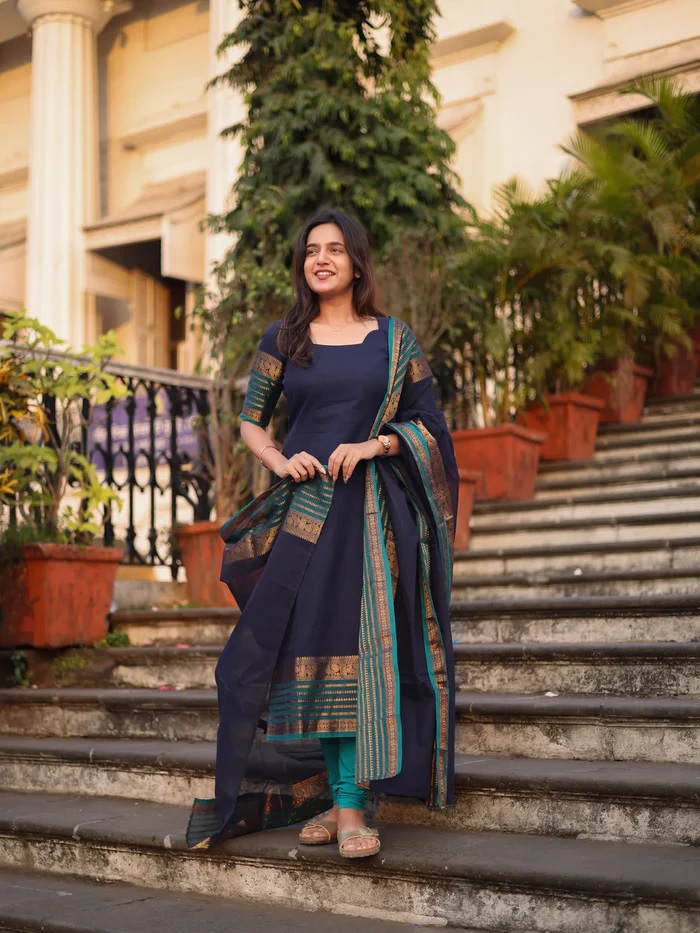
The Navy Kanchi Cotton Kurti Set with Woven Dupatta offers another useful comparison point for a woven cotton look. Kanchi cotton, woven motifs and a structured straight shape can create a firmer visual line than a thin printed fabric. Pocket comfort still depends on the actual garment pattern, so check whether the pocket is stitched into the side seam, lined and reinforced at both ends.
A-line and flared shapes
An A-line kurti can accommodate a pocket comfortably when the pocket opening sits close to the natural side seam rather than too far forward on the front panel. The flare provides ease around the hips, but an oversized pocket bag can swing inside the garment and disturb the drape. Keeping the pocket bag moderate in depth usually produces a cleaner result.
The Teal Cotton A-Line Kurti Pant Set with Handwork shows how handwork and colour can draw attention to the upper body while the A-line cut creates movement below. When styling a pocketed A-line kurti, carry only compact essentials and avoid placing a bulky phone together with keys, because the weight can pull the nearest decorative panel out of alignment.
How Should a Pocket Be Placed on a Salwar Suit?
A pocket should sit near the natural hand position, usually around the upper hip, with enough room for the hand but not so much depth that the pouch reaches the thigh. Correct placement allows the wearer to reach inside without lifting the kurti, pulling the bust area or disturbing the dupatta.
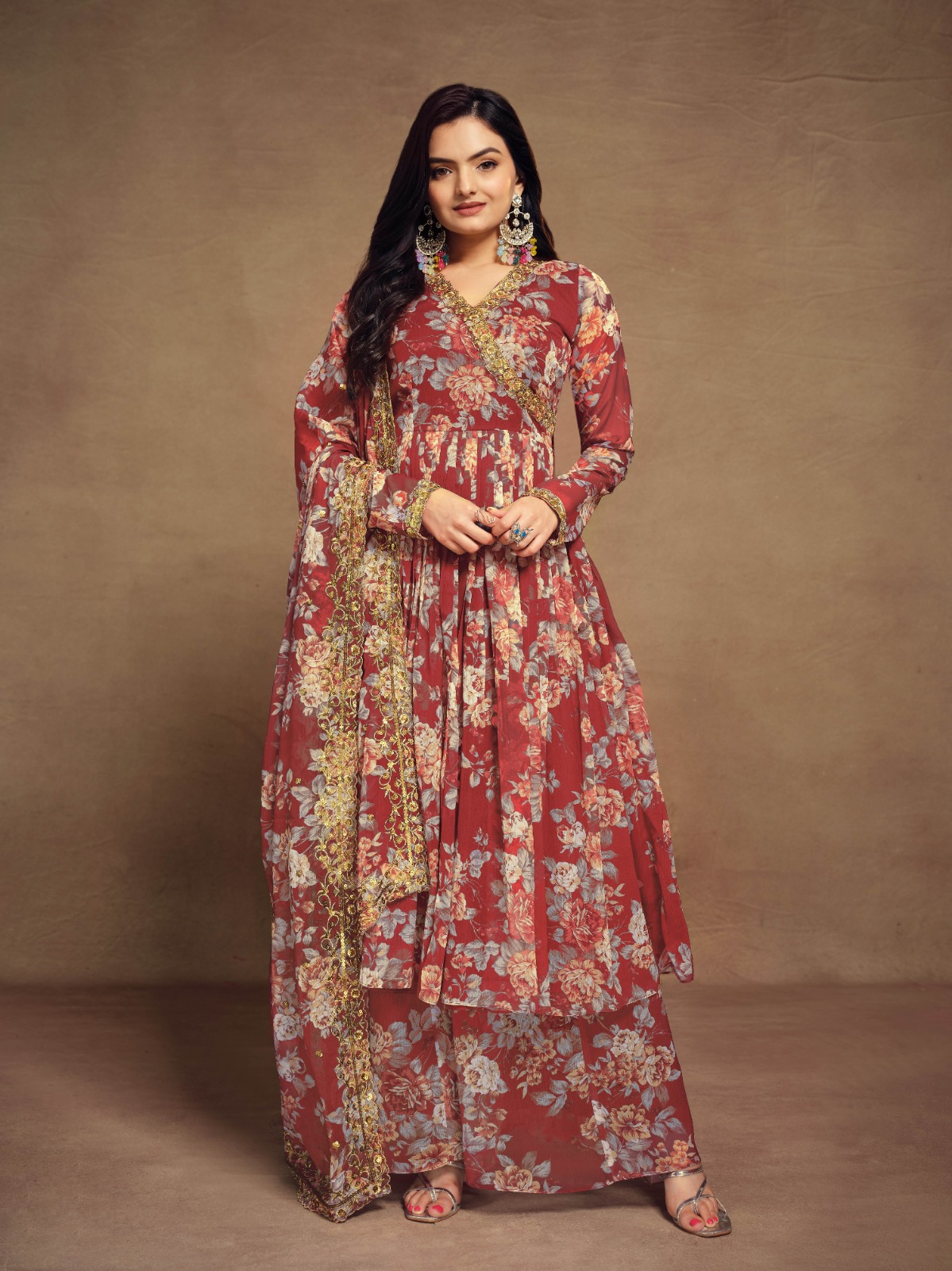
Measure placement against the wearer rather than relying only on a size label. A petite wearer may find a low pocket awkward, while a taller wearer may prefer a slightly longer opening. The pocket opening should also remain accessible when the kurta is worn with salwar trousers, cigarette pants or palazzos, because different rises change where the hand naturally rests.
Side-seam pockets are usually the least distracting option for printed kurtis. A pocket placed too close to the front can interrupt Kalamkari motifs, Bandhej dots or woven borders. The Kalamkari Print Salwar Suits (Copy) collection, for example, highlights why print continuity matters: a concealed side pocket preserves the visual rhythm better than a large contrasting patch pocket placed across a prominent motif.
Dupatta placement can affect access as well. A dupatta worn across both shoulders may cover the opening, while an one-shoulder drape leaves one side easier to reach. For practical commuting, place the phone on the less-covered side and keep the dupatta pinned lightly rather than tightly around the pocket opening.
How Much Weight Can a Kurti Pocket Safely Carry?
A kurti pocket should normally carry a phone, a few cards and a key, but not a heavy wallet, cosmetics case or water bottle. The exact safe load depends on fabric, pocket size and reinforcement, yet keeping the total load around 250 to 350 grams is a sensible everyday limit for many lightweight and medium-weight kurtis.
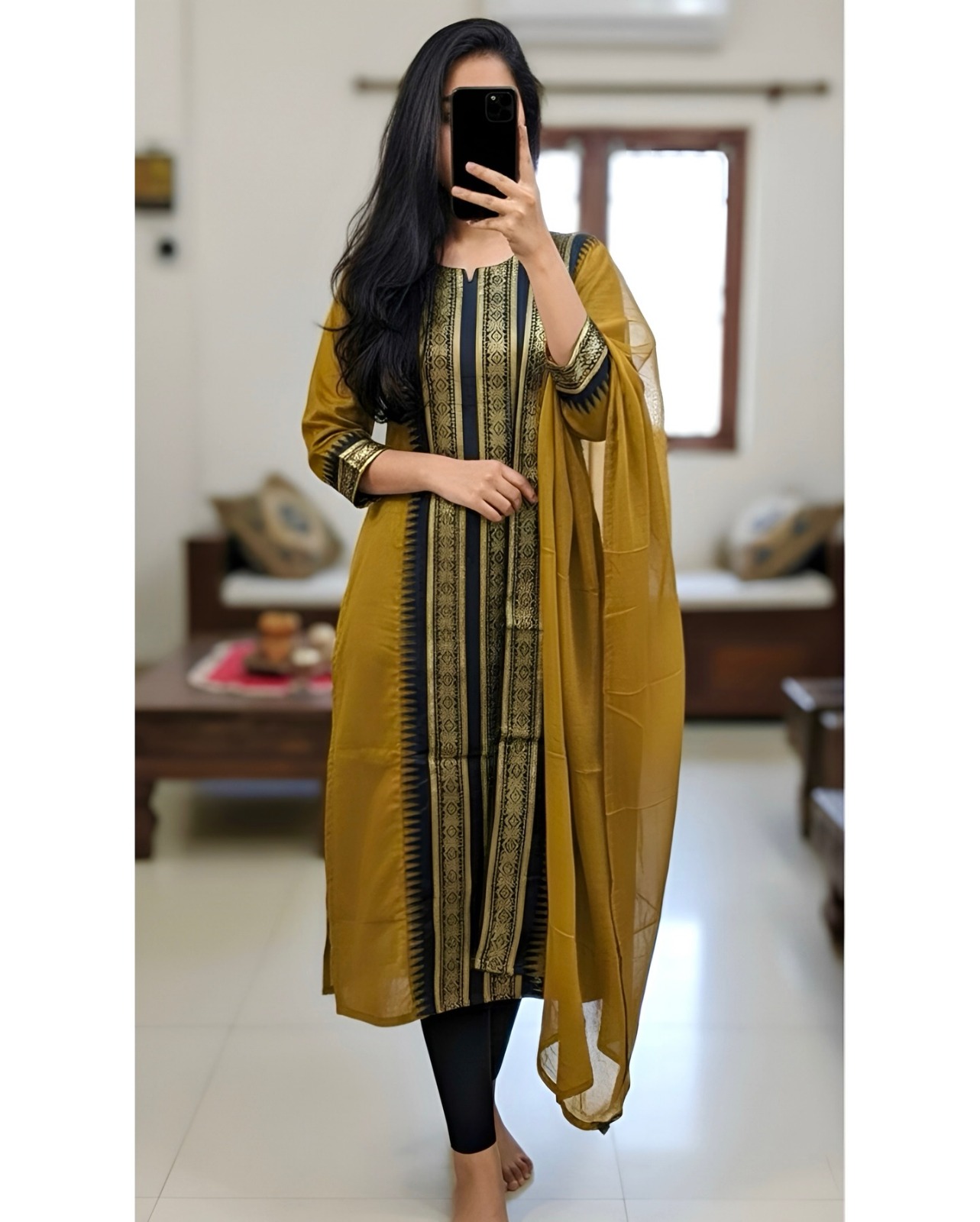
Weight creates two kinds of strain. The first strain pulls the pocket opening downward and can cause gaping. The second strain pulls the side seam outward, which may make the kurti look twisted even when the pocket itself remains intact. A large modern phone with a thick protective case can weigh more than expected, so test the garment with the actual phone rather than an empty hand.
- Keep keys in a small pouch so sharp edges don't catch the pocket bag.
- don't place a power bank, perfume bottle or metal sunglasses case in a lightweight kurti pocket.
- Use a small crossbody bag when the pocket begins to pull the hem or side seam.
- Empty pockets before sitting for long periods, especially in a fitted straight kurti.
The Rust Printed Cotton Kurta Set with Pant and Dupatta is an useful example of a coordinated everyday outfit where print, pant structure and dupatta can carry the styling, leaving the pocket to perform a modest practical role. A pocket works best when it carries essentials rather than replacing a handbag entirely.
How Do Regional Textiles Affect Pocket-Friendly Salwar Suit Styling?
Regional textiles affect pocket styling through their weave density, surface decoration and traditional placement of borders. Maharashtra Paithani Inspired Salwar Suits, Gujarat Bandhej Salwar Suits and Odisha Sambalpuri Salwar Suits may each bring distinctive motifs or borders, so a concealed pocket often protects the design better than a prominent pocket added over the pattern.
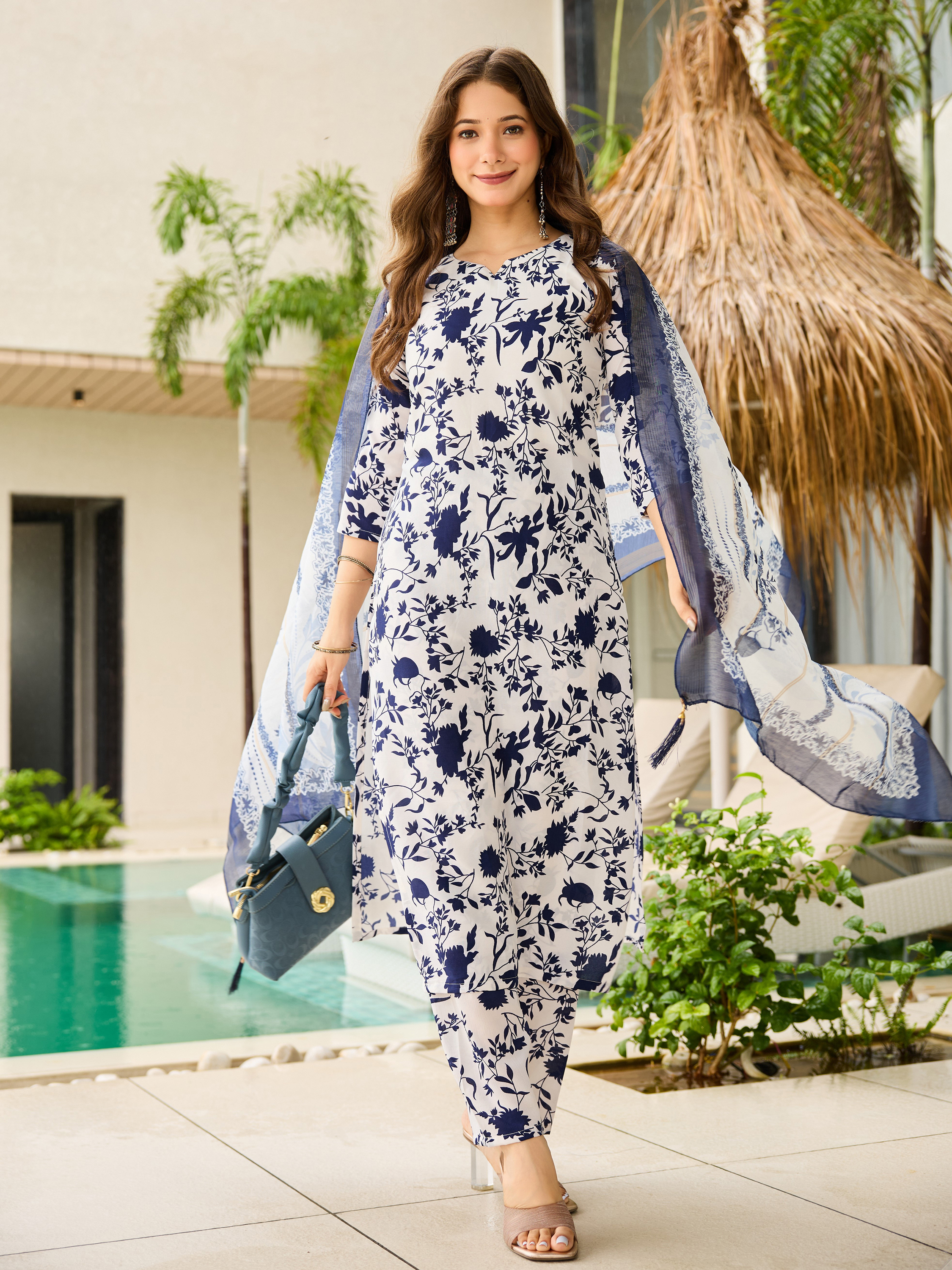
Paithani-inspired motifs can benefit from side-seam placement because a pocket opening across a border may interrupt the relationship between the body pattern and hem. Bandhej-inspired dots are more forgiving visually, although a pocket bag should still be colourfast and strong enough to survive washing. Sambalpuri-inspired geometric designs can make uneven pocket alignment noticeable, making accurate pattern matching especially valuable.
Punjab Patiala Salwar Suits typically create more volume through the lower garment, which can make a kurti pocket feel less visually dominant. The pocket should still be placed high enough for comfortable access, because excess fabric in a Patiala-style bottom doesn't solve a poorly positioned kurta pocket.
Heritage influence should not be confused with a guarantee of pocket construction. A regional name describes a design direction or inspiration; the actual pocket quality comes from the garment pattern, stitching, lining and finishing. Always read the product specifications and examine close-up images where available.
How Can You Test Kurtis With Pockets That Keep Their Shape Before Buying?
You can test Kurtis With Pockets That Keep Their Shape by checking the empty pocket, adding the intended load and observing the side seam, hem and opening from several angles. A two-minute inspection reveals more than judging the pocket by depth alone.
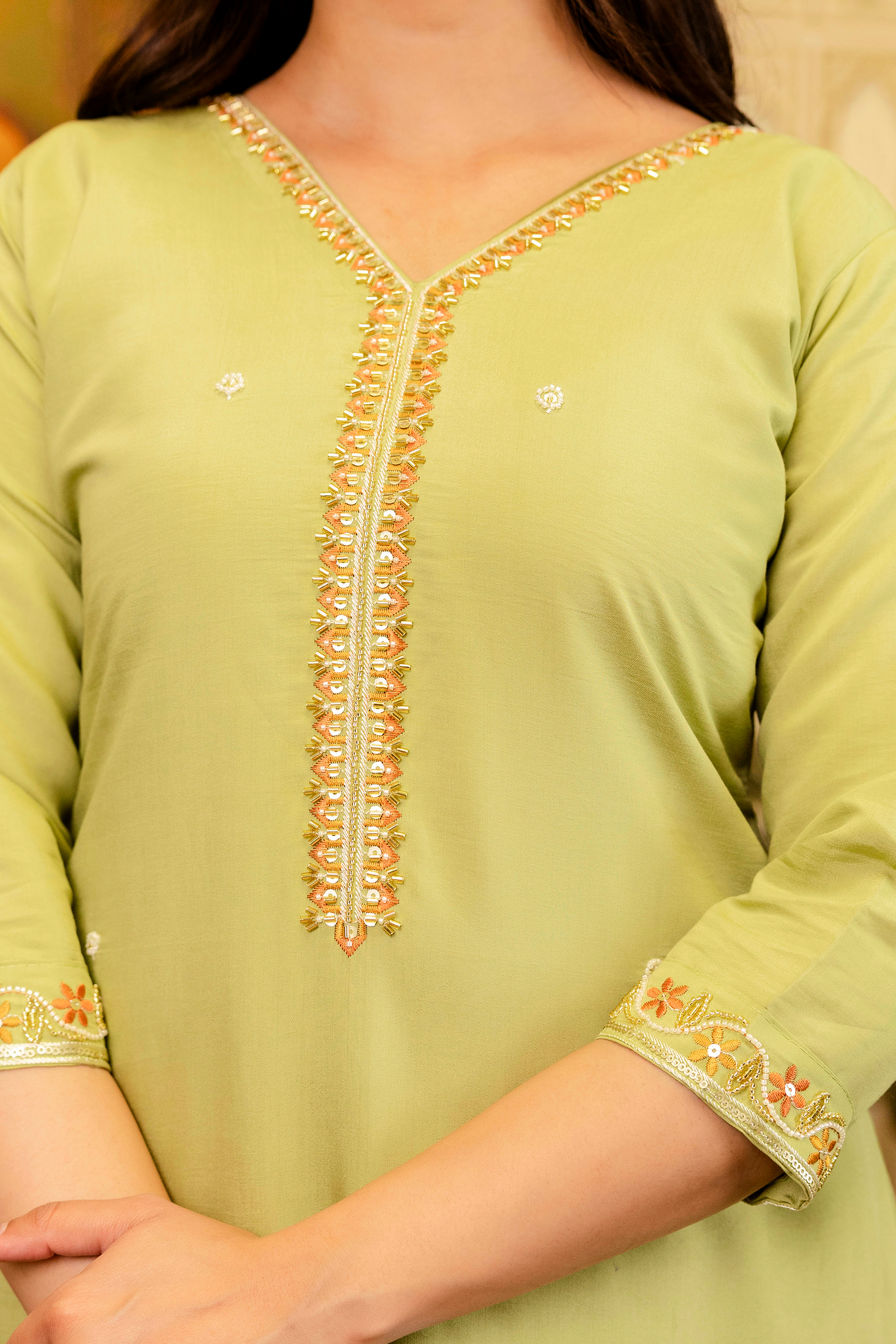
- Check the empty pocket: the opening should lie flat without a visible gap or diagonal wrinkle.
- Test hand access: slide the hand in naturally while standing and sitting; the pocket should not force the elbow outward.
- Add a realistic load: use the phone, keys and cards you normally carry, then inspect the hem and side seam.
- Walk for one minute: movement shows whether the pocket bag swings, taps against the leg or pulls the kurti to one side.
- Check the stitch ends: bar-tacks, dense stitching or clean reinforcement at the opening indicate better resistance to tearing.
- Review care instructions: a pocket that requires gentle handling may not suit daily commuting or frequent washing.
Compare the Pista Kurti with Embroidery and Jacquard Dupatta with the intended occasion before deciding how much practical use the pocket must provide. Embroidery and a jacquard dupatta can make a kurti appropriate for a gathering, while a small pocket may be sufficient for a lipstick or card holder. Occasion dressing usually benefits from a light load that preserves the fall of the garment.
How Should You Wash and Store a Pocketed Kurti?
Wash a pocketed kurti inside out, empty every pocket first and follow the care label; drying the garment flat or on a broad hanger helps prevent the pocket opening from stretching. Heat, harsh rubbing and overfilled pockets during drying can permanently distort the pocket bag.
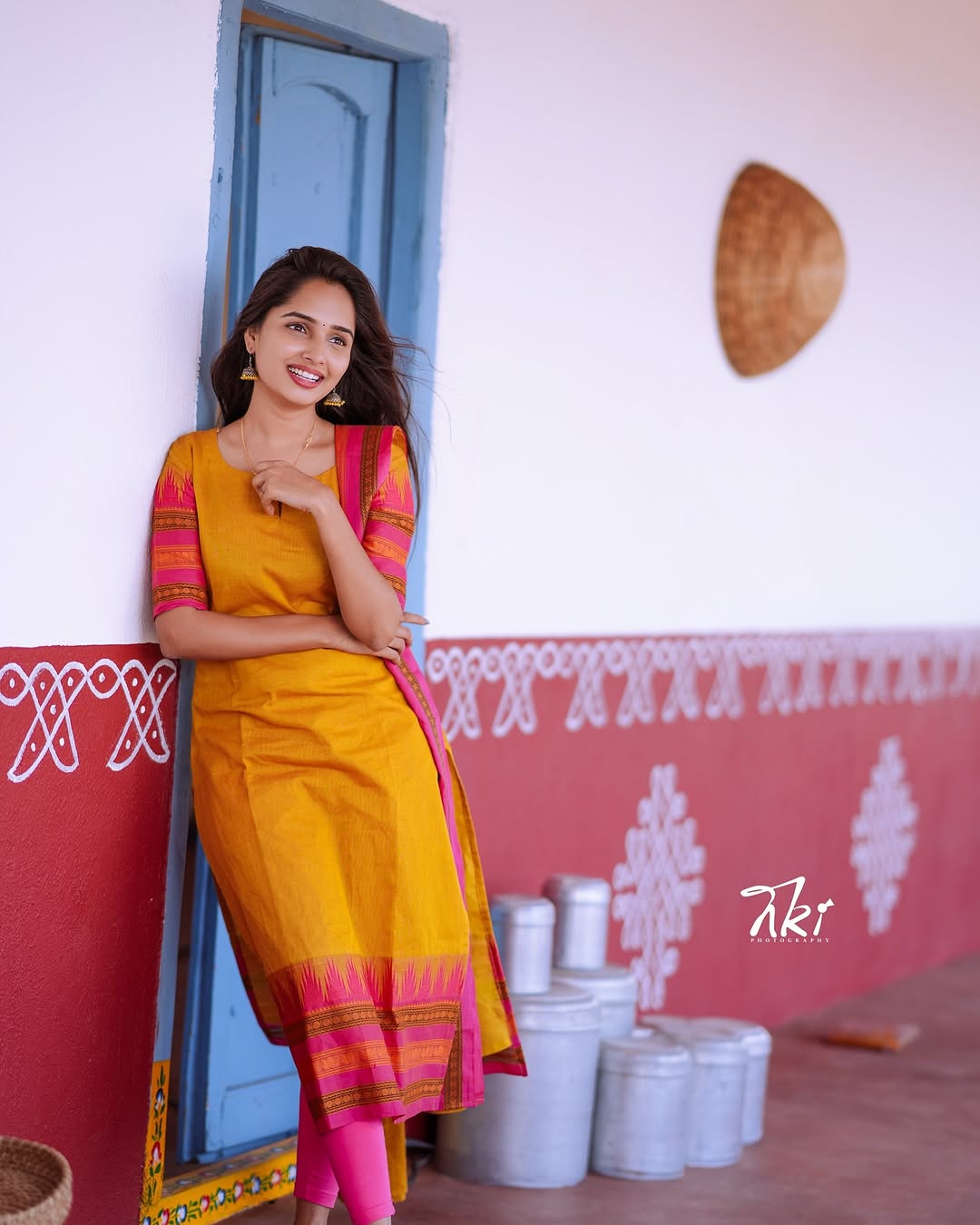
For cotton, use a mild detergent and avoid leaving the garment wet in a crowded bucket, because prolonged soaking can encourage colour bleeding and uneven shrinkage. Printed fabrics should be washed with similar colours, while handwork and zari should be protected from rough machine agitation. Do not iron directly over mirrors, embroidery or metallic thread.
Before storing a kurti, smooth the pocket bag from the inside and make sure the opening is dry. Fold heavier embellished garments rather than hanging them for months, because continuous hanger pressure can stretch the shoulder and alter the side seam. A breathable cotton garment bag is preferable to sealed plastic for long-term storage.
When maintained this way, a practical pocket can remain a quiet but valuable feature rather than becoming the first part of the kurti to look worn. The best choice balances fabric, silhouette, regional design language and the real objects you carry every day.
Common Questions About Shape-Holding Pocketed Kurtis
Which fabric is best for a kurti pocket that does not sag?
Medium-weight woven cotton is usually the most dependable choice because it supports the pocket bag and tolerates regular washing. A firm cotton blend can also work, while very thin or fluid fabrics need extra reinforcement and a lighter load.
Where should a pocket sit on a straight kurti?
A straight kurti pocket should usually sit around the upper hip, close to the natural hand position. The opening should be reachable while standing or sitting without pulling the bust area, side seam or hem.
Can a kurti pocket hold a large smartphone?
A reinforced pocket in medium-weight fabric can usually hold a smartphone, cards and a small key set. Keep the total load modest, ideally around 250 to 350 grams for many everyday kurtis, and stop using the pocket if the side seam begins to pull.
Are side-seam pockets better than patch pockets on salwar suits?
Side-seam pockets usually create a cleaner appearance and distribute strain along the seam. Patch pockets are easier to inspect and can be decorative, but their top edge needs strong reinforcement when used for a phone or keys.
How do you stop a cotton kurti pocket from losing its shape after washing?
Empty the pocket, wash the kurti inside out with mild detergent and follow the care label. Reshape the pocket bag while damp and dry the garment flat or on a broad hanger instead of using high heat.
Do pockets work with embellished or regional-print kurtis?
Pockets work well with embellished and regional-print kurtis when the opening is placed near the side seam and does not cut across a key border or motif. A concealed pocket usually protects Kalamkari, Bandhej, Sambalpuri and Paithani-inspired designs better than a large patch pocket.