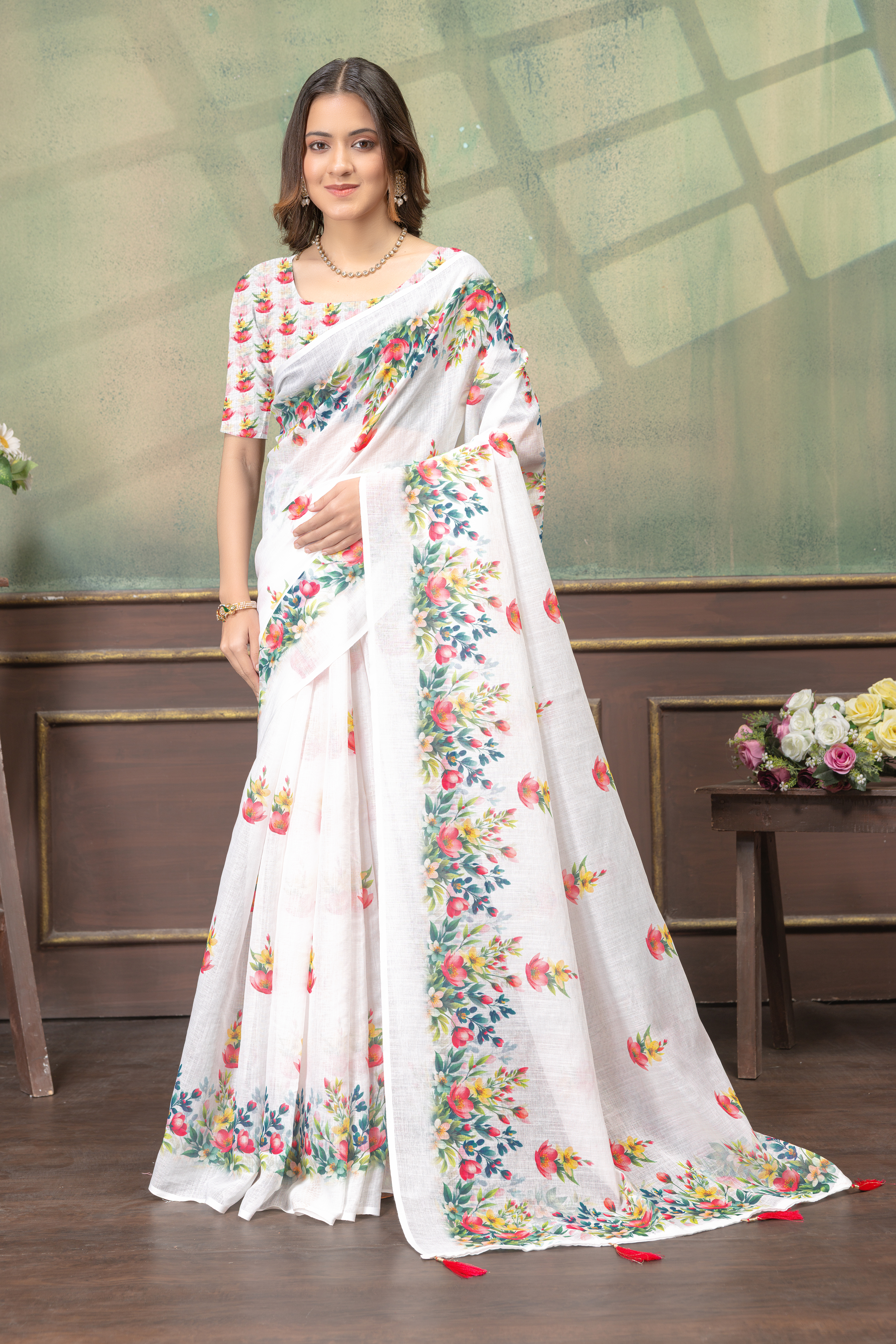
Raksha Bandhan Sarees for a Festive Look That Still Feels Easy should let you move from the rakhi ceremony to lunch, photographs and family visits without constant adjusting. The most reliable choices combine a breathable fabric, a manageable pallu, a blouse that allows arm movement and colours suited to daytime celebrations. A saree doesn't need heavy embroidery or a stiff silk body to look festive; a thoughtful combination of weave, print, border and accessories can create polish with considerably less effort.
Why Fabric Matters More Than Embellishment
Breathable cotton blends, linen cotton and lightweight tissue cotton are usually the most comfortable fabrics for a daytime Raksha Bandhan gathering. These fabrics allow air circulation, dry perspiration faster than heavily layered synthetics and create less weight around the waist during several hours of wear.
Linen cotton offers a gently structured drape with a natural, slightly textured appearance. Linen cotton can crease, but small creases often add to its relaxed character rather than making the saree look untidy. Cotton tissue has a lighter hand and a subtle surface glow, making it useful when you want a festive finish without choosing a heavily embellished Banarasi silk or brocade saree.
Banarasi silk, Kanjeevaram silk and dense zari sarees remain valuable for weddings and evening celebrations, but they can feel warmer and heavier for a Raksha Bandhan lunch held in August. Chanderi is another elegant option because its fine weave and translucent quality feel light, although a Chanderi saree may need a carefully chosen lining or petticoat for comfortable coverage.
A practical fabric test takes less than a minute. Hold the saree folded over your forearm, check whether the border pulls the body downward and rub a small section gently between your fingers. A comfortable saree should not feel excessively rigid, scratchy or slippery. A very slippery fabric can require repeated pleat adjustments, while an extremely stiff border can make sitting cross-legged or climbing stairs inconvenient.
Raksha Bandhan Sarees for a Festive Look That Still Feels Easy
Raksha Bandhan Sarees for a Festive Look That Still Feels Easy work best when the visual interest is concentrated in one or two details rather than distributed across the entire outfit. A floral print, woven border or printed pallu can supply enough occasion character for a daytime function.
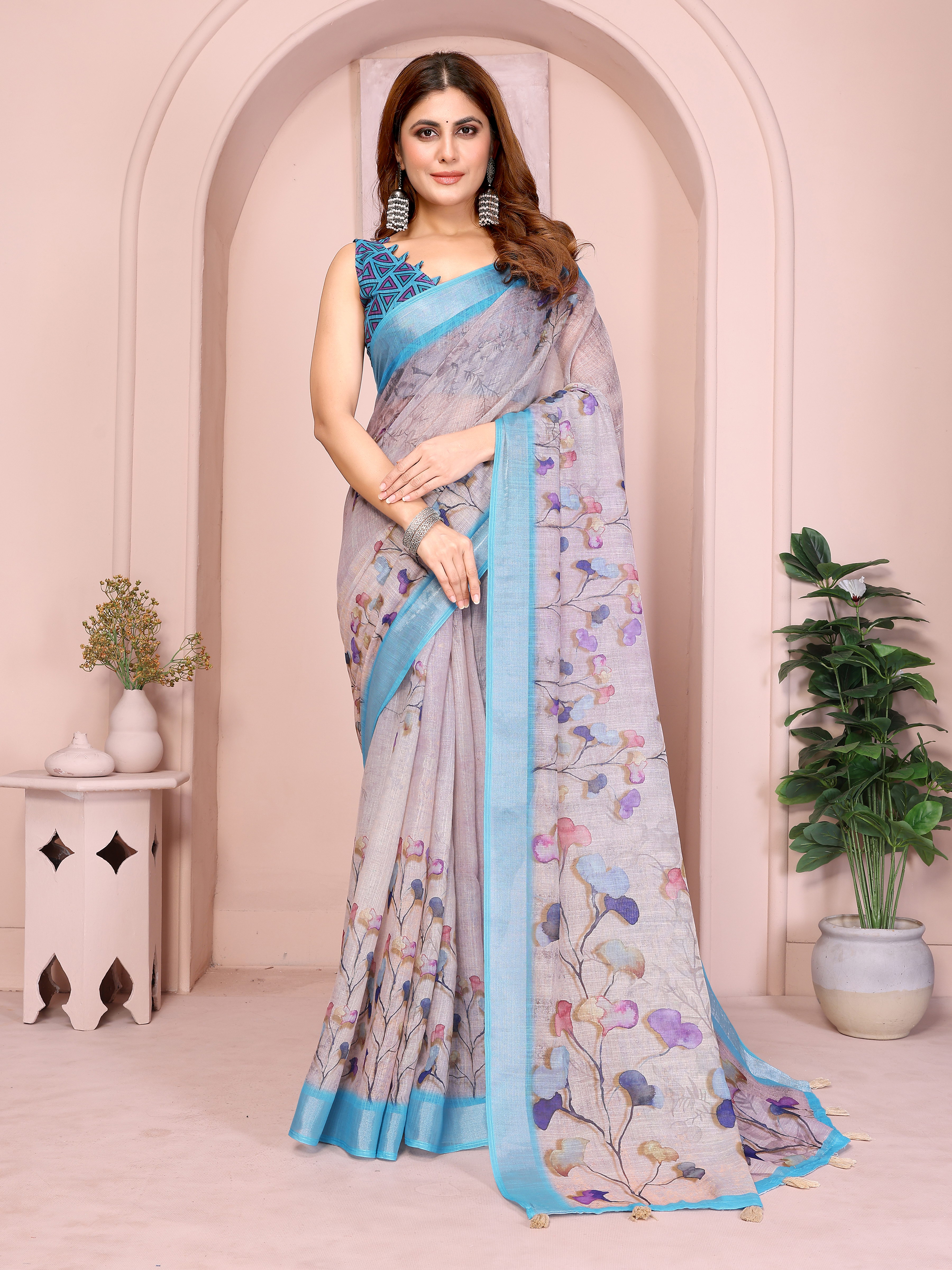
Floral prints for a soft daytime palette
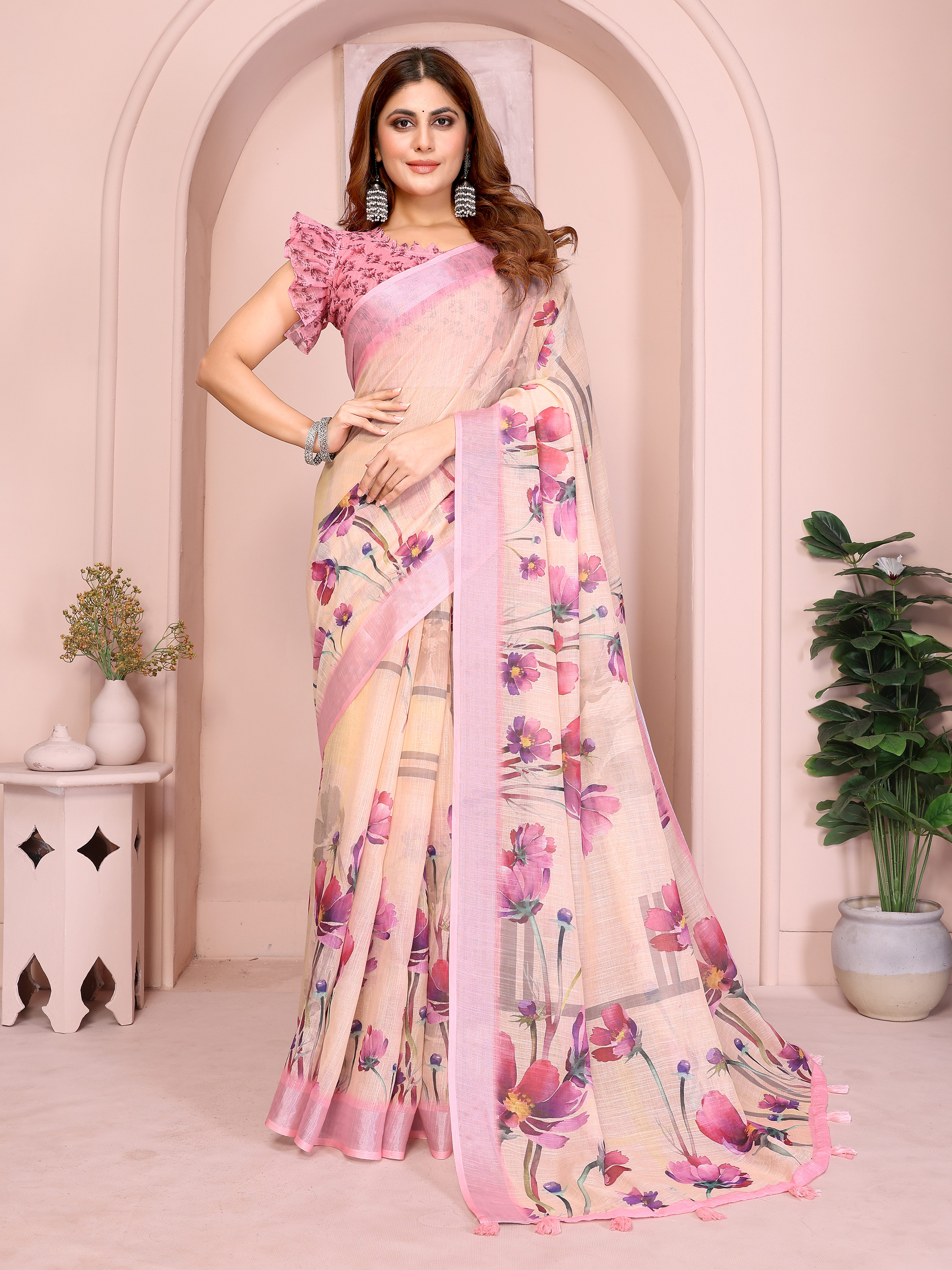
Floral motifs suit Raksha Bandhan because they bring colour and festivity without the visual weight of all-over sequins. Pastel pink, peach, sea green, olive, powder blue and teal photographs well in natural daylight and pairs easily with gold-toned or pearl jewellery.
Pastel Linen Cotton Floral Print Saree with Designer Blouse demonstrates how a printed body and coordinated blouse can remove much of the styling work. Peach Linen Cotton Floral Print Saree with Blouse for Women brings a warm, cheerful alternative that works especially well with antique-gold earrings, tan sandals and a small potli bag.
Woven borders for quiet definition
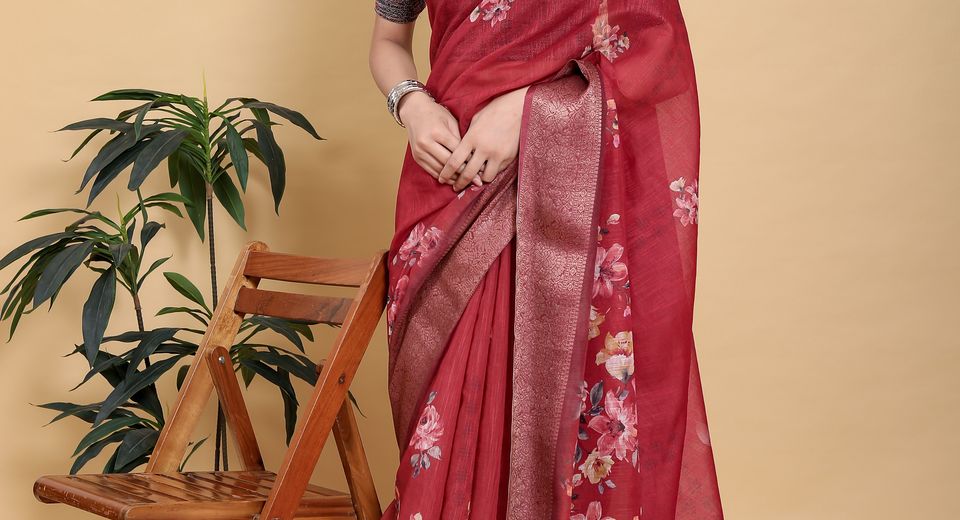
A jacquard or woven border gives a saree a finished appearance even when the body remains simple. Maroon Floral Linen Cotton Saree with Jacquard Woven Border uses the border to add depth, so the rest of the outfit can remain restrained with a plain blouse and minimal jewellery.
Floral prints don't have to look casual when the blouse fits neatly, the pleats are pressed and the pallu is arranged evenly. A narrow belt, a structured blouse neckline or a pair of traditional jhumkas can make a lightweight saree look deliberately festive rather than everyday.
How to Choose a Colour for a Daytime Rakhi Gathering
Light to medium colours are generally the easiest choice for daytime Raksha Bandhan because they reflect heat and keep the outfit visually fresh in indoor and outdoor photographs. The right colour also depends on the setting, jewellery and the amount of contrast in the print.

- Peach and coral: These shades create a warm, welcoming appearance and complement antique gold, rose gold and pearl accessories.
- Sea green and teal: These colours feel refreshing in humid weather and pair well with silver, oxidised metal, pearls and champagne-gold details.
- Olive green: Olive works with maroon, rust, beige and gold accents, making it useful when you prefer a grounded palette rather than pastel dressing.
- Blue: A blue saree looks crisp with a white, silver or navy blouse and photographs clearly against cream or neutral interiors.
- Maroon: Maroon brings richer festive depth, but balancing it with a simple blouse and lighter accessories prevents a daytime outfit from appearing too formal.
Olive Green Tissue Handloom Cotton Saree With Floral Prints creates an earthy festive look, while Sea Green Tissue Handloom Cotton Saree With Floral Patterns gives a cooler palette. Teal Green Tissue Handloom Cotton Saree With Printed Pallu is particularly useful when you want the pallu to act as the main focal point without adding a separate dupatta or dramatic jewellery.
Colour coordination doesn't require an identical blouse and saree. A peach saree can take an ivory, rust or muted green blouse. A teal saree can take a cream, gold or deeper teal blouse. A maroon saree can take beige, blush or antique gold. Repeating one colour from the print in the blouse usually looks more intentional than matching the entire saree exactly.
How to Make a Saree Comfortable for Several Hours
A comfortable saree depends on secure inner layers, correctly placed pleats and footwear selected before the final hemming or tuck. Fabric alone can't prevent discomfort if the saree is pinned too tightly or the petticoat restricts walking.
Set the base before draping
Wear a well-fitting petticoat or shapewear skirt with a firm but comfortable waistband. The waistband should sit securely at the natural waist without digging into the skin. A cotton petticoat gives airflow, while a stretch shapewear skirt can create a smoother line under a lightweight saree; either choice should allow a full walking stride.
Put on the footwear before setting the final saree length. The lower edge should sit close to the floor without dragging. A heel height of approximately 1 to 2 inches is usually easier for a family function than a high stiletto because it supports walking, sitting and standing during the rakhi ritual.
Keep the pleats functional
Five to seven front pleats usually provide a neat fall without creating excessive bulk. The pleats should face the same direction, sit flat at the waist and leave enough fabric for a natural stride. A safety pin placed inside the waistband can anchor the pleats discreetly, while a second pin at the shoulder keeps the pallu stable during photographs and meals.
A medium-width pallu is easier to manage than an exceptionally broad display drape. Fold the pallu so the border remains visible, then secure it at the shoulder with one concealed pin and, if needed, another pin near the underarm. Avoid placing pins directly through delicate zari, fine tissue or loosely woven areas because repeated pinning can leave permanent holes.
Blouse and Jewellery Choices That Keep the Outfit Balanced
A comfortable Raksha Bandhan blouse should provide arm movement, sit securely at the bust and echo one detail from the saree rather than competing with every motif. Elbow-length sleeves, a modest round neck and a breathable lining are practical choices for a daytime family gathering.

Short sleeves can feel cooler, but very tight armholes make lifting the hand for the rakhi ritual uncomfortable. A blouse with a side or back opening should have secure hooks, and a deep back should be tested while sitting because the back may shift more than expected. Blouse fabric should also be checked against the saree body; rough synthetic lining can create friction and make the drape ride upward.
Jewellery can follow a simple three-part formula: one visible pair of earrings, one wrist detail and one optional necklace. Pearl drops soften peach and pastel sarees. Jhumkas suit cotton, linen cotton and handloom textures. Gold-toned hoops bring a contemporary finish to a printed saree. A lightweight bangle stack is more practical than numerous rigid bangles if the wearer will be tying rakhi, serving food or carrying gifts.
Party Wear Sarees can provide ideas for stronger blouse contrasts, but daytime Raksha Bandhan styling usually benefits from reducing the number of statement elements. If the saree has a prominent printed pallu, skip a large necklace. If the blouse has embroidery, choose smaller earrings. If the saree is very simple, a brooch or textured earrings can supply the needed focal point.
Easy Styling Formulas for Different Family Plans
Different Raksha Bandhan schedules call for different levels of structure, and the same saree can be adapted through footwear, blouse styling and accessories.

- Home ceremony: Pair a floral linen cotton saree with a comfortable blouse, small jhumkas, flat sandals and a low bun. This combination supports sitting on the floor and moving between rooms.
- Restaurant lunch: Choose tissue cotton with a printed pallu, a structured blouse, block heels and a compact shoulder bag. Keep the pallu pinned at the shoulder so it doesn't fall into the table or chair.
- Large family gathering: Select a saree with a clear border and medium-contrast colours, then add statement earrings and a neat low ponytail. The border and earrings will remain visible in group photographs.
- Evening visit: Add a satin or silk-blend blouse, deeper lipstick and metallic sandals to a lightweight saree. A small amount of shimmer in the accessories can replace heavy embroidery.
Peach Green Tissue Cotton Saree With Print Blouse Piece is useful when the outfit needs a coordinated look without extensive blouse customisation. The printed blouse piece can be tailored with elbow sleeves, a simple back and a slightly relaxed fit, making the ensemble easier to wear for a long afternoon.
Shopping categories such as Pink Georgette Sarees and Gray Color Sarees Under 1000 can help compare colour directions and budgets, but fabric weight should remain the deciding factor for comfort. Red Banarasi Silk Sarees for Weddings Under 1100 may suit a more formal wardrobe requirement, while Silk Sarees Under 3000 With Discount can be considered when a silk-like finish matters more than an airy daytime drape.
What to Check Before Buying a Festive Saree
A reliable buying decision comes from checking measurements, fabric details, blouse length and return conditions before focusing on photographs. A product image can show colour and print placement, but it can't confirm whether the saree will be easy to sit in or whether the blouse piece will provide enough material.

- Read the fabric description: Confirm whether the saree is linen cotton, cotton tissue, handloom cotton, georgette or silk. Fabric names affect breathability, fall, transparency and care.
- Check the saree length: A length around 5.3 to 5.5 metres suits many standard drapes, while taller wearers or those wanting broad pleats may need more fabric.
- Inspect the blouse piece: Confirm whether the blouse is stitched, unstitched or included as a separate piece. Check the length before planning sleeves, lining or a deep neckline.
- Look at border and pallu details: A heavy border changes the saree's balance and may pull downward. A printed pallu can create impact without requiring extra accessories.
- Plan delivery time: Order at least 7 to 10 days before Raksha Bandhan when tailoring, alterations and a trial drape are necessary.
- Test the complete outfit: Wear the saree with the intended blouse, footwear and jewellery for 20 minutes. Sit, walk, raise both arms and climb a few steps before the event.
Price should be compared with construction rather than decoration alone. A lower-priced saree may be excellent for an one-day celebration if the fabric, stitching and finish are suitable, while a higher-priced silk may offer better longevity but require more careful storage. A clear use plan helps prevent buying a fabric that looks attractive online but remains unworn because it's too warm, delicate or difficult to drape.
Care After Raksha Bandhan
Lightweight festive sarees last longer when perspiration, food marks and pinholes are addressed before storage. Air the saree in shade for several hours after wearing, then inspect the pallu, underarm area and lower pleats for stains or moisture.

Follow the garment label before washing linen cotton, tissue cotton, Chanderi or silk. Hand washing in cool water with a mild detergent is often safer for cotton blends, but zari, jacquard borders and delicate prints may require professional cleaning. Do not wring a saree because twisting can distort the border and weaken woven threads.
Fold the saree along different lines each time it's stored so a permanent crease doesn't form in one place. Keep silk and zari away from direct sunlight, place tissue paper between heavy folds when appropriate and store the garment in a breathable cotton cover rather than sealed plastic. Remove all pins before folding because hidden metal can rust or leave small tears.
Raksha Bandhan Sarees for a Festive Look That Still Feels Easy remain useful beyond one celebration when the fabric is breathable, the colour works with existing blouses and the drape suits the wearer's routine. A floral linen cotton saree can return for office celebrations, a cotton tissue saree can work for pujas and a deeper printed saree can transition into an intimate dinner with a blouse and accessory change.
Common Questions About Comfortable Raksha Bandhan Sarees
Common Questions About Comfortable Raksha Bandhan Sarees
Which fabric is most comfortable for a Raksha Bandhan saree?
Linen cotton, cotton tissue and lightweight handloom cotton are among the most comfortable choices for a daytime Raksha Bandhan gathering. These fabrics are generally more breathable and easier to wear for several hours than heavily layered synthetic or dense silk sarees.
Can I wear a cotton saree for Raksha Bandhan?
A cotton saree is well suited to Raksha Bandhan, especially for a home ceremony or daytime lunch. Floral prints, tissue finishes, jacquard borders and a polished blouse can make cotton look festive without sacrificing movement.
What colour saree is suitable for Raksha Bandhan?
Peach, sea green, teal, blue, olive and maroon are all suitable Raksha Bandhan colours. Pastels feel light for daytime, while maroon and deeper teal create a richer appearance when balanced with simple accessories.
How can I stop my saree from slipping during the rakhi ceremony?
Use a well-fitting petticoat, secure the front pleats at the waistband and pin the pallu at the shoulder. Wearing the planned footwear before adjusting the saree length also reduces dragging and movement during the ceremony.
What jewellery goes with a lightweight festive saree?
Jhumkas, pearl drops, small hoops and a few bangles complement lightweight festive sarees without making the outfit cumbersome. Choose one statement element if the saree has a strong floral print or prominent pallu.
How early should I buy a saree for Raksha Bandhan?
Buy the saree at least 7 to 10 days before Raksha Bandhan when the blouse needs stitching or alterations. A 20-minute trial with the final footwear and jewellery can reveal draping or comfort problems before the event.