Pre Stitched Sarees for Women Who Love the Look but Not the Draping offer the visual rhythm of a traditional saree with a much shorter dressing routine. Fixed pleats, a shaped waistband and a prepared pallu can reduce the most difficult parts of wearing a saree to a few practical steps: put it on, secure it, adjust the fall and style the blouse.
The important detail is that a ready-to-wear saree isn't simply a saree with fewer pleats. Construction, waist measurement, pallu length, fabric weight and footwear all affect the final silhouette. Understanding those details helps a first-time buyer avoid a loose waistband, a dragging hem or a pallu that feels too short for the intended drape.
Pre Stitched Sarees for Women Who Love the Look but Not the Draping: What makes them different?
Pre Stitched Sarees for Women Who Love the Look but Not the Draping have permanently arranged pleats and a finished waist fastening, while a regular saree requires the wearer to create the pleats and control the lower edge during every drape. Most ready-to-wear designs also have a stitched pallu section that falls over the shoulder in a predictable position.
A conventional saree usually measures about 5.5 metres, although the usable length varies by border, blouse piece and finishing. A pre-stitched version may use a similar overall amount of fabric, but the fabric is folded and sewn into a specific silhouette. The wearer generally steps into the waistband, closes a hook, zip or tie, and arranges the pallu with pins.
Time-honoured saree dressing depends on repeated adjustments. Pre-stitched construction keeps the front pleats evenly spaced, maintains the intended height of the waistband and prevents the lower folds from opening while walking. The design is especially useful for people who have limited dressing time, are learning to wear sarees or need to change clothes without assistance.
Ready-to-wear doesn't mean completely pin-free. One or two discreet safety pins can still improve shoulder security, especially during dancing, commuting or a long ceremony. The difference is that pins support the look instead of creating the entire look.
Pre Stitched Sarees for Women Who Love the Look but Not the Draping: How should they fit?
A pre-stitched saree fits correctly when the waistband sits securely at the wearer's natural waist or preferred saree height, the hem clears the floor by roughly 1 to 2 centimetres, and the pallu reaches the upper thigh or lower hip after crossing the shoulder.
Measure the waist instead of relying on trouser size
Measure around the place where the saree waistband will sit while wearing the blouse or inner layer intended for the outfit. Keep the tape level and comfortably close to the body. Do not rely only on a small, medium or large label because ethnic-wear sizing differs between manufacturers.
A waistband that's 2 to 4 centimetres too loose may twist when the wearer walks. A waistband that's too tight can create horizontal pulling across the pleats and become uncomfortable after a meal. If the product has an elasticated section, check the stated minimum and maximum waist range rather than assuming that elastic will fit every body shape.
Check height and footwear together
Height matters because the hem is usually finished before the saree reaches the customer. Try the saree with the footwear planned for the event. A flat sandal and a 7-centimetre heel can create a noticeable difference in floor clearance and pleat position.
Choose the footwear before making alterations. A tailor can shorten the lower edge, but shortening may affect the balance between the border, pleats and pallu. If a saree will be worn with both flats and heels, a modest block heel of about 3 to 5 centimetres usually offers more flexibility than an extreme change in height.
Pre Stitched Sarees for Women Who Love the Look but Not the Draping: Which fabrics work best?
Medium-weight fabrics with enough body to hold pleats and enough movement for walking generally work best in a ready-to-wear saree. Linen cotton, cotton blends, tissue cotton, chinnon and silk create different results.
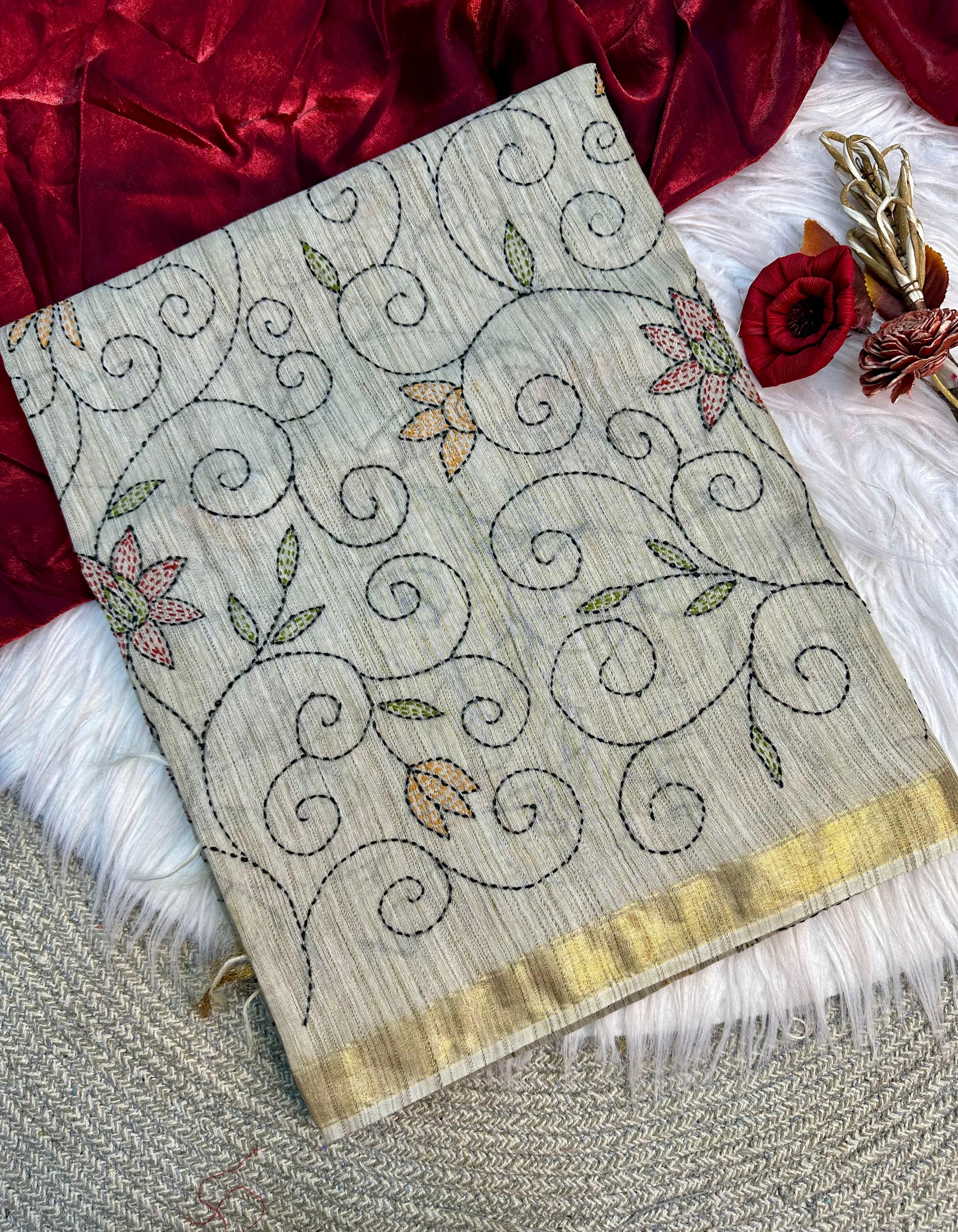
- Linen cotton: Linen cotton gives a crisp, breathable appearance and holds defined pleats well. The fabric can show natural texture and may develop gentle creases during sitting, which suits daytime and semi-formal dressing.
- Cotton: Cotton is practical for warm weather and repeated wear. Handloom cotton often has a slightly irregular texture that adds character, but heavier cotton can need careful waistband support.
- Tissue cotton: Tissue cotton creates a light, subtly luminous surface. A zari border or zari weave can make a simple drape look festive without the weight of a heavily embellished silk saree.
- Chinnon: Chinnon has a soft, fluid fall and creates a graceful pallu. Because the fabric can be slippery, shoulder pinning and a well-fitted blouse are particularly important.
- Silk: Silk has visual depth and can hold a formal shape. Banarasi silk and Kanjeevaram, for example, have distinctive structures and borders, but their weight and stiffness should be checked before selecting a pre-stitched construction.
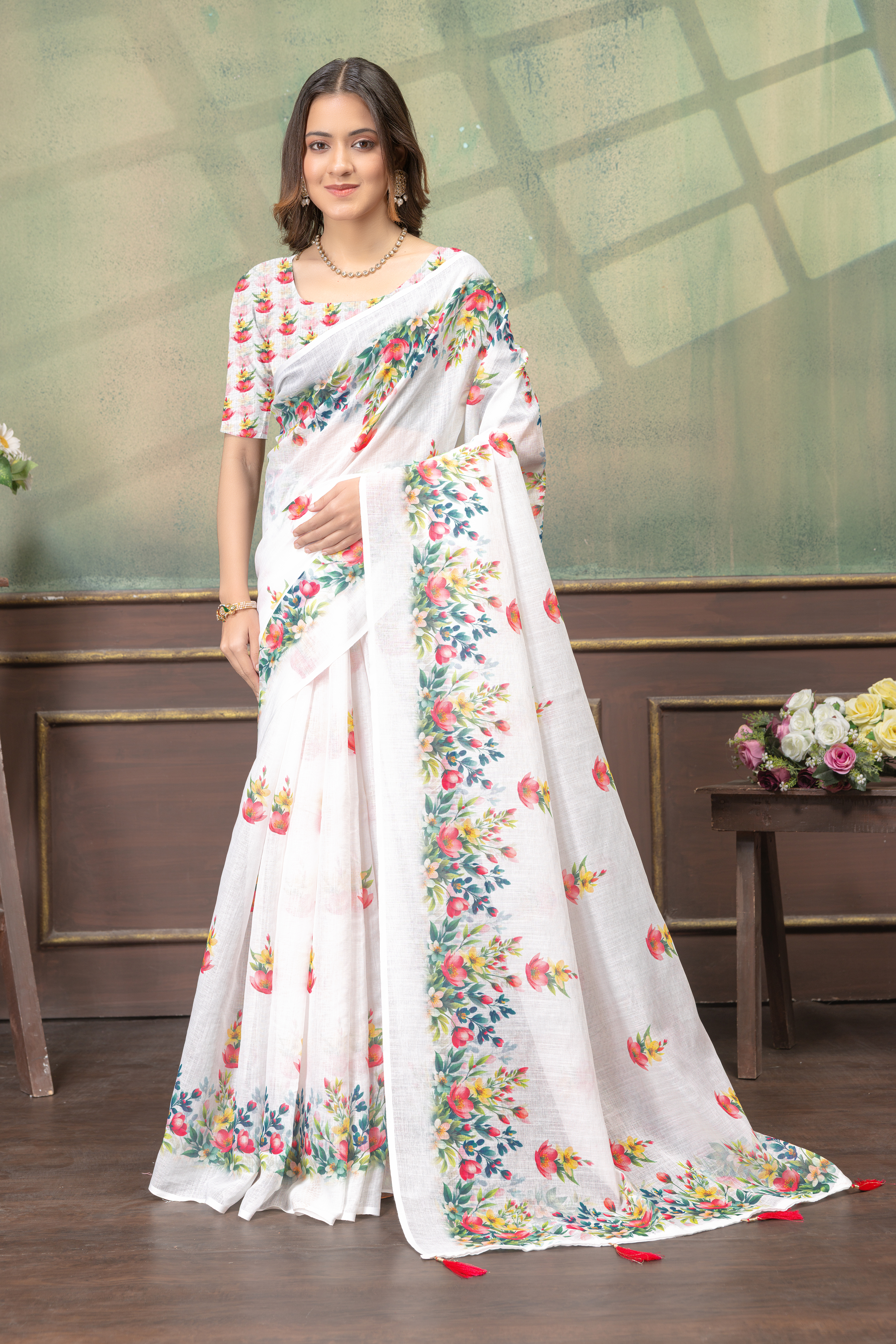
Pastel Linen Cotton Floral Print Saree with Designer Blouse can be useful for daytime dressing because the floral surface supplies interest without requiring heavy jewellery. Pastel Floral Printed Linen Cotton Saree with Blouse and Peach Linen Cotton Printed Saree for Women Online show how a soft colour palette can keep a ready-to-wear silhouette relaxed rather than overly formal.
For a festive interpretation, Pastel Floral Tissue Handloom Cotton Saree with Zari Weaves shows why fabric surface and border finish matter. Zari catches light differently from a matte cotton print, so the outfit may need simpler jewellery to prevent visual competition.
Pre Stitched Sarees for Women Who Love the Look but Not the Draping: How do you choose for an occasion?
The right pre-stitched saree depends on the event's duration, movement level, formality and weather, not only on its colour or embroidery.
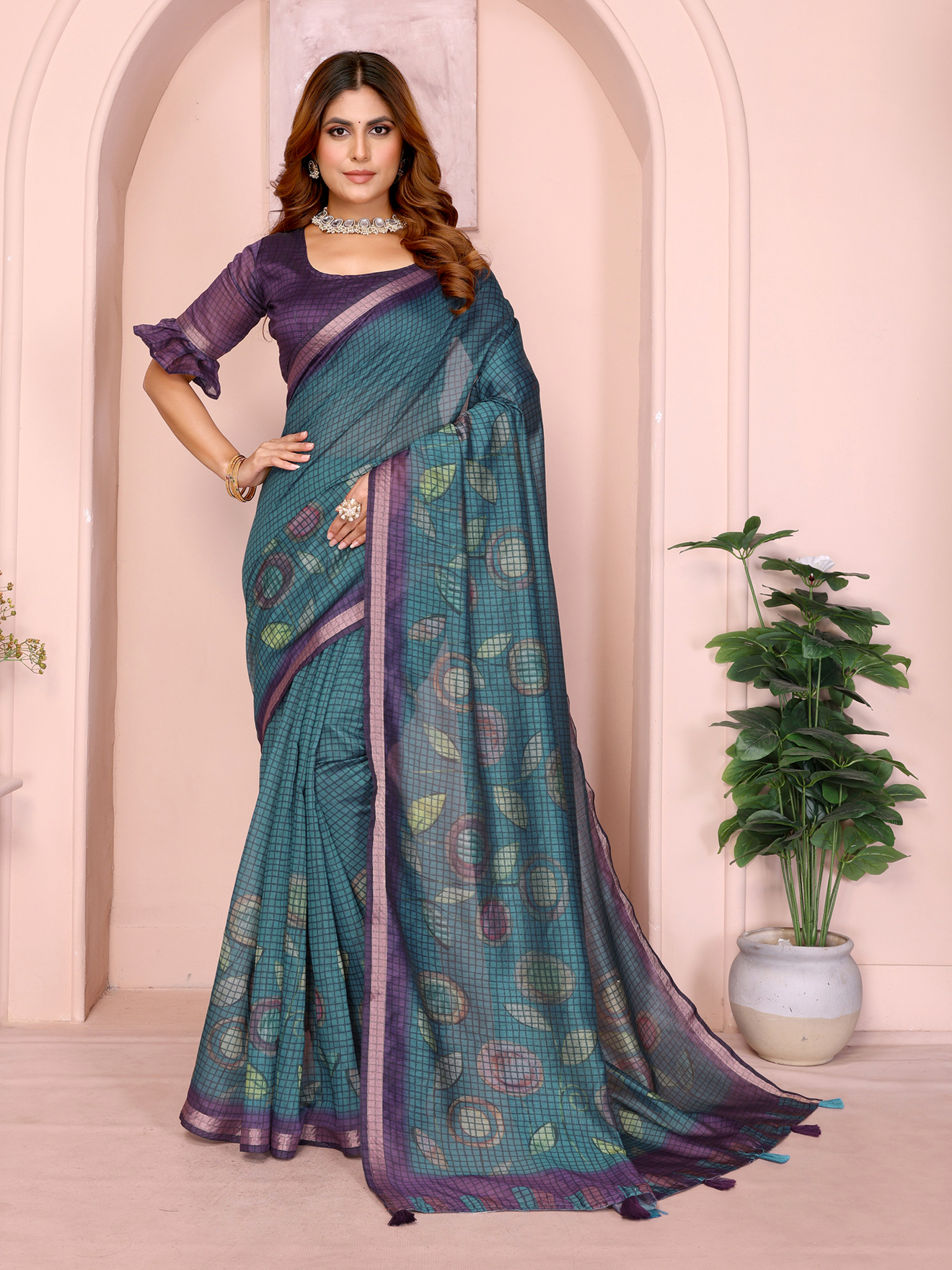
Work, daytime gatherings and travel
Linen cotton and lighter cotton are sensible for office celebrations, cultural programmes and daytime lunches because they breathe better than dense synthetic fabrics. A modest border, a comfortable blouse sleeve and a pallu that stays close to the body make movement easier in a work setting.
Pastel Linen Cotton Floral Print Saree with Designer Blouse brings an useful reference for balancing print scale and ease. A small or medium floral motif generally looks polished at close distance, while very large motifs can dominate a short pallu or petite frame.
Festivals and family functions
Tissue cotton with zari, textured silk and richer Chanderi-style surfaces suit festive gatherings because these fabrics reflect light and photograph well. Chanderi is known for a delicate, airy hand and a translucent visual quality, so the blouse and lining become important parts of the overall look.
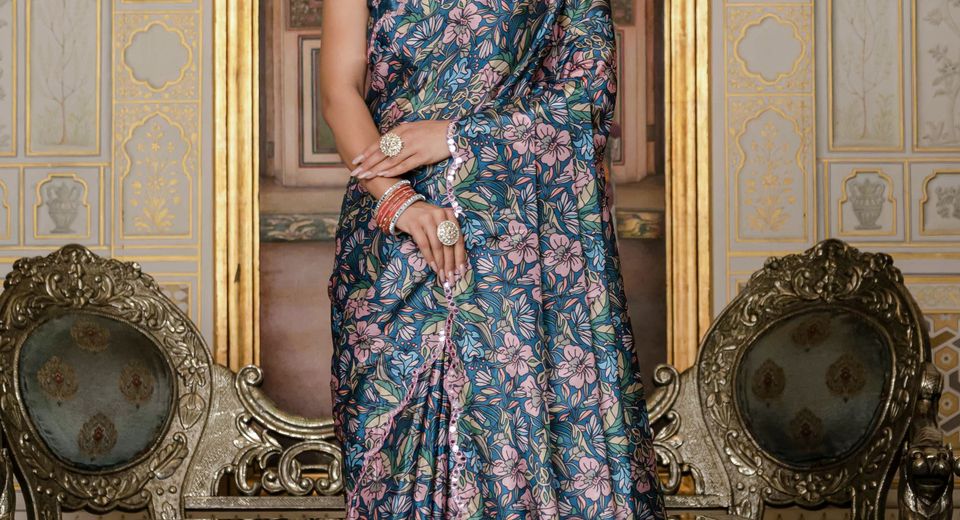
Blue Floral Chinnon Ready To Wear Saree with Mirror Lace illustrates a more decorative direction. Mirror lace brings sparkle and movement near the border, while blue provides a strong colour anchor. Keep earrings, bangles and footwear coordinated rather than adding a second highly reflective embellishment.
Weddings and evening celebrations
For a long wedding function, prioritise a secure waistband, a blouse that permits arm movement and fabric that doesn't become tiring after several hours. Premium Handloom Silk Saree with Handkatha can guide a more heritage styling approach, with a structured blouse, measured jewellery and a firmly placed pallu.
A ready-to-wear saree can also be appropriate for a Haldi ceremony, but choose a washable or easy-care fabric when turmeric, flower petals and outdoor seating are likely. Pale shades show stains quickly, while delicate zari or mirror details may require more careful handling around rough surfaces.
Pre Stitched Sarees for Women Who Love the Look but Not the Draping: How can you style them?
A finished look needs a well-fitted blouse, the correct pallu position, suitable footwear and deliberate accessories. The simplified draping process should not make the rest of the outfit feel accidental.
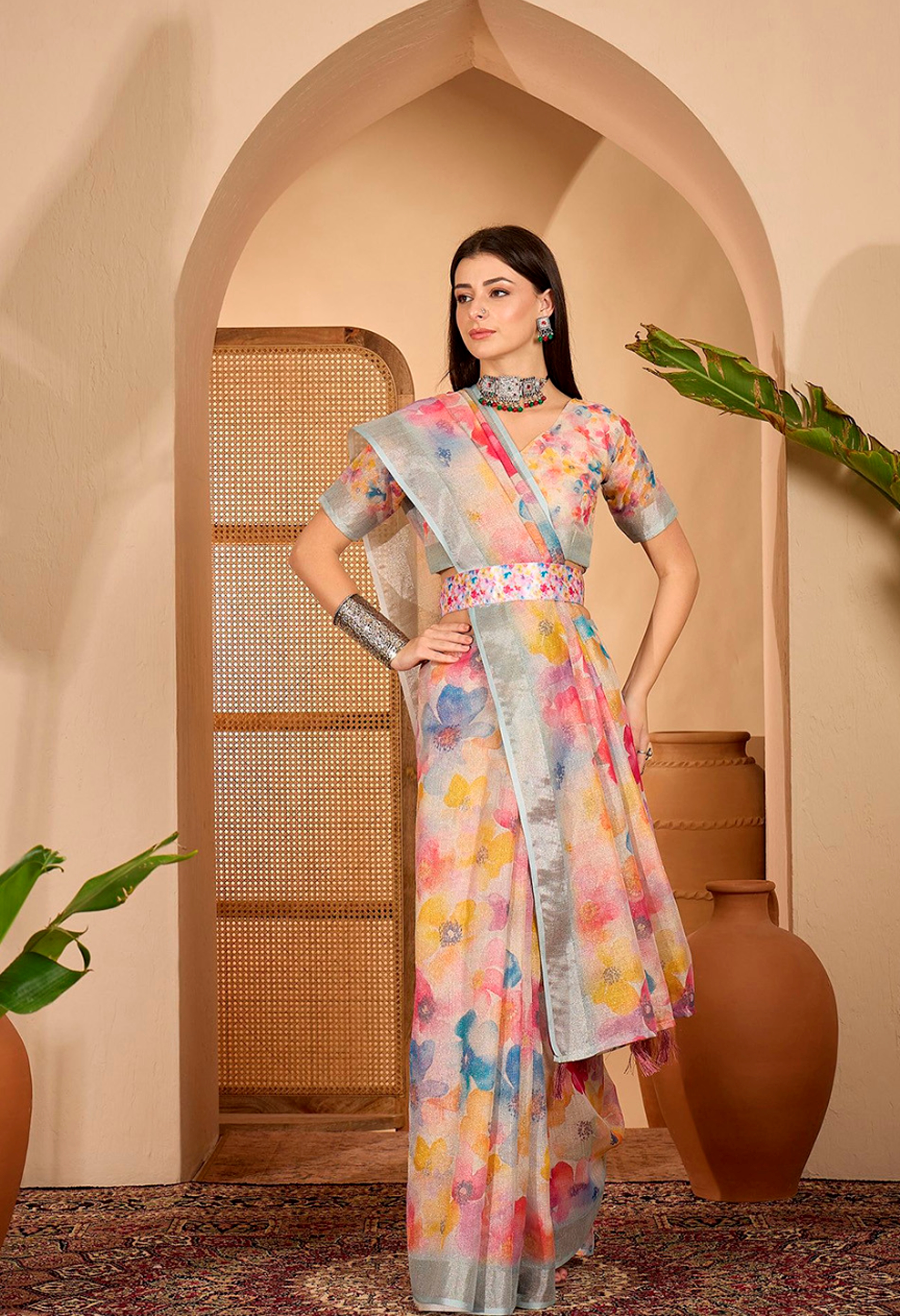
- Start with the blouse: The blouse shoulder should end at the natural shoulder point, and the armhole should allow the wearer to raise both arms comfortably. A blouse that's too loose can make the pallu slide even when the waistband fits.
- Choose proportionate jewellery: A detailed border can support smaller earrings, while a plain saree can carry a stronger necklace or statement earrings. Match gold-toned jewellery with warm zari and silver-toned jewellery with cool embellishment when a coordinated finish is wanted.
- Set the pallu intentionally: A narrow pallu fold creates a clean, contemporary line. A wider open pallu gives more coverage and highlights a printed or woven design. Pin the pallu from the inner side so the visible surface remains neat.
- Use the right footwear: A block heel supports the saree's vertical line and is more stable than a very thin heel for long events. Closed-toe footwear can work for formal winter events, while metallic sandals complement tissue or zari details.
- Keep the waistline smooth: Avoid bulky keys, phones or thick waist pouches underneath the waistband. A small clutch or crossbody worn before final pallu placement is usually more comfortable.
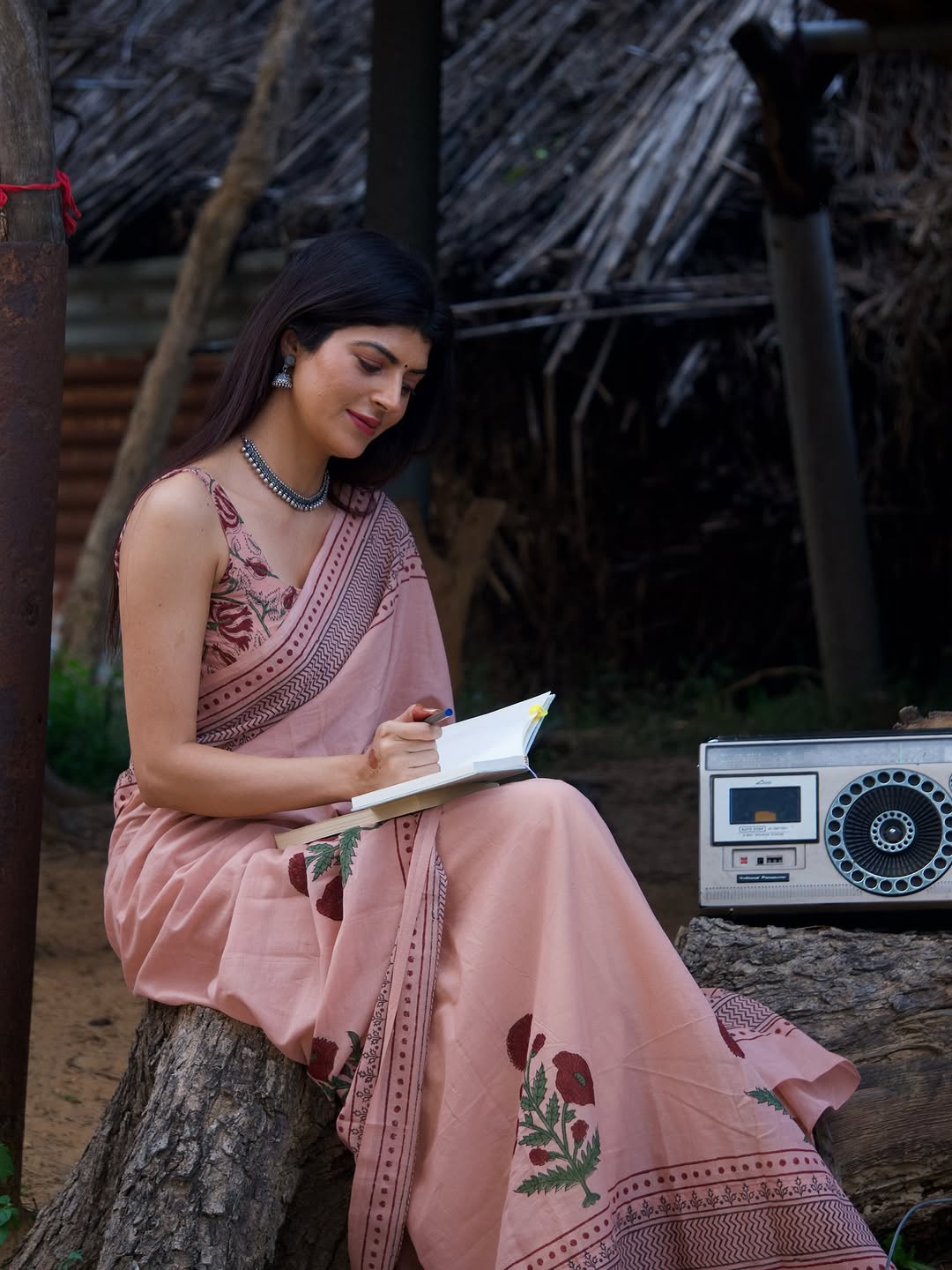
Peach Linen Cotton Floral Print Saree with Blouse for Women can inspire a soft monochromatic approach: repeat a peach or coral tone in the blouse, sandals or earrings, then introduce contrast through a deeper lip colour or a small metallic accessory.
Pre Stitched Sarees for Women Who Love the Look but Not the Draping: What should you check before buying online?
Before buying online, check the waist range, garment length, fastening method, blouse inclusion, fabric composition, transparency and alteration options.
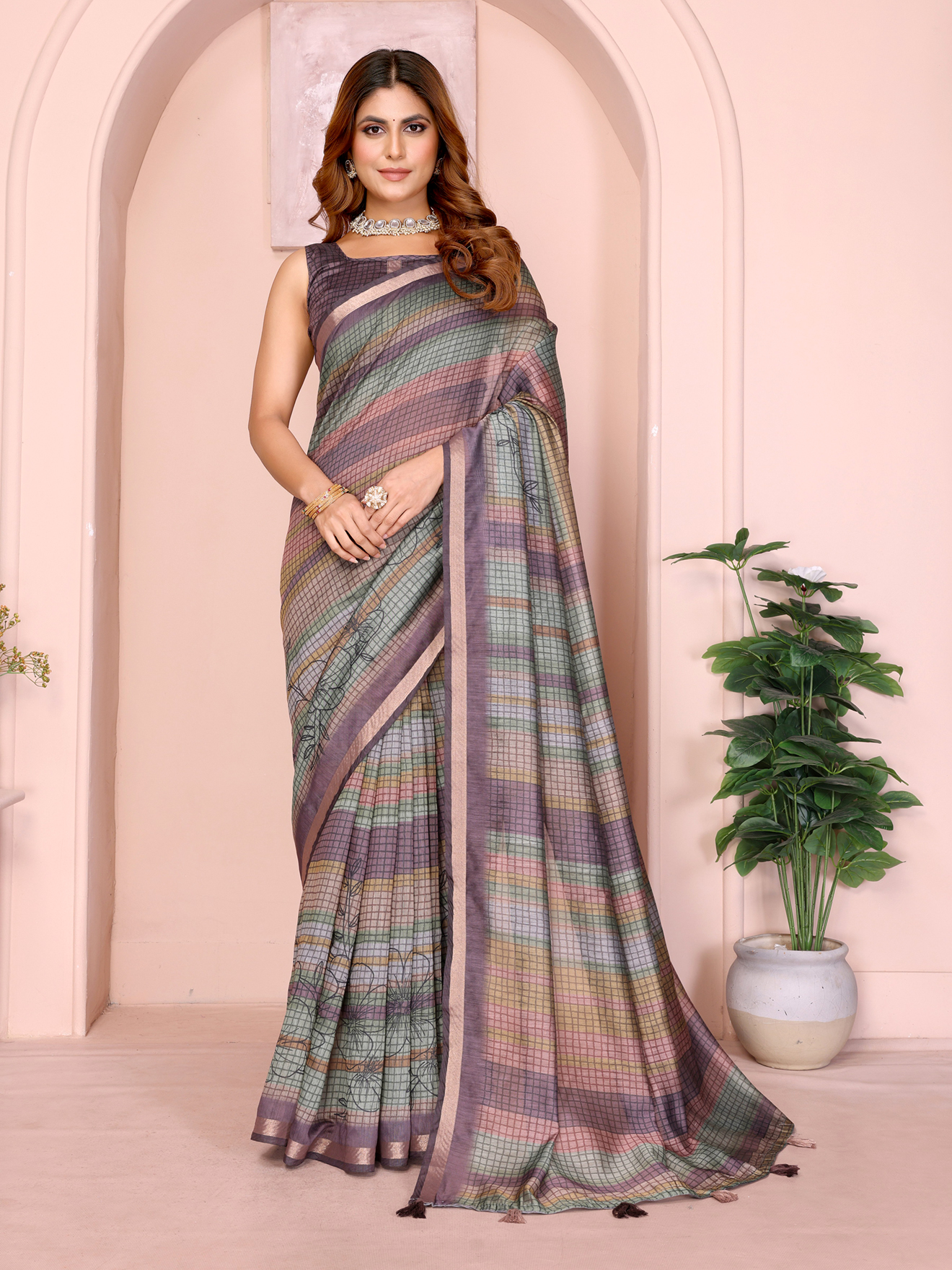
- Size information: Look for actual waist measurements in centimetres or inches, not only general size labels. Check whether the measurement refers to the relaxed waistband, stretched waistband or finished garment.
- Length information: Confirm the wearer height used for the product photographs and compare the listed saree length with personal height and footwear.
- Included pieces: A product title may mention a blouse, but the blouse may be unstitched, stitched, padded or sold in a fixed size. Read the product details carefully before assuming that the blouse will be ready to wear.
- Surface details: Zari, mirror lace, embroidery and printed borders can change the care requirement. Check whether the decoration is woven, printed, stitched or attached as trim.
- Budget: Price should be compared with construction and intended frequency of wear. A buyer working within a ₹1,000 to ₹1,500 range can review Sarees from Rs 1000 to Rs 1500, while discount-led browsing may include Sarees Under 20% Off, Sarees Under 10% Off, Sarees Flat 60% Off and Sarees Flat 50% Off.
Photographs are useful for judging colour and overall proportion, but measurements determine comfort. A model's drape can look different because of height, waist placement, body proportions, shapewear, heels and professional pinning.
Pre Stitched Sarees for Women Who Love the Look but Not the Draping: How should they be cared for?
Care for a pre-stitched saree by following the fabric-specific wash instructions, protecting the waistband and storing the pleats without crushing them.

Air linen cotton and cotton sarees after wearing before folding them. For routine care, hand washing in cool water with a mild detergent is generally gentler than a hot machine cycle, but the garment label should take priority. Do not wring zari, mirror lace or delicate chinnon because twisting can distort both fabric and embellishment.
Dry the saree away from harsh direct sunlight when the colour is delicate. Place a thin cotton cloth between an iron and the saree, and use a low or medium setting suitable for the fibre. Press along the existing pleat direction rather than flattening the stitched folds in random directions.
Store the saree on a broad hanger or fold it along its stitched pleats. Avoid placing heavy embroidered garments on top of a lightweight saree. Keep silk and zari away from damp cupboards, perfume overspray and rough jewellery hooks that can catch the surface.
A ready-to-wear saree saves time, but its best advantage is control: the pleats remain consistent, the waist can be fitted accurately and the wearer can focus on comfort and personal style. With the right measurements and fabric choice, the saree becomes easier to wear without losing the grace of a heritage silhouette.
Common Questions About Pre Stitched Sarees for Women Who Love the Look but Not the Draping
Are pre-stitched sarees suitable for beginners?
Yes, pre-stitched sarees are suitable for beginners because the pleats and main waist structure are already prepared. Beginners still need to check the waistband fit, place the pallu correctly and use one or two pins for security.
Can a pre-stitched saree be altered if the waist does not fit?
A pre-stitched saree can often be altered by a skilled tailor, but the alteration depends on the waistband construction and seam allowance. Ask the tailor to preserve the pleat spacing and border alignment rather than simply cutting away excess fabric.
Do pre-stitched sarees work for short women?
Pre-stitched sarees can work for short women when the hem and pallu length are proportionate to the wearer's height. Choose a design that can be shortened without cutting through a major border or decorative panel, and test it with the intended footwear.
Which fabric is easiest to wear in a pre-stitched saree?
Linen cotton and medium-weight cotton are usually among the easiest fabrics to wear because they offer breathability and enough structure for stable pleats. Chinnon feels lighter and more fluid but may need stronger shoulder pinning because it can slip.
Can I wear a ready-to-wear saree to a wedding?
A ready-to-wear saree can be worn to a wedding when the fabric, embellishment and styling match the formality of the event. Handloom silk, tissue cotton with zari and decorative chinnon can look festive, while a secure waistband and comfortable footwear matter for long functions.
How do I stop a pre-stitched saree pallu from slipping?
Stop pallu slippage by wearing a well-fitted blouse, placing the pallu at the intended shoulder point and securing it from the inner side with a safety pin. A fabric-friendly brooch or a second concealed pin can add support during active events.