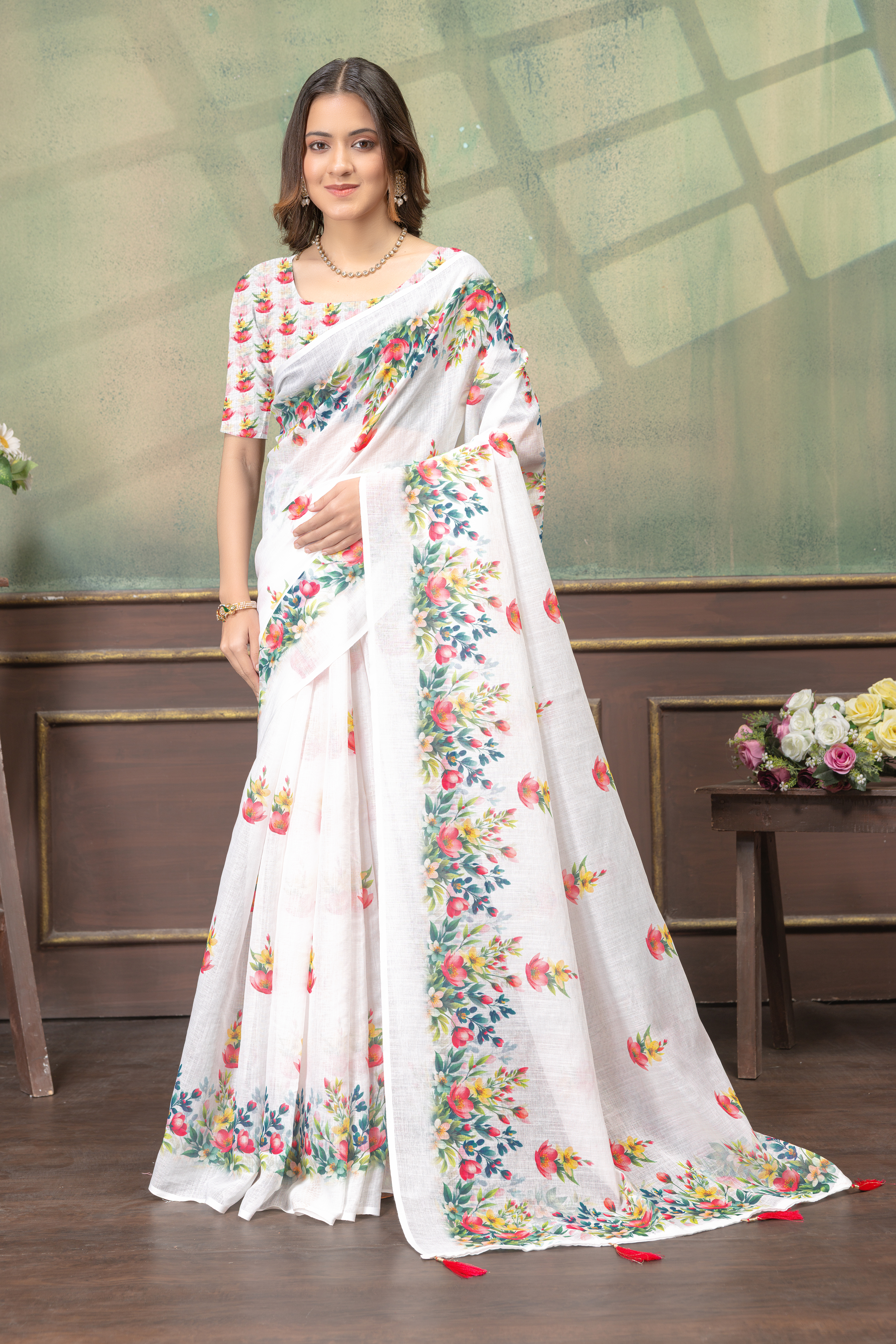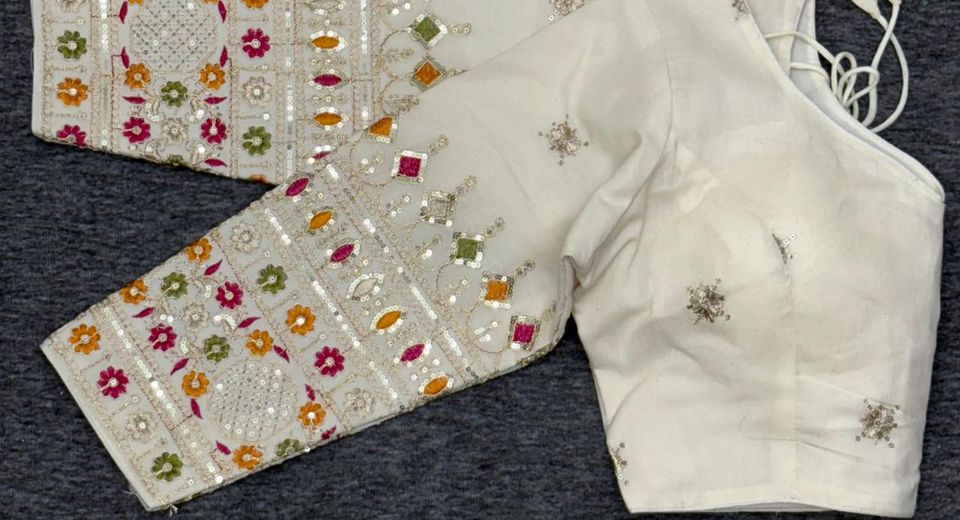
Peplum blouses that change the way a saree sits on the body do more than add a fashionable waistline. A peplum cut introduces a short, shaped flare below the bust or waist, so the saree pallu, pleats and lower border interact with a new silhouette. The result can be a more defined waist, extra coverage at the midriff and a different balance between the blouse and the six-yard drape.
That change matters because a saree doesn't fall independently of the blouse. Blouse length, stiffness, hem shape and fabric weight all influence where the saree gathers, how the pleats spread and whether the pallu stays close to the torso. A well-fitted peplum blouse can make a plain cotton saree look deliberately structured, while a poorly proportioned one can create bulk around the waist.
Why the Peplum Shape Alters a Saree Drape
A peplum blouse alters a saree drape by adding volume and structure at the waist, which changes the path of the pleats and the position of the pallu. A conventional fitted blouse usually creates a relatively straight transition between the bust and saree waistband. A peplum blouse creates a curved or flared transition instead.
The flare may be subtle, with only 3 to 5 centimetres of extra fabric at the hem, or visibly gathered, with a wider 8 to 12 centimetre extension. A subtle peplum gives definition without competing with the saree. A fuller peplum creates a fashion-forward outline and can reduce the need to expose a large strip of midriff.
The blouse hem also acts as a visual dividing line. When the hem finishes just above the natural waist, the saree pleats begin from a narrower point and may look more vertical. When the peplum ends at the high hip, the saree can appear softer and more fluid, but the extra width needs enough fabric in the saree to fall smoothly over it.
A peplum blouse is especially useful for balancing proportions. A narrow shoulder line can be balanced with a modest flare, while a fuller lower body usually looks more streamlined with a lightly shaped hem rather than dense gathers. The correct silhouette depends on the amount of ease, the blouse length and the stiffness of the saree.
Choosing the Right Peplum Length and Waist Placement
The most versatile peplum length finishes between the natural waist and the upper hip, because that position defines the torso without adding unnecessary volume at the widest part of the body. Measuring the blouse against the saree waistband is more reliable than choosing a length from a photograph.
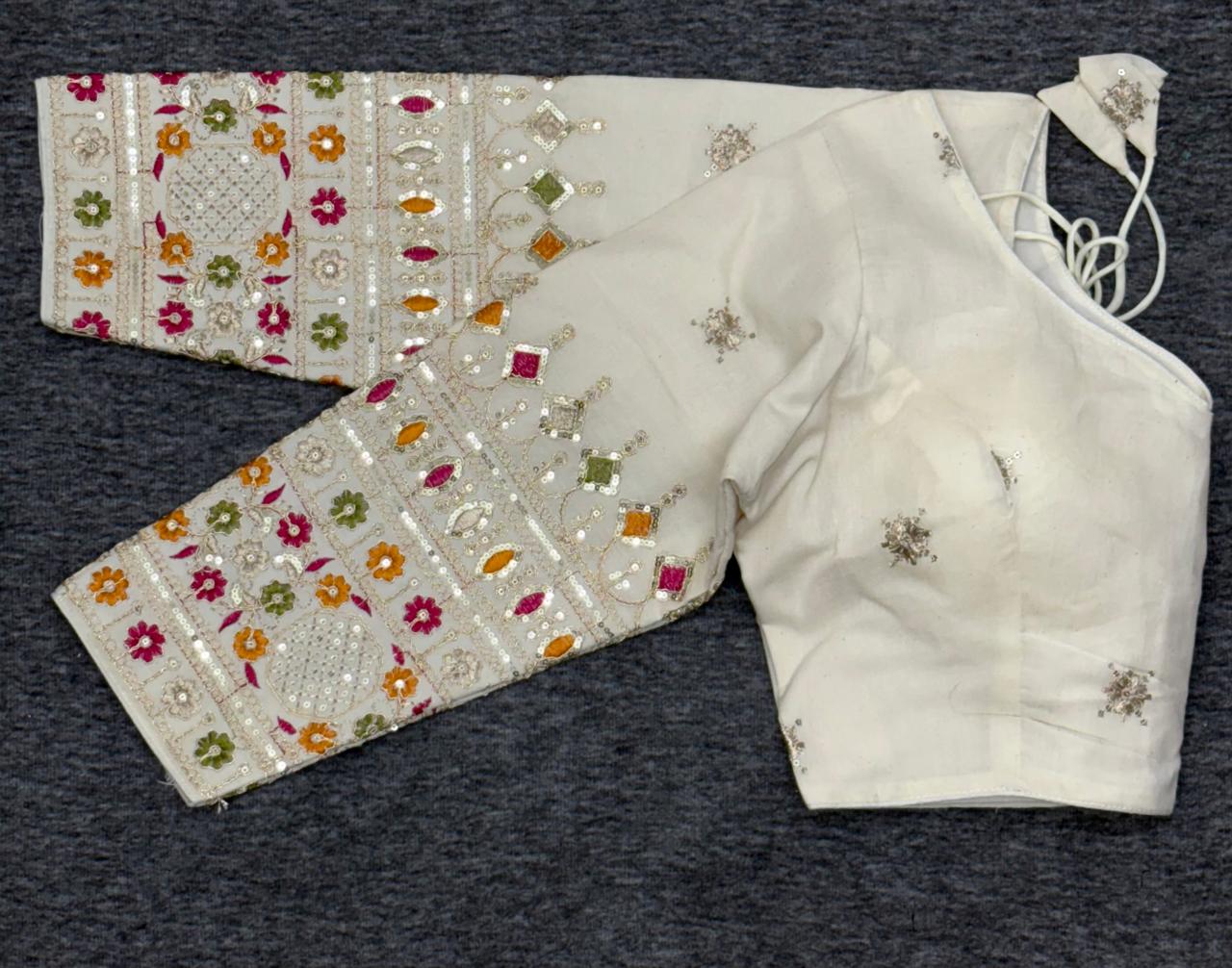
For a high-waisted saree drape, a hem that ends 2 to 4 centimetres below the natural waist usually creates a clean line. For a lower drape, the peplum can finish slightly lower, but the hem should not sit directly on the fullest part of the hip unless the design intentionally uses that volume.
Waist placement affects comfort as much as appearance. A blouse that cinches tightly beneath the bust can ride upward when the wearer sits. A blouse that's loose at the waist can pull the saree pleats outward. Allowing approximately 2 to 4 centimetres of wearing ease, depending on fabric and closure, generally gives enough room for breathing and arm movement.
How to check the fit before wearing the saree
Check the peplum blouse while standing, sitting and raising both arms because a static mirror check doesn't reveal movement problems. The neckline should stay flat, the armhole should not cut into the underarm, and the hem should remain level rather than lifting at the back.
Pin the saree at the intended waist and test the blouse with the full number of pleats you plan to wear. Six to eight front pleats are common for a regular drape, but a stiffer peplum may need fewer pleats to prevent crowding at the waist. The blouse and saree should create one continuous outline rather than two competing horizontal bands.
Fabric Pairings That Keep the Silhouette Balanced
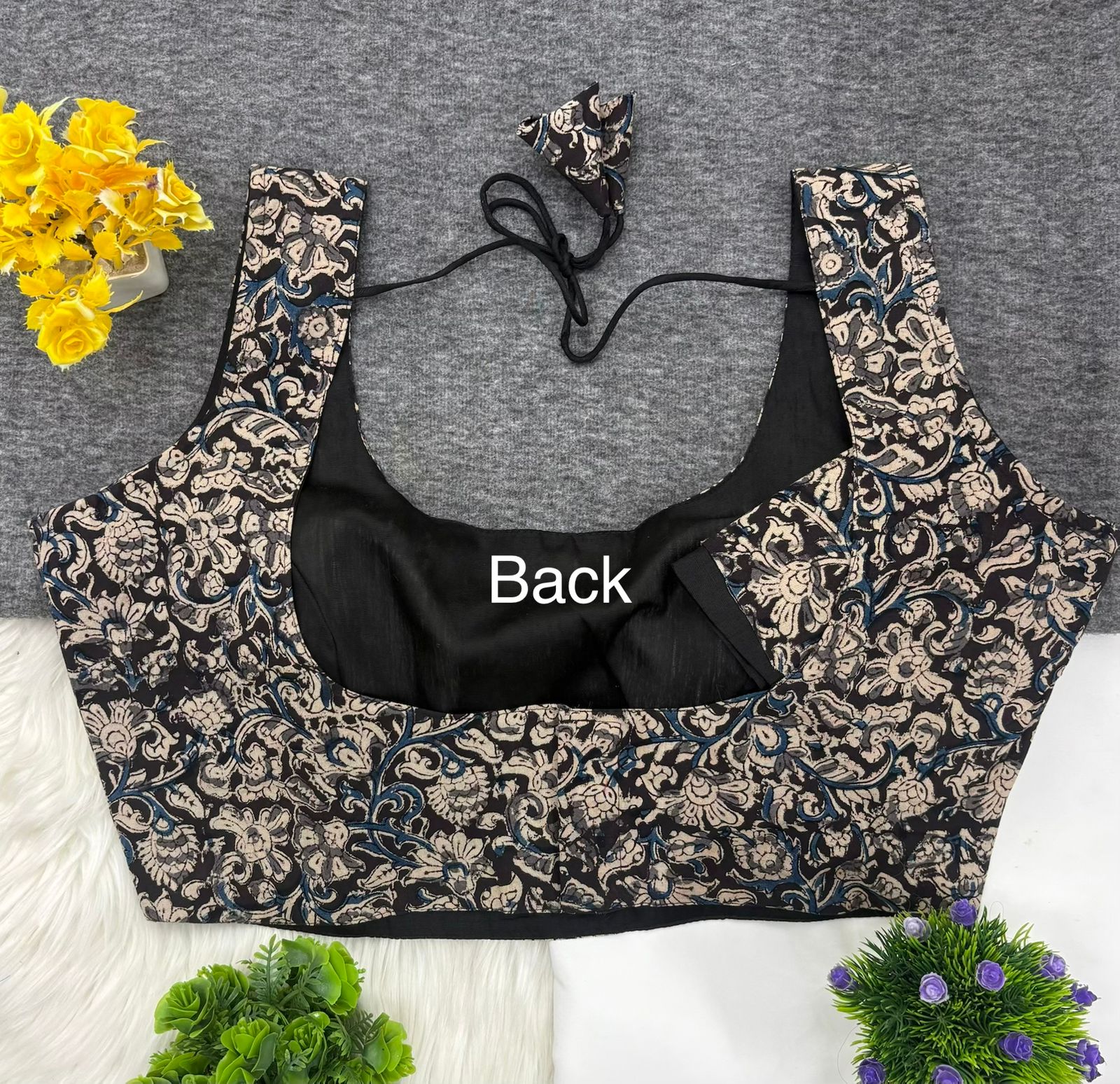
Cotton peplum blouses work best with sarees that have enough body to support a defined waist without becoming bulky. Handloom cotton, cotton-silk and lightly starched cotton sarees can hold front pleats neatly against a structured blouse. Pure Kalamkari Cotton Padded Blouse for Women demonstrates how printed cotton can provide both coverage and surface interest when paired with a simpler saree.
Silk peplum blouses create a richer, more formal finish, especially with Banarasi silk, Kanjeevaram or silk-blend sarees. Banarasi Silk Golden Jari Padded Blouse for Women can be used with a plain silk saree when the blouse is intended to carry the main decorative focus. With a heavily woven saree, a restrained peplum hem prevents zari from competing with gathers or ruffles.
Lightweight fabrics such as Chanderi need careful handling because their crisp surface can hold a small flare beautifully but may show bulky gathers. Chanderi with a narrow peplum and clean waist seam creates an airy festive look. Heavy brocade, dense velvet or multiple layers at the blouse hem require a saree with enough fall and width to cover the transition smoothly.
Padding changes the fit calculation. A padded blouse can support the bust and create a cleaner upper line, but the wearer should account for the padding thickness when selecting the bust measurement. A blouse that fits before padding compresses the bust after padding has been added, particularly when the peplum seam is high.
Readymade and Designer Readymade Options: What to Measure
A readymade peplum blouse should be selected by actual garment measurements rather than by the usual small, medium or large label. Bust, underbust, shoulder width, armhole depth, blouse length and peplum hem circumference are the measurements that most directly determine how the saree will sit.
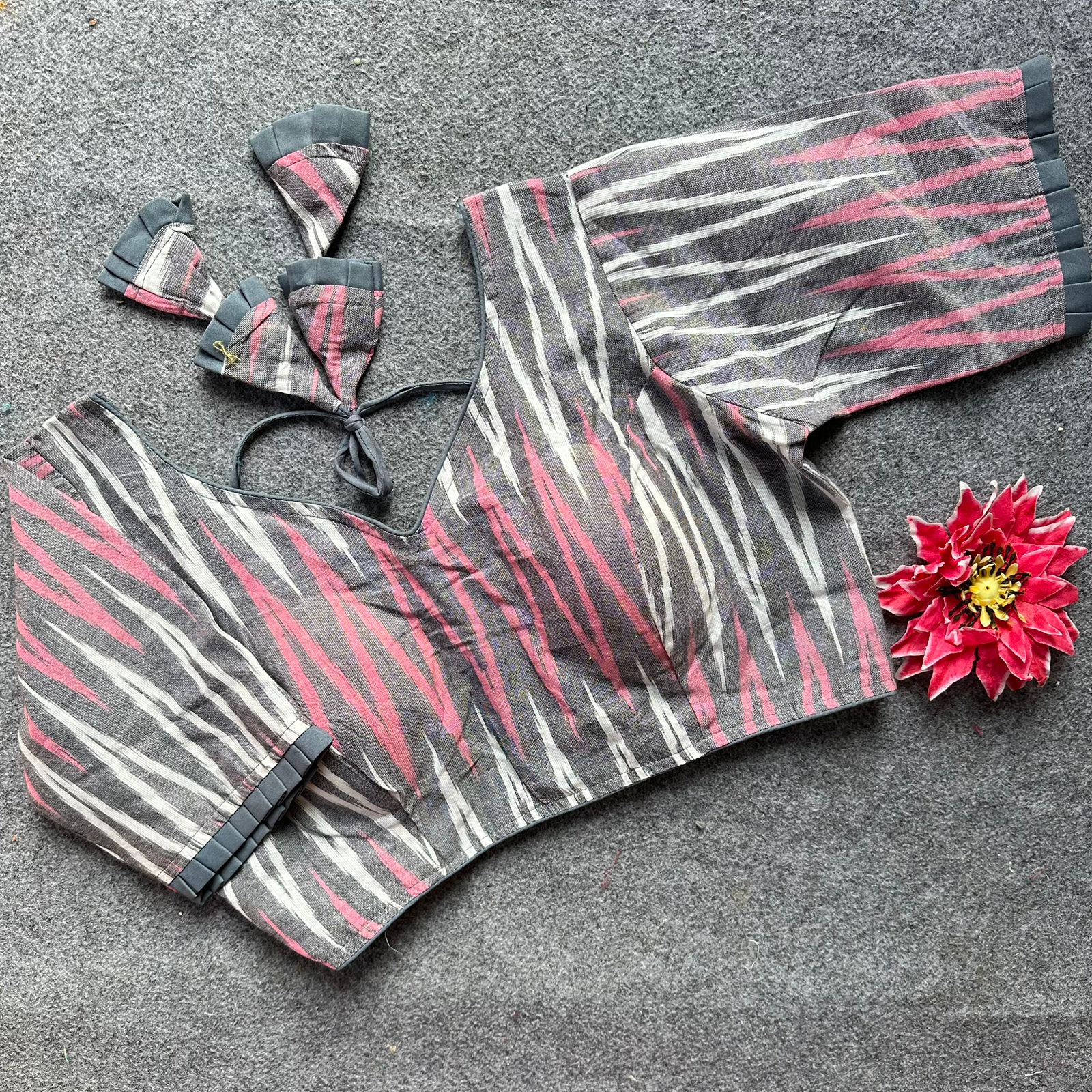
Designer readymade styles often use shaped panels, darts, padding or side openings to create a close fit. A garment with a back hook or side zip can be easier to put on than a heavily embellished blouse with a narrow opening. The closure must lie flat because a raised zip or hook line can show through a thin saree.
Classic Festive Wear Blouse for Stylish Saree Look is a useful reference for a more conventional festive proportion. A conventional blouse can be compared with a peplum cut to identify whether the desired change is extra waist definition, more midriff coverage or simply a decorative hem.
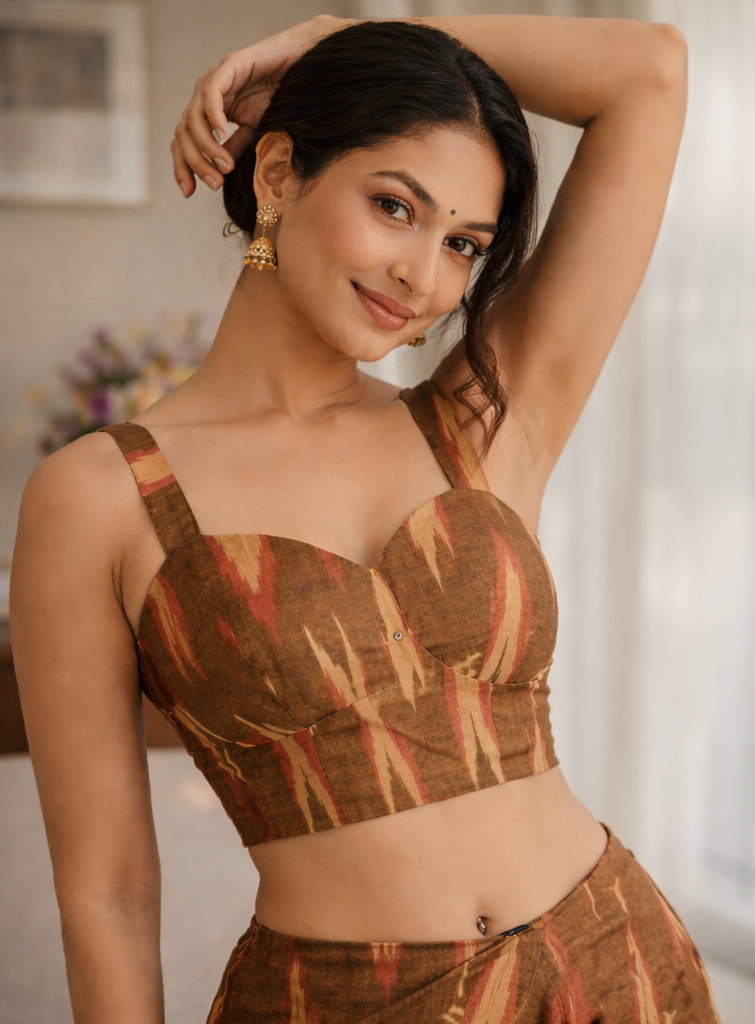
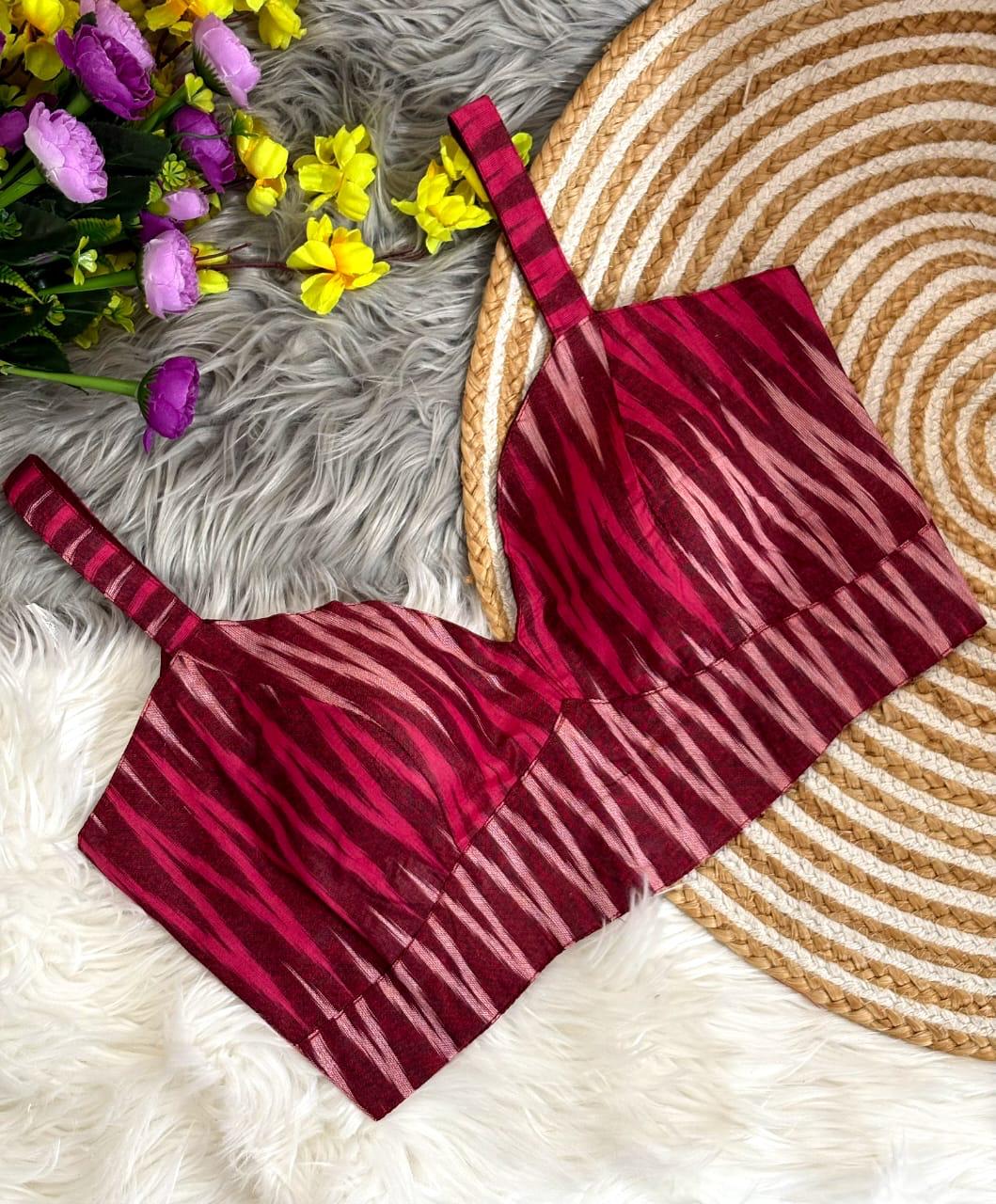
For sleeveless styling, Ikkat Cotton Padded Blouse for Women Sleeveless gives a useful example of how a patterned cotton surface can carry a saree look without heavy embroidery. Cream Ikat Cotton Blouse Sleeveless Trendy and Brown Ikat Cotton Blouse Sleeveless Stylish offer neutral directions for printed or woven sarees, where colour coordination matters more than matching every motif.
Readymade sizing becomes more complicated when the bust and waist fall into different size categories. Choose the size that accommodates the bust and examine whether the waist can be altered by a tailor. A tailor can usually adjust side seams, but changing the position of a peplum seam or reducing a gathered hem may alter the intended silhouette.
Pairing Peplum Blouses with Saree Types
A peplum blouse pairs most easily with a saree that has moderate fall, controlled volume and a clear border. The saree should glide over the peplum rather than catch on surface gathers. Matching the blouse to the saree by texture is often more effective than matching it by colour alone.
With silk and Banarasi sarees
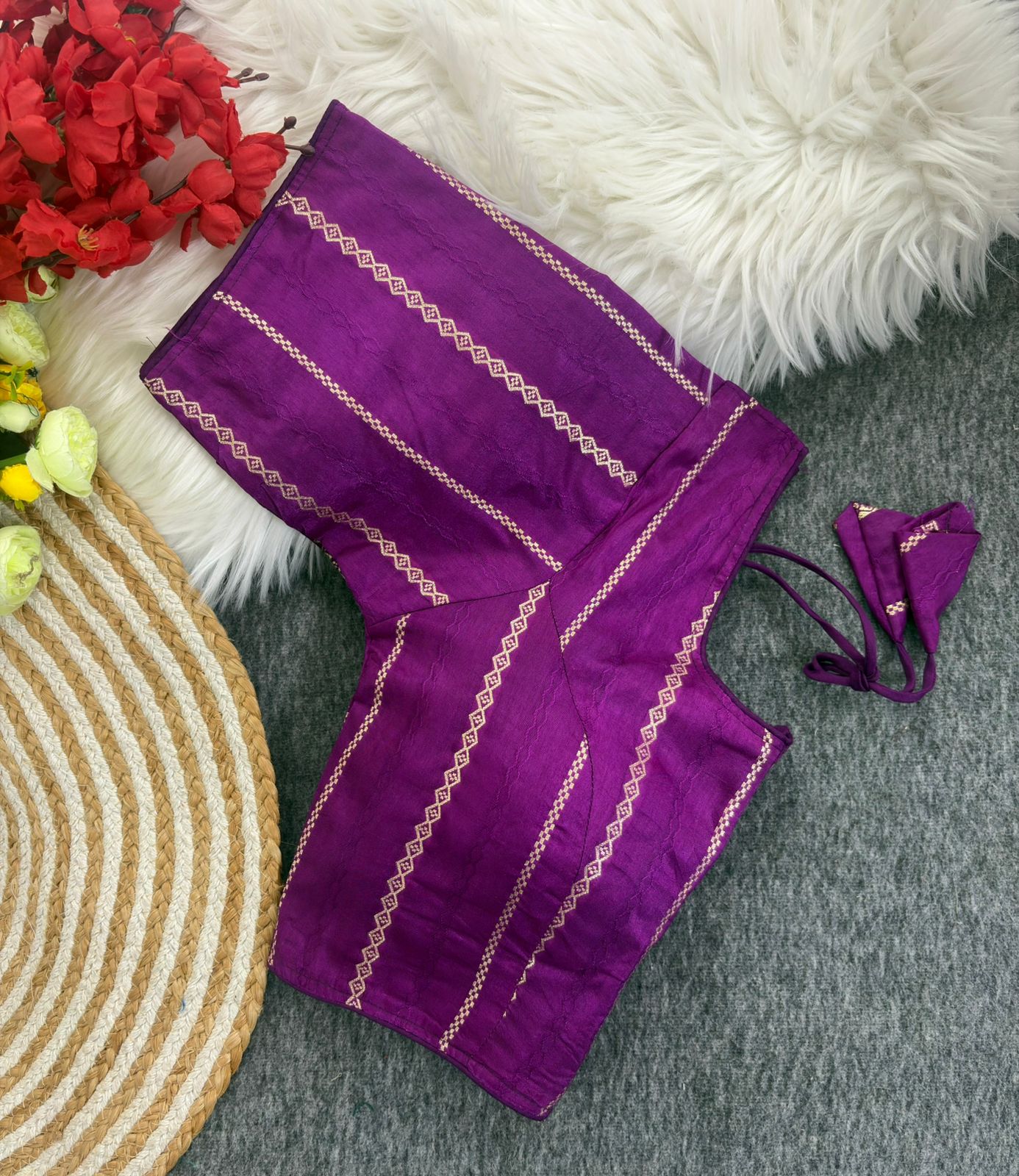
Silk sarees need a peplum blouse with controlled structure and minimal excess at the hem. Banarasi silk with zari works well with a blouse that repeats one metallic or jewel tone, while the peplum remains narrow enough to keep the saree border visible. A Blue Zari Work Cotton Saree for Wedding can be paired with a gold, ivory or blue blouse, provided the blouse doesn't introduce a second competing border.
With cotton and printed sarees
Cotton sarees suit peplum blouses with breathable construction, moderate padding and a hem that doesn't trap heat. Kalamkari, Ikat and block-printed sarees can take a solid blouse in a colour drawn from the print, or a small-scale patterned blouse with a quieter saree. A cotton peplum is practical for daytime celebrations because it gives shape without requiring a heavily rigid lining.
With a designer saree
A designer saree with sequins, sculptural pleats or a pre-stitched pallu needs a blouse that respects the garment's engineered lines. A clean peplum with one strong detail, such as a square neckline or restrained zari edge, is usually more successful than multiple ruffles, tassels and layered embellishment. The blouse should be tested with the saree already pinned because pre-stitched drapes leave less room for adjustment.
Styling Details That Prevent Visual Bulk
Visual bulk can be reduced by keeping only one part of the outfit voluminous. If the peplum is gathered, choose a flatter saree pleat and a clean pallu. If the saree has a wide zari border, use a narrow peplum hem and avoid a second wide border at the blouse waist.
The pallu placement also changes the effect. A shoulder pallu worn close to the body shows the peplum outline clearly and creates a tailored appearance. A loose pallu softens the waist and makes the blouse feel less structured. A front-pallu drape can work with a peplum, but the pallu should be secured so that its folds don't bunch against the flare.
Jewellery should follow the blouse neckline and the amount of detail near the waist. A high-neck peplum can support earrings and bangles without a large necklace. A deep or square neckline may need a short necklace, while a broad waist embellishment calls for simpler earrings. Footwear with a modest heel can keep the saree hem clear of the floor and improve the vertical line created by the pleats.
Colour blocking is another practical tool. A darker peplum worn with a lighter saree can define the waist sharply. A tonal blouse and saree create a longer visual line and make the flare appear subtler. Contrasting sleeves or a contrasting yoke draw attention upward, which can be useful when the peplum has a fuller hem.
Care, Alterations and Wearability
A peplum blouse should be stored flat or on a broad hanger so that the shaped hem doesn't crease permanently. Padded, zari-work and structured blouses should not be compressed under heavy garments because crushed padding and metallic thread are difficult to restore.
Check the care label before washing. Cotton blouses may shrink if washed in hot water, while silk and zari usually need gentle professional cleaning. Air-dry cotton garments in shade to reduce colour fading, and place a thin muslin layer between a zari blouse and other clothes to prevent snagging.
Small alterations can substantially improve the saree drape. A tailor can move a hook, reduce a side seam, insert a modest panel or shorten an overly long hem. Alterations should be completed before final saree pinning because even a 1-centimetre change at the waist can affect pleat placement.
Peplum blouses are most wearable when the design supports the wearer's movements. Test walking, sitting, lifting an arm and carrying a small handbag before wearing the blouse for a wedding or Haldi ceremony. Comfort isn't separate from style: a blouse that stays in place produces a cleaner saree line throughout the event.
Peplum Blouses That Change the Way a Saree Sits on the Body: Key Takeaways
Peplum blouses that change the way a saree sits on the body work because the blouse controls the transition between the upper torso and the drape. The strongest results come from matching peplum volume to saree weight, checking the hem against the actual waistband and allowing enough ease for sitting and arm movement.

- Choose a 3 to 5 centimetre flare for a subtle everyday or daytime festive look.
- Use a high-waisted saree drape with a peplum hem 2 to 4 centimetres below the natural waist.
- Pair cotton peplums with cotton, Kalamkari, Ikat or lightly starched sarees.
- Pair silk or zari peplums with Banarasi silk, Kanjeevaram or other structured festive sarees.
- Reduce gathers and extra borders when the saree already has heavy zari or a wide decorative edge.
- Check bust, underbust, shoulder, armhole, length and hem circumference before buying readymade.
- Test the blouse while sitting and moving before finalising the saree drape.
Common Questions About Peplum Blouses and Saree Drape
Can a peplum blouse be worn with any saree?
A peplum blouse can be worn with many sarees, but moderate-weight cotton, silk, cotton-silk and structured designer sarees usually drape most cleanly over the shaped hem. Very clingy or extremely lightweight sarees may reveal gathers, while very heavy sarees may overwhelm a delicate peplum.
Are peplum blouses suitable for silk sarees?
Peplum blouses are suitable for silk sarees when the blouse has controlled volume and a smooth hem. Banarasi silk and Kanjeevaram pair well with a narrow peplum, especially when the blouse repeats one colour or zari tone from the saree.
How long should a peplum saree blouse be?
A versatile peplum blouse usually ends between the natural waist and upper hip. A hem 2 to 4 centimetres below the natural waist works well with a high-waisted saree drape, while a longer hem should be tested carefully so it does not sit at the widest part of the hip.
Is a readymade peplum blouse easy to fit?
A readymade peplum blouse is easy to fit when the bust, shoulder and armhole measurements are correct and the waist has modest alteration allowance. Side seams can often be adjusted, but changing the peplum seam or reducing gathers may affect the original shape.
What saree works with a cotton peplum blouse?
A cotton peplum blouse works well with handloom cotton, Kalamkari, Ikat, cotton-silk and lightly starched sarees. A solid blouse can pick one colour from a printed saree, while a patterned blouse is best balanced with a quieter saree.
How can I stop a peplum blouse from looking bulky under a saree?
Keep the peplum flare narrow, avoid placing the hem at the fullest part of the hip and choose a saree with enough fall to cover the transition smoothly. Fewer front pleats, a flatter pallu and one main decorative border also reduce visual bulk.