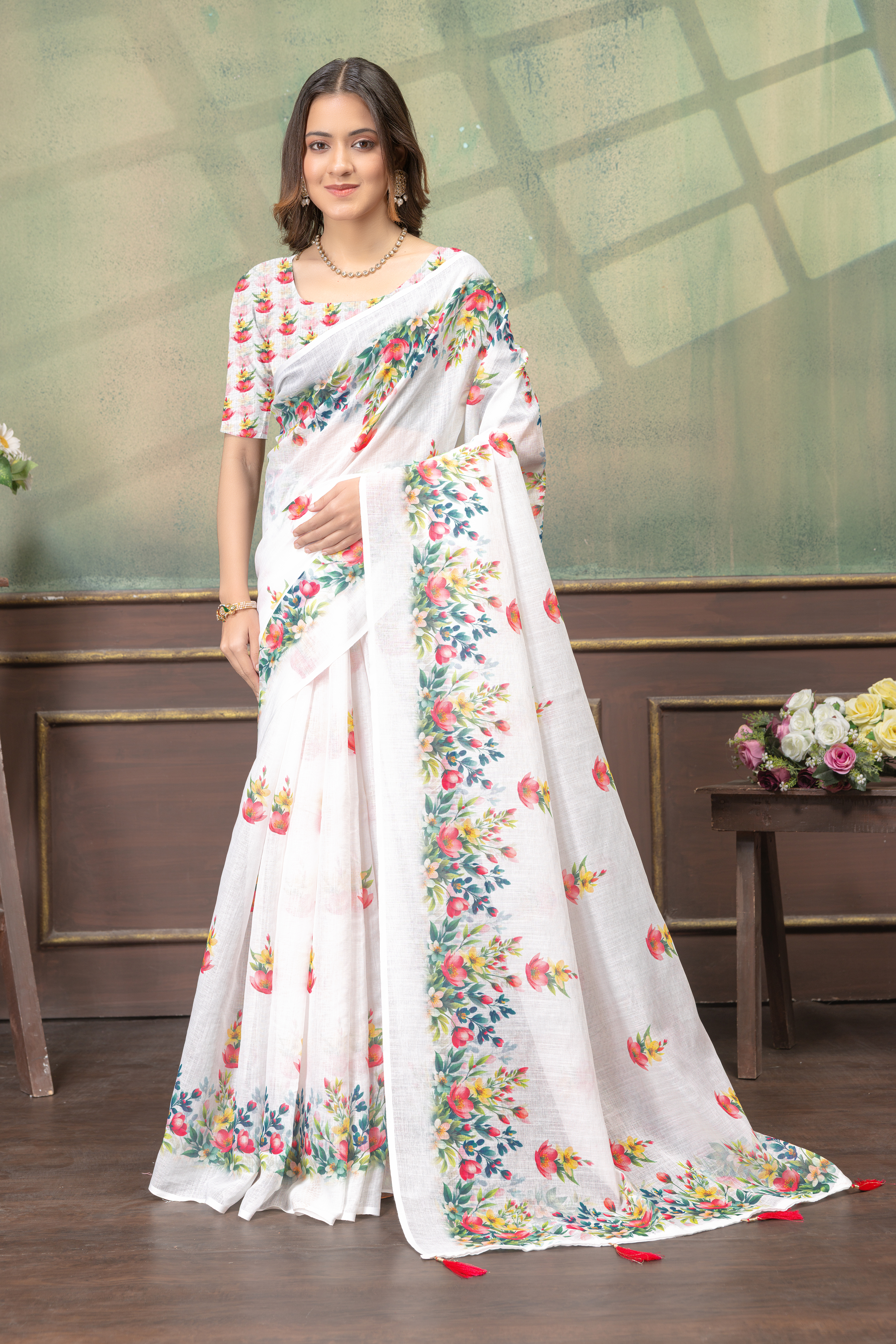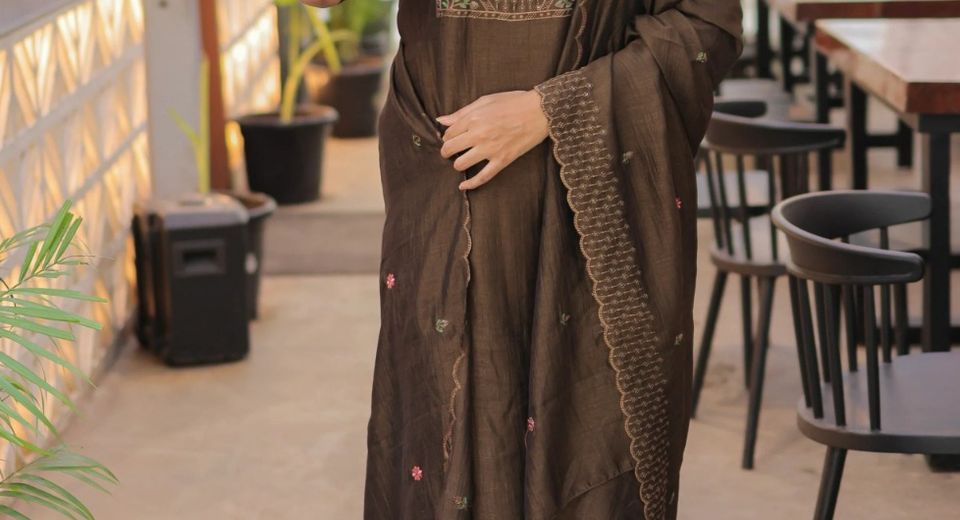
A hot afternoon can make even familiar cotton clothing feel restrictive, especially when the weave is dense, the fabric is starched or the garment has several lined layers. Mulmul Kurtis for Days When Regular Cotton Still Feels Too Heavy address that problem with fine, soft cotton that sits lightly against the skin. The fabric suits commuting, working from home, running errands and spending long hours in warm, humid weather.
Mulmul isn't a separate variety of cotton plant. Mulmul describes a fine cotton textile traditionally valued for its delicate hand, low weight and breathability. Modern mulmul kurtis may be handwoven or mill-produced, so opacity, texture, strength and shrinkage can differ. Understanding those differences helps you select daily wear that feels airy without becoming too fragile.
Why Choose Mulmul Kurtis for Days When Regular Cotton Still Feels Too Heavy?
Mulmul feels cooler because its fine yarns and light construction allow more air movement around the body while absorbing perspiration without adding much bulk. Dense cotton poplin, thick cambric or heavily starched cotton can feel warmer because more fibre sits between the skin and the surrounding air.
Fibre content alone doesn't determine comfort. A garment labelled 100% cotton may be made from voile, poplin, slub cotton, khadi, cambric or a brushed weave. Each construction feels different. Mulmul generally has a softer drape and lower fabric weight than these heavier options, although yarn count and finishing influence the final result.
Fine cotton also dries relatively quickly when the garment is unlined and lightly decorated. That quality matters in humid regions, where perspiration can remain against the skin. Cotton absorbs moisture and spreads it across the fabric surface, allowing evaporation when the weave is open enough.
Very light mulmul can have one practical drawback: pale colours may be slightly transparent. A white, cream or pastel kurti may need a cotton slip, a bodice lining or a longer inner layer. Checking opacity in daylight is more reliable than judging a garment under bright shop lighting.
How Do You Select Mulmul Kurtis for Days When Regular Cotton Still Feels Too Heavy?
Select Mulmul Kurtis for Days When Regular Cotton Still Feels Too Heavy by checking fabric density, opacity, stitching, shrinkage allowance and decoration before choosing a colour. A daily-wear kurti must remain light while handling repeated washing and ordinary movement.
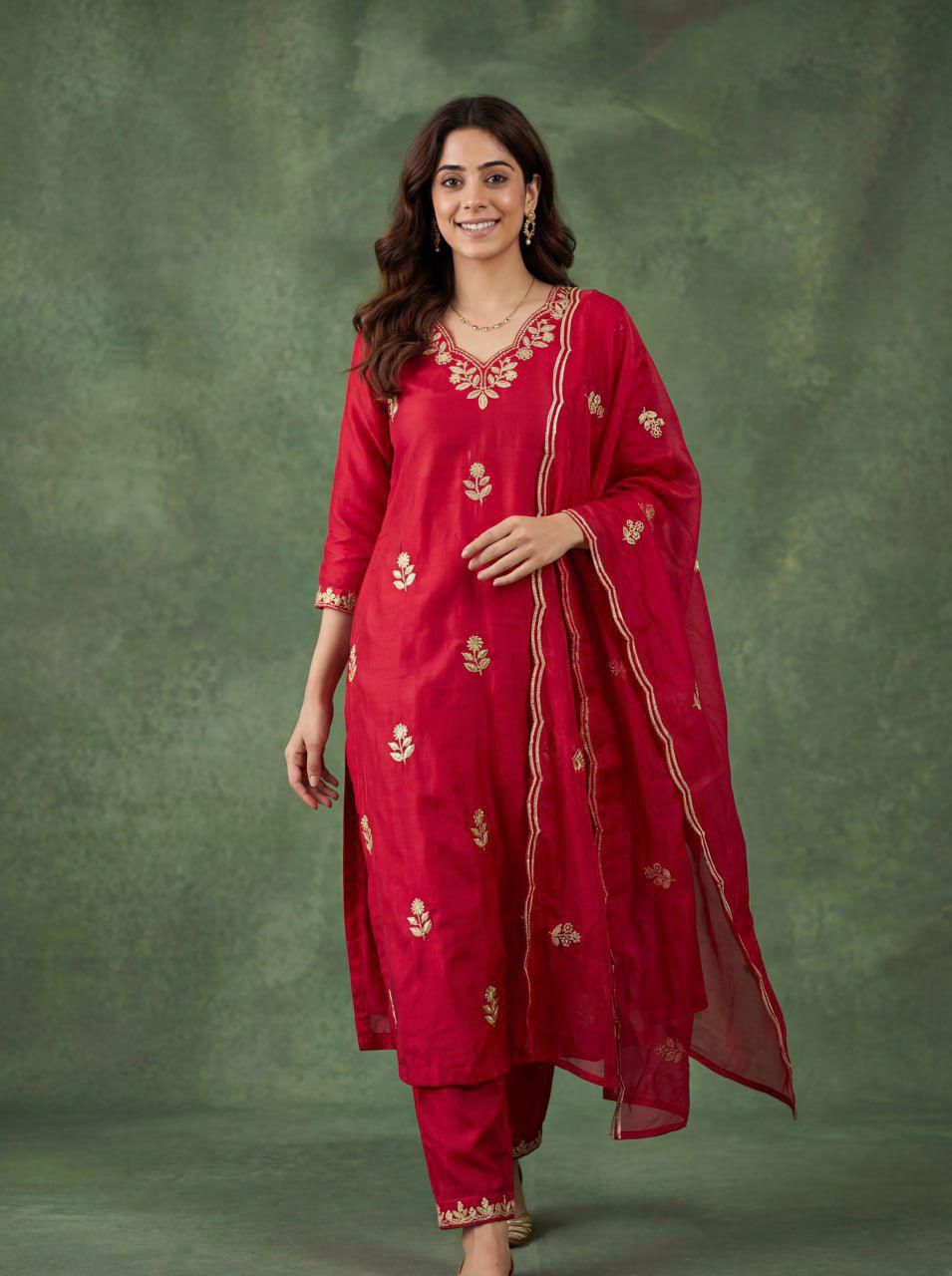
Check the weave and weight
Hold the fabric near a window or under bright, indirect light. An even weave is preferable to accidental gaps, pulled threads or irregular openings that may enlarge after washing. Very sheer mulmul can work as a summer overlay, but an everyday kurti usually needs enough density to cover the bust and upper back comfortably.
Run your fingers over the surface. Good mulmul should feel soft rather than waxy, brittle or excessively crisp. Starch can make new cotton appear structured, but the first wash reveals the fabric's natural hand. Ask whether the garment is pre-shrunk when the fit is close at the shoulders, armholes or bust.
Assess construction and fit
Look for neat seams, reinforced side slits and a neckline that lies flat without pulling. Lightweight fabric needs careful finishing because frayed seam allowances become visible sooner than they do in thick cotton. A straight kurta with side slits should have securely finished slit ends, while an A-line kurti needs sufficient hem width for comfortable movement.
Three-quarter sleeves protect the upper arm while remaining cooler than full sleeves. A knee-length or mid-calf hem is easier to wash and move in than a floor-length layer. For a complete salwar suit, check the bottom fabric as carefully as the kurti. A light cotton kurti paired with dense polyester pants can reduce the outfit's overall breathability.
Consider embellishment
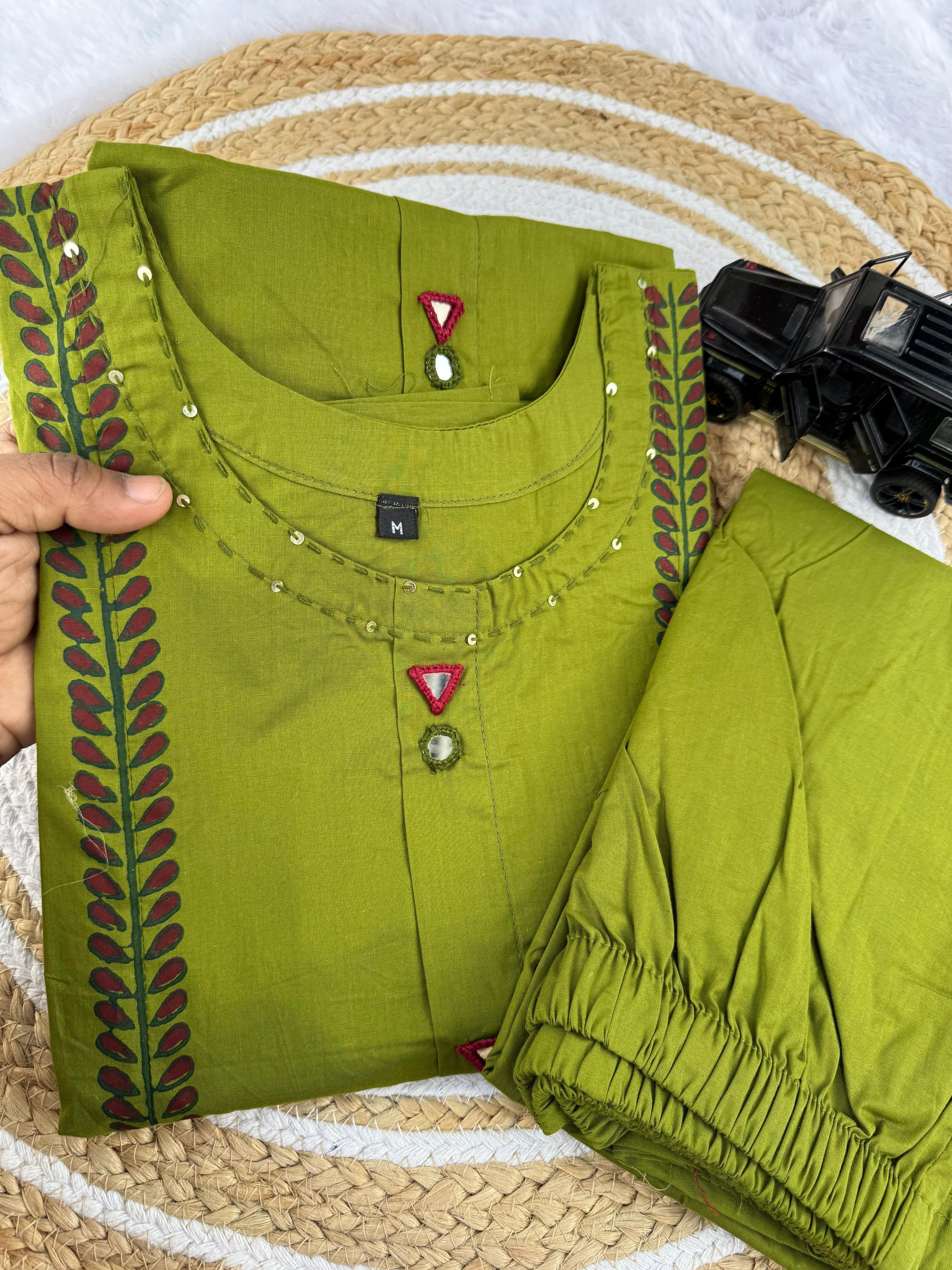
Mirror work, dense embroidery and metallic zari add visual interest but also add weight, stiffness and care requirements. Small motifs on a yoke or sleeve can preserve the softness of mulmul, while heavy work across the front may make a garment less suitable for hot commutes.
Designer Cotton A-Line Kurti Pant Set with Mirror Work shows why embellishment placement matters. Mirror work can create a focal point, while an A-line shape keeps the lower half easy to move in. Teal Cotton A-Line Kurti Pant Set with Handwork offers another useful example of balancing surface detail with a relaxed silhouette.
Which Colours and Shapes Suit Mulmul Kurtis for Days When Regular Cotton Still Feels Too Heavy?
Light to medium colours and relaxed silhouettes usually suit hot weather because they reduce visual heaviness and allow air to move around the body. Comfort still depends on weave, fit, lining and fibre blend, so colour alone can't make a warm garment cool.
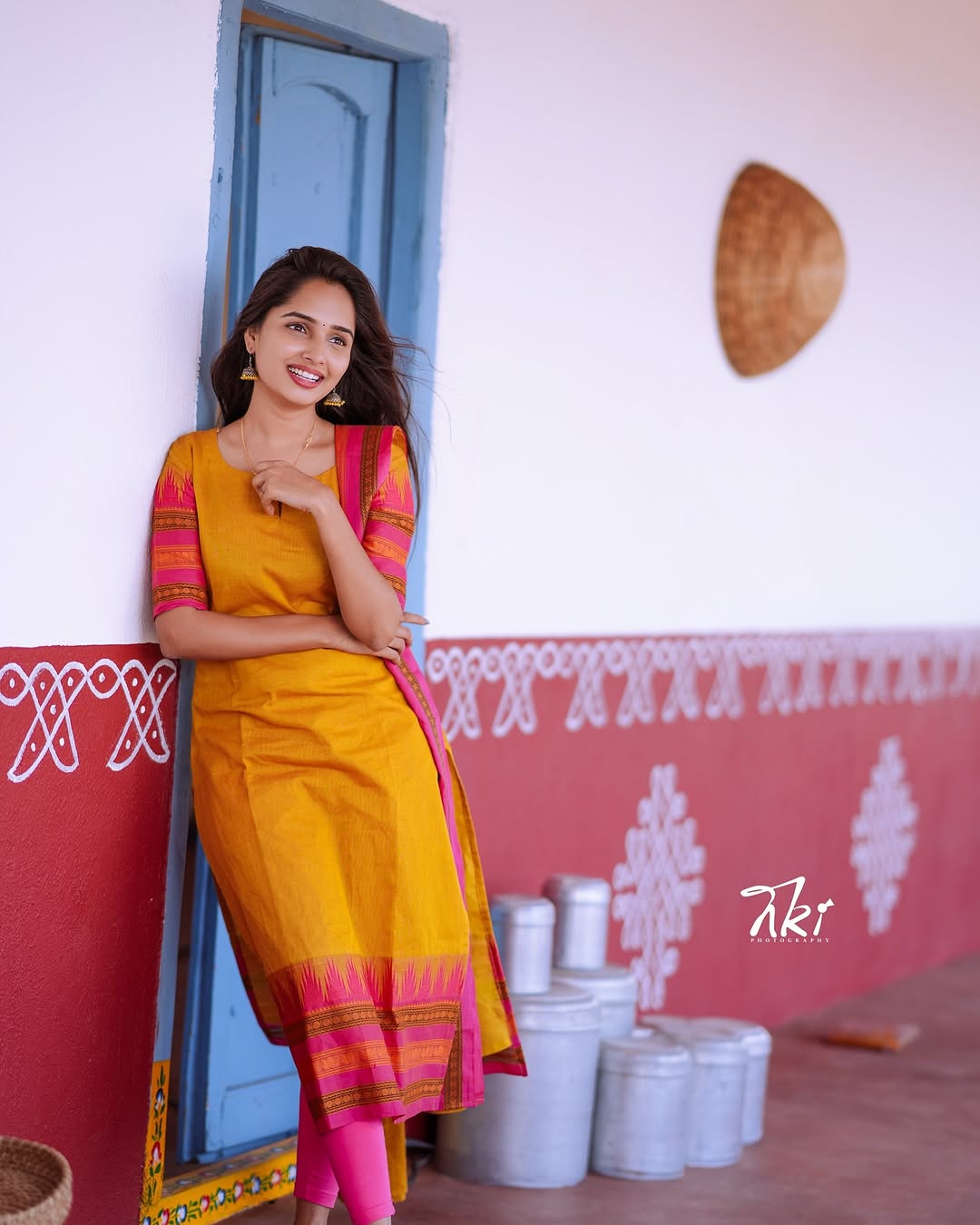
Ivory, cream, powder blue, soft yellow, sage and muted pink reflect more sunlight than very dark colours when worn outdoors. Black, navy and deep teal remain practical choices for office routines because they conceal marks, but dark dense cotton can absorb more heat than pale, lightweight fabric. Prints are especially useful because they disguise minor creasing and everyday stains.
An A-line kurti widens gradually from the chest, creating airflow around the waist and hips. A straight kurta gives a cleaner line and pairs well with palazzos or narrow cotton pants when the fit isn't tight. A small back pleat, side slit or relaxed armhole can improve movement without making the garment appear oversized.
Grey Printed Cotton Kurti Pant Set for Women Daily Wear demonstrates the value of a practical print. A medium-toned pattern can look polished while reducing the need for frequent pressing. Cream Floral Cotton Kurta Set with Pant and Dupatta uses a lighter palette suited to bright days, although a cream dupatta should be checked for opacity before outdoor wear.
Classic Yellow Cotton Kurti Set with Woven Dupatta brings colour through the kurta and dupatta rather than relying on dense embellishment. A woven dupatta adds texture, but a light weave is more comfortable than a thick wrap around the neck in humid weather.
How Can You Style Mulmul Kurtis for Days When Regular Cotton Still Feels Too Heavy?
Style Mulmul Kurtis for Days When Regular Cotton Still Feels Too Heavy with breathable bottoms, a light dupatta and accessories that don't create unnecessary layers. The most comfortable outfit usually keeps at least two of the three main pieces, namely kurti, bottom and dupatta, lightweight.
Cotton pants, soft palazzos and lightweight churidars work well because they allow moisture to escape from the legs. A wide palazzo increases airflow but may require additional fabric, which can feel warm if the textile is thick. For travel or cycling, a moderately wide cotton pant with a secure waistband is often more practical than a dramatically flared silhouette.
A dupatta changes the outfit's function. A light cotton dupatta brings sun protection over the shoulders, while a voile layer adds modesty with little warmth. Cream Khadi Cotton Straight Kurta Set with Dupatta shows how textured khadi can add structure to a simple set. Khadi is breathable, but its hand may feel firmer and less fluid than mulmul.
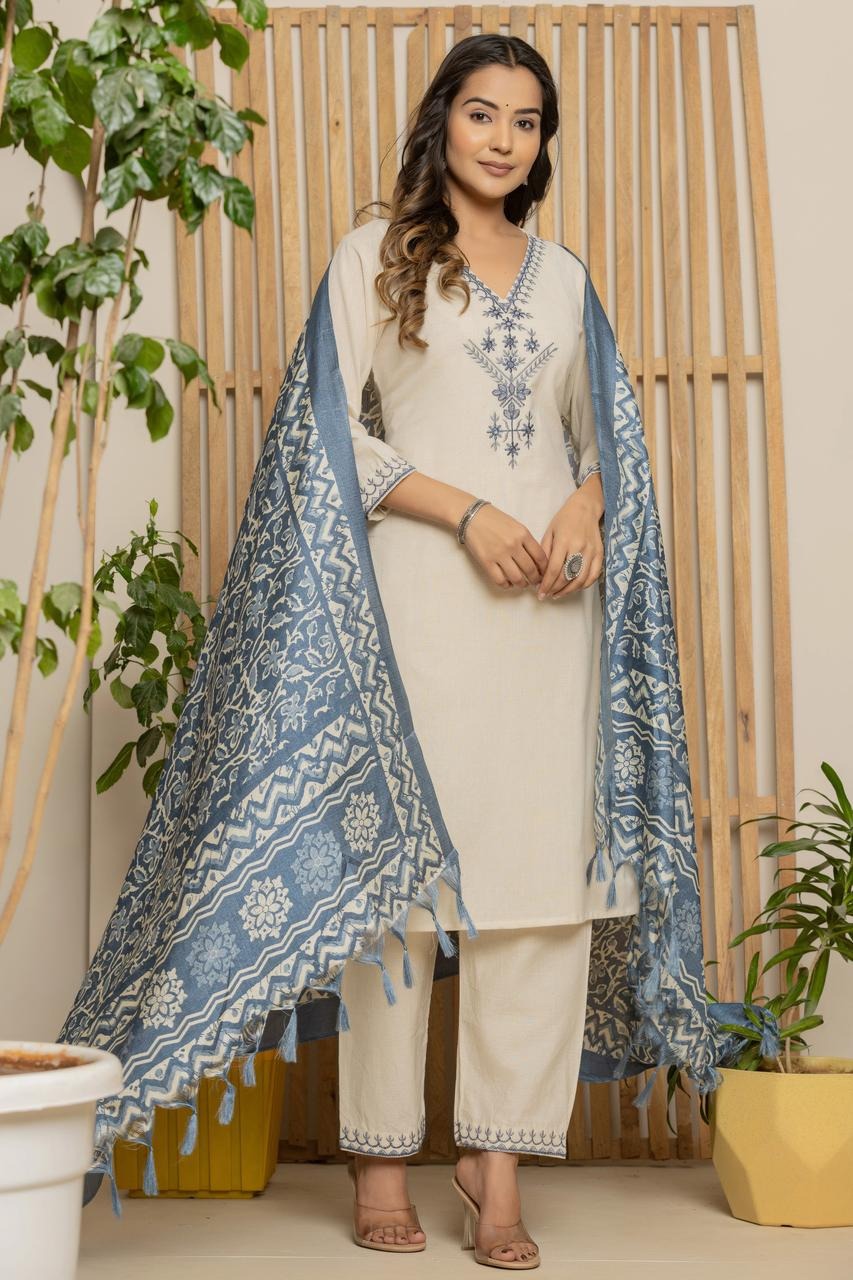
Cotton Embroidered Kurti Pant Set with Nylon Dupatta for Women can work when the embroidered kurti remains comfortable and the dupatta is used as a loose styling layer. Nylon dries quickly, but nylon may not feel as breathable against the neck as cotton. Keeping the synthetic dupatta loose and away from the skin improves comfort.
Simple accessories suit the fabric's easy character. Small silver earrings, fabric-covered bangles, a cotton tote and flat sandals create a coordinated daily look without adding warmth. A structured handbag can sharpen a straight kurta for office wear, while a woven bag works naturally with printed or handworked cotton.
Can Mulmul Kurtis for Days When Regular Cotton Still Feels Too Heavy Look Festive?
Mulmul can look festive when prints, embroidery, borders and accessories are used selectively rather than covering the entire garment. Fine cotton supports decorative details while retaining a softer everyday character.
Printed mulmul works well for office-casual dressing because surface design creates interest without the weight of sequins or thick threadwork. Small floral, geometric and block-inspired motifs usually preserve drape better than large raised appliqué. Kalamkari Print Salwar Suits offer an useful visual reference for combining storytelling motifs with an easy cotton base.
Embroidery should be judged by thread density and placement. A narrow embroidered neckline, sleeve border or pocket can make a kurti look finished while leaving the torso flexible. Dense embroidery across the stomach can make fine cotton hang unevenly and feel warmer in direct sun.
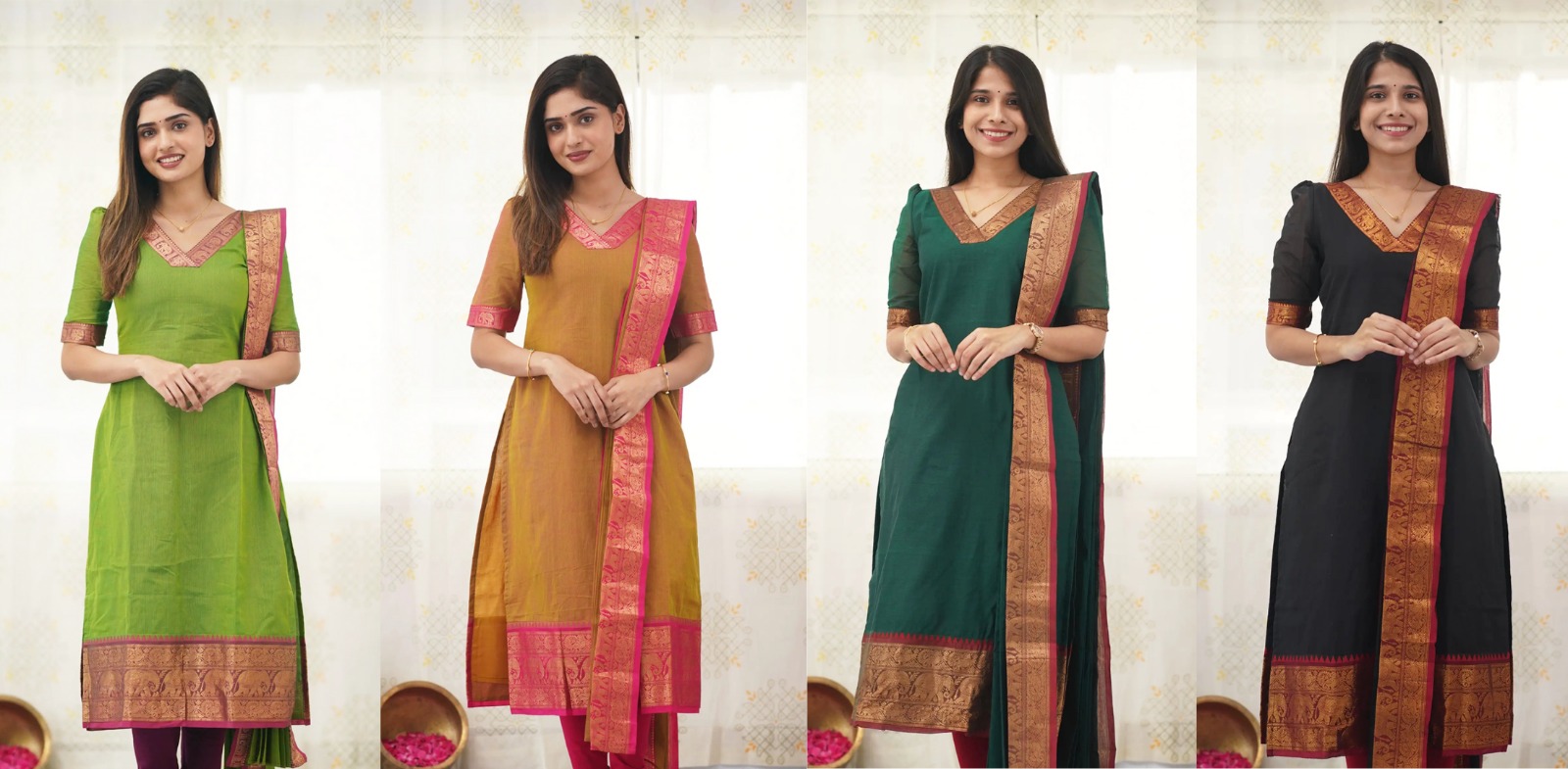
Metallic zari and silk-inspired borders can create a dressed-up effect when used sparingly. Karnataka Silk Salwar Suits and Kashmir Embroidered Salwar Suits offer ideas for jewel-toned borders and concentrated ornamentation. A mulmul daily set remains more comfortable when the border is narrow, the lining is limited and the embroidery doesn't cover the entire front panel.
Punjab Phulkari Embroidered Salwar Suits demonstrate how embroidery can frame a neckline or central panel instead of covering every surface. Maharashtra Paithani Inspired Salwar Suits show how a distinctive border can provide colour contrast. These references can guide styling choices without requiring a heavy silk or embellished base for daily wear.
How Should You Wash Mulmul Kurtis for Days When Regular Cotton Still Feels Too Heavy?
Wash mulmul kurtis gently in cool or lukewarm water, use mild detergent, avoid harsh wringing and dry them away from intense direct sunlight. Gentle handling reduces shrinkage, colour fading, seam stress and surface roughness.
Read the care label first, particularly when the kurti includes embroidery, mirror work, a contrast border or a nylon dupatta. For washable cotton, soak the garment for no more than 10 to 15 minutes. A long soak can cause dye migration, weaken fine yarns and make embroidery threads bleed into pale fabric.
Use a small amount of mild liquid detergent instead of strong bleach or optical brightener. Wash dark and light colours separately, especially during the first two washes. Place heavily embroidered pieces in a mesh laundry bag if machine washing is permitted. A gentle cycle with a low spin setting is safer than a vigorous cycle.
don't twist fine cotton tightly to remove water. Press the garment between clean towels or squeeze it gently, then reshape the neckline, side seams and hem before drying. Hang mulmul on a padded hanger or lay it flat when the fabric is very fine. Drying in harsh midday sun can fade yellow, teal, printed and indigo dyes; bright shade is usually safer.
Iron mulmul while it's slightly damp, using a low to medium cotton setting. Place a thin cotton cloth over mirror work, metallic thread or embroidery to prevent snagging and scorching. Fold the garment only after it's completely dry. Store heavily embroidered pieces with soft tissue between folded sections so the embellishment doesn't press into the fabric.
When Are Mulmul Kurtis for Days When Regular Cotton Still Feels Too Heavy the Right Choice?
Mulmul is the right choice when you need low-bulk comfort for warm weather, repeated daytime use and gentle layering. Mulmul may not be the best choice for heavy rain, rough travel or situations where you need a highly opaque, structured garment without an inner layer.

For office commuting, choose medium-density mulmul with secure seams, a practical hem and a print or mid-tone colour. For home wear, a looser A-line cut and minimal embellishment prioritise airflow. For a Haldi ceremony, select a washable yellow, cream or floral set with enough opacity for movement and photographs.
For travel, consider how often the garment will be washed and how easily it will crease. Mulmul packs lightly, but very fine fabric can wrinkle quickly. Rolling rather than tightly folding the kurti reduces hard crease lines, and a small spray of water followed by air drying can refresh the shape.
For monsoon weather, choose a slightly denser cotton or carry an extra lightweight layer because mulmul can become more transparent when wet. For air-conditioned offices, add a thin cotton stole or light cardigan instead of choosing a thick kurti. The goal is to adjust the layers while keeping the base garment breathable.
Mulmul succeeds when its lightness matches the way you live. Checking weave, opacity, stitching, bottom fabric and care instructions turns a pleasant first impression into dependable daily wear.
Common Questions About Choosing and Caring for Mulmul Kurtis
Is mulmul cotton suitable for daily wear?
Yes, mulmul cotton is suitable for daily wear when the fabric has an even weave, adequate opacity and reinforced seams. A medium-density mulmul kurti is generally more practical than an extremely sheer version for commuting and repeated washing.
Are mulmul kurtis cooler than regular cotton kurtis?
Mulmul kurtis often feel cooler because fine, lightweight construction allows more air circulation and creates less bulk. The actual comfort difference depends on weave density, lining, fit, decoration and the fabric used for the pants and dupatta.
Do mulmul kurtis shrink after washing?
Mulmul can shrink after washing, particularly when it has not been pre-shrunk. Use cool or lukewarm water, avoid hot dryers and check the care label; allowing a small shrinkage margin is sensible when buying a close-fitting garment.
How do you make a white or cream mulmul kurti less transparent?
Wear a lightweight cotton slip or choose a kurti with a lined bodice. A longer inner layer in a skin-close or matching shade usually looks smoother than a contrasting lining, and checking the outfit in daylight helps prevent surprises outdoors.
Can mulmul kurtis be worn for a Haldi ceremony?
Yes, mulmul kurtis suit a Haldi ceremony when they are comfortable, washable and opaque enough for movement. Yellow, cream and floral cotton sets work well, while minimal embroidery is easier to maintain if turmeric stains occur.
How should embroidered mulmul kurtis be ironed?
Iron embroidered mulmul kurtis inside out on a low to medium setting, preferably while the fabric is slightly damp. Place a thin cotton cloth over mirror work, zari or raised embroidery to prevent scorching and snagging.