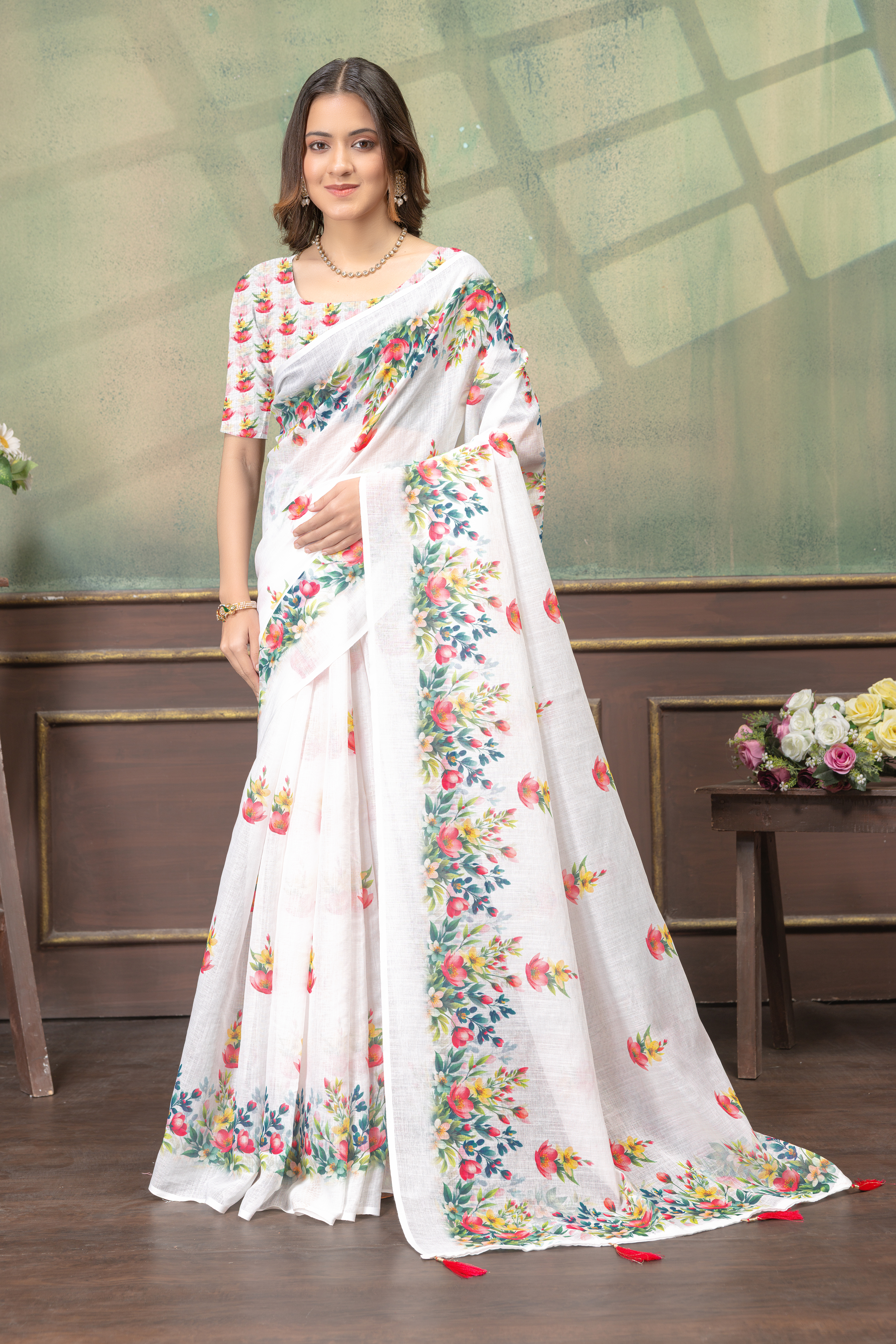
Gota Patti Suit Sets You Can Wear Beyond Wedding Season deserve a place in a wardrobe that includes more than baraats and receptions. The metallic ribbon work associated with North Indian festive clothing can look equally considered at a Diwali lunch, a family anniversary, a temple visit or an evening dinner. The key is to adjust the surrounding details: choose quieter accessories, change the dupatta drape, balance shine with a matte fabric and select a silhouette that suits the setting.
Gota patti is decorative, but decoration doesn't automatically make an outfit formal. A heavily embellished dupatta may be reserved for a wedding, while a lightly worked kurta with straight trousers can work for a festive office gathering. Understanding that difference helps you buy a suit set that earns repeated wear instead of staying folded after one celebration.
Why Gota Patti Suit Sets You Can Wear Beyond Wedding Season Work
Gota patti suit sets work beyond wedding season because the embellishment can be controlled through colour, surface balance, styling and occasion-appropriate accessories. Traditional gota patti uses metallic ribbon, lace or appliqué elements arranged in floral, geometric or border patterns, so the final effect depends on how much surface area carries the shine.
A suit with gota patti concentrated around the neckline, sleeve edge or dupatta border usually feels easier to repeat than a three-piece set covered from hem to hem. A tonal design, such as ivory work on an ivory base, can also appear quieter than bright gold against red or fuchsia. The difference is useful when you want festive detail without a bridal impression.
Silhouette changes the message as well. An Anarkali with a wide flare and ornate dupatta creates movement suited to a wedding or sangeet. A straight kurta with cigarette pants, palazzo trousers or a restrained dupatta can look polished at a puja, a festive lunch or a cultural programme. The garment doesn't need to lose its Indian identity to become more versatile.
Match the Suit to the Occasion Before Choosing Accessories
The right accessory level depends on the event's formality, time of day and setting. An useful rule is to let only one element lead: if the dupatta has prominent gota patti, keep the earrings smaller; if the suit is relatively simple, use earrings or a cuff to provide the emphasis.
For a festive office or daytime celebration
A festive office outfit benefits from controlled shine, practical movement and a dupatta that stays in place. Choose small jhumkas, a slim watch, low block heels and a structured tote rather than a large necklace and a heavily embellished potli. White Embroidered Anarkali Suit Set with Gota Patti Dupatta can be styled for a daytime celebration by keeping the white base visible, wearing pearl or silver-toned studs and using a neat shoulder drape instead of a dramatic front cascade.
Daylight also reveals colour contrast more clearly than evening lighting. White, ivory, powder blue, sage, soft pink and muted yellow generally look lighter when paired with minimal metallic jewellery. Avoid combining a shiny gota border with sequinned footwear, a reflective clutch and layered necklaces for a workplace event, because several competing surfaces can make a comfortable suit look costume-like.
For a family lunch, puja or festive visit
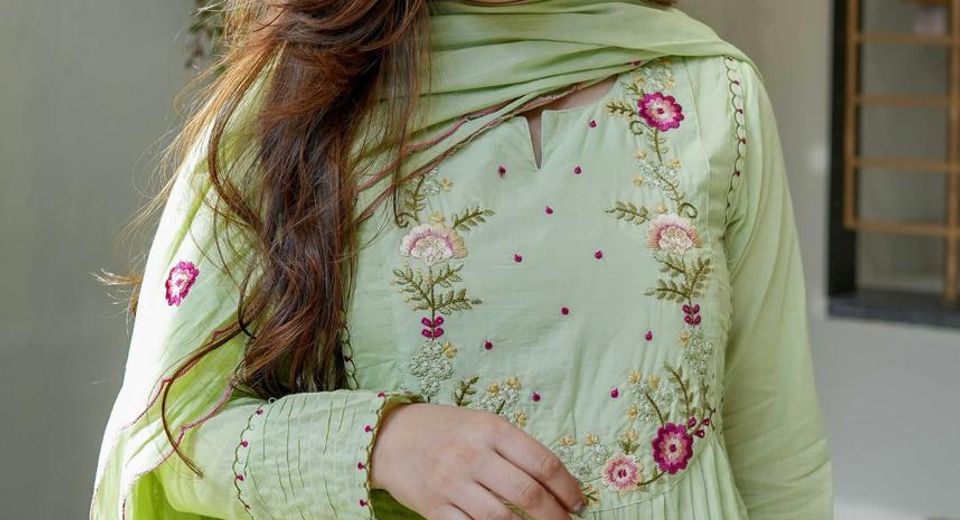
A family lunch or puja suits medium embellishment, breathable construction and footwear that can be removed easily. A Green Georgette Embroidered Kurta Pant Dupatta Set offers an useful direction: the kurta-and-pant shape feels less ceremonial than a flared Anarkali, while the dupatta retains the finish expected from festive Indian dressing.
Wear a small bindi, lightweight bangles and embroidered juttis when the event includes sitting on the floor or walking between homes. Keep the dupatta pinned at one shoulder if you expect to perform aarti or serve food. A three-quarter sleeve, a modest neckline and a lining that's not too warm are practical details for a long daytime gathering.
For dinner, theatre or an evening gathering
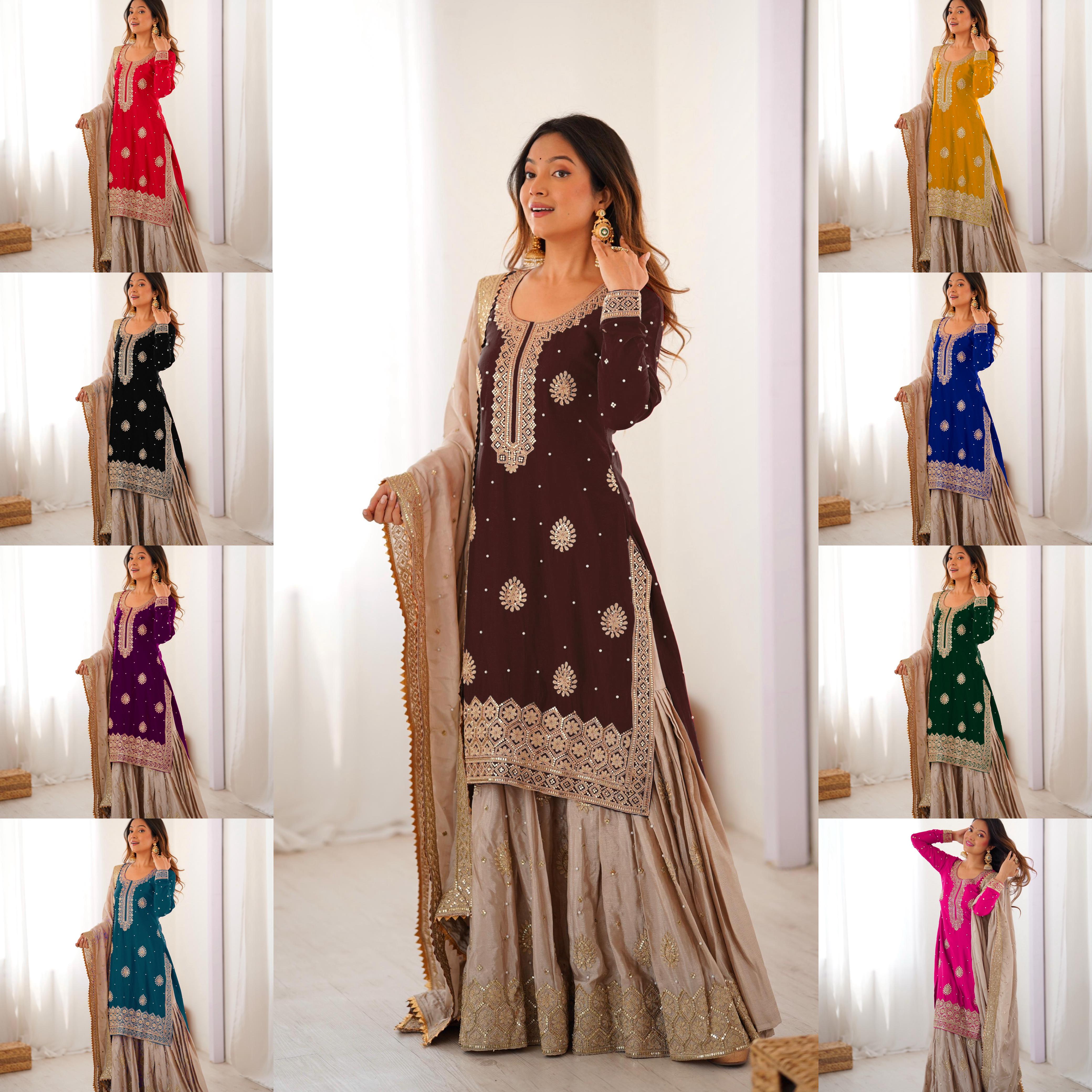
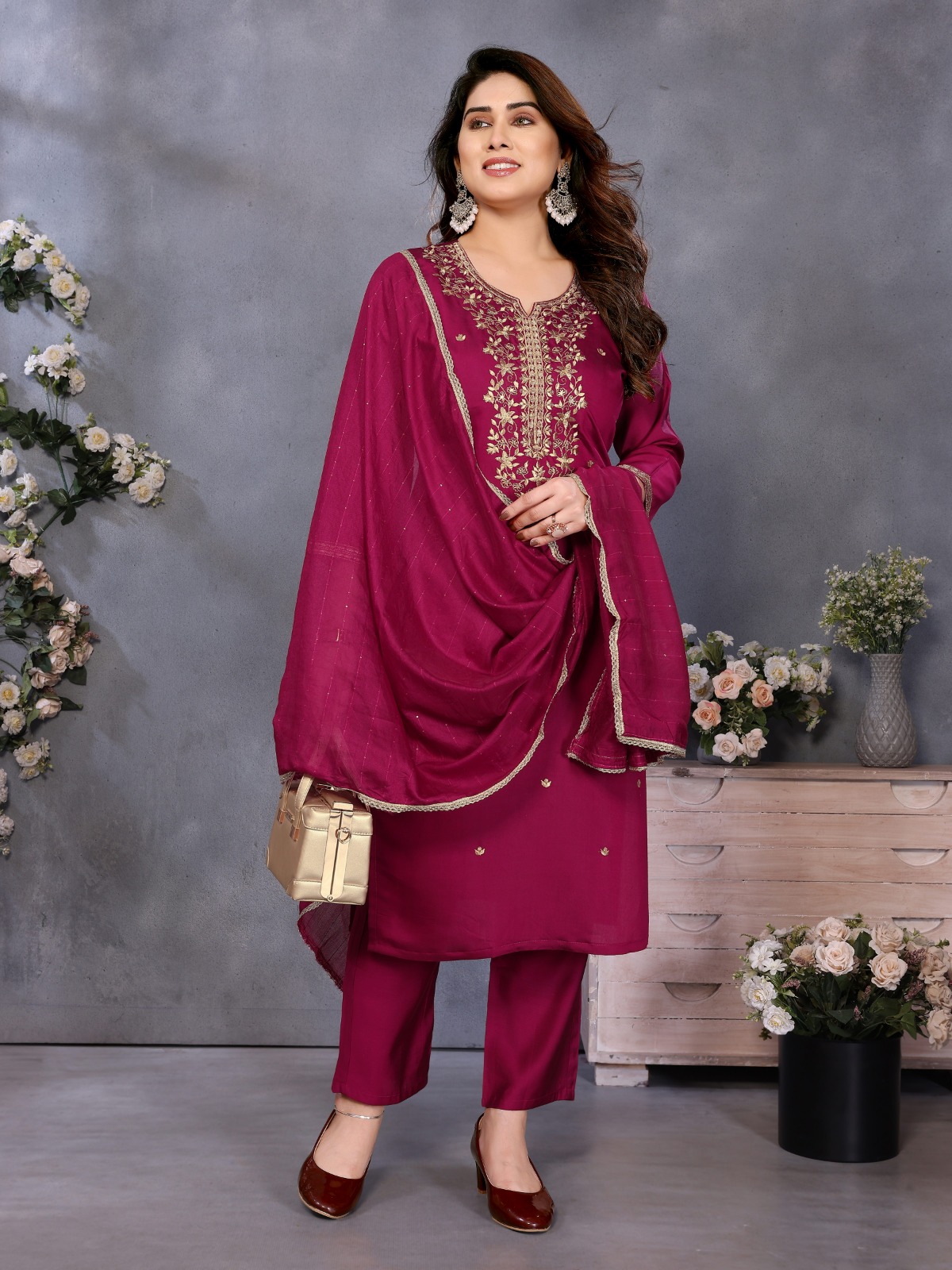
An evening event can support stronger colour and more visible metallic detail, but balance remains important. Maroon Wedding Wear Embroidered Palazzo Suit Set can move beyond a wedding when paired with plain metallic sandals, a compact clutch and one statement earring rather than a full jewellery set.
Deep maroon, navy, charcoal, emerald and black absorb some light and make zari or gota accents stand out. Black Zari Sequins Embroidered Anarkali Suit Set | Varnavi! Would create a more dramatic evening direction, so keep the makeup defined but uncomplicated and avoid adding a contrasting heavily decorated dupatta. A clean low bun or a sleek braid can make a richly worked Anarkali feel intentional rather than excessively ornate.
Use Colour and Fabric to Lower or Raise the Formality
Colour and fabric are the fastest ways to decide whether a gota patti suit reads as ceremonial, festive or wearable for a less formal gathering. Bright jewel tones and dense metallic contrast usually look more celebratory, while pale neutrals, earthy shades and low-contrast embroidery create more styling flexibility.
Georgette has a fluid fall and often suits evening movement, but the lining and embellishment weight determine comfort. BLUE Georgette Designer Gown Set with Dupatta Women can be treated as an evening statement by using silver-toned accessories and keeping the rest of the look streamlined. Blue also works well with pearl, silver, clear crystal or even matte white accents, depending on the intensity of the shade.
Crepe tends to hold a clean line, making it useful when a set has a maxi or long-kurta shape. Multicolor Embroidered Crepe Maxi Suit Set for Festive Wear already carries visual variety, so accessories should repeat one colour from the embroidery rather than introduce a fourth or fifth strong shade. A plain sandal and a solid-colour bag can give multicoloured embroidery enough space to read clearly.
Ivory and cream are especially adaptable because they can be dressed up with gold jewellery or softened with tan leather, coloured glass bangles and a printed dupatta. Ivory Zari Sequins Embroidered Anarkali Suit Set | Varnavi carries a formal surface, so a daytime version would benefit from a simple hairstyle, minimal makeup and flat footwear. For evening, the same base can take a metallic heel and a more sculptural earring.
Change the Dupatta Before Buying Another Outfit
Changing the dupatta is one of the most effective ways to give a gota patti suit a different identity. The dupatta occupies a large visual area, so replacing a high-shine textile with a matte, printed or lightly bordered layer can reduce formality without altering the kurta or trousers.
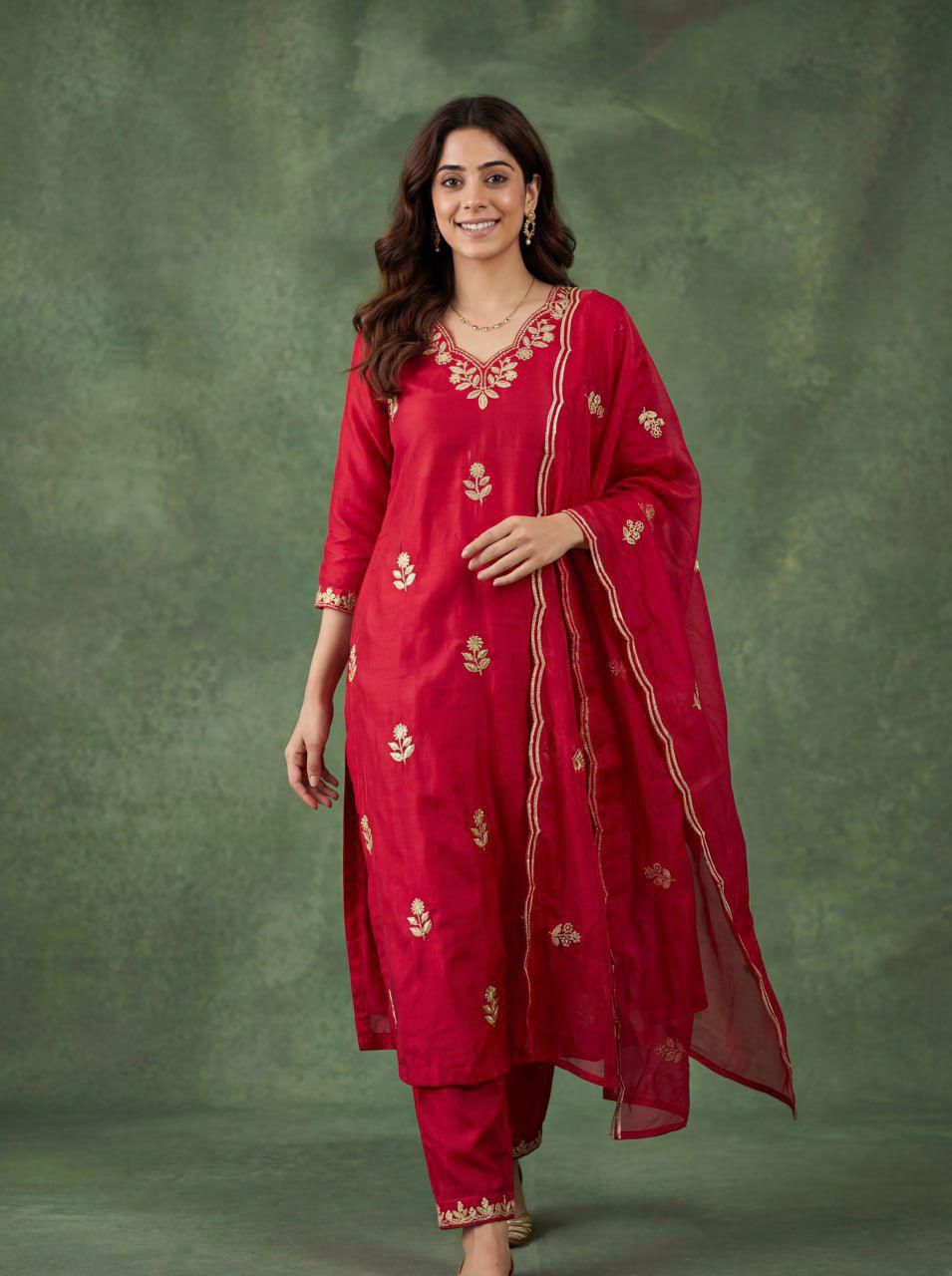
For a wedding, a wide front drape displays the border and creates a time-honoured silhouette. For a lunch, fold the dupatta lengthwise and place it over one shoulder with the ends falling behind the arm. For an office celebration, secure one shoulder with a discreet pin and let the opposite side remain clear, which keeps the hands free and reduces repeated adjustment.
Printed Indian textiles can also create useful contrast. Kalamkari Print Salwar Suits (Copy) suggest how a narrative print can carry the outfit when metallic accessories are reduced. Maharashtra Paithani Inspired Salwar Suits bring a woven, regional visual language that can sit naturally beside restrained gota details. Gujarat Bandhej Salwar Suits and Odisha Sambalpuri Salwar Suits offer further colour and pattern references when you're building a festive wardrobe that doesn't rely on sequins for impact.
When mixing a replacement dupatta with an embellished suit, match one colour rather than trying to match every colour. A cream gota border can sit comfortably with a rust, teal or indigo printed dupatta if one small detail connects the two pieces. Avoid pairing two competing borders of equal width, because the eye may not know which edge to follow.
Build Three Different Looks from One Suit Set
One suit set can create three distinct outfits when the styling changes in silhouette, accessories and layering. Repetition becomes less noticeable when the outfit is photographed or remembered as a complete look rather than as an isolated kurta.
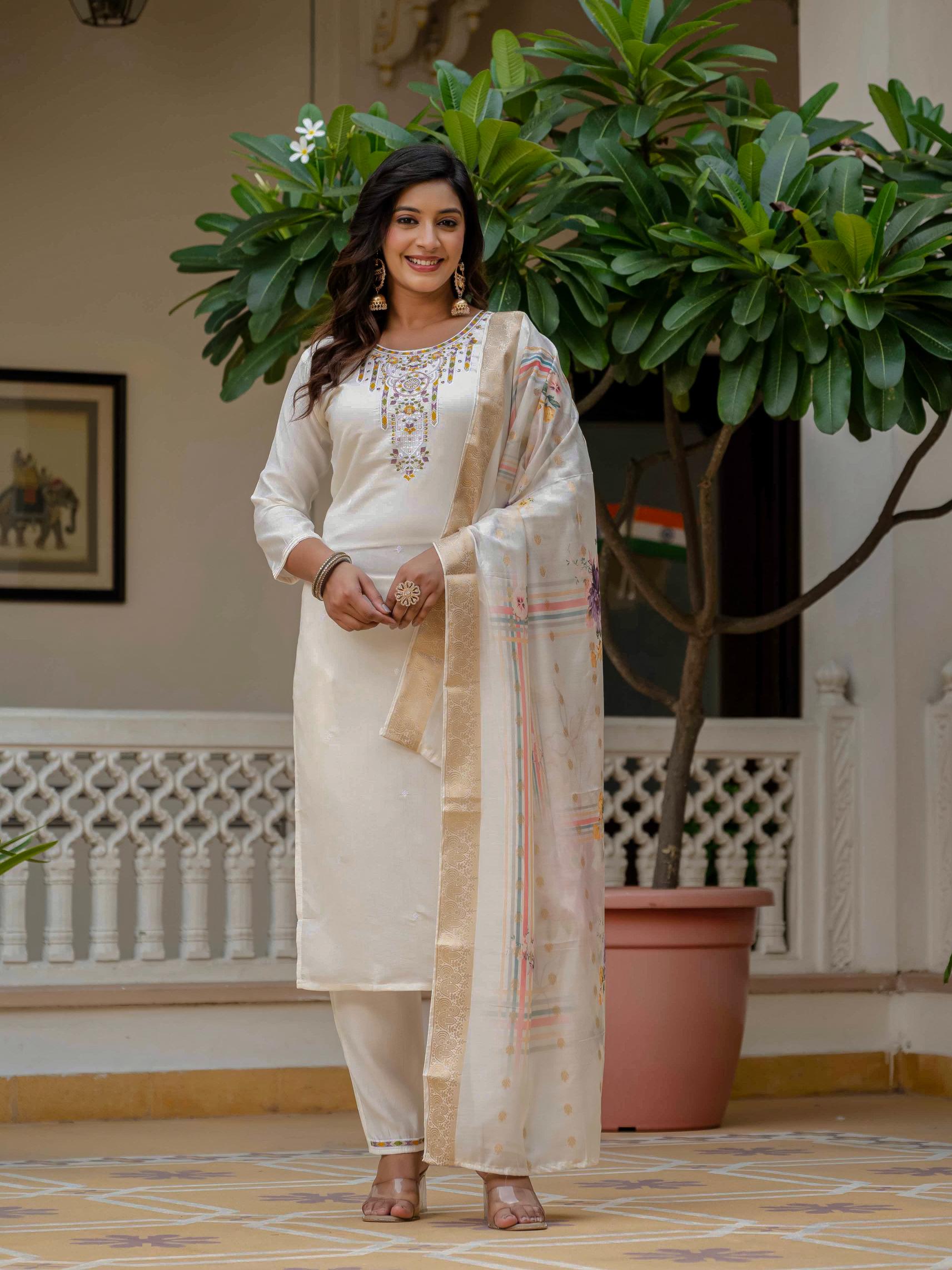
- Daytime classic: Wear the matching dupatta in a compact shoulder drape with juttis, small earrings, a bindi and a low bun. This combination works for a puja, festive lunch or family visit because the look feels finished without excessive height or shine.
- Contemporary evening: Replace heavy jewellery with one architectural earring, use a metallic sandal, carry a small solid clutch and let the kurta's neckline remain visible. This approach suits dinner, a gallery event or an intimate celebration where a full wedding-style drape would feel too formal.
- Relaxed festive: Wear the kurta with straight trousers or palazzos from another set, add a plain cotton-silk or lightweight printed dupatta and choose flat footwear. The mix-and-match version is useful for a school event, a casual Diwali visit or a regional cultural programme.
Punjab Patiala Salwar Suits provide an useful styling reference for the relaxed festive version because a fuller lower silhouette changes the proportion of the upper garment. A flared or long kurta should be balanced with a narrower bottom, while a shorter kurta can accommodate a fuller Patiala-inspired shape. Proportion matters more than following a fixed rule about what counts as formal.
Check Construction Details Before You Buy
Construction details determine whether a decorative suit remains comfortable after several hours. Check the lining, seam finish, closure placement, trouser waistband, sleeve opening and total garment weight before judging only the embroidery.

A lining should cover areas where metallic ribbon, sequins or zari may rub against the skin, especially around the armhole and neckline. A side zip or back closure should lie flat when seated. Trousers need enough ease at the hip and thigh for walking and sitting; a very narrow waistband can make a beautiful set impractical for a long celebration.
Measure your bust, waist, hip and preferred garment length against the seller's size chart rather than relying on a familiar letter size. An Anarkali needs particular attention to bust and shoulder measurements because excessive tightness at the yoke can restrict the flare. Palazzo trousers require hip and rise measurements, while a pant set needs ankle and calf comfort if the hem is narrow.
Consider the number of times you can name a realistic use before purchasing. If a suit works only with its original dupatta, jewellery and footwear, its cost per wear will remain high. If the kurta works with plain trousers, the dupatta works with another outfit and the colour suits both day and evening, the set has greater wardrobe value.
Care for Gota Patti, Zari and Embroidery Correctly
Gota patti, zari and sequins should generally be handled with gentle spot cleaning, low-friction storage and professional cleaning when the care label requires it. Water, heat, perfume and rough surfaces can dull metallic work or loosen attached elements.
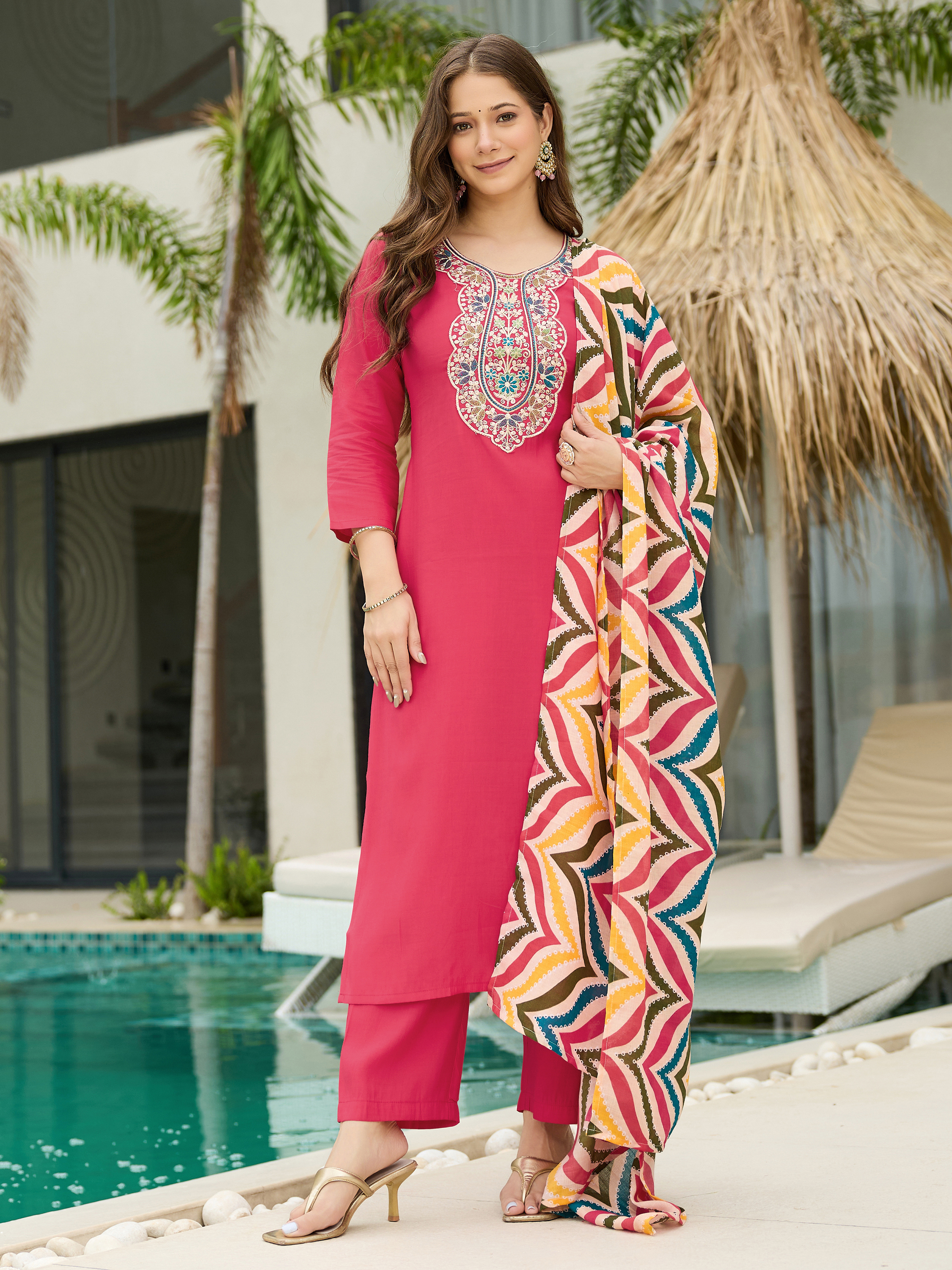
Read the garment label before washing, because fabric composition and embroidery method change the correct treatment. Do not soak a decorated suit for several hours, wring the dupatta or scrub the neckline. A small hidden-area test can reveal colour bleeding, but a test doesn't replace the manufacturer's care instructions.
After wearing the suit, air it indoors away from direct sunlight before folding. Remove stains by pressing gently with a clean, barely damp cloth instead of rubbing. Store a heavily embellished dupatta in a soft cotton or muslin layer, with the decorated side protected from abrasion. Avoid hanging a very heavy Anarkali for months if the shoulder seams may stretch under the weight.
Steam should be used cautiously and never pressed directly onto zari, gota ribbon or sequins. Turn the garment inside out, place a thin cotton cloth between the iron and fabric if pressing is permitted, and use the lowest suitable temperature. Store metallic accessories separately so sharp edges don't catch the embroidery.
Make the Purchase Work After the Wedding Invitation Ends
The most adaptable gota patti suit isn't necessarily the plainest one; it's the one whose colour, silhouette and embellishment can be separated into several styling levels. A formal dupatta can be reserved for weddings, while the kurta can return with simple trousers and small jewellery for a quieter event.
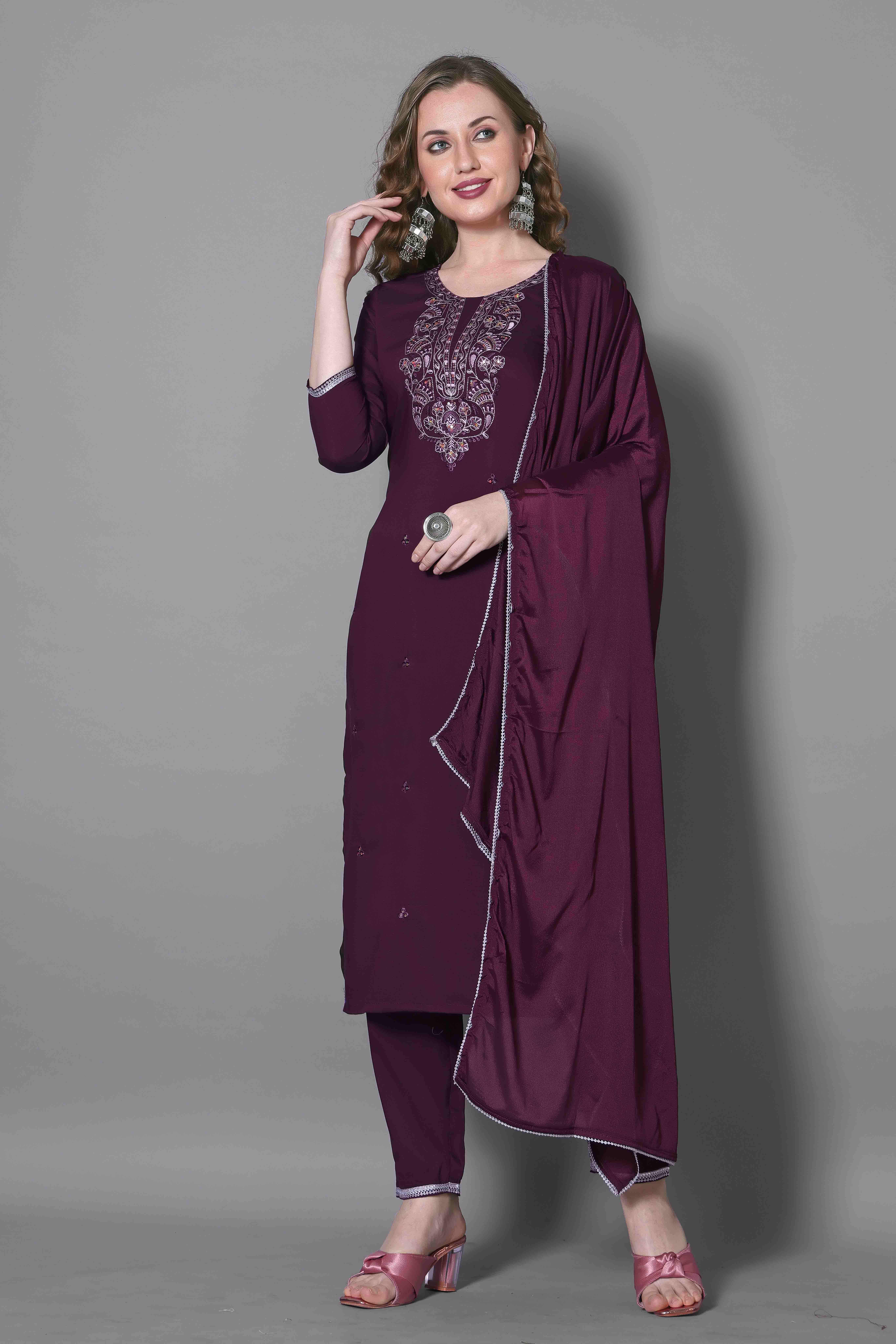
Before buying, picture the suit at three specific events: a two-hour daytime lunch, a five-hour family celebration and an evening dinner. Decide which footwear, bag and jewellery would complete each version. That exercise exposes whether the garment brings genuine flexibility or only looks flexible in a product photograph.
Gota Patti Suit Sets You Can Wear Beyond Wedding Season become especially valuable when they connect with the rest of your wardrobe. Choose a shade that works with an existing neutral bottom, a dupatta that can be styled in more than one way and embellishment that complements rather than overwhelms your accessories. The result isn't a compromise outfit; it's a festive suit with a longer, more useful life.
Practical Questions About Wearing Gota Patti Suits All Year
Can gota patti suits be worn to the office?
Yes, gota patti suits can work for a festive office day when the embellishment is balanced with simple accessories and practical footwear. Choose a straight or lightly flared silhouette, a compact dupatta drape, small earrings and a structured bag instead of a full wedding-style jewellery set.
How can I make a heavily embroidered Anarkali look less bridal?
Use understated styling around the Anarkali to reduce its bridal impression. Swap a highly ornate dupatta for a plain or lightly bordered one, choose flat or low block-heel footwear, wear one statement accessory and keep the hairstyle clean.
What colours make gota patti suit sets more versatile?
Ivory, white, navy, muted blue, sage, maroon and deep green can be versatile when the metallic contrast is not excessively dense. Neutral or low-contrast embroidery usually transitions more easily between daytime events, family gatherings and evening occasions.
Can I wear a gota patti suit to a daytime puja?
Yes, a gota patti suit is suitable for a daytime puja when the fabric is comfortable and the styling is restrained. Choose breathable lining, secure the dupatta at one shoulder, wear easy-to-remove footwear and avoid accessories that may interfere with prayer or serving food.
How should I wash a gota patti or zari suit?
Follow the garment's care label and prefer gentle spot cleaning or professional cleaning when metallic work is extensive. Avoid soaking, wringing, direct ironing and harsh rubbing because moisture, friction and heat can damage gota ribbon, zari and sequins.
What should I check before buying an embroidered salwar suit online?
Check the size chart, garment measurements, lining, fabric description, closure type, trouser measurements and care instructions before purchasing. Pay special attention to bust and shoulder measurements for Anarkalis, hip and rise measurements for palazzos, and the listed weight or construction of heavily embellished dupattas.