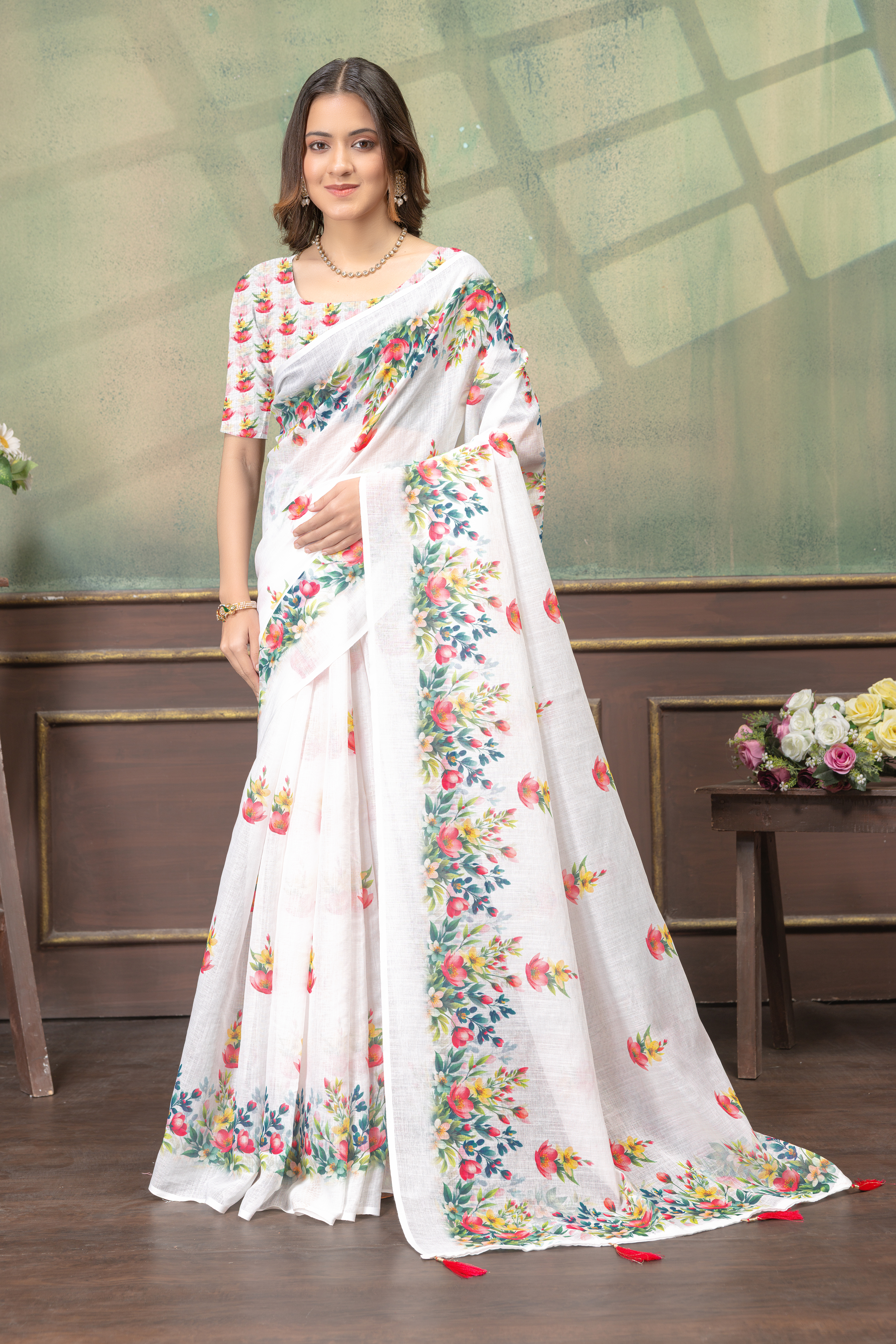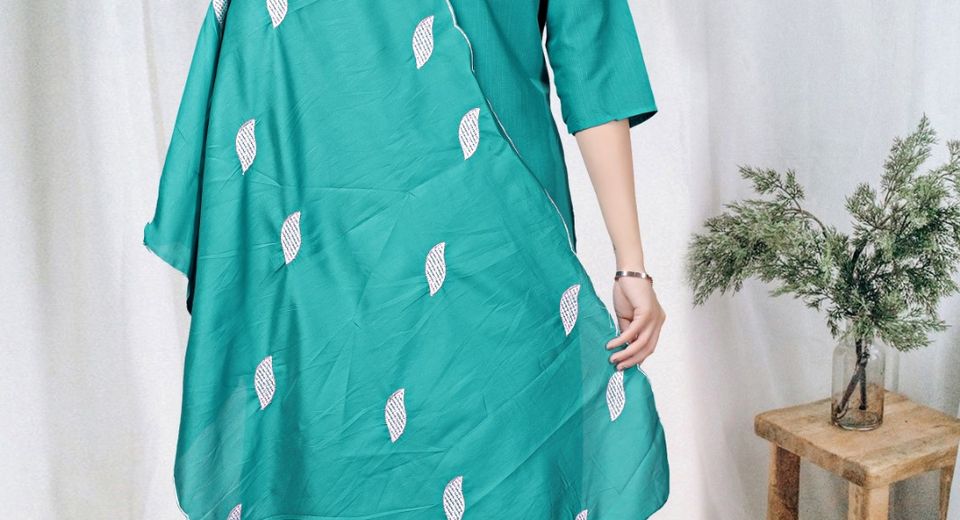
Ethnic Co Ord Sets That Make Everyday Dressing Feel Effortless solve a familiar daily problem: creating a polished Indian outfit without spending fifteen minutes matching a kurta to separate bottoms and a dupatta. A coordinated set usually brings together two or three pieces in a planned colour, print or embroidery story. The result is quick to wear, comfortable for movement and flexible enough for office hours, errands, college, travel or a casual lunch.
The real value of a co ord set isn't simply that every piece matches. An useful set gives you a dependable base that can be worn together, separated into new outfits and adjusted for weather, dress codes and the amount of styling time available. Choosing the right fabric, silhouette and level of detail matters more than following a short-lived trend.
Why Ethnic Co Ord Sets That Make Everyday Dressing Feel Effortless Work So Well
Ethnic co ord sets reduce daily outfit decisions by combining compatible garments in advance. A wearer can put on a complete set with flats and small earrings, or use the individual pieces with existing wardrobe staples.
Coordinated dressing also creates visual balance. A straight kurta with narrow pants looks neat because the proportions are already considered, while a short kurta with palazzo trousers feels relaxed because the volume is intentionally distributed. Colour repetition makes simple clothing look finished, even when the outfit has minimal jewellery.
Sets are particularly useful when daily dressing involves changing temperatures and multiple activities. A cotton kurta-pant set can handle a commute, while a removable dupatta adds modesty or colour for a meeting. A rayon palazzo set offers ease when sitting for long periods. A lightweight organza dupatta can create a more dressed-up finish without adding the warmth of a heavy stole.
Another practical advantage is wardrobe multiplication. A teal kurta can be worn with white trousers, a printed palazzo can be paired with a plain cotton top, and a dupatta can refresh a neutral kurta from another outfit. A two-piece or three-piece purchase therefore has more value when every component works independently.
Which Fabrics Make a Daily Ethnic Co Ord Set Comfortable?
Cotton, rayon, khadi cotton and lightweight blends are among the most practical fabrics for daily ethnic co ord sets because they allow movement and remain manageable through repeated wear.
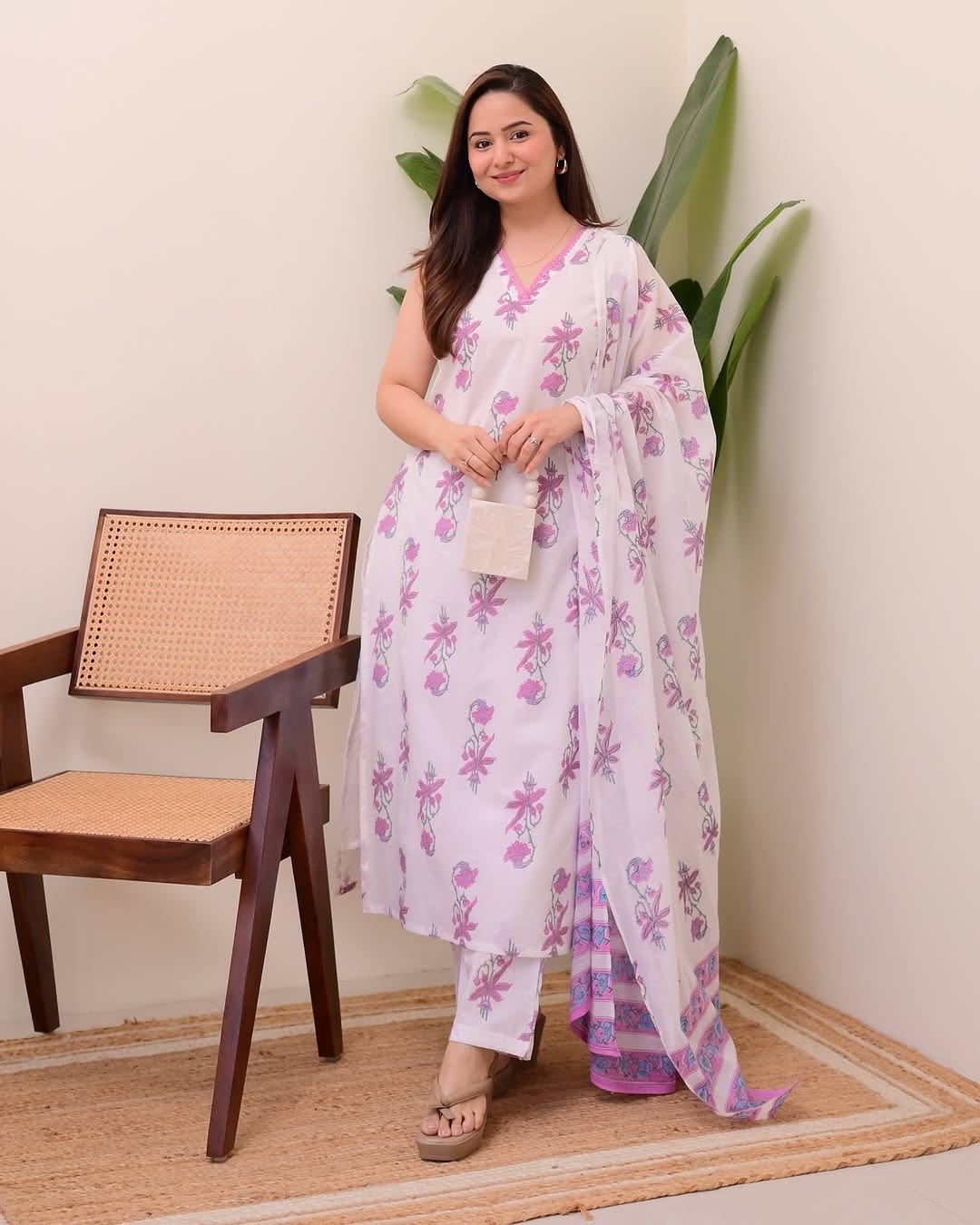
Cotton for heat and regular washing
Cotton is a strong choice for warm climates, workdays and frequent laundering. Cotton absorbs moisture, feels breathable against the skin and becomes easier to handle when the weave is light to medium weight. A cotton kurta-pant set generally holds its shape better when washed according to the care label and dried away from harsh midday sun.
Teal Embroidered Cotton Kurta Pant Set Online demonstrates how embroidery can add definition without requiring a separate styling layer. Cream Khadi Cotton Straight Kurta Set with Dupatta brings a more textured, artisanal quality to a neutral daily wardrobe. Khadi cotton may have small slubs and irregularities because of its handwoven character; those details are part of the fabric rather than signs of damage.
Rayon for fluid movement
Rayon drapes softly and is useful when a wearer prefers palazzos or a fluid straight kurta. Rayon doesn't feel as crisp as cotton, but the extra fall can make wide-leg trousers look graceful rather than bulky. Rayon needs gentler handling because aggressive wringing and high heat can affect its shape.
Navy Blue Ajrakh Printed Rayon Top Palazzo Set Women combines a strong indigo base with an easy silhouette. Ajrakh-inspired prints often use repeated geometric or floral motifs, so a set with this visual density can be worn with restrained jewellery and plain footwear.
Khadi and lightweight dupatta fabrics
Khadi cotton gives a dry, slightly textured hand-feel that suits simple silhouettes and natural-looking styling. Organza, by contrast, is crisp and translucent, making it useful when a plain kurta needs a festive-looking layer without a heavily embellished garment.
Teal Embroidered Rayon Straight Kurta Set with Organza Dupatta shows how fabric contrast can create interest: the rayon provides softness while the organza contributes structure. The combination works for a regular day when the dupatta is worn loosely and for a small gathering when it's pleated neatly over one shoulder.
How Should You Choose the Silhouette for Daily Wear?
The best daily silhouette depends on movement, climate, body comfort and the places where you expect to wear the set. A straight kurta with pants is generally the most adaptable option, while a kurta with palazzos brings more ease and a wider visual line.
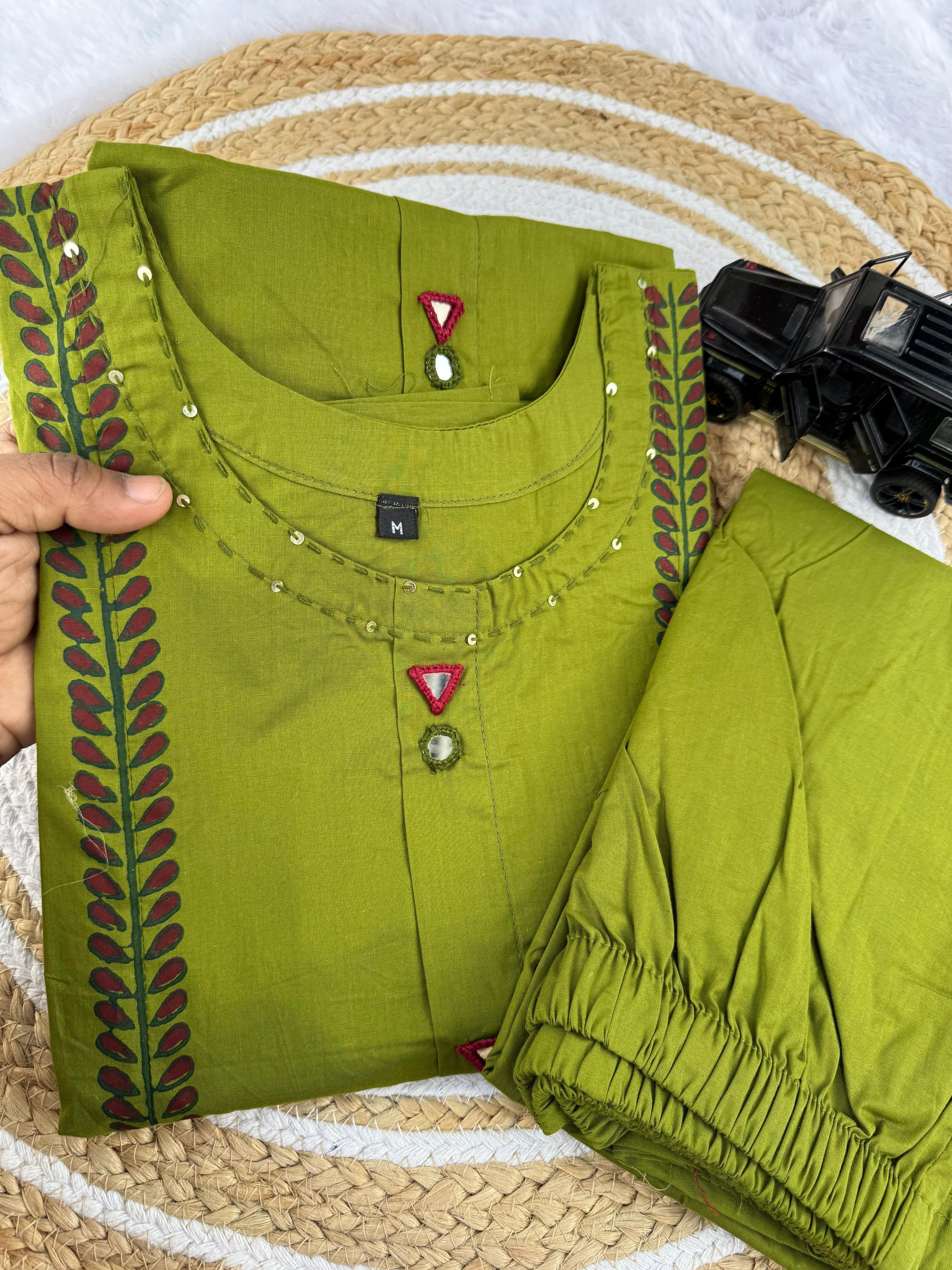
Straight kurtas and narrow pants
A straight kurta and pant combination creates a clean vertical line that suits office-casual dressing and everyday appointments. Look for side slits that allow comfortable walking, sleeves that don't restrict the upper arm and a trouser waistband that sits securely without digging in when seated.
Elegant Teal Embroidered Kurta Pant Dupatta Set uses a coordinated three-piece format that can be worn traditionally or simplified. For a busy day, wear the kurta and pants with flat sandals. For a presentation or family visit, add the dupatta and small metal earrings.
Palazzos for relaxed movement
Palazzo trousers are useful when sitting, travelling or walking frequently because their wide leg doesn't cling to the body. The kurta length should be considered carefully: a shorter or mid-thigh kurta shows the shape of the palazzo, while a longer straight kurta gives a more continuous line.
Wide trousers look most balanced when the top has some structure at the shoulders or neckline. A very oversized kurta with a very wide palazzo can add unnecessary volume, especially in heavier fabric. Lightweight rayon and cotton generally make the combination easier to wear.
Dupattas and practical proportions
A dupatta should be long enough to drape securely but light enough to stay in place during ordinary movement. For commuting or desk work, an one-shoulder drape or a loose loop around the neck is more practical than a style requiring repeated adjustment.
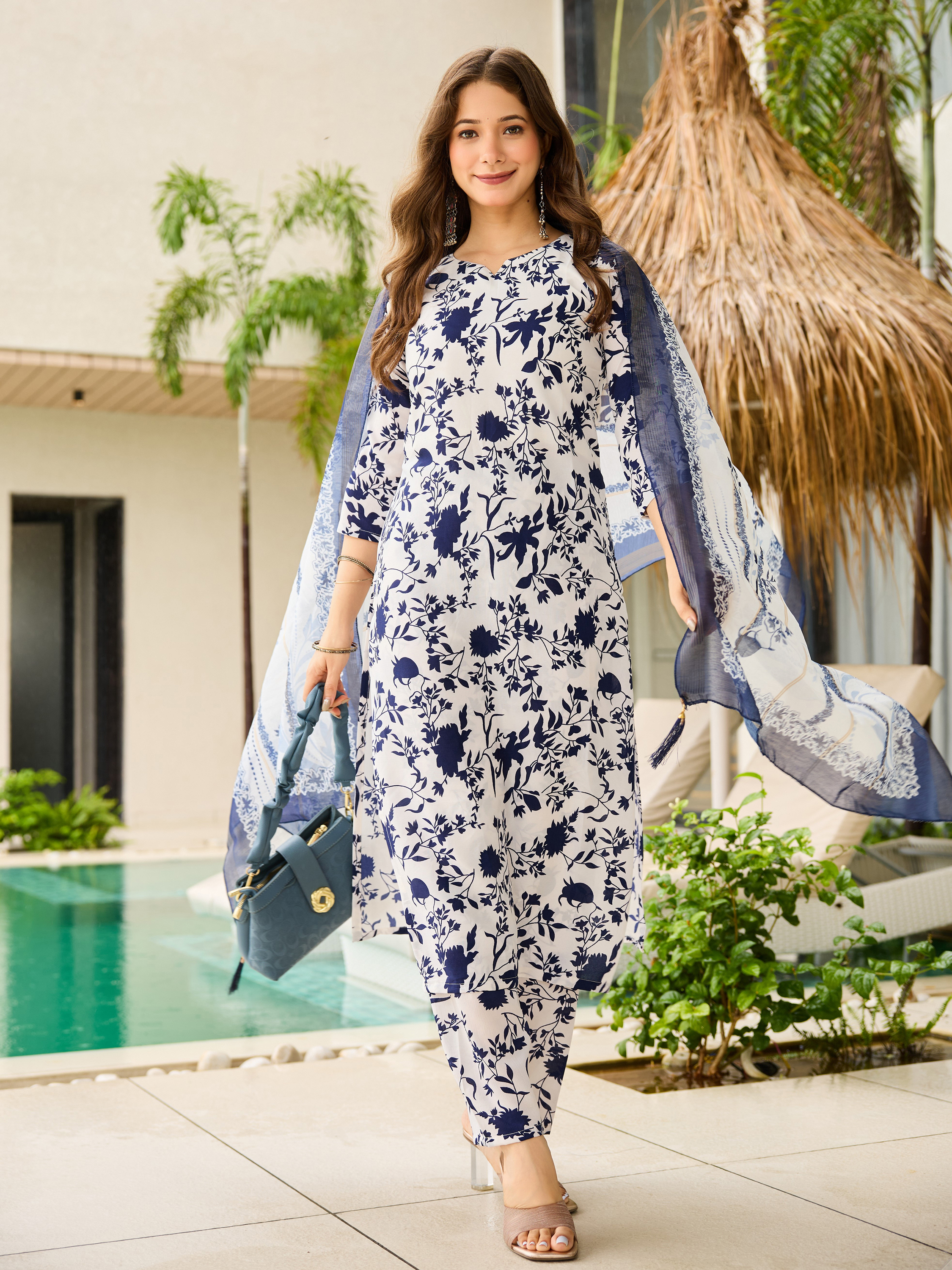
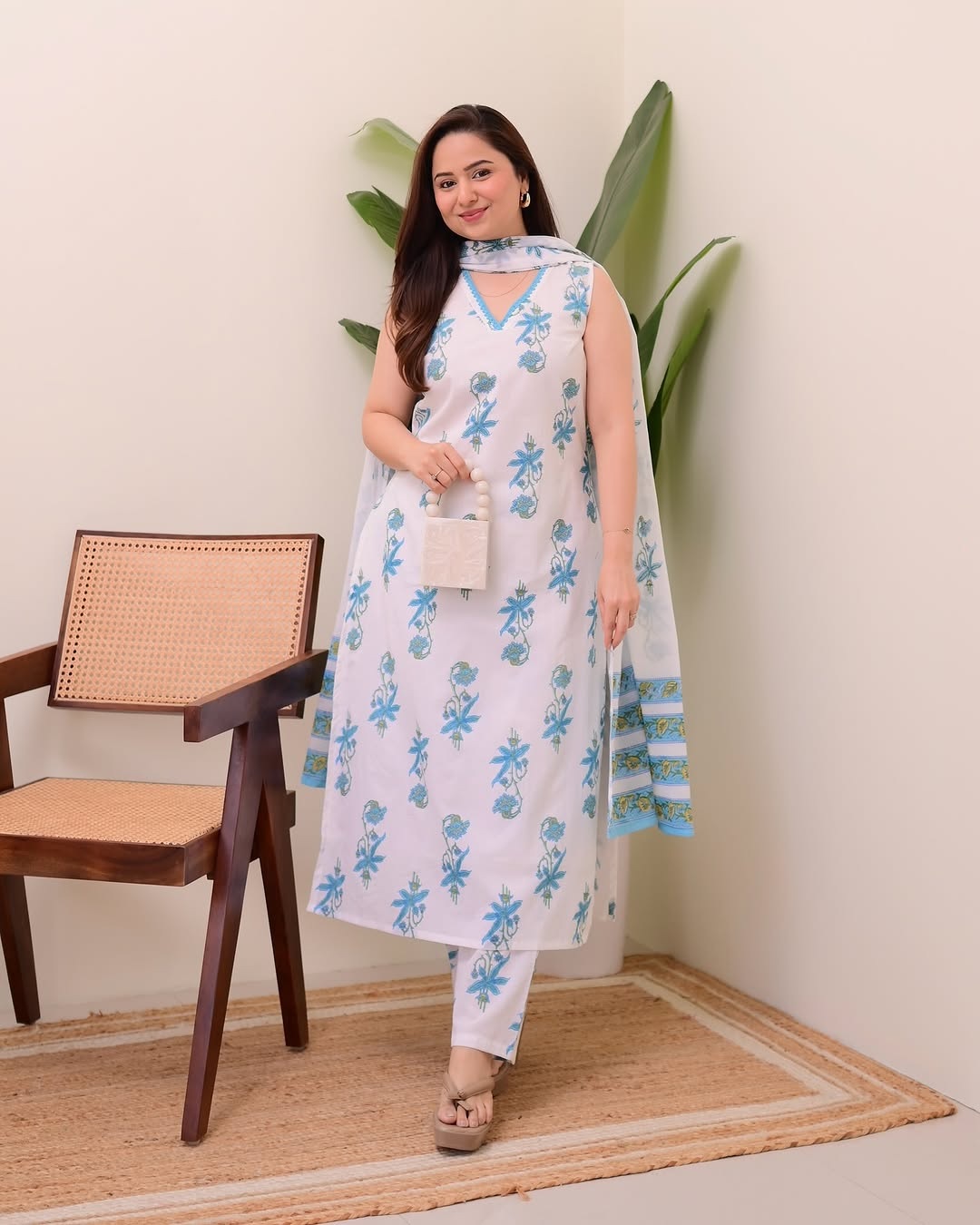
White Blue Printed Cotton Kurta Pant Dupatta Set gives an useful example of colour distribution. White brings a calm base, blue supplies contrast and the dupatta repeats the palette so the outfit feels coordinated without looking overly formal.
What Colours and Prints Are Easiest to Repeat?
Neutral bases, deep jewel tones and two-colour prints are the easiest to repeat because they pair with more accessories and existing separates. Cream, navy, teal, brown, white and muted green can each support several styling directions.
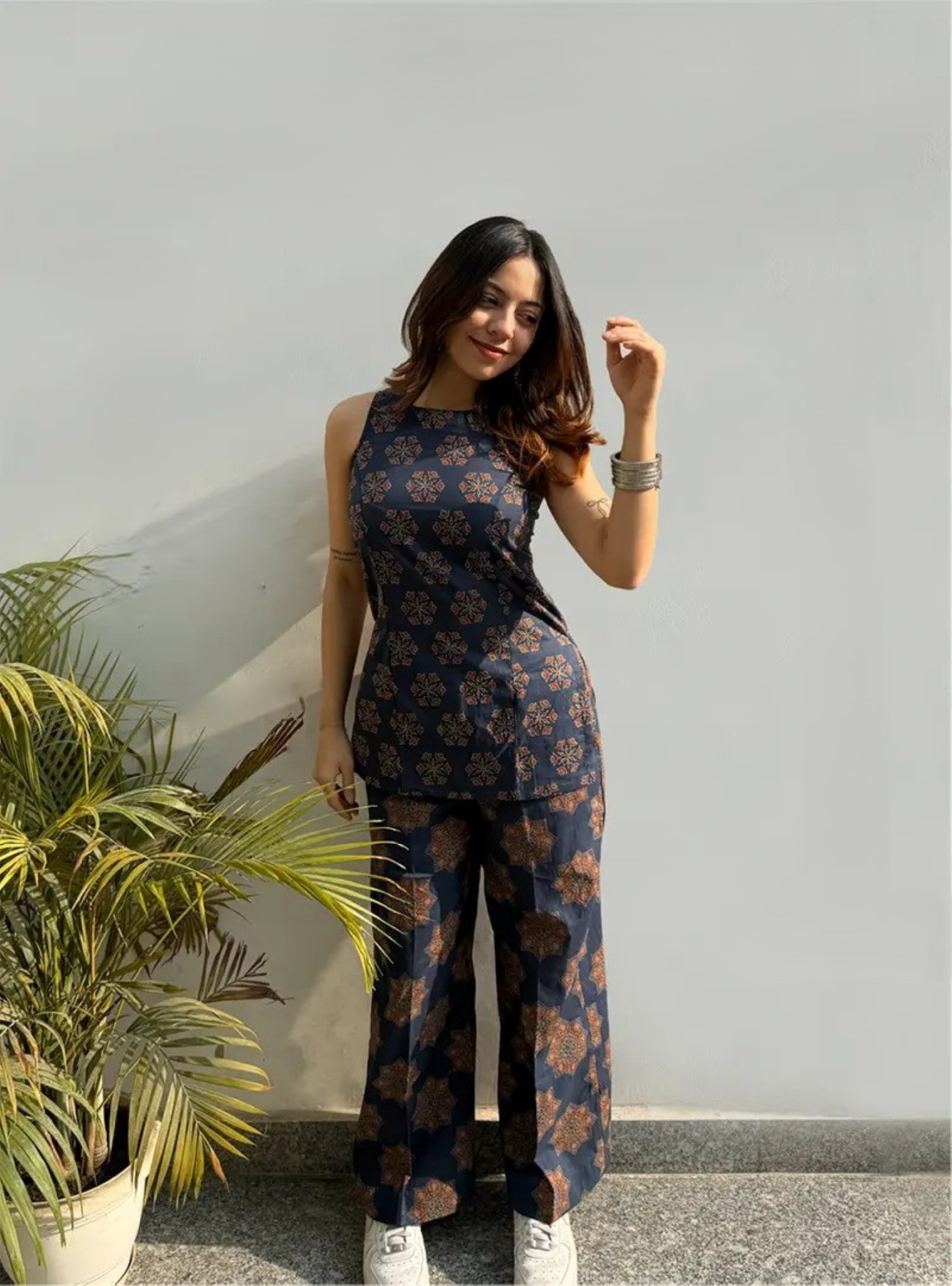
Navy works well with tan footwear, silver jewellery and white or beige accessories. Teal can be softened with cream or sharpened with gold-toned accents. Brown pairs naturally with ivory, rust, mustard and muted pink. White and blue create a crisp combination that works especially well in cotton.
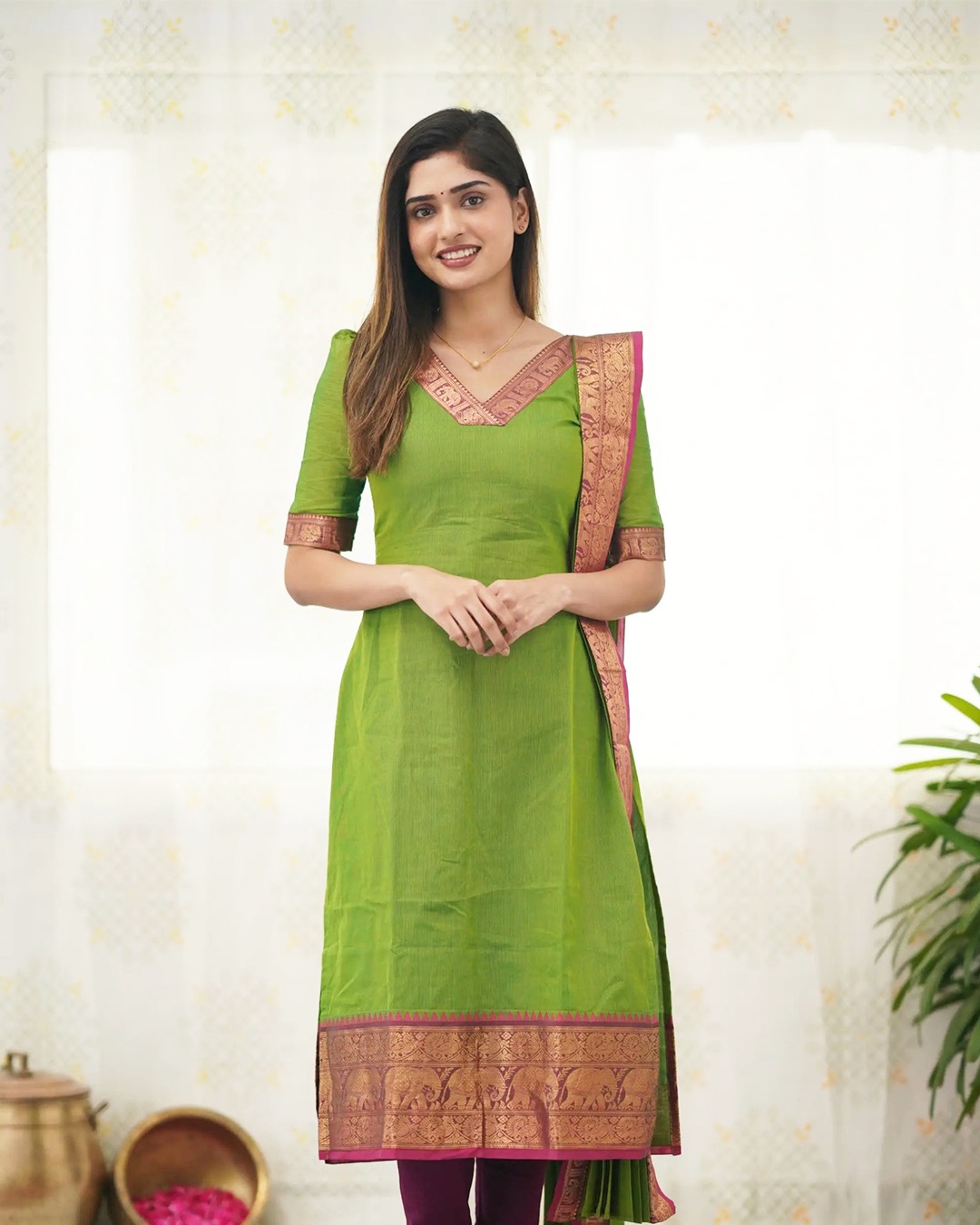
Green Elegant Traditional Kurti Set can become a dependable daily option when styled with neutral sandals and a simple tote. Green also works with wooden jewellery, antique-gold earrings and cream trousers, giving the kurti more than one visual identity.
Print scale affects how often a garment can be worn. Small, evenly repeated motifs are discreet enough for regular office or daytime use. Large contrast prints make a stronger statement and may feel more distinctive when rotated between outfits. Ajrakh prints, block-print-inspired patterns and small florals can all work for daily wear when the silhouette remains comfortable.
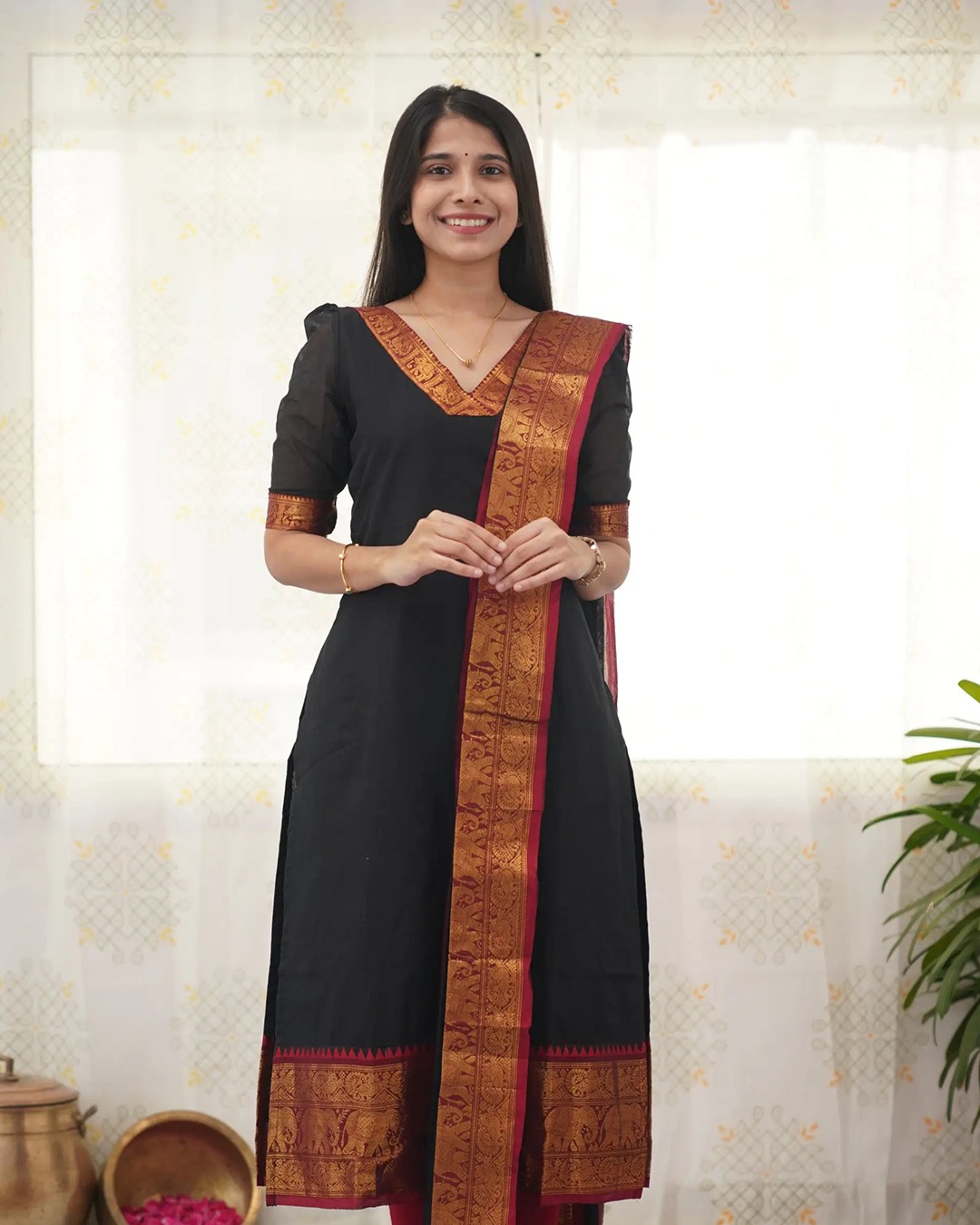
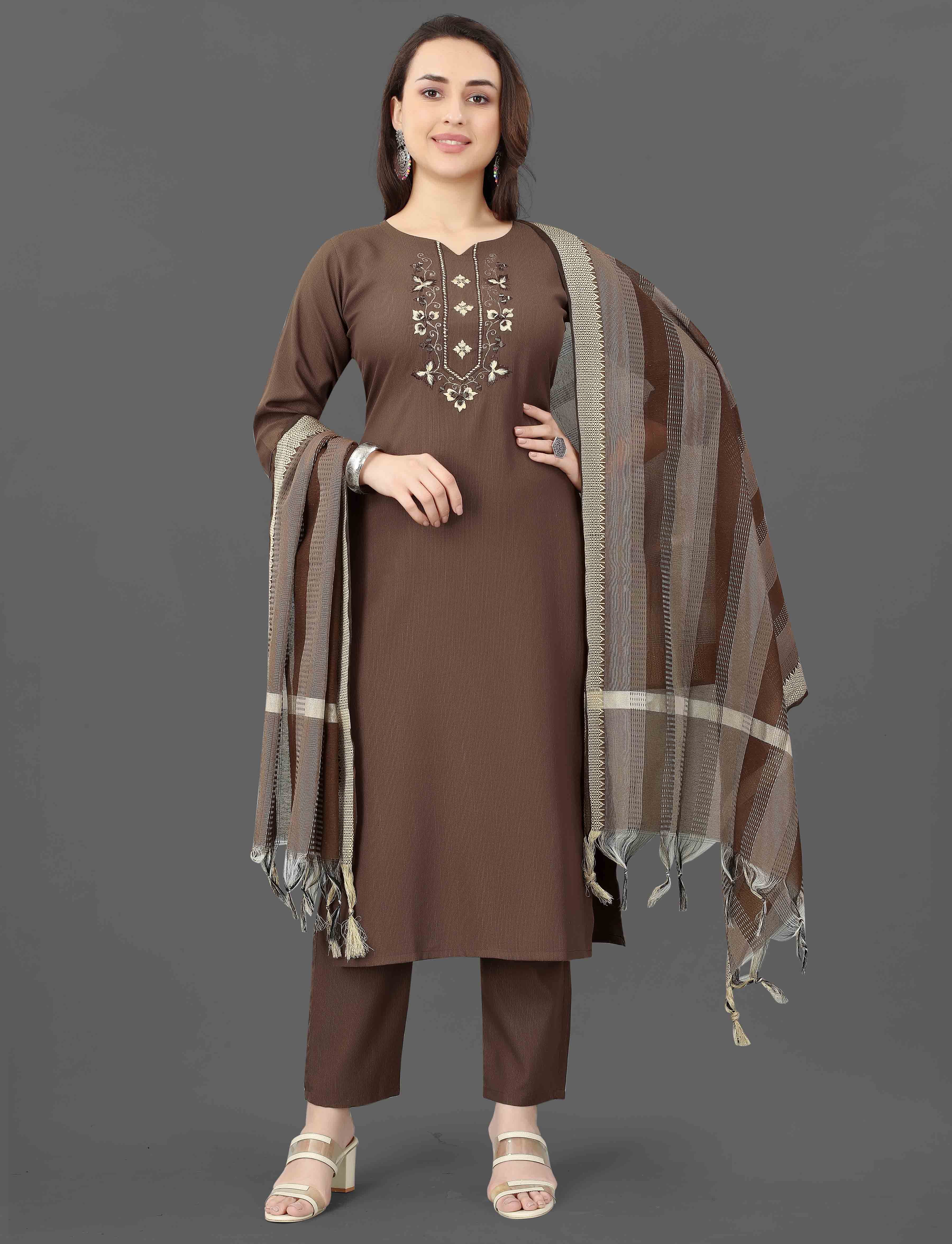
Embroidery requires similar judgment. Tone-on-tone threadwork looks refined and easy to repeat, while dense metallic zari or high-contrast embellishment moves a set closer to occasion wear. Brown Embroidered Kurta Pant Dupatta Set for Women can be made more casual with plain sandals and a fabric tote, but its embroidery may also support a low-key festive setting.
How Can One Co Ord Set Create Several Outfits?
One co ord set can create at least three useful outfits when the kurta, bottom and dupatta are each compatible with other wardrobe pieces.
- Wear the complete set. Keep the styling simple with flat sandals, a watch and small studs. This is the fastest option for a workday or an appointment.
- Separate the kurta. Pair the kurta with white cigarette pants, denim, a plain salwar or a long skirt. A printed kurta usually benefits from a solid bottom.
- Separate the bottom. Wear a palazzo with a plain short kurta, fitted cotton top or longline tunic. Keep the upper layer relatively simple when the palazzo has a detailed print.
- Reuse the dupatta. A printed or embroidered dupatta can add colour to an otherwise plain cream, navy or brown outfit. Pinning the dupatta at one shoulder gives a more structured appearance, while a loose drape keeps the look relaxed.
White Blue Printed Cotton Kurta Pant Dupatta Set could therefore be worn as a complete outfit, with its kurta over plain navy pants, or with its dupatta over a cream kurta. The same approach applies to Green Elegant Traditional Kurti Set when the kurti is combined with nude bottoms.
How Do You Style Daily Ethnic Co Ord Sets Without Overdoing Them?
Daily ethnic styling works best when one element carries visual interest and the remaining elements provide restraint. If a set has a bold print, choose plain footwear and one small jewellery category. If the garments are solid and minimally detailed, add a printed dupatta, textured bag or noticeable earrings.
For office wear, keep the outfit structured with closed flats, a medium-sized tote and a watch. For errands, replace the tote with a lightweight crossbody bag and choose sandals that can handle walking. For a casual lunch, add a slim belt over a longer straight kurta only if the fabric falls smoothly and the belt doesn't distort the side seams.
Jewellery should respond to the neckline and embroidery. Small hoops or studs suit a detailed neckline, while a plain round neck can accommodate a short necklace. Zari, metallic thread and organza already reflect light, so additional high-shine accessories are usually unnecessary for daytime.
Layering should remain practical in warm weather. A cotton shirt worn open over a simple kurta can add shape, while a lightweight sleeveless jacket brings coverage without the weight of a long coat. Avoid combining multiple bulky layers with palazzo trousers because the outfit may become difficult to move in.
What Should You Check Before Buying a Co Ord Set?
Check fabric, measurements, transparency, garment length, fastening details and care instructions before buying a daily ethnic co ord set. These details determine whether the outfit will remain useful after the first few wears.
- Measure the garment, not only the body. Compare bust, waist, hip, shoulder, sleeve and kurta lengths with a well-fitting garment you already own.
- Check ease for movement. A daily kurta should allow you to sit, raise your arms and walk without pulling at the bust, armhole or hips.
- Inspect the bottom structure. Look for a comfortable waistband, sufficient rise and pockets if storage is important during commuting.
- Consider opacity. White cotton and lightweight rayon may need a lining or a slip, particularly in bright daylight.
- Read the care label. Embroidery, organza, rayon and dark prints may require gentler washing than plain cotton.
- Assess separate wear. Ask whether the kurta works with another bottom and whether the trousers or palazzo can work with a plain top.
Teal Embroidered Cotton Kurta Pant Set Online, Elegant Teal Embroidered Kurta Pant Dupatta Set and Cream Khadi Cotton Straight Kurta Set with Dupatta illustrate three different buying directions: a two-piece cotton outfit, a more complete embroidered set and a textured neutral option. Comparing those formats helps you choose according to actual wardrobe needs rather than appearance alone.
How Should You Wash and Store These Sets?
Wash daily ethnic co ord sets according to their fibre and surface detailing, using cold or lukewarm water, mild detergent and gentle handling whenever the care label permits.
Turn printed garments inside out before washing to reduce surface friction and colour loss. Hand wash rayon when recommended, press out excess water without wringing and dry it flat or on a broad hanger. Cotton can usually tolerate regular washing, but dark Ajrakh-style prints benefit from shade drying to protect colour intensity.
Embroidered kurtas should be folded with the decorated surface facing inward or covered with soft cotton tissue to reduce snagging. Organza dupattas should be stored flat or on a wide hanger rather than compressed beneath heavy garments. Do not iron directly over zari, embroidery or delicate synthetic embellishment; use a pressing cloth and a low to medium temperature.
Before storing a set for several weeks, make sure every piece is completely dry. Dampness encourages mildew and can leave persistent odours, particularly in folded cotton. Store matching pieces together, but avoid tightly packing them so air can circulate and creases remain manageable.
Common Questions About Effortless Everyday Ethnic Co Ord Sets
Ethnic co ord sets are coordinated Indian outfits that usually combine a matching or deliberately complementary kurta, bottom and sometimes dupatta. The pieces are designed to be worn together, but they can also be separated to create additional outfits.
A cotton kurta pant set is usually the most practical choice for hot weather, frequent washing and long workdays. Rayon is useful when softer drape and palazzo trousers are priorities, while khadi cotton suits people who prefer a textured, breathable fabric.
A co ord set can be worn to the office when the print, embroidery and silhouette suit the workplace dress code. Choose a straight kurta, moderate hemline, comfortable pants, understated jewellery and flat or low-heeled footwear for a polished office-casual result.
Palazzo co ord sets are comfortable for daily wear when the waistband fits securely and the fabric is light enough to move freely. Balance wide palazzos with a kurta that has some shoulder structure or a clean neckline.
A dupatta isn't always necessary for casual daily wear, but it can add coverage, colour and formality when required. A lightweight cotton or organza dupatta is easier to manage than a heavy embellished style during commuting and desk work.
Ethnic co ord sets can be worn across seasons by changing the fabric and layers. Choose cotton or rayon in warm months, add a lightweight jacket or shawl in cooler weather and use the individual kurta or bottom with seasonal wardrobe staples.
Common Questions About Effortless Everyday Ethnic Co Ord Sets
What are ethnic co ord sets?
Ethnic co ord sets are coordinated Indian outfits that usually combine a matching or deliberately complementary kurta, bottom and sometimes dupatta. The pieces are designed to be worn together, but they can also be separated to create additional outfits.
Which fabric is best for a daily wear ethnic co ord set?
Cotton is usually the most practical choice for hot weather, frequent washing and long workdays. Rayon is useful when softer drape and palazzo trousers are priorities, while khadi cotton suits people who prefer a textured, breathable fabric.
Can I wear an ethnic co ord set to the office?
An ethnic co ord set can be worn to the office when the print, embroidery and silhouette suit the workplace dress code. Choose a straight kurta, moderate hemline, comfortable pants, understated jewellery and flat or low-heeled footwear for a polished office-casual result.
Are palazzo co ord sets comfortable for everyday wear?
Palazzo co ord sets are comfortable for daily wear when the waistband fits securely and the fabric is light enough to move freely. Balance wide palazzos with a kurta that has some shoulder structure or a clean neckline.
Do ethnic co ord sets always need a dupatta?
A dupatta is not always necessary for casual daily wear, but it can add coverage, colour and formality when required. A lightweight cotton or organza dupatta is easier to manage than a heavy embellished style during commuting and desk work.
How do I wash an embroidered or rayon co ord set?
Turn printed garments inside out and use cold or lukewarm water with mild detergent whenever the care label permits. Hand wash rayon when recommended, avoid wringing, dry dark prints in shade and protect embroidery or zari from direct ironing.