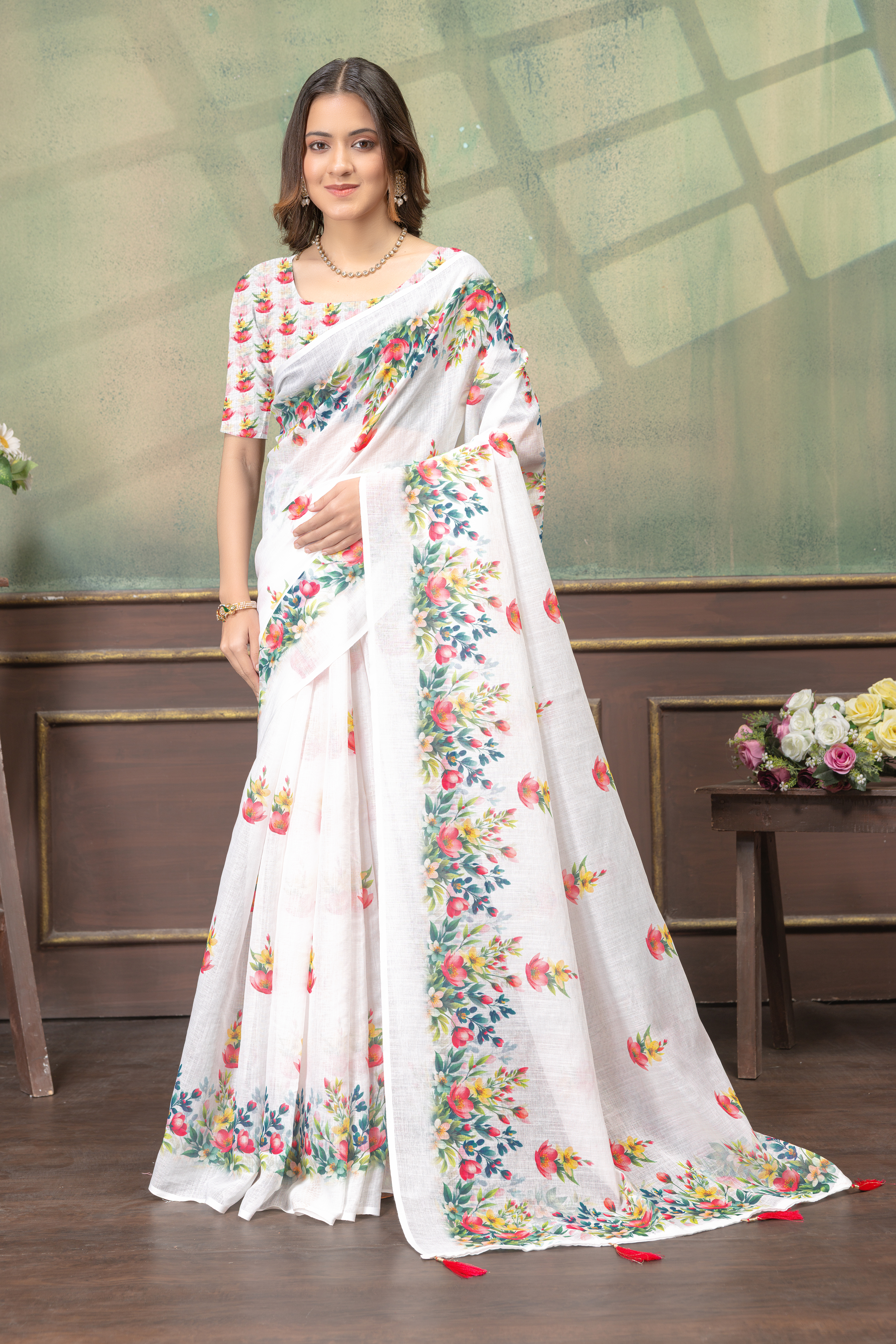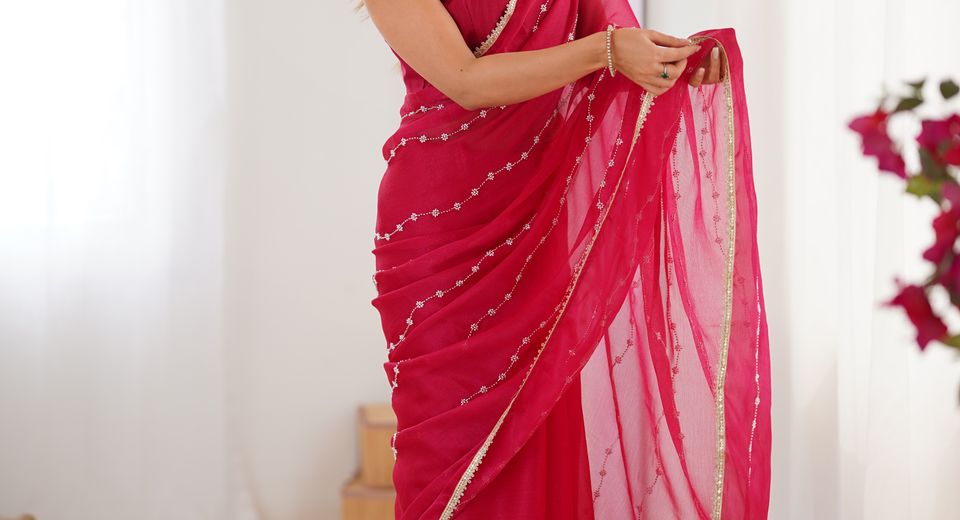
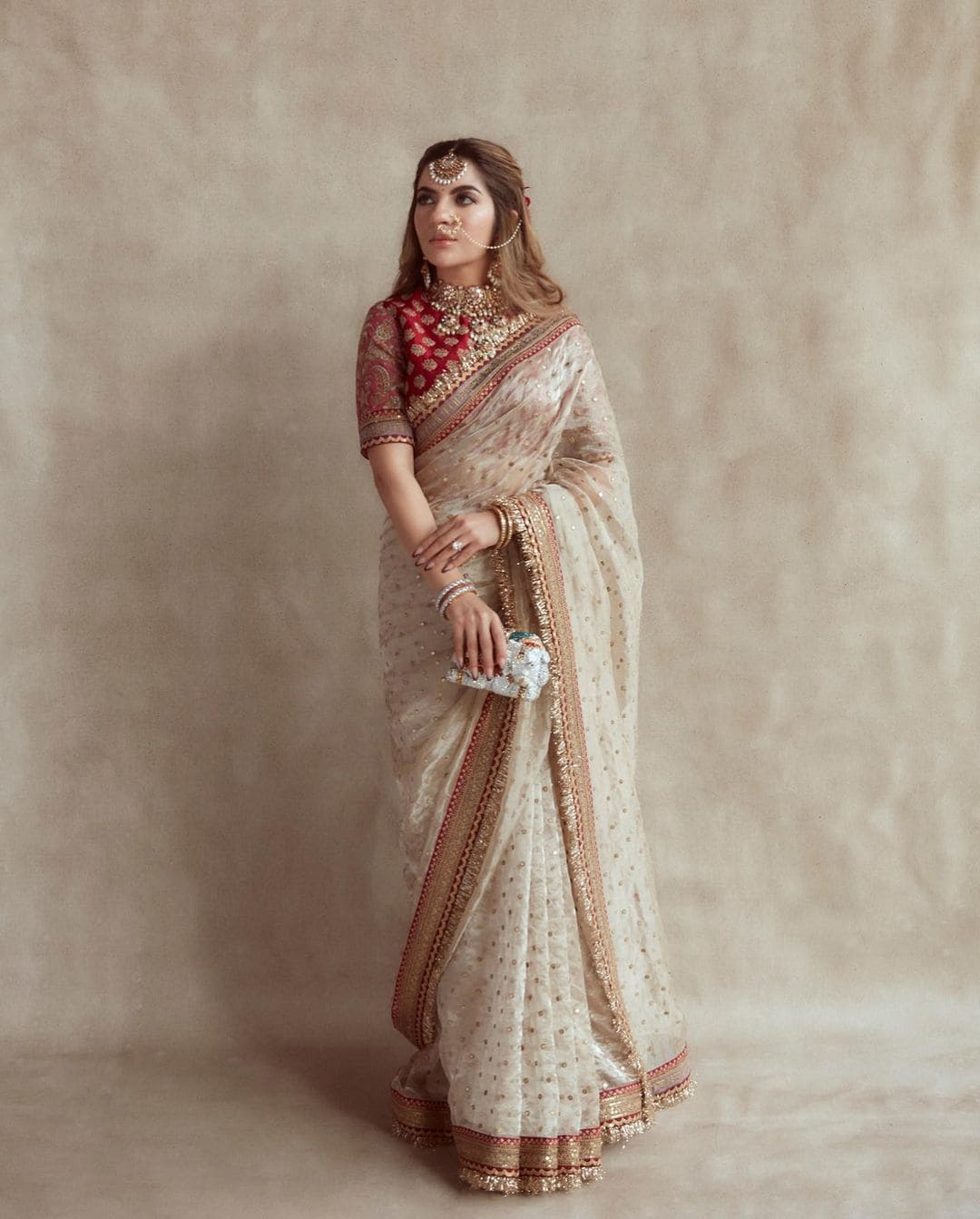
Day Wedding Sarees That Look Rich Without Heavy Embroidery depend on light, colour, texture and proportion rather than a dense surface of sequins or threadwork. Morning pheras, garden ceremonies and lunch receptions usually reward fabrics that catch natural light softly and remain comfortable for several hours. A Banarasi silk weave, a controlled zari border, a tissue surface or a well-chosen floral print can create a more refined result than all-over embellishment.
The practical advantage is equally important. A lighter saree is easier to pleat, less tiring during movement and less likely to look visually overwhelming in direct sunlight. The most successful daytime wedding look usually has one clear source of richness: the weave, the border, the blouse, the jewellery or the colour story. When every element competes for attention, luxury becomes visual noise.
Why heavy embroidery can look different in daylight
Heavy embroidery can appear harsher in strong daylight because sunlight reveals every reflective surface and creates sharper contrast around sequins, stones and metallic thread. Indoor evening lighting softens those contrasts, while open-air daylight makes dense embellishment more prominent from a distance.
Daylight also changes how colour is perceived. Gold sequins may appear highly yellow beside a pale background, silver work can become stark against a cool pastel, and dark threadwork may dominate an otherwise delicate saree. A daytime wedding outfit therefore benefits from visible breathing room between the blouse, saree body and border.
Richness doesn't require a high quantity of decoration. Banarasi silk gains depth from the repeated structure of its weave, Chanderi gains elegance from transparency and a fine edge, and tissue fabric gains presence from its reflective surface. Zari can be more effective when it appears as a border, motif or woven accent instead of covering the complete saree.
Day Wedding Sarees That Look Rich Without Heavy Embroidery: the fabric decision
The best fabric for a daytime wedding depends on the ceremony setting, weather, drape preference and the amount of movement expected. Silk, cotton-silk, linen cotton, tissue and selected handloom weaves each create a different kind of richness.
Silk for traditional depth
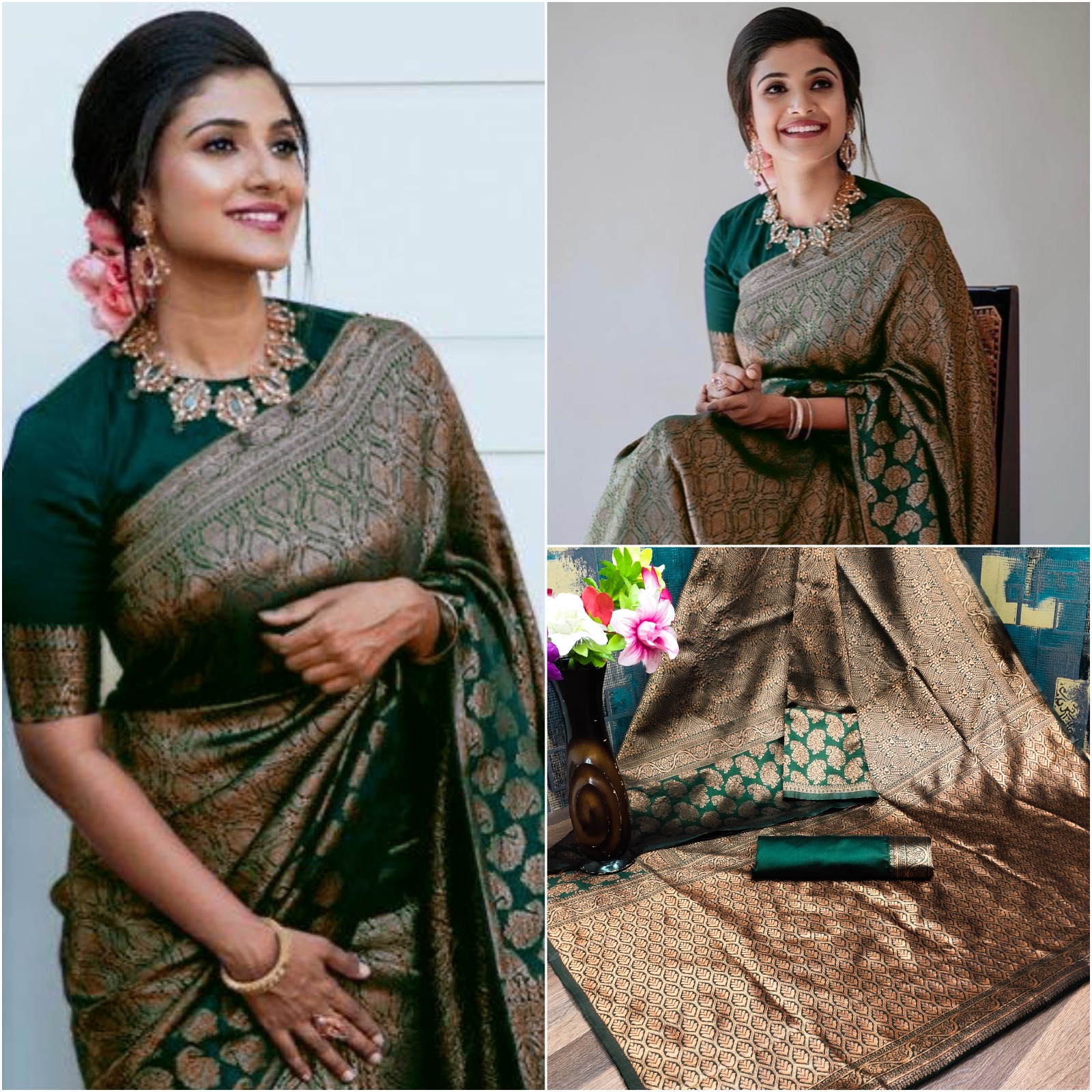
Banarasi silk and Kanjeevaram are strong choices when the ceremony calls for a classic wedding appearance without elaborate surface work. Banarasi silk provides pattern through woven zari and brocade structure, while Kanjeevaram is recognised for its substantial drape, contrast borders and strong silk character. A medium-weight silk can look ceremonial while remaining more manageable than a heavily embellished bridal saree.
Royal Mustard Bloom Banarasi Silk Saree shows how a warm colour and a woven silk identity can carry the outfit. Mustard works particularly well in morning functions because it looks festive without depending on bright metallic decoration. Pairing a saree with a plain or lightly textured blouse allows the Banarasi surface to remain the main feature.
Linen cotton and handloom cotton for relaxed elegance
Linen cotton and handloom cotton suit daytime celebrations when breathability and ease matter as much as formality. These fabrics create visual interest through slubs, print placement, weave variation and a naturally matte finish. A floral saree in linen cotton may feel less conventional than a silk saree, but a carefully chosen blouse and jewellery can make it appropriate for a haldi ceremony, intimate wedding or daytime reception.
Pastel Linen Cotton Floral Print Saree with Designer Blouse offers an useful styling principle: a coordinated blouse can make a lightweight printed saree feel complete without requiring additional embroidery. Peach Linen Cotton Floral Print Saree with Blouse for Women follows the same logic through colour harmony. Peach, coral and blush tones reflect daylight gently and work well with pearl, kundan-look or antique-gold accessories.
Tissue and cotton-silk for controlled shine
Tissue creates a luminous effect through the fabric surface, so it can look dressed-up even when the embroidery is minimal. Pastel Floral Tissue Handloom Cotton Saree with Zari Weaves combines a soft floral direction with woven zari, giving the eye both a pattern and a restrained metallic detail to notice.
Tissue can be slightly more structured than fluid georgette, which helps create crisp pleats and a defined pallu. A cotton-tissue or handloom-tissue blend is often easier to wear during a long daytime event than a heavily layered saree. Use a fitted blouse with clean sleeves if the saree already has a visible sheen.
How colour creates a luxurious daytime effect
Colour creates daytime luxury when the saree has a clear tonal relationship between the body, border and blouse. A sophisticated daytime palette usually combines one dominant shade with one supporting neutral or metallic accent.
- Mustard and antique gold: This combination feels ceremonial and warm without relying on bright yellow sequins.
- Peach and muted gold: Peach looks graceful in natural light and pairs easily with pearls, rose-gold details or soft bronze makeup.
- Pastel pink and silver-gold: A pale pink saree benefits from a border or blouse that adds definition without introducing a third strong colour.
- Maroon and old gold: Maroon gives depth for a wedding while an understated zari edge prevents the look from becoming too heavy.
- Green, ivory and gold: A botanical palette works particularly well for garden venues and daytime pheras.
Maroon Cotton Saree with Zari Work for Wedding demonstrates why a darker colour doesn't automatically require heavy embellishment. The maroon base supplies visual weight, while zari work brings the festive signal. Keep the blouse neckline and jewellery relatively clean so that the colour remains the centre of the outfit.
Pastel colours should not be matched with a blouse that's exactly the same pale shade unless the saree has enough border contrast. A blouse in rose, pistachio, ivory, muted gold or a deeper version of the saree colour can prevent the outfit from looking washed out under bright sun.
Border, pallu and blouse choices that add polish
A defined border and an intentional pallu can make a lightly decorated saree look occasion-ready. These areas frame the body, remain visible in photographs and provide a natural place for zari or a contrasting weave.
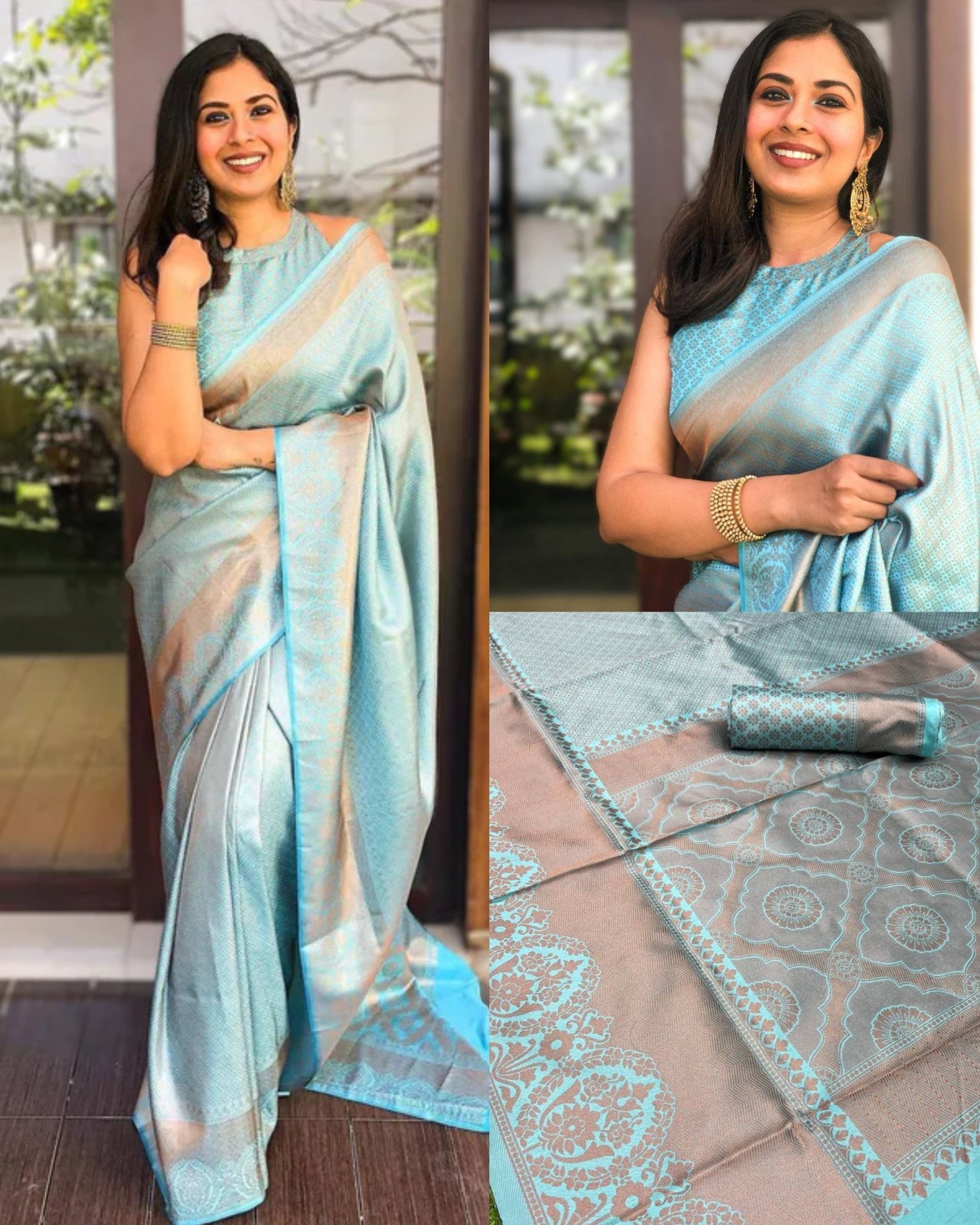
Use the border as the visual anchor
A narrow border of approximately 1 to 3 inches gives a contemporary daytime saree a neat finish, while a broader 4 to 6 inch border creates a more heritage statement. Choose one border scale according to your height, blouse detail and jewellery; combining a broad border with a heavily worked blouse can make the upper and lower halves feel crowded.
Woven zari is usually more subtle than embroidered metallic thread because the shine is integrated into the fabric structure. A gold zari border on a maroon cotton saree, a zari weave on pastel tissue or a classic Banarasi motif can therefore supply occasion character without creating a hard, glittering surface.
Choose the blouse by contrast, not by excess
A blouse should either repeat a colour from the saree or provide a measured contrast. A plain silk blouse can elevate a printed cotton saree, while a lightly textured blouse can support a woven silk saree without competing with it.
For a morning wedding, elbow-length sleeves, a high square neck, a modest boat neck or a simple round neck often photograph well and remain comfortable. A dramatic back, dense sleeve embroidery and metallic piping should not all appear together. Pick one detail if the saree already has zari or a patterned pallu.
Golden Glow Gold Crush Embroidered Party Wear Saree for Women and Heavy Sitara Fancy Saree for Wedding & Party Wear illustrate a different styling route: when the saree itself has stronger shine or embellishment, simplify the blouse, jewellery and makeup for a daytime setting. These examples are useful comparisons even if you finally choose a lighter handloom, cotton or woven silk option.
Jewellery and draping for a lighter wedding saree
Jewellery should reinforce the saree's strongest feature instead of compensating for a lack of embroidery. A woven silk saree may need only jhumkas, a bangle stack and a short necklace, while a pastel floral saree can benefit from pearls, enamel or delicate kundan-inspired pieces.
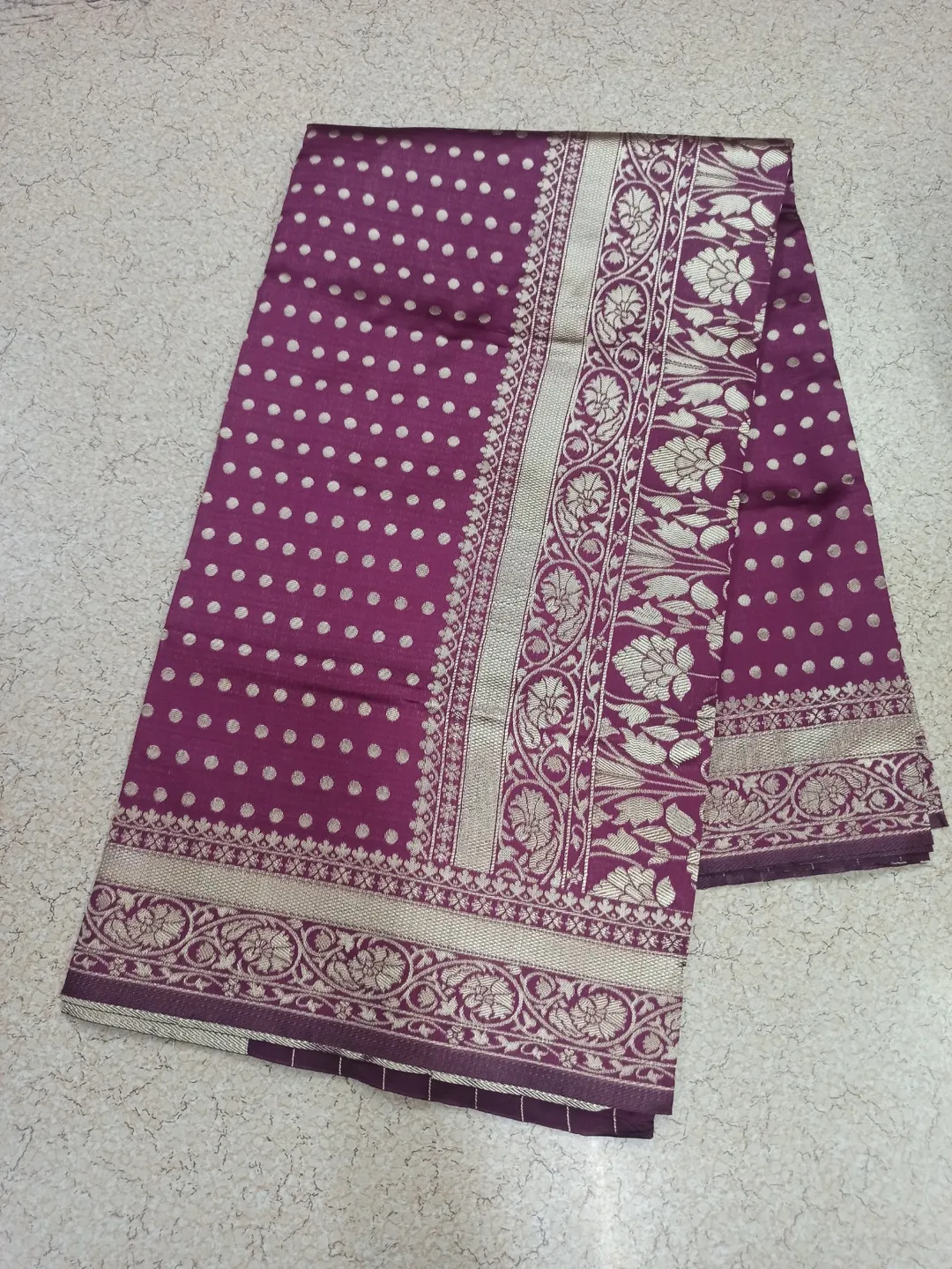
Gold jewellery complements mustard, maroon, rust, peach and warm ivory. Silver, pearls and polki-style white stones suit lilac, blush, powder blue and cool green. Mixed metals can work when the saree itself contains both warm and cool accents, but repeating one metal in the earrings, bangles and blouse details usually creates a cleaner result.
The Nivi drape remains dependable for a daytime wedding because evenly spaced pleats show the fabric and keep the pallu controlled. Pin the shoulder pleats discreetly and secure the pallu near the waist if you expect to move between seating, rituals and photographs. A slightly narrower pallu fold can show more of a woven border without adding bulk.
For cotton and linen cotton sarees, starching should be light rather than stiff. A soft press helps the pleats hold their shape while preserving the natural fall of the fabric. Silk and tissue sarees should be pressed on the reverse side at a suitable temperature, with a thin cotton cloth between the iron and the saree when the care label permits ironing.
Shopping intelligently across wedding saree budgets
A practical budget comparison should separate fabric value, finish, blouse inclusion and expected use rather than treating embellishment as the only measure of quality. A saree under ₹3,000 can look more refined than a more decorated option when the weave, colour and finishing are better suited to daylight.
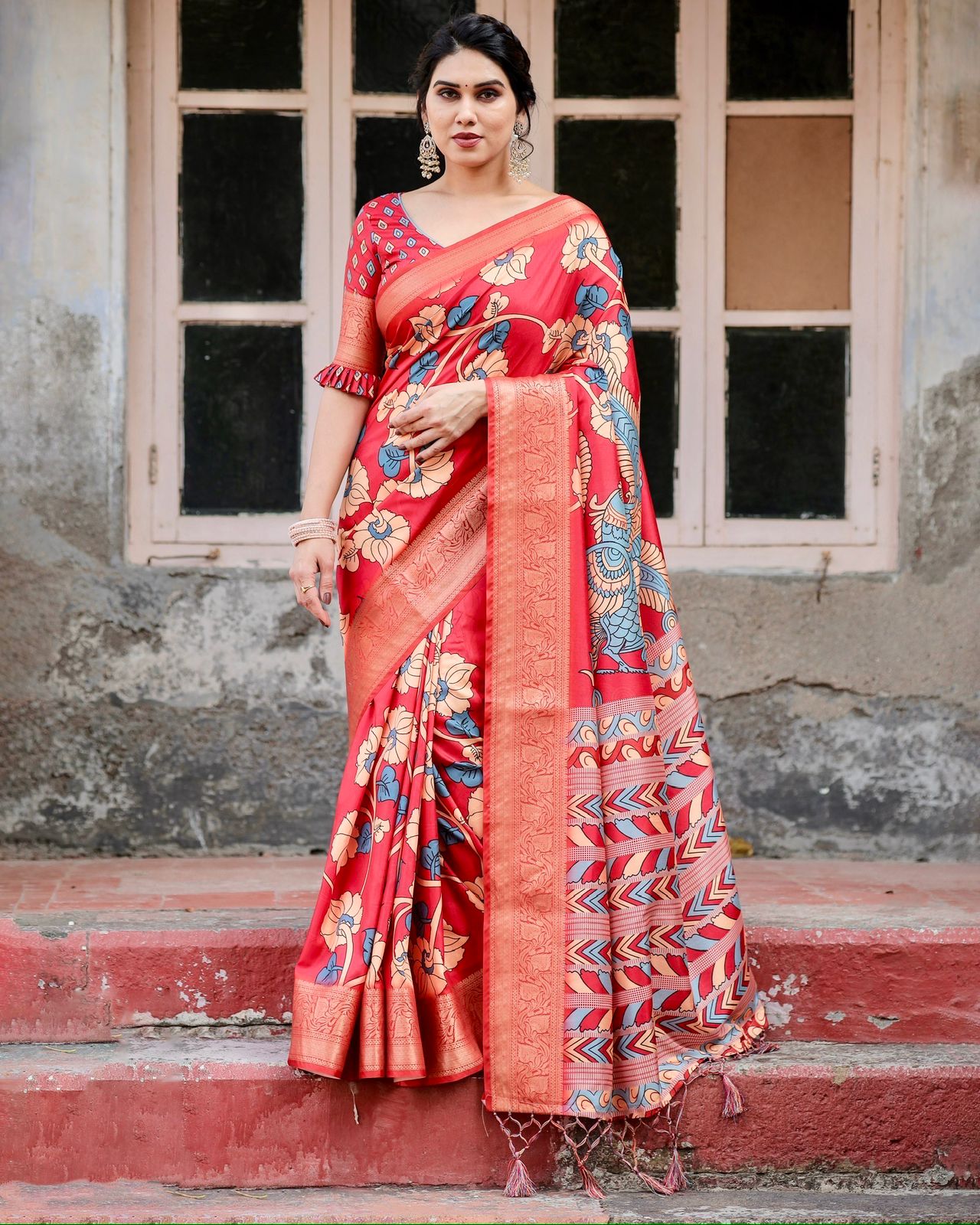
The Wedding Sarees Collection Under 4000 is useful for comparing accessible wedding-ready fabrics and styling levels in one price range. Silk Sarees Under 3000 With Discount can help shoppers examine how colour, weave and border design create value when the budget doesn't allow heavy embellishment.
Pink Georgette Sarees can be considered when a fluid drape and soft movement matter more than a structured handloom texture. Red Banarasi Silk Sarees for Weddings Under 1100 may suit shoppers looking for a time-honoured colour direction at a lower price. But check the fabric description, lining, blouse piece and zari composition before assuming that every red saree has the weight or finish of premium Banarasi silk.
Use the Latest Wedding Sarees Collection as a broader reference point, then narrow the decision by asking four questions: Will the saree remain comfortable for four to six hours? Does the border show clearly in photographs? Is the blouse included or separate? Can the saree be cared for using the time and storage space available at home?
Care steps that preserve a rich-looking saree
Correct storage preserves colour, zari and drape longer than occasional surface touch-ups. Air a wedding saree fully after wearing it, remove any temporary pins and fold it with the embellished or zari side inward when the fabric surface is vulnerable to snagging.

- Store silk, tissue and zari sarees in breathable cotton or muslin rather than sealed plastic for long periods.
- Refold a stored saree every two to three months so a permanent crease doesn't form along one fold.
- Keep dark maroon, red and mustard sarees away from direct sunlight to reduce gradual fading.
- don't spray perfume directly onto zari, sequins, tissue or silk; apply fragrance to skin before dressing.
- Use professional dry cleaning for silk, zari and heavily coloured sarees, and follow the care label for linen cotton and handloom cotton.
Richness survives repeated wear when the saree is selected for its actual lifestyle rather than a single photograph. A breathable cotton saree may become the better purchase if the wedding includes outdoor rituals, while a silk saree may be worth choosing when a structured drape and traditional formality are the priority.
The strongest daytime wedding look usually follows a simple formula: select one luminous or textural fabric, add one deliberate zari or border detail, choose a blouse that gives the saree space, and finish with jewellery suited to the colour temperature. That balance allows Day Wedding Sarees That Look Rich Without Heavy Embroidery to feel festive, photograph well and remain comfortable from the first ritual to the final meal.
Questions to Ask Before Choosing a Daytime Wedding Saree
Which fabric is best for a daytime wedding saree?
Banarasi silk, Kanjeevaram, tissue, linen cotton and handloom cotton can all work well for a daytime wedding. Choose silk for woven depth and tradition, linen cotton or cotton for breathability, and tissue for a controlled luminous finish.
Can a saree look bridal without heavy embroidery?
Yes, a saree can look bridal through silk, zari, a defined border, a rich colour and an elegant blouse. Banarasi silk and Kanjeevaram create ceremony-appropriate depth through their weave, so dense sequins are not essential.
Which colours suit a daytime wedding saree?
Mustard, peach, maroon, pastel pink, ivory, green and muted red are reliable daytime choices. Warm colours pair naturally with antique gold, while cool pastels often look balanced with pearls, silver or soft gold.
How should jewellery be styled with a lightly embellished saree?
Jewellery should highlight the saree's strongest feature rather than add decoration everywhere. Use gold with mustard or maroon, pearls and silver with cool pastels, and keep the necklace, earrings and bangles within one clear visual scale.
How can I make a cotton saree look wedding-ready?
Choose cotton with a visible zari border, handloom texture, floral placement or a coordinated blouse. Light starching, crisp pleats, festive earrings and a structured pallu can make linen cotton or handloom cotton suitable for a daytime wedding.
What should I check before buying a wedding saree online?
Check the exact fabric, saree length, blouse-piece details, border width, zari or embroidery description, care instructions and return measurements. Product photographs should also show the pallu and border clearly, because those areas determine how the saree will appear in wedding photographs.