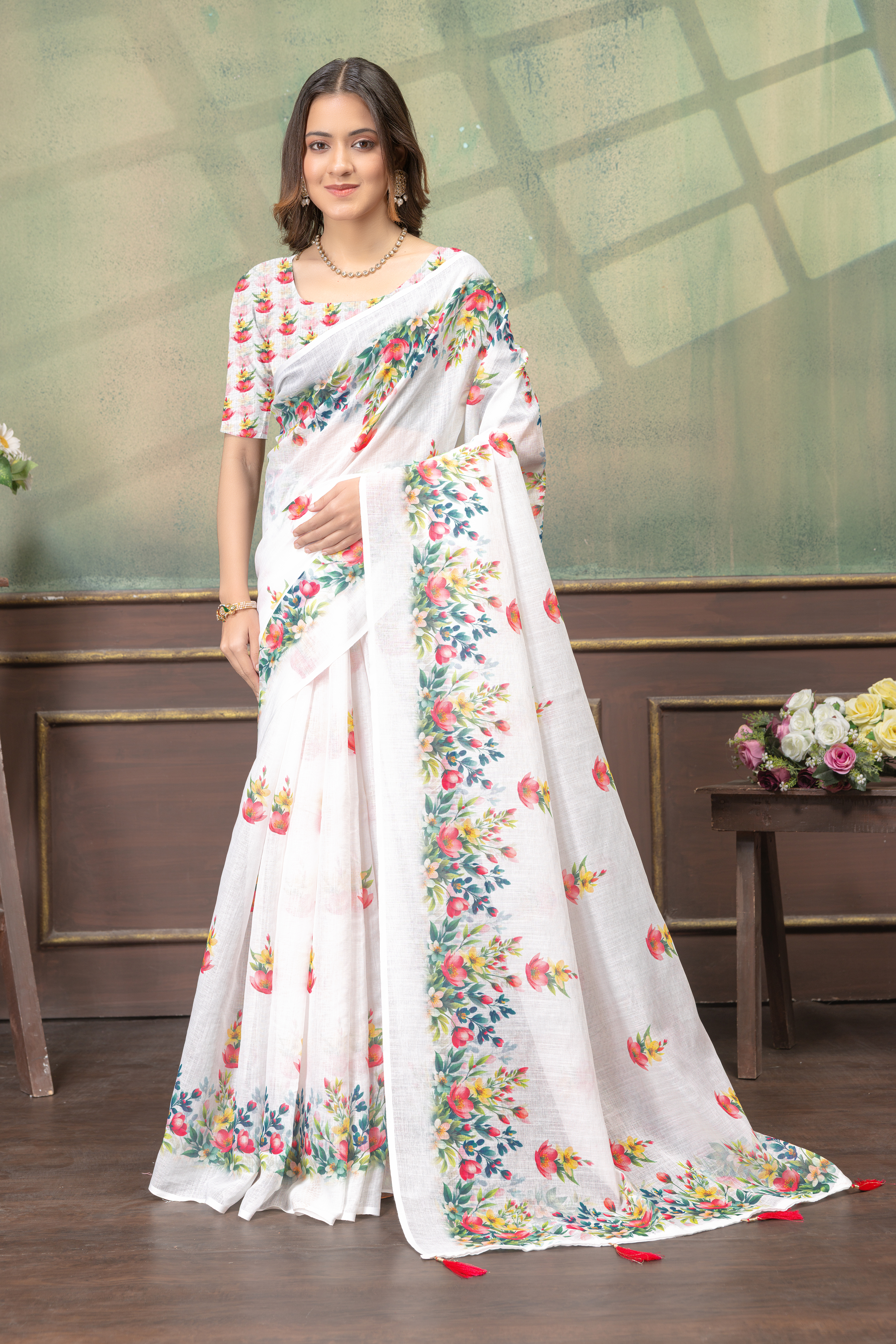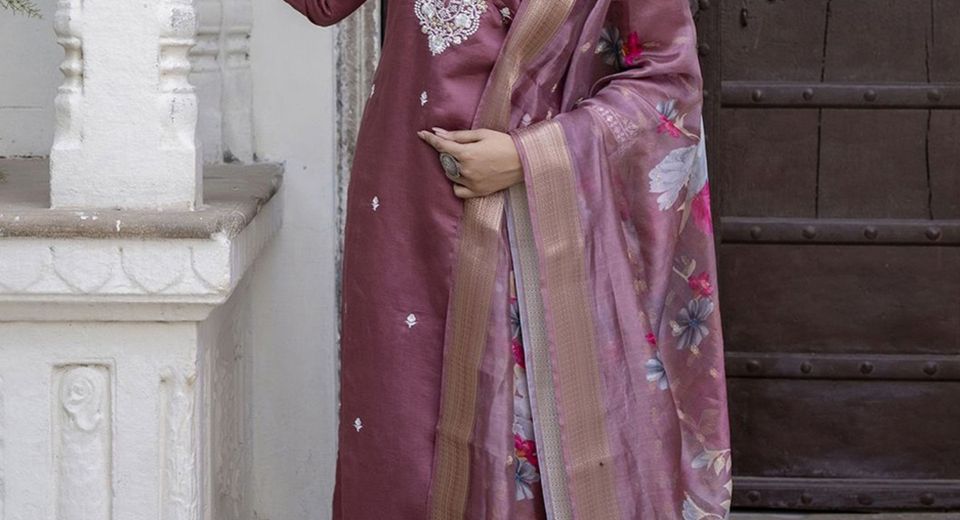
A festive wardrobe doesn't need sequins, dense zari or several layers to look considered. Chanderi Kurtis That Feel Festive Without Looking Overdressed achieve that balance through a light-catching weave, graceful colour and carefully placed detail. Chanderi salwar suits work particularly well for pujas, intimate Diwali gatherings, daytime weddings, family lunches and office celebrations where comfort matters as much as polish.
Chanderi comes from Madhya Pradesh and is traditionally woven with silk and cotton yarns. Chanderi silk has a mild sheen and a slightly crisp fall, while Chanderi cotton feels lighter and more breathable. Both versions can look celebratory, but they weaken differently to lining, embroidery, dupatta weight and accessories. Understanding those differences makes festive dressing more precise and prevents a beautiful kurti from becoming visually busy.
Chanderi Kurtis That Feel Festive Without Looking Overdressed: Why the Fabric Works
Chanderi works for festive dressing because its subtle sheen, airy texture and structured drape create elegance without requiring heavy surface decoration. The fabric catches movement and light softly, particularly near a window or under warm indoor lighting.
The weave also gives a kurti more shape than many fluid everyday cottons. A straight Chanderi kurta can hold a clean shoulder line, while a softly flared kurta can retain volume without appearing bulky. That balance is useful when a celebration involves sitting on the floor, moving between rooms or spending several hours with relatives.
Chanderi cotton is usually the more practical choice for warm daytime functions because cotton yarns allow greater breathability. Chanderi silk offers a richer finish for evening dinners and formal festive visits. A silk-cotton blend can sit between the two, giving the wearer some sheen without the weight of a fully embellished ensemble.
Small woven motifs, delicate butis and thin borders often provide enough visual interest on their own. A kurti with a plain body and an ornate dupatta can therefore look more sophisticated than a set where the kurta, trousers and dupatta all take competing embellishments.
Chanderi Kurtis That Feel Festive Without Looking Overdressed: Choosing a Silhouette
The right Chanderi silhouette depends on the formality of the celebration, the length of wear and the amount of movement required. A straight kurta with tapered trousers looks composed for office festivities, while a softly flared kurta with a light dupatta feels more relaxed for a family gathering.
Straight kurtas for polished simplicity
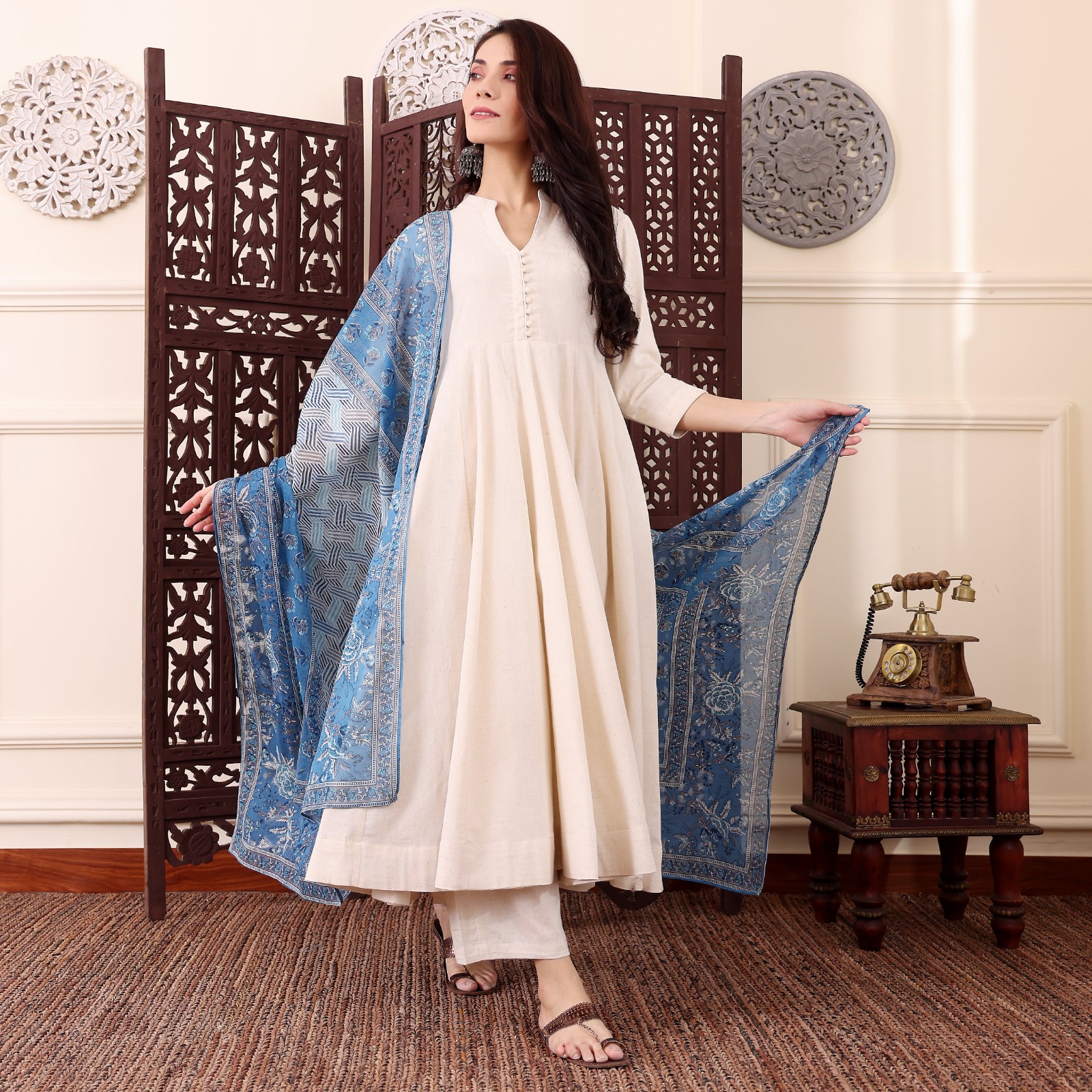
Straight kurtas create a long, uncluttered line and make embroidery or a woven border easier to appreciate. Pairing a straight kurta with ankle-length pants keeps the outfit current without making it casual. A narrow sleeve, modest round neckline or restrained V-neckline can be more versatile than a dramatic cut.
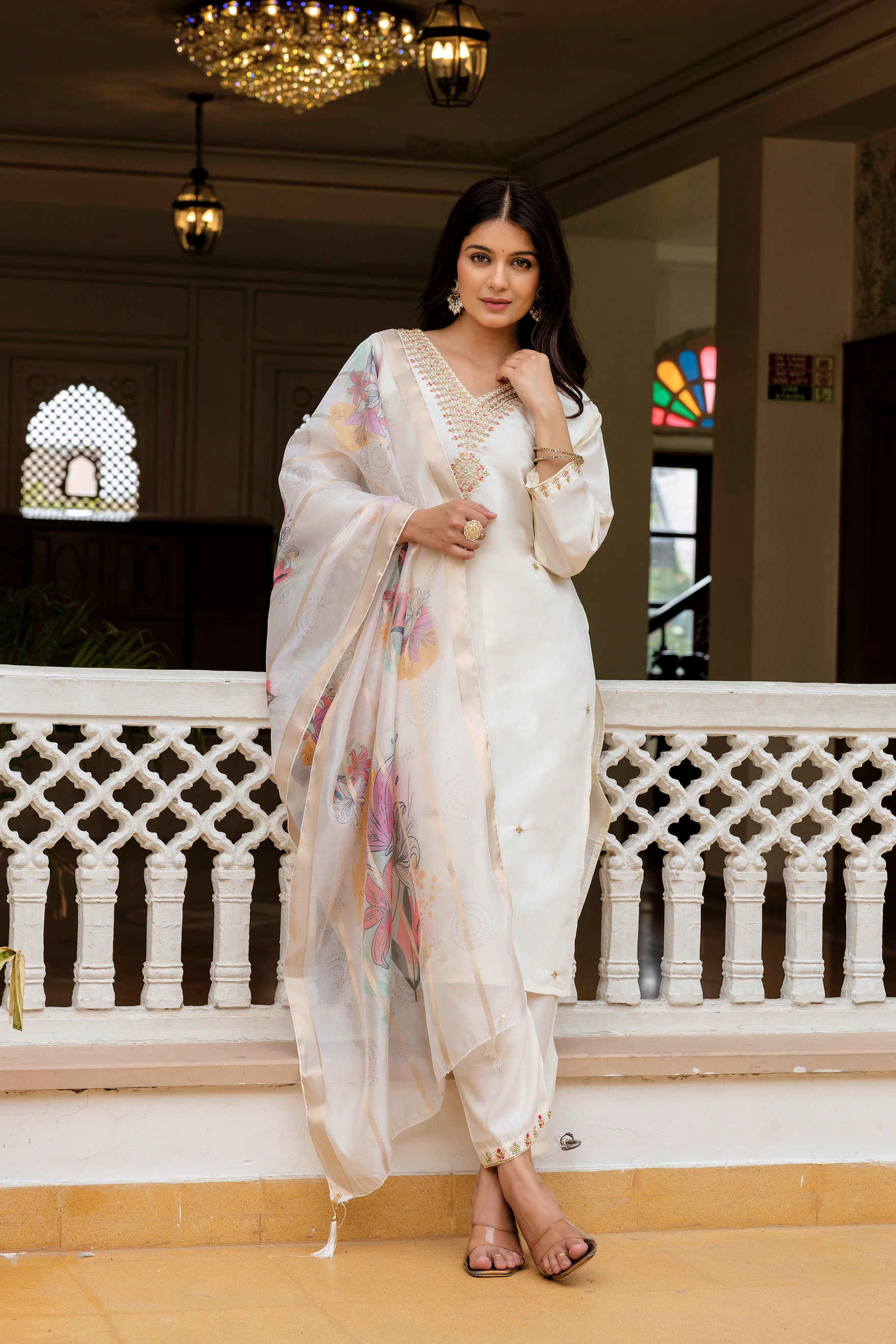
Elegant White Chanderi Kurta Pant Dupatta Set Women demonstrates why a pale straight set can feel festive when the fabric and finishing carry the look. White and ivory Chanderi provide a calm base for pearl earrings, a coloured bindi or metallic footwear. The result suits a daytime puja as well as a lunch where bright colours might feel excessive.
Flared and panelled shapes for movement
Flared and panelled Chanderi kurtas add movement without the volume of a full anarkali. The flare looks especially effective when the hem contains a narrow woven border or when the fabric has enough body to hold the panels. Keep the dupatta relatively light so the outfit retains visual air.
Shorter Chanderi kurtis can work with wide-leg pants, but proportion needs attention. A kurti ending near the mid-thigh generally works best with palazzos that fall cleanly from the hip. A longer kurta usually looks more balanced with slim or straight pants rather than another very wide layer.
Chanderi Kurtis That Feel Festive Without Looking Overdressed: Building a Colour Story
Festive colour looks balanced when one shade leads and the remaining elements support it. Jewel tones, warm neutrals and softened pastels can all work, but the outfit becomes easier to wear when the colour story contains no more than two strong visual accents.
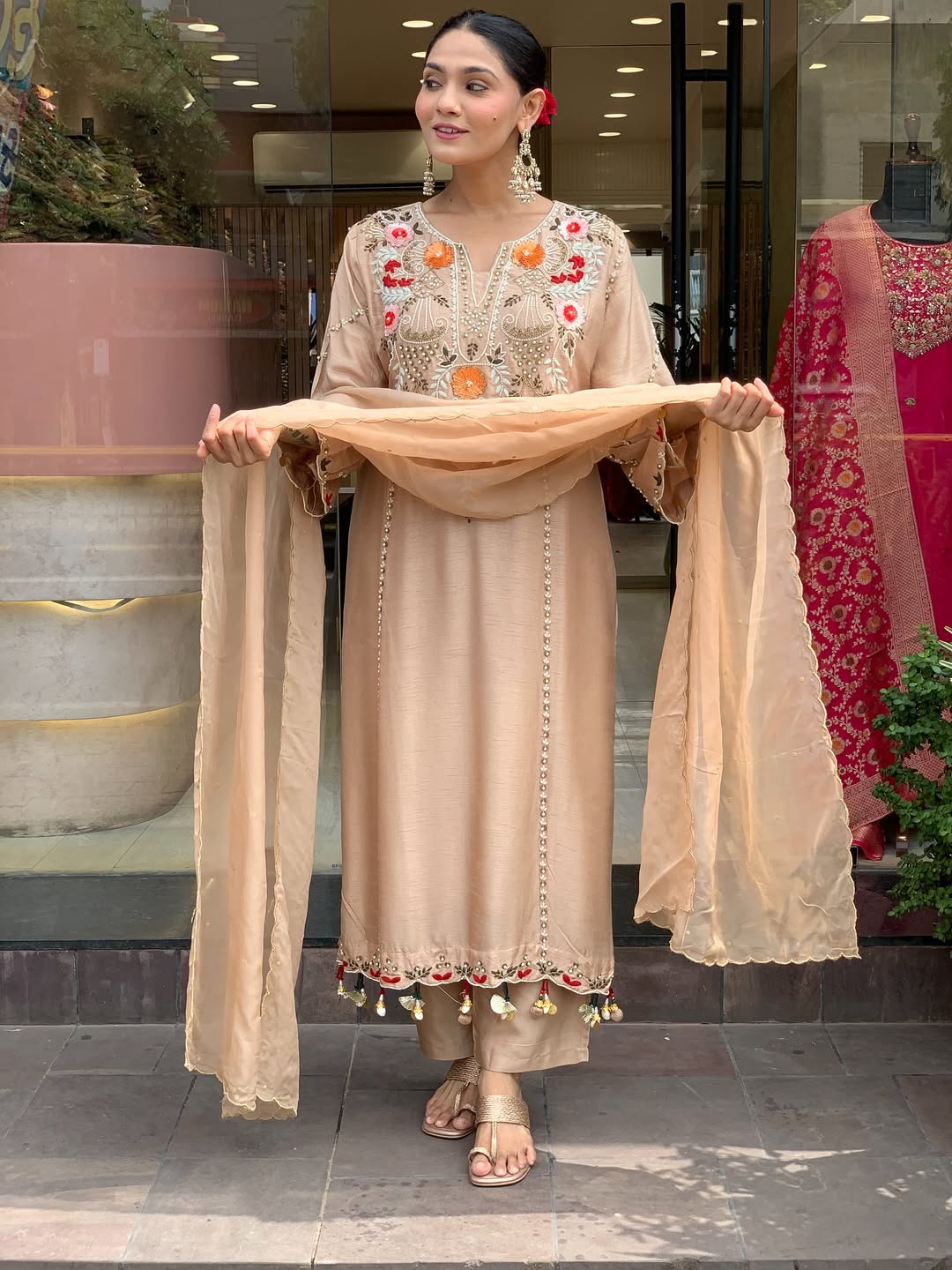
Mustard is particularly effective in Chanderi because its warm yellow undertone echoes marigold flowers and brass décor without copying them literally. Mustard Chanderi Embroidered Kurta Pant Dupatta Set uses the relationship between colour and embroidery to create occasion appeal. Gold-toned jhumkas or brown leather sandals can finish mustard more naturally than very bright yellow accessories.
Wine, deep rose and burgundy offer an evening alternative to red. Rich Wine Chanderi Cotton Kurta Set with Elegant Jacquard Dupatta combines a saturated base with a textured layer. Additional shimmer should remain minimal. A small gold chain, low heels and a neutral clutch are enough for a dinner or card party.
Green works across daytime and evening settings because it can be styled in several directions. Elegant Green Chanderi Silk Kurti Pant Dupatta Set can take antique-gold jewellery for a traditional look or simple pearl studs for a quieter family event. Emerald, bottle green and sage each produce a different effect, so the depth of the green should match the lighting and time of day.
Cream, ivory and soft beige are useful when the wearer wants a festive appearance without a saturated palette. These shades allow embroidery, jacquard texture or a contrasting dupatta to become the focal point. Pairing cream with one accent colour, such as rust, teal or wine, prevents the look from becoming flat.
Chanderi Kurtis That Feel Festive Without Looking Overdressed: Balancing Detail
A Chanderi outfit looks refined when embroidery, zari and jacquard texture are distributed rather than repeated heavily on every piece. Choose one dominant detail, then let the other components remain relatively quiet.
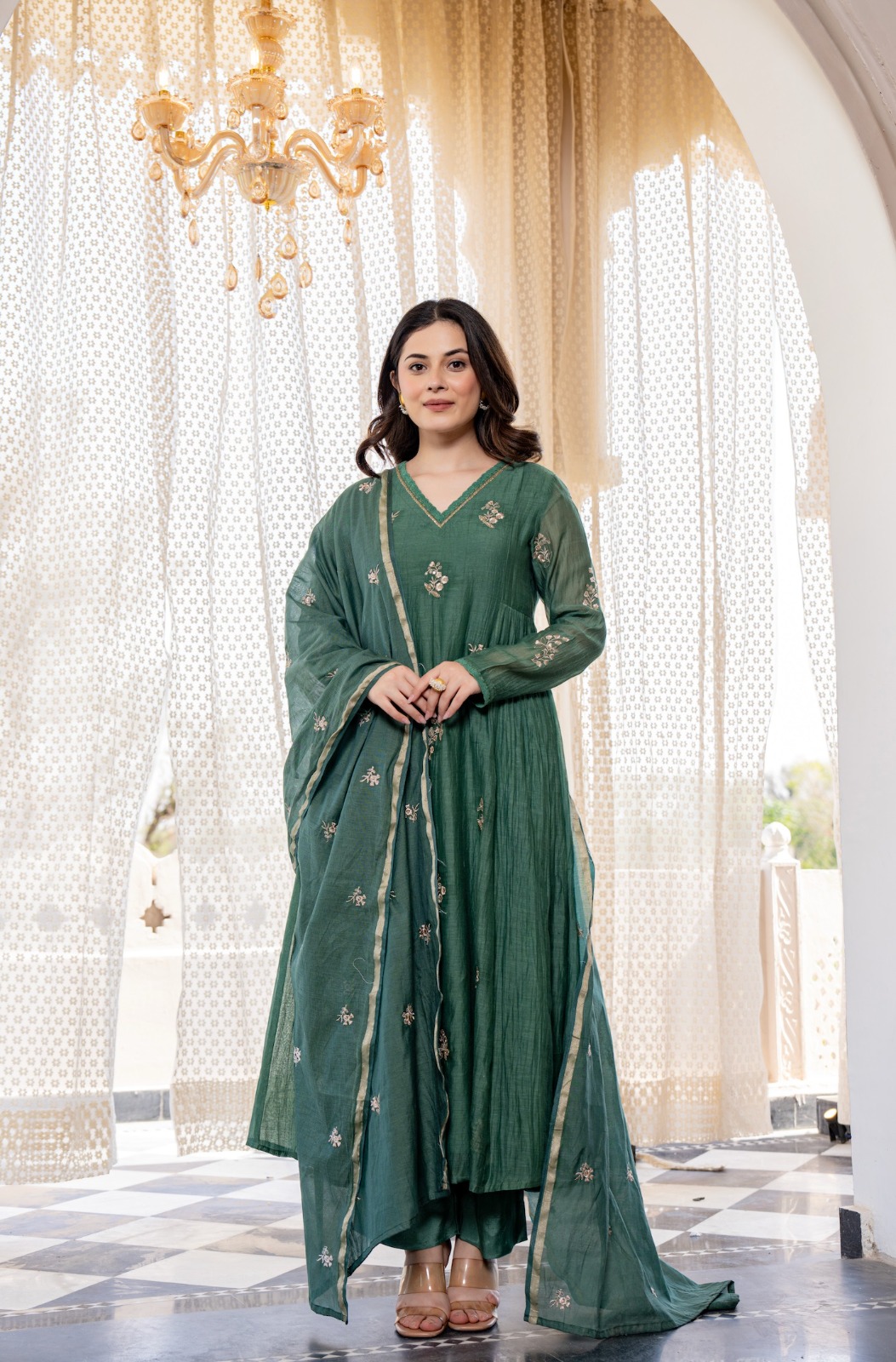
A kurta with embroidered sleeves and neckline may only need a plain dupatta with a narrow border. Conversely, a simple kurta can support a richer jacquard or woven dupatta. This approach creates contrast and helps the outfit remain comfortable in photographs, where excessive shine can flatten individual details.
Zari is a metallic thread that can be woven or embroidered into motifs, borders and butis. Gold zari usually feels warmer and more classic, while silver zari can make a pastel or cool-toned Chanderi set feel lighter. A thin zari border often has more longevity than dense metallic coverage because it remains suitable for both formal and semi-formal events.
Cream Chanderi Embroidered Kurta Set with Dupatta illustrates the value of controlled surface work. Cream fabric already reflects light, so embroidery can remain delicate while the dupatta adds enough definition. Wearers who prefer a quieter style can fold the dupatta lengthwise and drape it over one shoulder, keeping the neckline visible.
A dupatta should also be judged by its weight. A heavy dupatta can pull at the neckline, crease the kurta and become inconvenient during meals or rituals. For a long daytime event, choose a dupatta that can stay on the shoulder with one discreet pin rather than requiring constant adjustment.
Chanderi Kurtis That Feel Festive Without Looking Overdressed for Different Events
Styling should follow the scale, time and practical demands of the event. A Haldi ceremony, a temple visit and an evening reception may all be festive, but they call for different levels of colour, movement and embellishment.
Daytime pujas and family gatherings
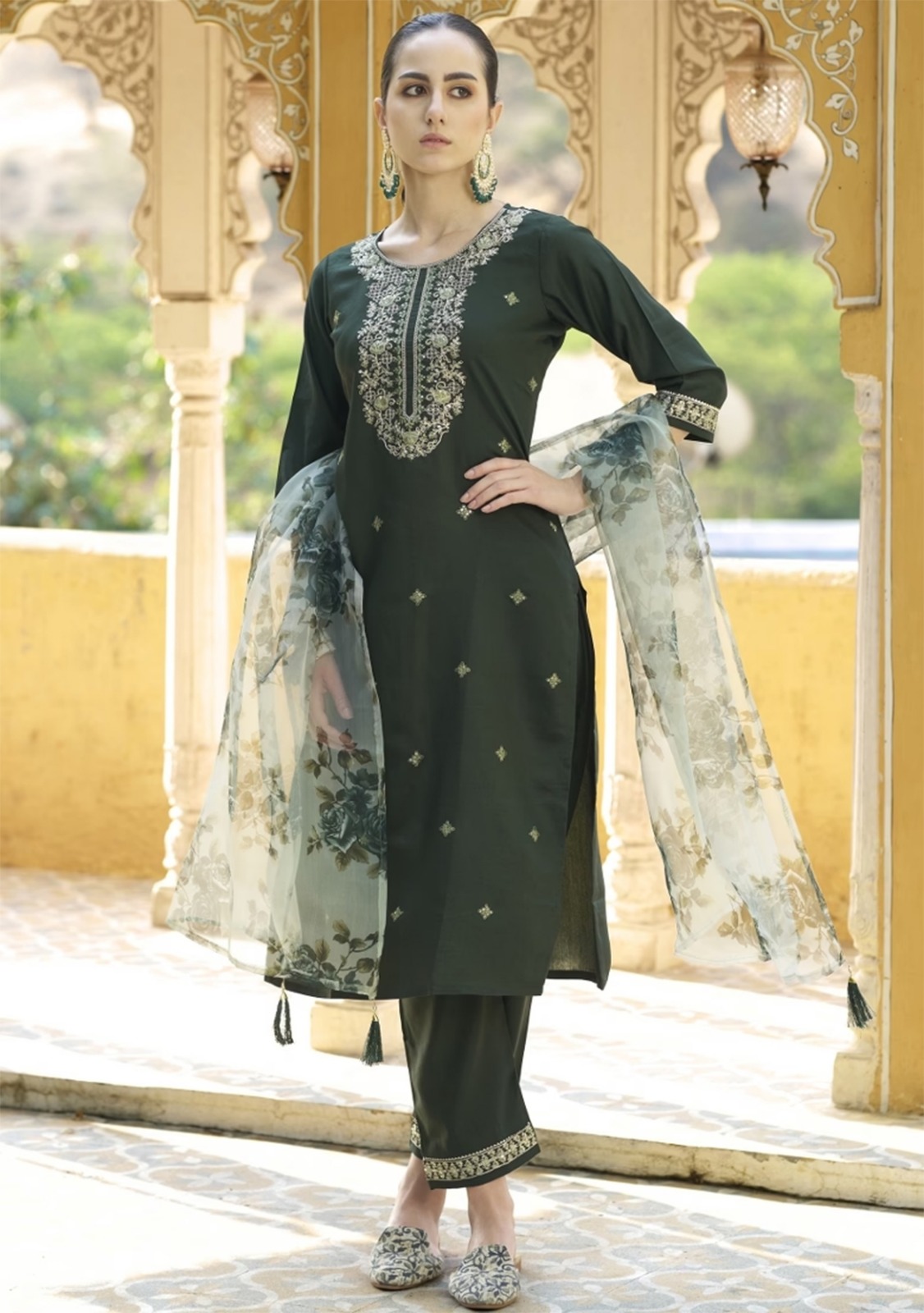
Daytime pujas and family gatherings suit breathable Chanderi cotton, light embroidery and comfortable footwear. Choose mustard, cream, white, leaf green or softened pink, then keep jewellery close to the face with small jhumkas, pearls or a delicate pendant.
Elegant Mustard Chanderi Cotton Kurta Set with Embroidery provides an useful daytime festive direction. The embroidery supplies occasion detail, while the cotton construction supports longer wear in warm weather. Flat embellished sandals or juttis are more practical than narrow heels when the gathering involves removing shoes or sitting on the floor.
For a Haldi ceremony, avoid wearing a hem or dupatta that drags through turmeric paste and flower petals. A secure side drape, washable inner layer and minimal dangling jewellery reduce the chance of staining or snagging. A small potli can hold essentials without adding another large shape to the outfit.
Evening dinners and intimate celebrations
Evening dinners allow deeper colours, Chanderi silk, jacquard texture and slightly brighter jewellery. Elegant Wine Ethnic Kurti Set with Dupatta can be styled with brushed-gold earrings and a compact clutch, while makeup remains defined rather than heavily glittered.
Navy is another strong evening colour because it brings contrast without the visual intensity of black. Navy Floral Woven Chanderi Kurti Pant Dupatta Set can be paired with silver-toned earrings or a single colour accent in the footwear. Keep the rest of the accessories simple so the woven floral detail remains readable.
Office festivities and daytime ceremonies
Office festivities and daytime ceremonies benefit from a polished kurta-pant combination with restrained accessories. Choose a medium-length kurta, closed-toe flats or low block heels, and a dupatta that can be folded neatly rather than dramatically draped.
Elegant Wine Ethnic Kurti Set with Dupatta can move from an office celebration to dinner when the footwear and jewellery change. For work, use small hoops and a structured tote; for dinner, switch to a metallic clutch and more visible earrings. Reusing the base outfit in two settings is a practical way to make festive clothing more flexible.
Chanderi Kurtis That Feel Festive Without Looking Overdressed: Accessorising with Restraint
The most effective accessories repeat one existing colour or texture instead of introducing several unrelated accents. If the kurta has gold zari, choose warm metal jewellery; if the dupatta has silver thread, use cooler metal or pearl details.
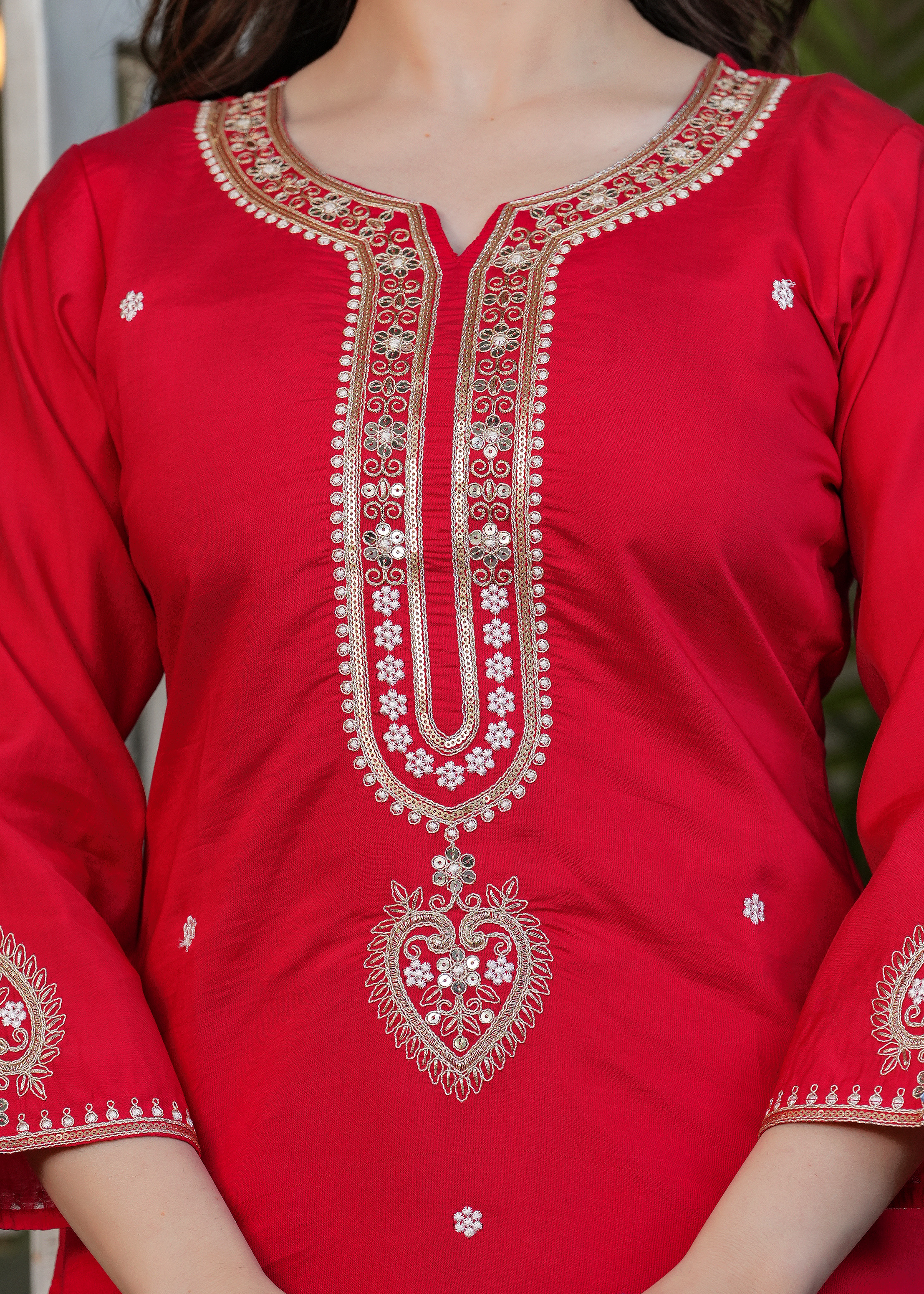
Jewellery scale should respond to the neckline and embroidery. A high neckline pairs well with earrings and bangles, while a simple V-neckline can support a short pendant. Heavy earrings and a large necklace together may hide the garment's neckline and make a light Chanderi outfit feel crowded.
Footwear can quietly change the formality of a Chanderi set. Juttis and embroidered flats suit daytime pujas, low block heels work for long dinners. Metallic sandals add evening polish without the visual weight of a heavily embellished shoe. Choose a pair that allows stable movement because festive events often involve standing, stairs and uneven outdoor surfaces.
Three related salwar-suit traditions offer useful styling references. Kalamkari Print Salwar Suits show how a strong print can replace extra jewellery. Maharashtra Paithani Inspired Salwar Suits demonstrate the impact of a distinctive border or pallu-like accent. Punjab Phulkari Embroidered Salwar Suits show how concentrated embroidery can provide enough celebration when the rest of the styling is simple.
Karnataka Silk Salwar Suits and Kashmir Embroidered Salwar Suits also illustrate two different approaches to festive dressing: the first relies on silk lustre and structure, while the second depends on detailed surface craft. Chanderi can sit comfortably between these directions by combining a modest sheen with a lighter, more breathable feel.
Chanderi Kurtis That Feel Festive Without Looking Overdressed: Care and Rewearing
Chanderi garments last longer when they're protected from moisture, friction and careless washing. Check the care label first, but delicate Chanderi silk and zari work generally benefit from professional dry cleaning rather than repeated machine washing.
Air the garment after wearing it and remove surface dust with a soft brush instead of rubbing embroidery. Store Chanderi in a clean cotton garment bag, away from direct sunlight and heavy garments that can crush the weave. Refold the garment every few months to reduce permanent creases along the same fold line.
Use low heat if ironing is permitted, and place a thin cotton cloth between the iron and the fabric. Direct high heat can flatten the texture, affect metallic threads and create unwanted shine. Never spray perfume directly on Chanderi, because alcohol and oils can leave marks on pale or silk-rich fabric.
Rewearing becomes easier when the set is separated into components. Pair a festive dupatta with a plain cotton kurta, wear Chanderi pants with a solid silk top, or style the kurta with a neutral palazzo. A single well-chosen accent can make the garment suitable for a second event without appearing repetitive.
The most dependable festive formula is simple: let Chanderi provide the sheen, let one colour or detail provide the occasion character, and keep the remaining styling comfortable. That method preserves the charm of the fabric while ensuring the wearer looks dressed for the celebration rather than dressed over it.
Common Questions About Styling Chanderi Kurtis for Festive Events
Can Chanderi kurtis be worn for a festive occasion?
Yes, Chanderi kurtis are suitable for festive occasions because the weave offers gentle sheen, structure and a refined texture. Choose Chanderi cotton for warm daytime events and Chanderi silk or silk-rich styles for evening celebrations.
How can I make a Chanderi kurti look festive without overdressing?
Use one main festive feature, such as embroidery, zari, a rich colour or a jacquard dupatta. Keep the remaining elements restrained with simple jewellery, comfortable footwear and a clean drape.
Which colour Chanderi kurti is best for a daytime puja?
Cream, white, mustard, soft green and muted pink work well for a daytime puja. These colours look celebratory in natural light without the intensity of very dark or heavily metallic outfits.
Is Chanderi cotton suitable for summer celebrations?
Chanderi cotton is suitable for summer celebrations because cotton yarns generally provide more breathability than silk-heavy fabrics. A lightweight lining, loose silhouette and breathable dupatta can make the outfit more comfortable in warm weather.
What jewellery goes well with a Chanderi kurta set?
Jhumkas, pearls, small hoops and delicate pendants work well with Chanderi kurta sets. Match gold jewellery with warm colours and gold zari, or choose silver jewellery and pearls for cool colours and silver detailing.
How should Chanderi fabric be stored and washed?
Follow the garment care label, and consider professional dry cleaning for Chanderi silk, zari and delicate embroidery. Store the garment in a clean cotton bag away from direct sunlight, and use low heat through a cotton cloth if ironing is allowed.