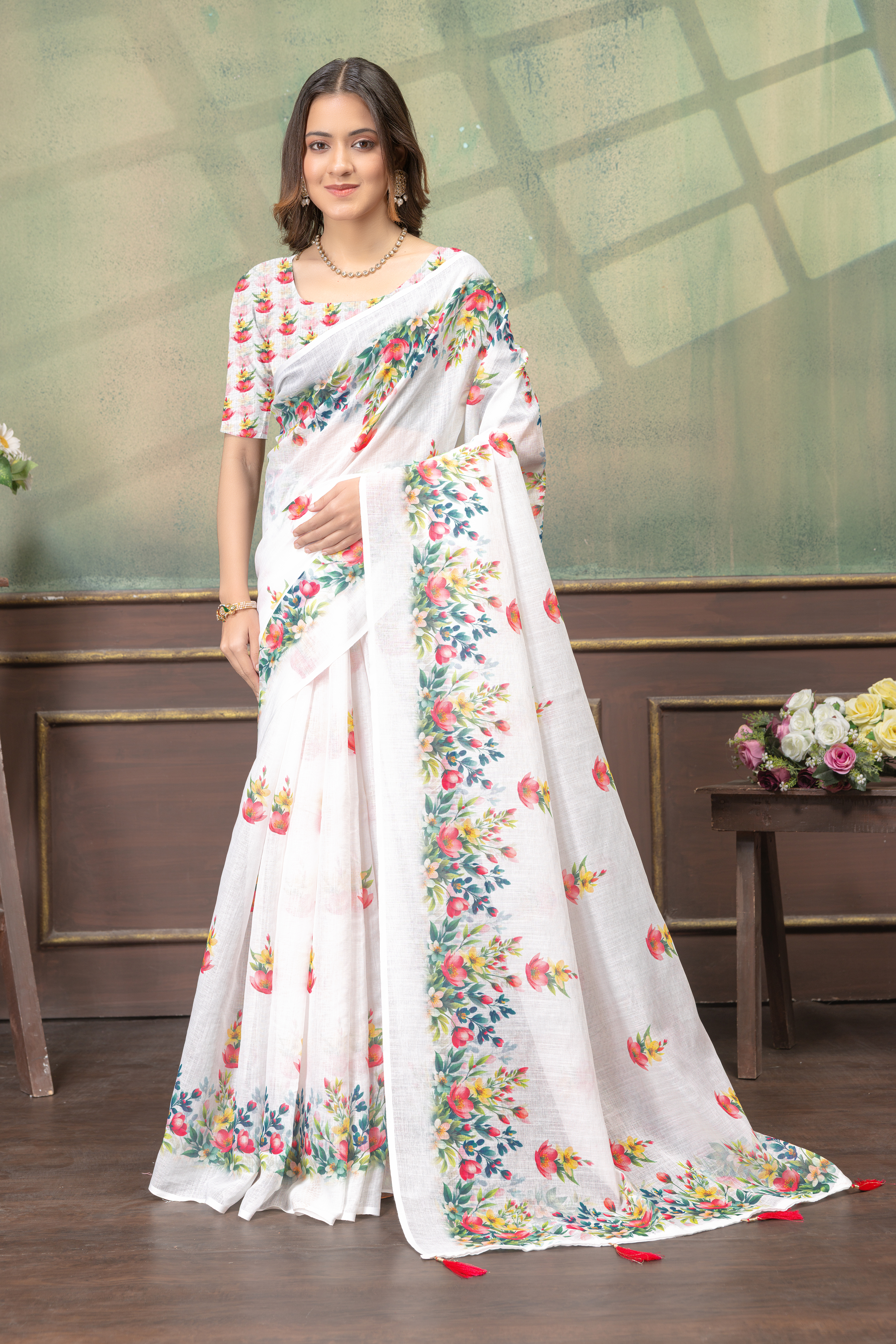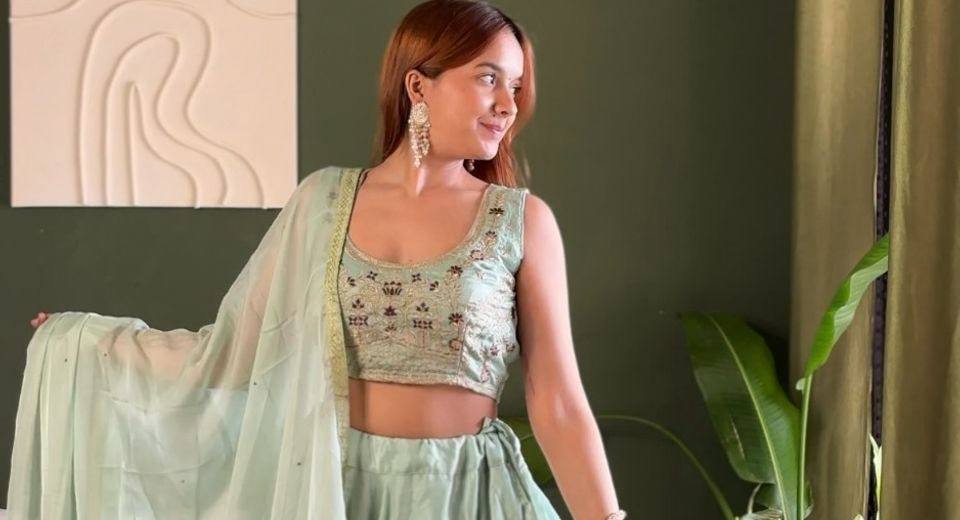
Cape Lehengas for Wedding Guests Who Want Less Dupatta Fuss solve a practical dressing problem: looking festive without spending an entire evening rescuing a slipping drape. A cape can provide shoulder coverage, arm coverage and visual movement while remaining attached to the blouse or bodice. The result is especially useful for guests moving between ceremonies, dining areas, photo sessions and crowded dance floors.
A cape lehenga isn't automatically lighter, cooler or easier than every dupatta-based lehenga. The experience depends on the cape's fabric, length, neckline, sleeve construction, lining and fastening. Understanding those details helps you choose a look that feels intentional rather than simply replacing one layer with another.
Why cape lehengas work for busy wedding guests
Cape lehengas reduce the need for repeated shoulder pinning because the upper layer is usually joined to the blouse, attached at the shoulders or cut as one coordinated garment. A guest can sit, greet relatives and raise an arm for photographs with fewer adjustments than a freely draped dupatta may require.
The practical advantage becomes clearer during a wedding with several functions. At a Haldi ceremony, a short washable or easily removable cape avoids a long edge trailing through turmeric and flower petals. At a sangeet, a lightweight georgette or net cape permits arm movement for dancing. At a reception, a structured organza or satin cape can create a sharper, more formal line.
Capes also distribute visual volume differently from dupattas. A dupatta often adds width across the torso or falls diagonally from one shoulder. A cape frames the shoulders and upper body, so the lehenga skirt remains the main area of movement. That balance can be flattering when the skirt has embroidery, a bold print or a wide flare.
What changes compared with a dupatta
A cape gives more predictable coverage but less flexibility in placement than a dupatta. A dupatta can be shifted away from the face, wrapped around the waist or removed after photographs; a cape remains part of the outfit. Guests who dislike adjusting fabric will appreciate that stability, while guests who frequently change their styling may prefer a detachable cape or a separate dupatta.
Neckline planning matters because the cape and blouse form one visual frame. A high-neck cape can make a heavily embroidered choli feel formal and covered. A deep V-neck or one-shoulder blouse needs careful cape placement so that the outfit doesn't look unbalanced. A narrow cape border can preserve definition around the neckline, while dense sequin work can make the upper body appear heavier.
Cape Lehengas for Wedding Guests Who Want Less Dupatta Fuss: choosing the right fabric
The best cape fabric depends on the wedding function, climate and amount of movement expected. Lightweight georgette, soft net and chiffon generally feel easier for long wear, while organza, silk and velvet offer more structure but can become warm or stiff.
For humid daytime ceremonies
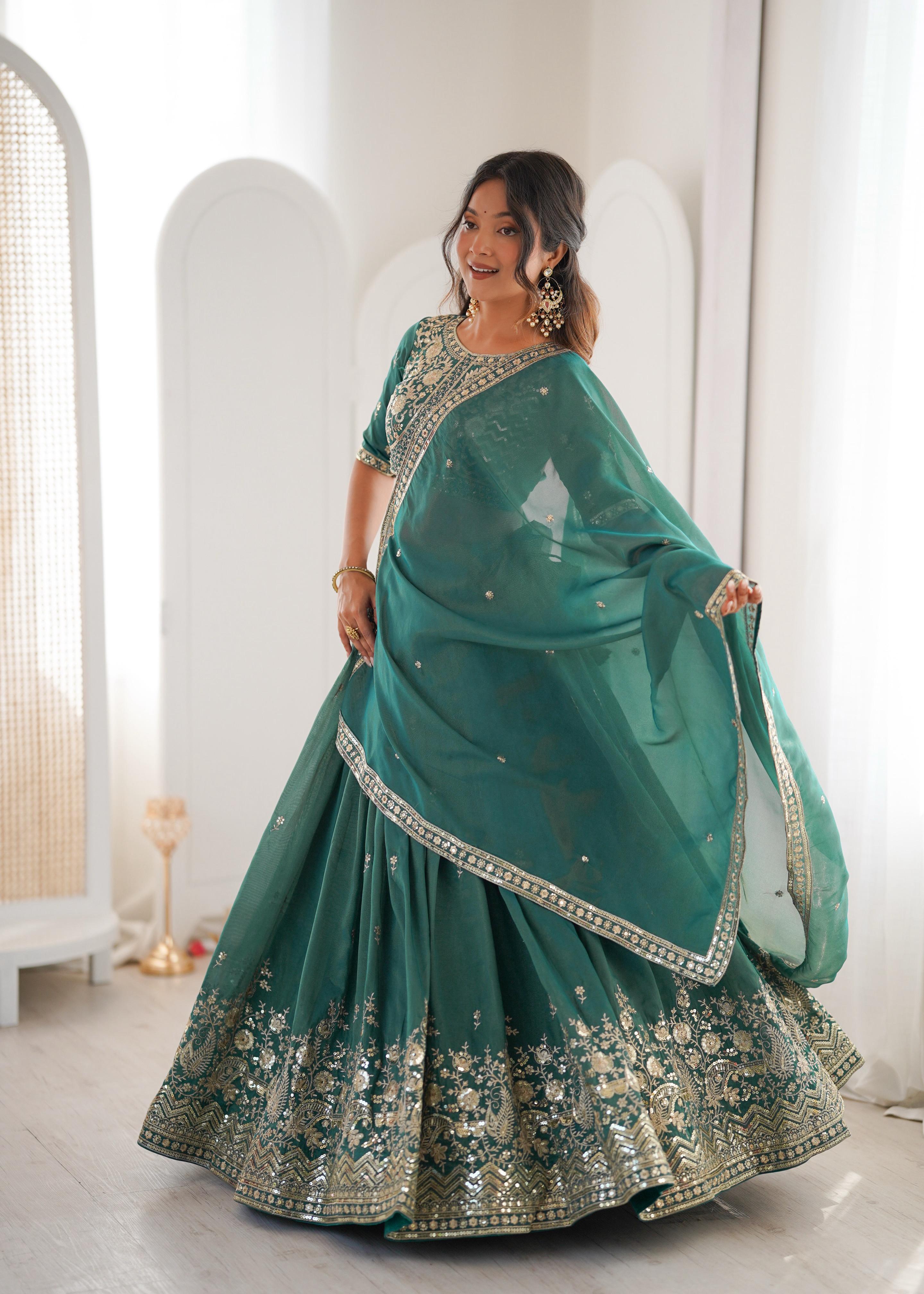
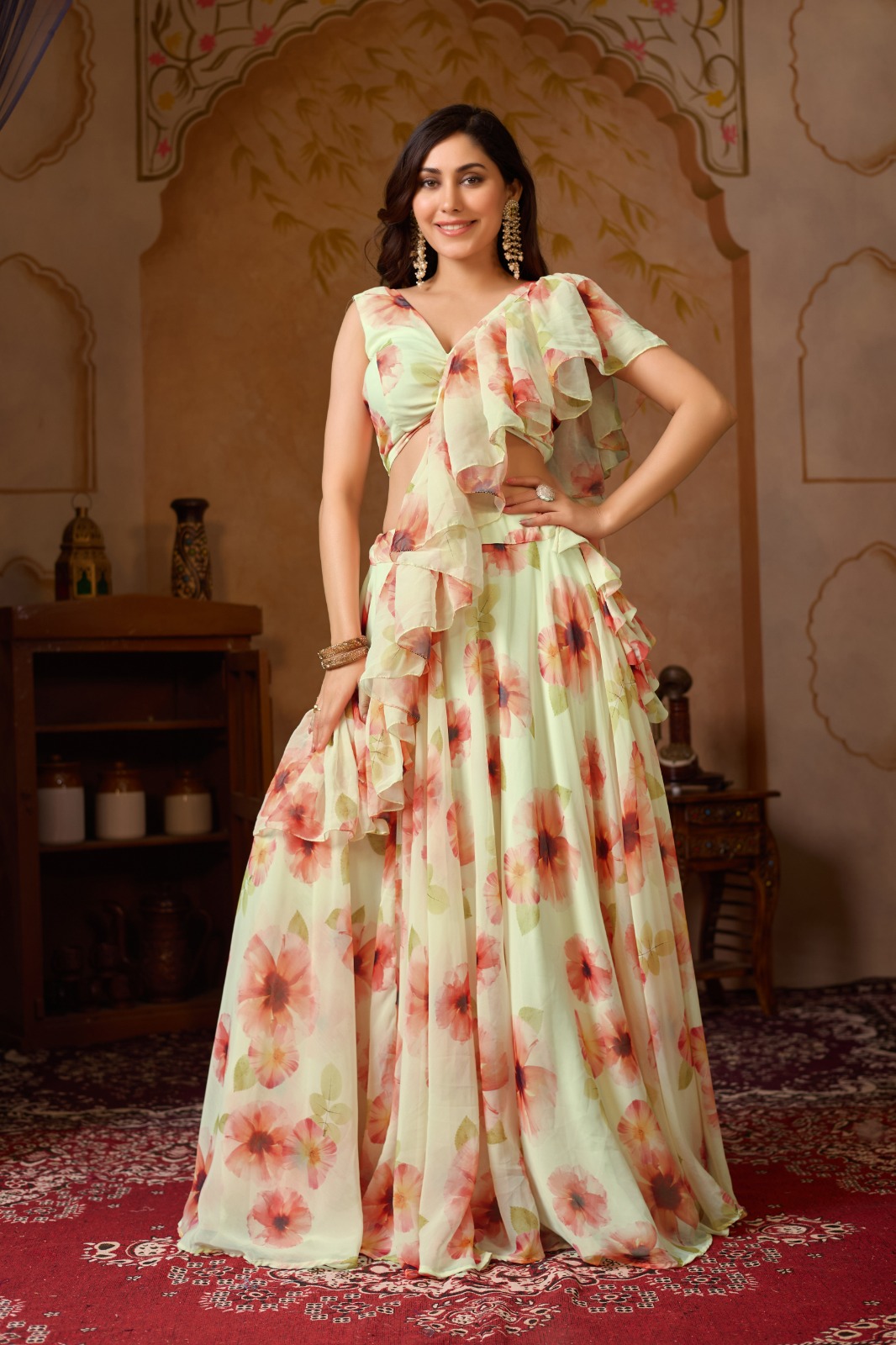
Georgette, chiffon and breathable lining are sensible choices for outdoor daytime weddings. A cape made from fluid georgette falls close to the body and doesn't need much shaping to look polished. The Pastel Floral Georgette Lehenga Set with Ruffle Blouse demonstrates why a soft, flowing upper layer can suit a daytime palette, particularly when the print already supplies visual interest.
Net can work well when the embroidery is concentrated along the border rather than spread across the entire cape. The fabric allows air to move through the garment, but a heavily embellished net cape can still feel scratchy or warm. Check whether the net is lined near the armhole and whether the embellishment sits against the skin.
For evening receptions
Silk blends, satin-backed fabrics and structured organza create a more formal evening silhouette. The Designer Threadwork Silk Lehenga Choli Set with Dupatta offers an useful reference for the richness of silk and threadwork, even when a guest chooses a cape variation instead of the included dupatta. Silk works best when the blouse and cape have a clean finish because bulky seams can undermine its elegant drape.
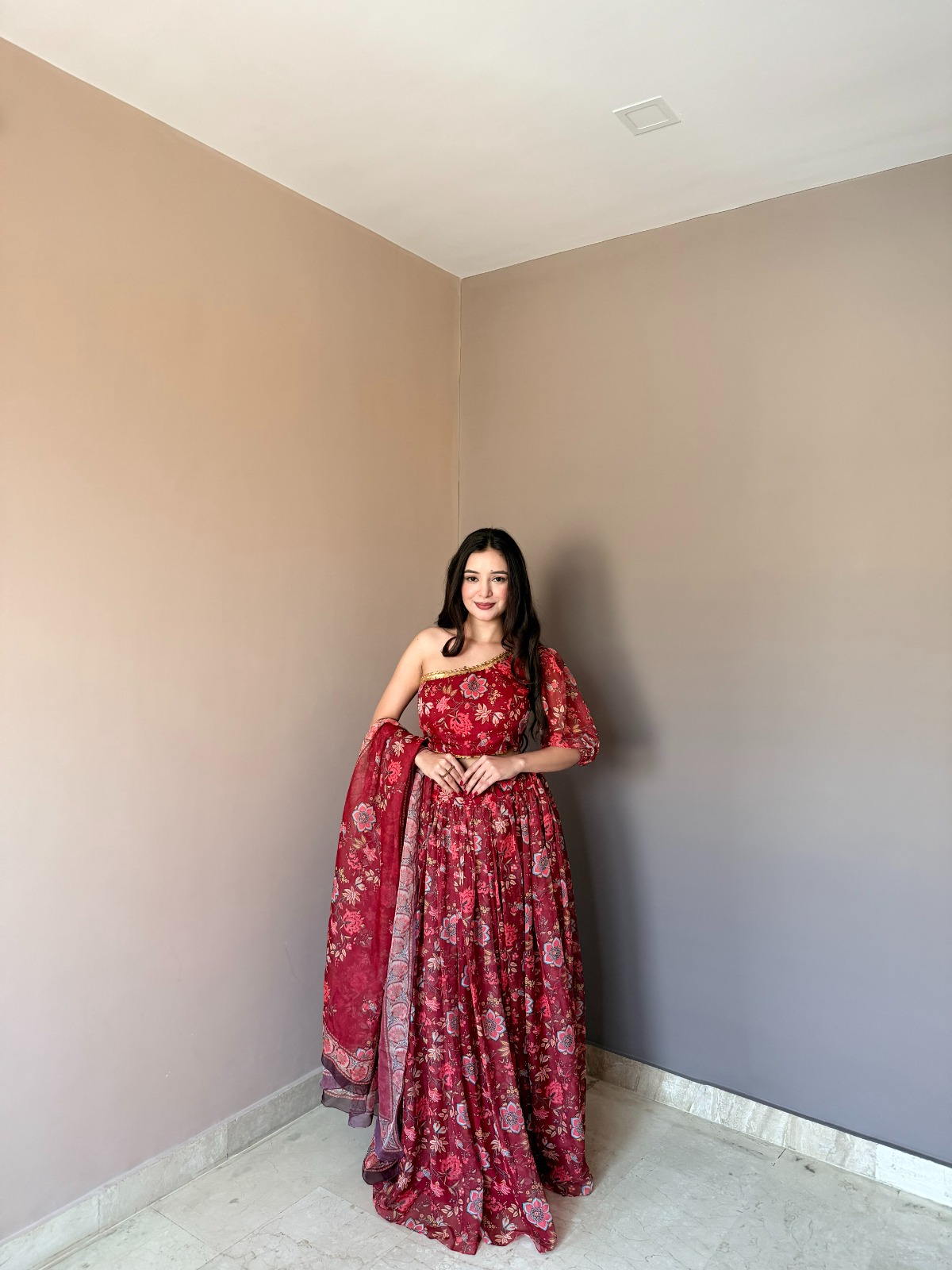
Organza gives a cape architectural shape and photographs clearly under reception lighting. The Red Floral Organza Lehenga Set with One Shoulder Blouse shows how organza and an asymmetric upper-body design can create a statement look. An one-shoulder silhouette needs secure shoulder construction, especially if the guest will carry a phone, clutch or child during the event.
For cooler venues
Velvet panels, silk capes and lined brocade provide more warmth than unlined net. A full velvet cape may feel excessive in a heated banquet hall, so a velvet border or short overlay can deliver the same richness with less weight. A cape that ends above the hip usually feels easier to manage than a floor-length version when the venue has stairs or uneven outdoor ground.
How to select cape length, sleeves and coverage
A cape ending between the waist and upper hip is usually the easiest length for dancing, dining and walking through crowded venues. A hip-length cape creates coverage without hiding the lehenga waistband. A mid-thigh cape brings more drape and can visually lengthen the outfit, but the added fabric needs a clean side opening so it doesn't catch on chairs.
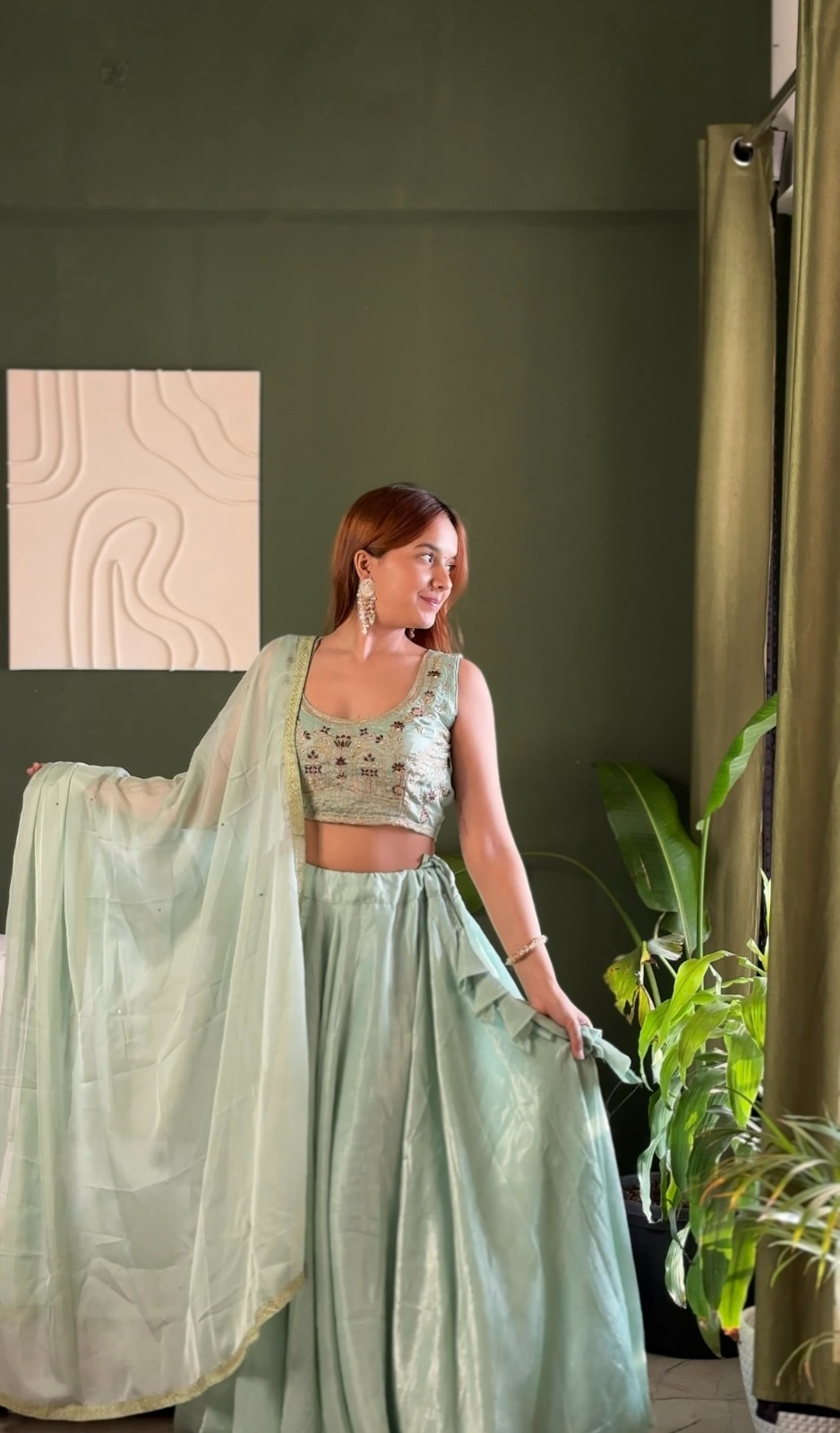
A floor-length cape creates the most dramatic effect but needs careful proportion. The hem should either finish close to the lehenga hem or stop clearly above it; a cape ending only a few centimetres above the skirt can look accidental. Floor-length layers also require a trial walk because the wearer should be able to turn without stepping on two separate hems.
Sleeve shape changes both comfort and proportion. Elbow-length sleeves offer coverage while leaving the wrist free for bangles. Bell sleeves provide movement but can dip into food or catch on jewellery. Fitted full sleeves suit cool venues and formal receptions, although the armhole should allow the wearer to lift both arms comfortably.
Guests seeking modest coverage should check the cape's front overlap, side opening and opacity rather than judging coverage from the product photograph alone. A cape open at the front may cover the arms while leaving the blouse fully visible. A cape with a soft front fall gives more coverage but may require a small hidden snap to prevent it from shifting during movement.
Building a balanced wedding guest outfit
A cape lehenga usually needs fewer accessories because the shoulder and neckline area already carries visual detail. If the cape has embroidery, choose earrings and a bracelet rather than a large necklace, or select a necklace only when the neckline leaves enough open space.
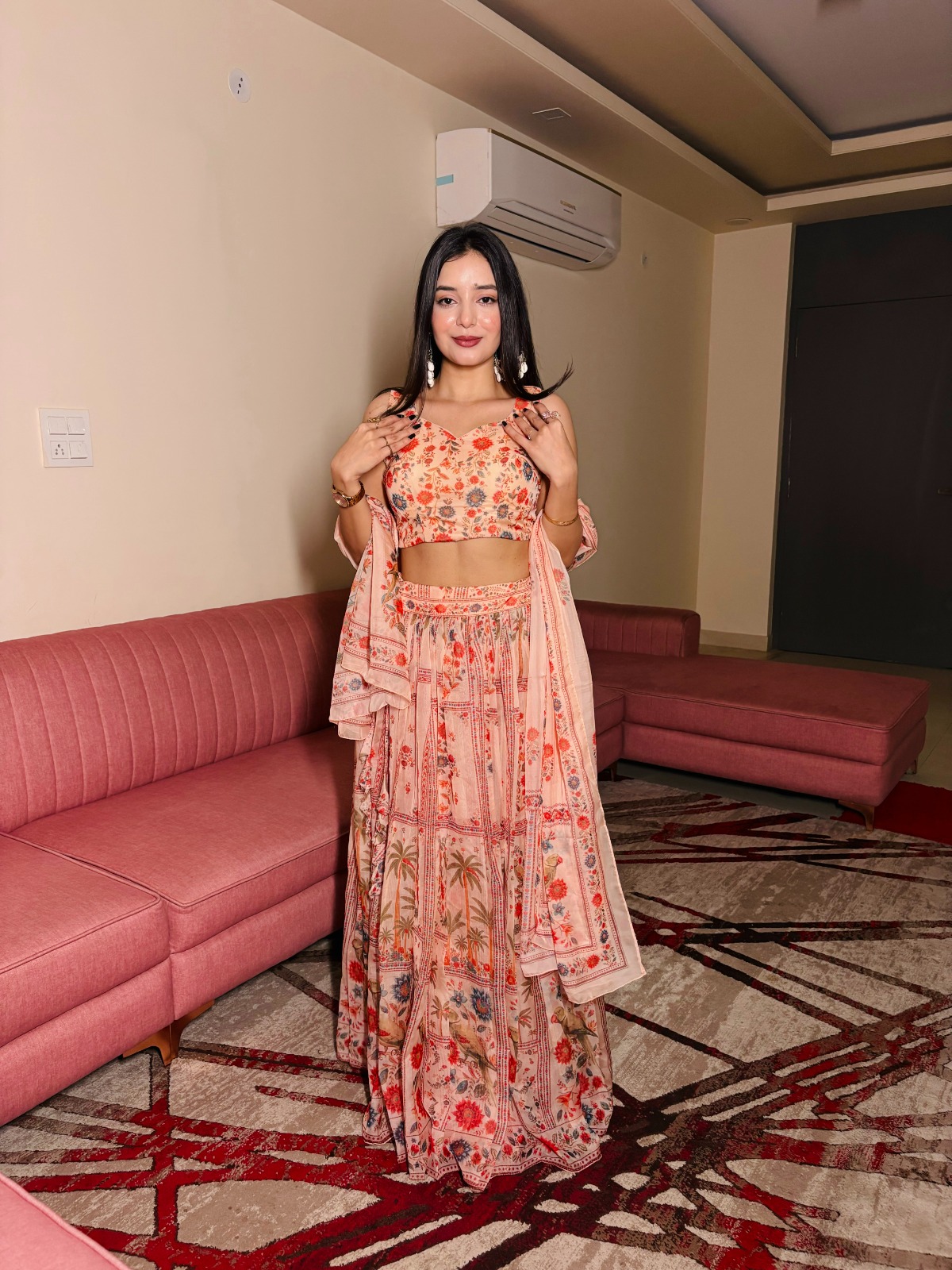
Printed skirts pair well with quieter capes, while plain skirts can support zari, mirror work, thread embroidery or floral appliqué on the cape. The Floral Digital Printed Organza Lehenga with Zari, Dori and Sequin Embroidery illustrates how print and surface embellishment can coexist. With a similarly detailed cape, keep the jewellery restrained and let one colour from the print guide the accessories.
An one-colour outfit can look especially polished when the cape and skirt use different textures. A matte crepe skirt with a lightly sheer organza cape creates contrast without introducing another colour. A silk skirt with a net cape feels richer and more dimensional than two layers made from identical shiny fabric.
Footwear should be selected before finalising the cape length. A two-inch block heel is generally easier for long wedding functions than a narrow stiletto, and it establishes the skirt hem before alterations. Guests wearing flats should not rely on pinning the hem higher on the event day; the lehenga should be measured for the actual shoe height.
Using colour with wedding etiquette in mind
Wedding guest colour choices should respect the couple's stated dress code and regional customs. Red may be associated strongly with bridal dressing in some celebrations, while white, ivory or black may carry different meanings across communities. The Red Floral Organza Lehenga Set with One Shoulder Blouse can inspire a red floral direction, but guests should confirm whether the wedding invitation reserves red for the bride or bridal party.
Pastels suit morning and daytime events, while jewel tones and metallic accents hold their own under evening lighting. Pink Lehengas Under 4000 with 50% Discount can be an useful starting point for comparing soft and bright pink palettes, but the final choice should consider the ceremony's dress code, venue and expected photography lighting.
Shopping checks that prevent last-minute cape problems
Check the garment measurements, not only the stated size. Compare bust, waist, shoulder width, armhole and cape length with a well-fitting blouse. A cape shoulder that's too narrow can pull at the neckline, while an oversized armhole can expose the blouse awkwardly whenever the wearer lifts an arm.
Inspect the fastening method before buying. A concealed hook, snap or waist attachment can stop a front cape from opening too far. Shoulder-only attachment allows more movement but may cause the cape to rotate. A detachable cape gives the greatest flexibility, especially for guests attending both a formal ceremony and a relaxed after-party.
Check the lining and seam finishing because embellished edges can irritate the neck, arms and underarms. Ask whether zari, sequins, mirror work and thread embroidery are hand-finished or machine-applied, and examine photographs for loose threads. A three-point inspection at the neckline, armhole and hem catches most comfort problems before the event.
Price should be judged against construction rather than decoration alone. Silk Lehengas Under 3000 may offer a rich-looking skirt, but confirm whether the cape is included, whether the silk is pure or blended, and whether the blouse is stitched. Net Lehengas Under 4500 with 51% Discount can be attractive for lightweight styling, but inspect the net quality and lining before assuming that a discount guarantees comfort.
Styling a cape lehenga across wedding functions
A single cape lehenga can be adapted across multiple functions by changing the accessories and cape treatment. For a daytime mehendi, use floral earrings, flat embellished sandals and a small potli. For an evening sangeet, switch to metallic heels, a sleek clutch and hair secured away from the face so the cape neckline remains visible.
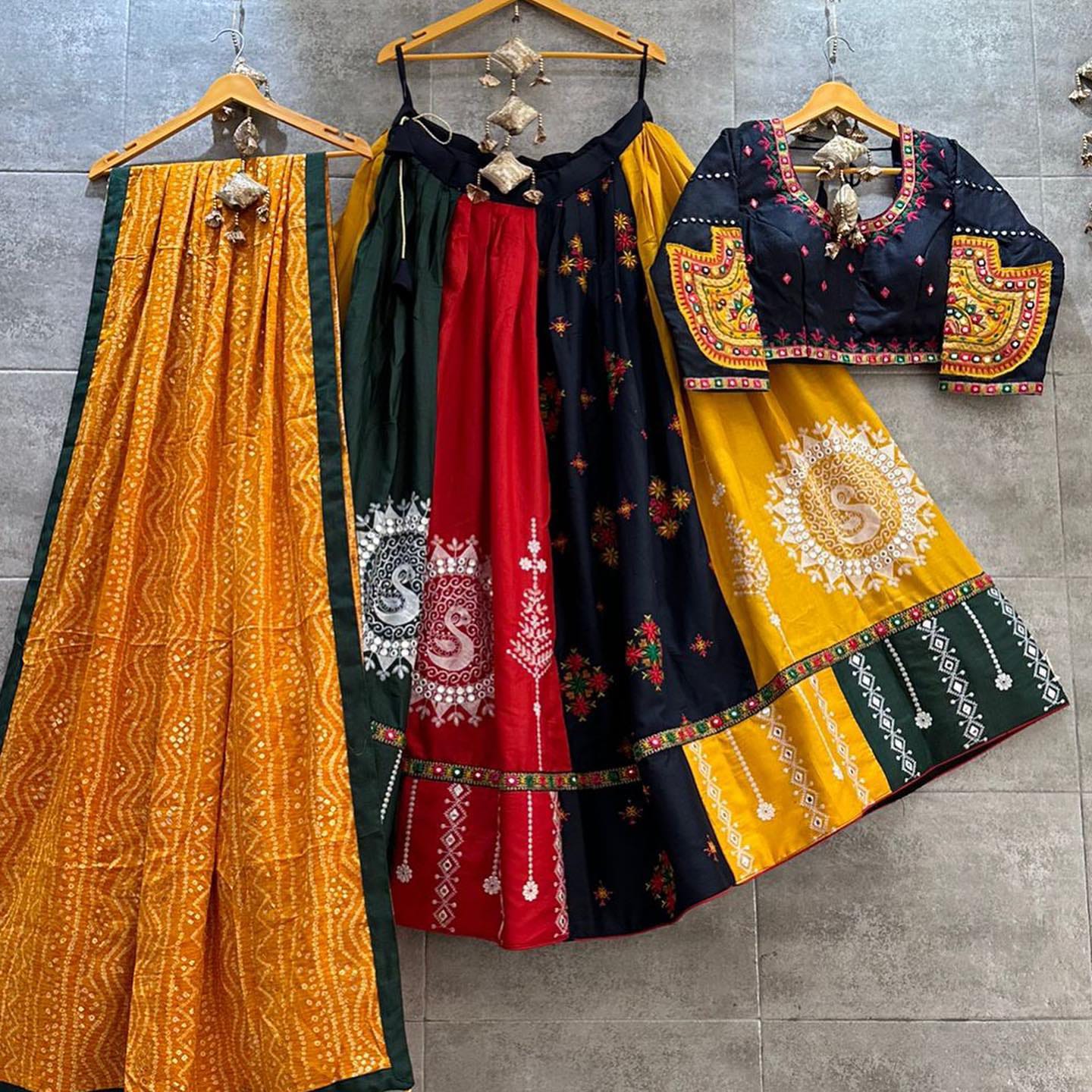
A Haldi ceremony rewards lighter colours, practical footwear and fabrics that don't drag. Haldi Lehengas Under 5500 can help compare cheerful yellow, green and coral palettes, but avoid placing delicate embroidery at the lower hem if the venue involves grass, turmeric paste or outdoor seating.
For a reception, add a defined waist belt only when the cape leaves the waistband visible and the skirt has enough structure to support it. A belt over a gathered or heavily embellished waist can create bulk. A single statement ring and sculptural earrings often look more deliberate than stacking every available accessory.
Guests who want a more traditional option can carry a lightweight dupatta for the ceremony and wear the cape alone at the reception, provided the outfit has been designed to work both ways. The Mint Embroidered Lehenga Set with Net Dupatta and the Semi Stitched Lehenga with Organza Dupatta show how net and organza layers can change the formality of a lehenga. These examples are useful when deciding whether a detachable dupatta should remain part of the wardrobe even when the main preference is a cape.
Care, packing and movement on the wedding day
Steam a cape from the reverse side at the temperature recommended for its fabric, and place a pressing cloth between the iron and zari, sequins or printed surface. Direct heat can flatten organza, melt synthetic embellishment or leave a shiny mark on silk blends. Hang the complete outfit overnight so the cape, blouse and skirt settle naturally.
Transport the cape on a broad hanger inside a breathable garment bag rather than folding embellished areas tightly into a suitcase. If folding is unavoidable, place tissue paper between decorated surfaces and keep the cape above heavier garments. Avoid spraying perfume directly onto silk, net or metallic thread because alcohol and moisture can stain or weaken some finishes.
During the event, sit by placing the skirt to one side and checking that the cape hem is clear of the chair leg. Use a small safety pin only on an inner seam if an emergency adjustment becomes necessary; pinning through visible organza, net or zari can leave permanent holes. A compact stain-removal cloth is safer than rubbing food or makeup into an embellished surface.
Cape Lehengas for Wedding Guests Who Want Less Dupatta Fuss deliver the most value when the design matches the guest's actual movements. A short, breathable cape suits daytime ceremonies and active celebrations; a structured silk or organza cape suits an evening reception; and a detachable layer gives the most flexibility. The right choice is therefore less about following a trend and more about matching construction, coverage and fabric to the wedding schedule.
Practical Questions About Cape Lehengas for Wedding Guests
Are cape lehengas suitable for wedding guests?
Yes, cape lehengas are suitable for wedding guests when the fabric, coverage and colour suit the ceremony and dress code. A lightweight cape works for daytime functions, while silk, organza or embellished styles suit evening receptions.
Can I wear a cape lehenga without a dupatta?
Yes, a cape lehenga can be worn without a separate dupatta when the cape is designed to provide the desired shoulder and arm coverage. Check the neckline, front overlap and opacity before leaving out the dupatta.
Which fabric is best for a cape lehenga in summer?
Georgette, chiffon and lightweight net are generally more comfortable for summer weddings than velvet or heavily lined silk. Choose breathable lining and avoid dense embellishment across the entire cape if the ceremony is outdoors.
How long should a cape be with a lehenga?
A cape ending between the waist and upper hip is usually easiest for movement, while a mid-thigh cape gives more coverage and drama. A floor-length cape needs a fitting trial to ensure that the two hems do not catch underfoot.
How can I style jewellery with a cape lehenga?
Choose jewellery according to the cape's neckline and embellishment. Detailed capes usually need earrings and a bracelet, while a simpler cape can support a necklace or one statement accessory.
Are cape lehengas easier to wear than lehengas with dupattas?
Cape lehengas are often easier for guests who dislike repeated pinning because the upper layer stays attached to the outfit. A separate dupatta remains more versatile, so a detachable cape or optional dupatta is the better choice for guests who want both stability and styling flexibility.