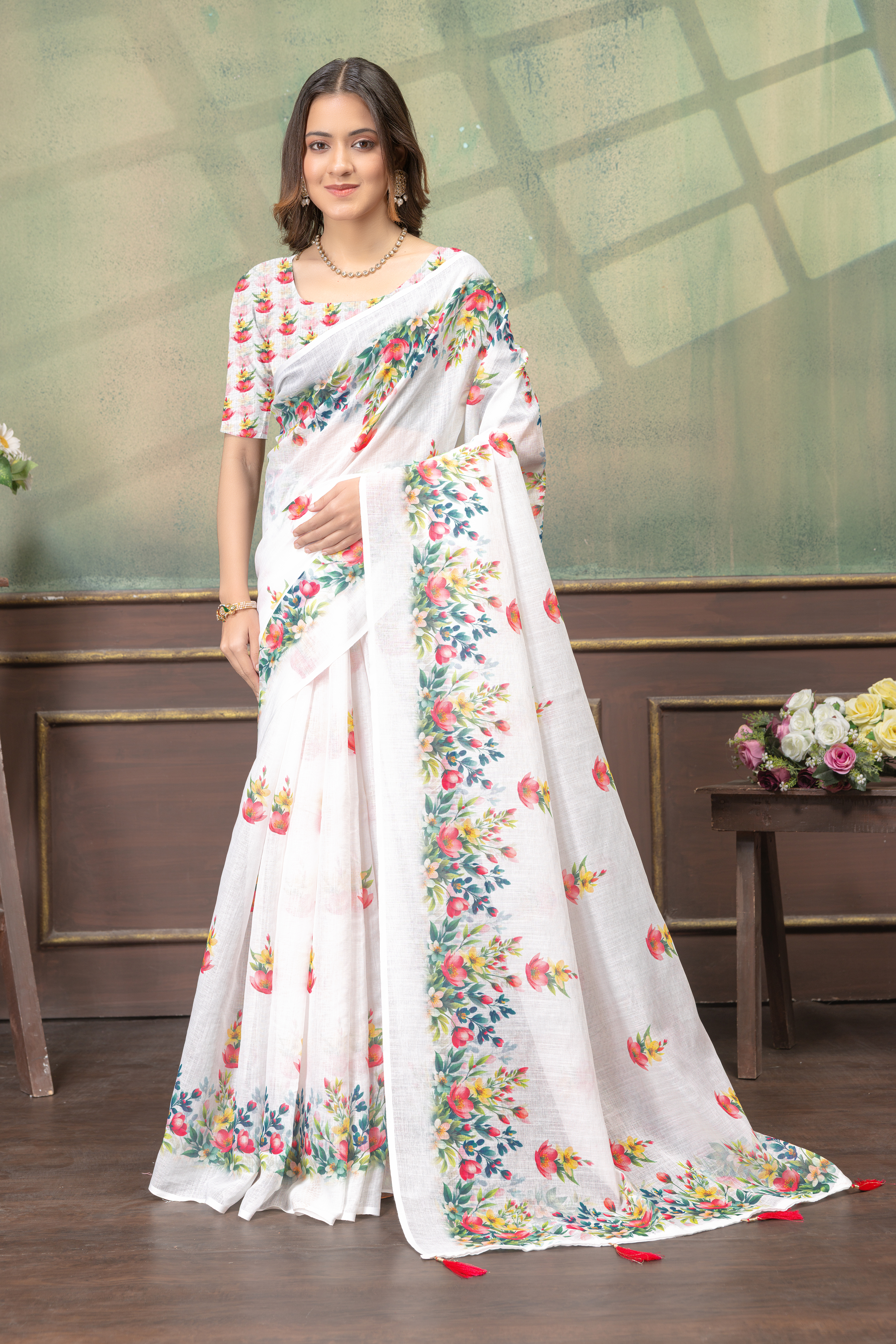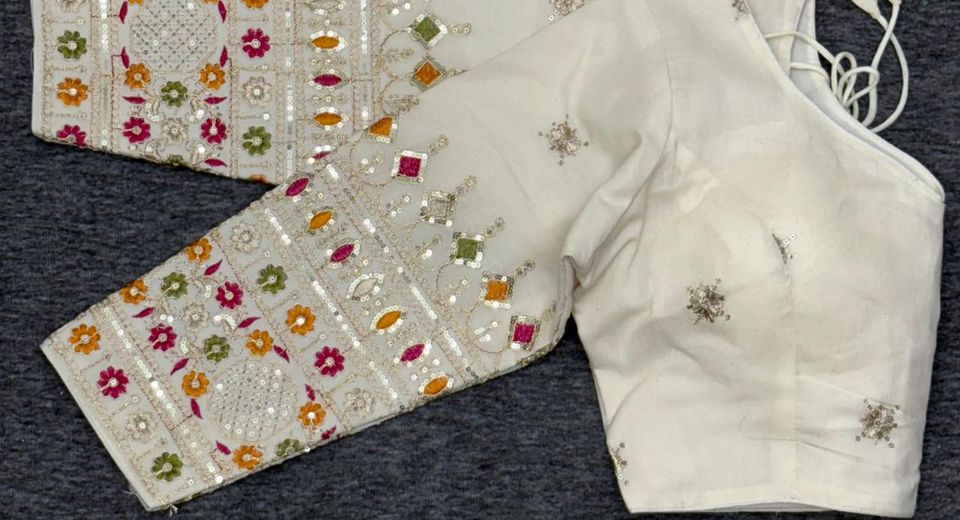
Angrakha Blouses for Women Tired of the Usual Saree Blouse offer a practical way to make a familiar saree look considered rather than predictable. The defining feature is a wrap-inspired front, usually created with overlapping panels, diagonal seams, tie details or an asymmetric opening. That construction gives the blouse movement and shape without depending on a dramatic back, deep neckline or heavy embellishment.
An Angrakha blouse can work with a cotton saree at a daytime gathering, a Banarasi silk drape at a wedding or a plain designer saree that needs a stronger focal point. The right choice depends on proportion, fabric weight, closure placement and the amount of visual detail already present in the saree. Those decisions matter more than simply choosing the most elaborate blouse design.
Why do Angrakha Blouses for Women Tired of the Usual Saree Blouse look different?
Angrakha Blouses for Women Tired of the Usual Saree Blouse look different because the front is built around an overlapping or cross-body arrangement instead of a symmetrical centre opening. The overlap may be secured with fabric ties, concealed hooks, buttons or a side fastening, depending on the design.
The diagonal line draws the eye across the torso and can soften the straight horizontal effect created by a conventional blouse hem. Some Angrakha blouses have a modest overlap with a neat V-neck, while others use layered panels, contrast edging or a longer peplum-like finish. The silhouette can therefore range from subtle to distinctly contemporary.
Traditional Angrakha garments are associated with wrap construction, but a modern saree blouse doesn't need to reproduce a full-length wrap garment. A blouse can borrow only the crossing front, side tie or asymmetric seam while retaining a fitted waist and standard sleeve. That makes the style easier to wear with pre-pleated or tightly tucked sarees.
How does the wrap detail change the saree silhouette?
The wrap detail changes the saree silhouette by introducing a diagonal line that balances the vertical fall of the pallu. A plain saree gains a point of focus at the upper body, while a heavily patterned saree benefits from a blouse that repeats one directional line without adding competing motifs.
Angrakha construction can also create a more forgiving visual fit around the bust and waist, but only when the overlap lies flat. Excess fabric, a badly placed tie or insufficient bust coverage can create bulk. Accurate measurements and a closure that holds the panels securely are more important than the number of decorative layers.
How should Angrakha Blouses for Women Tired of the Usual Saree Blouse be chosen by fabric?
Choose the fabric according to the saree's weight, the event's weather and the amount of structure required by the wrap front. Cotton works well for breathable daytime dressing, while silk and brocade suit formal occasions that need a firmer, more polished shape.
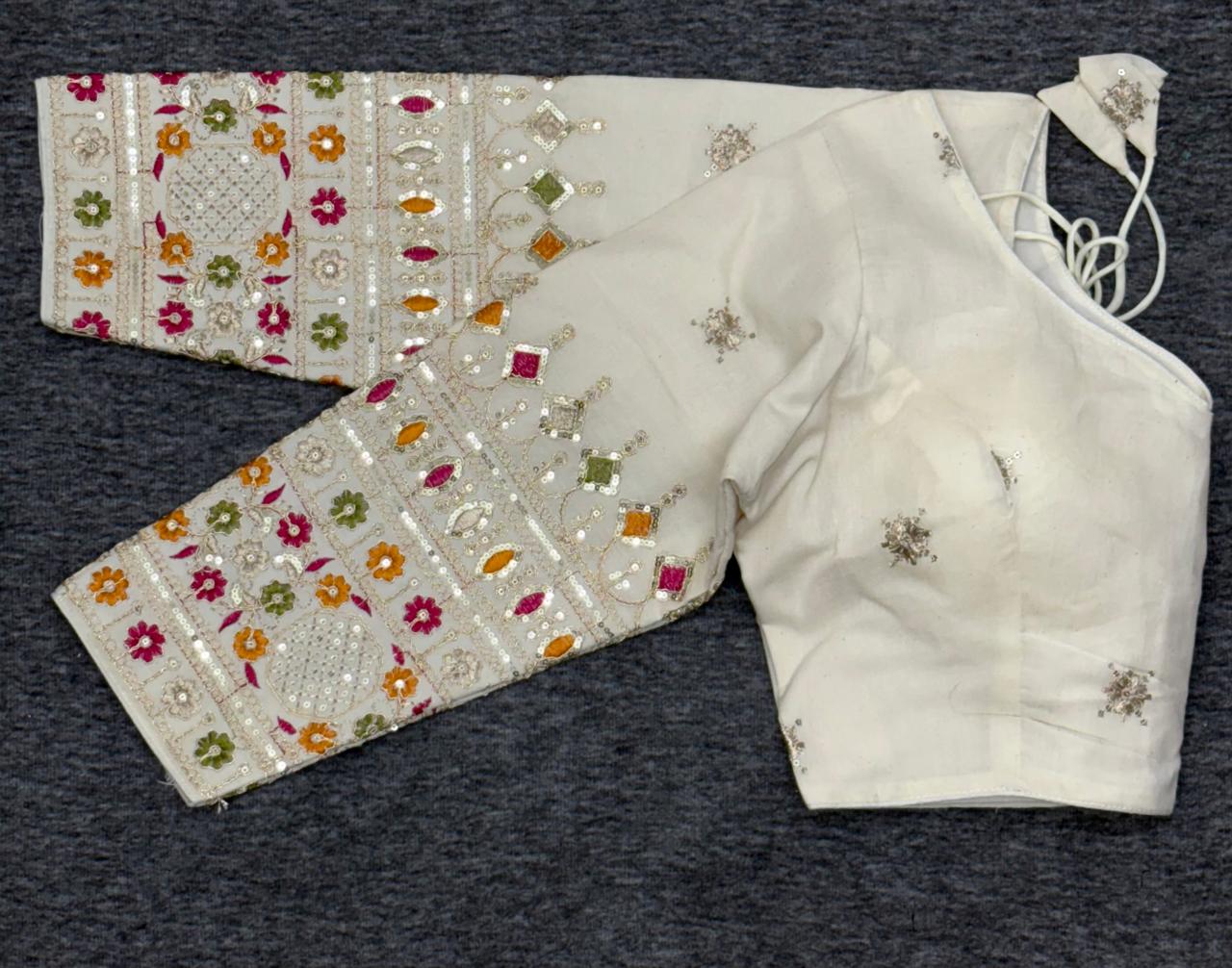
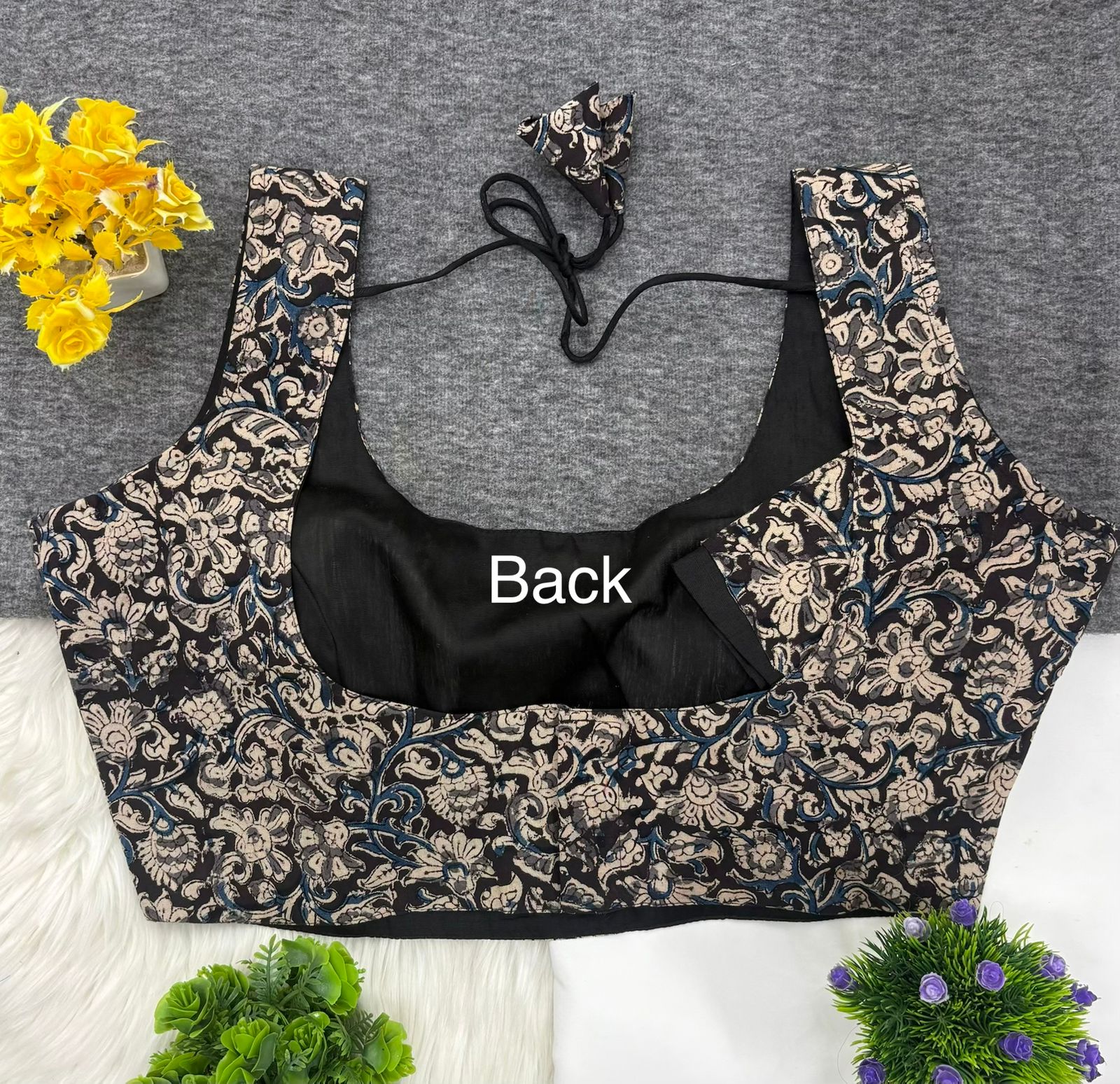
A cotton Angrakha blouse is comfortable for long wear because cotton allows air movement and absorbs some moisture. Kalamkari Cotton V Neck Collar Blouse for Women illustrates how printed cotton can bring colour and surface interest to a simple saree without relying on sequins. Pure Kalamkari Cotton Padded Blouse for Women is another useful direction when you want cotton with additional support.
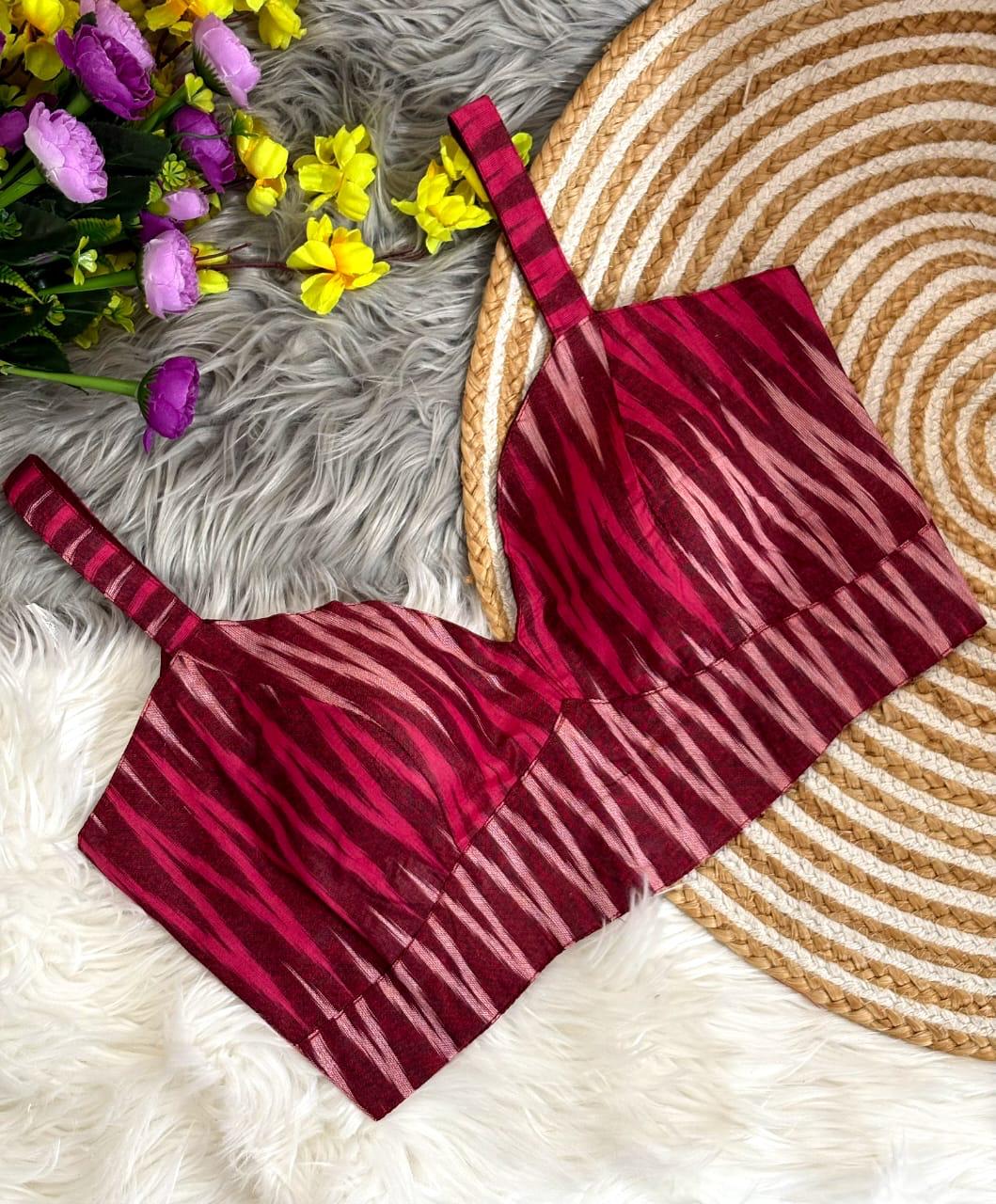
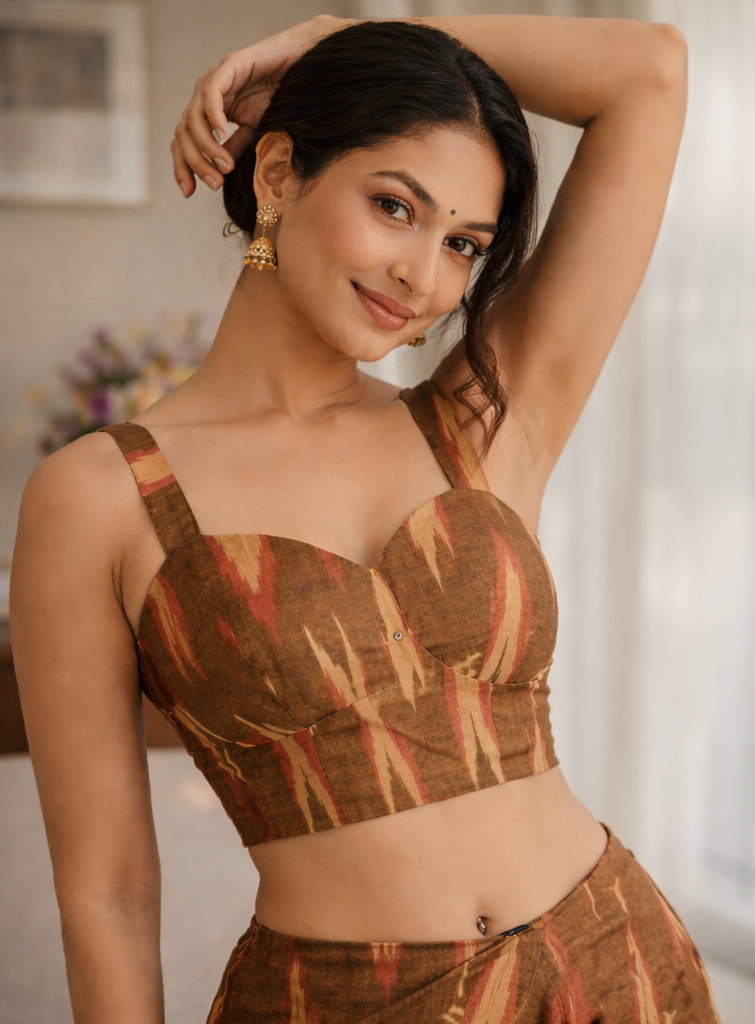
Ikat cotton has a distinct woven pattern that already attracts attention, so the Angrakha cut should remain controlled. Brown Ikat Cotton Padded Blouse Sleeveless can anchor an ivory, beige, rust or mustard saree, while Cream Ikat Cotton Padded Blouse Sleeveless Trendy works with deeper indigo, maroon and green drapes. Ikkat Cotton Padded Blouse for Women Sleeveless creates a similar contemporary effect when the saree has a clean border and limited ornamentation.
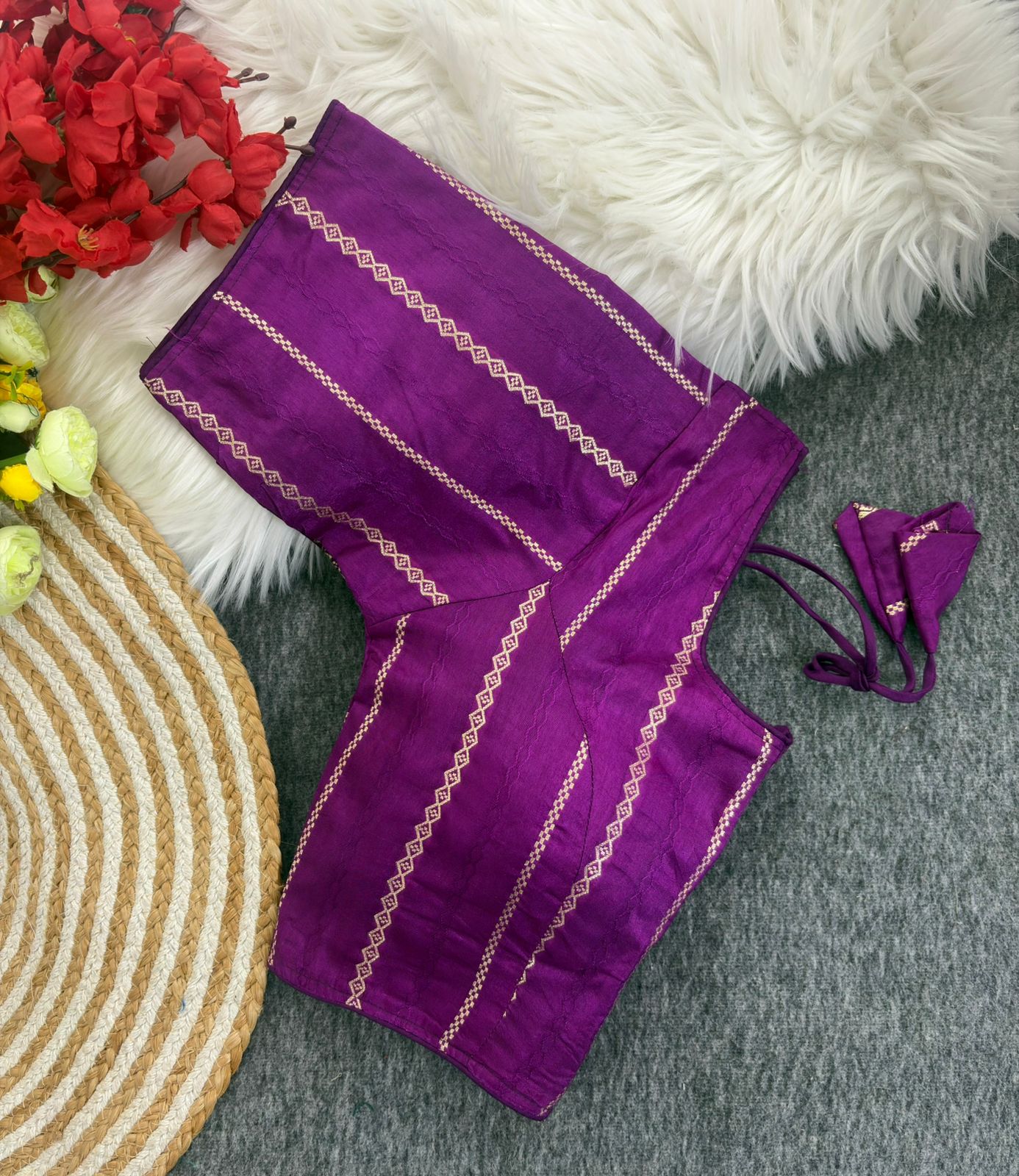
Silk gives the crossing panels more body and helps the blouse retain a crisp outline. Banarasi Silk Golden Jari Padded Blouse for Women suits festive styling because zari introduces a reflective accent. A blouse with gold work should usually be paired with a saree that has either a matching gold element or a deliberately quiet surface.
Very fluid fabrics can collapse at the overlap unless the blouse includes lining or interfacing. Lightweight cotton, silk blends and soft woven fabrics may need a stable lining beneath the visible layer. A firm lining also reduces friction between the blouse and saree, helping the diagonal panel stay in place during movement.
Which sarees work with Angrakha Blouses for Women Tired of the Usual Saree Blouse?
Angrakha Blouses for Women Tired of the Usual Saree Blouse pair best with sarees that leave enough visual space for the diagonal blouse detail to be noticed. Plain, lightly textured, handloom-inspired and narrow-border sarees are especially easy starting points.
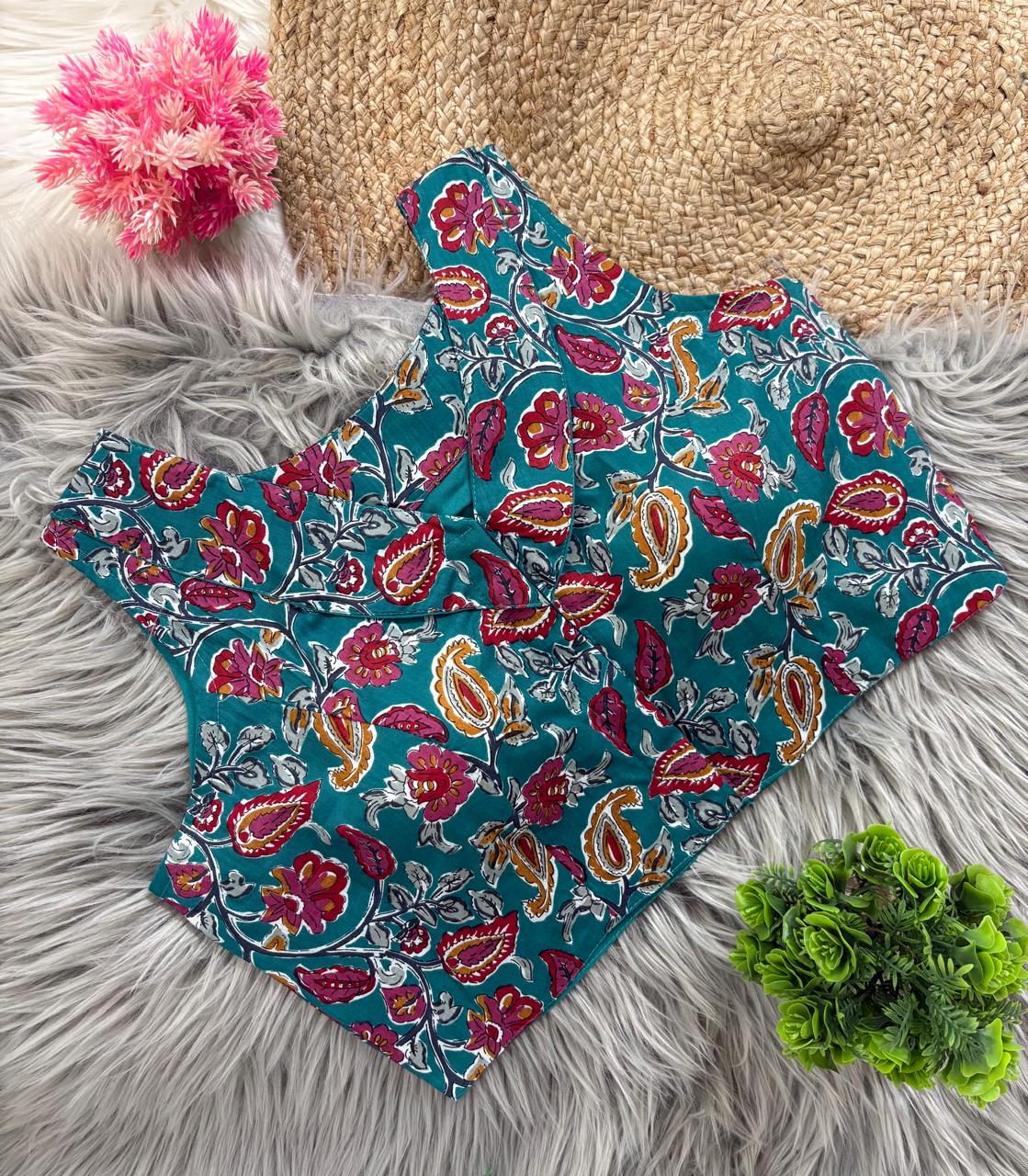
A cotton saree and a printed cotton Angrakha blouse create a relaxed combination for lunches, cultural events and work-friendly festive dressing. Keep the print scale different between the two pieces: a small blouse print can sit beneath a larger saree motif, but two large competing prints may make the wrap lines difficult to read.
A silk saree needs a blouse with enough body to match its fall. Banarasi silk, Kanjeevaram and other structured silk sarees can support a zari, brocade or plain silk blouse, provided the blouse doesn't repeat every motif on the saree. A simple gold-edged Angrakha blouse can be more effective than a heavily embroidered blouse when the saree already carries a wide zari border.
A plain or lightly woven drape can showcase a more detailed blouse. Blue Zari Work Cotton Saree for Wedding offers a strong base for a blouse that repeats its blue or metallic accents without copying the entire pattern. The result feels coordinated because the colours relate, while the wrap construction supplies the point of difference.
Pre-pleated sarees and ready-to-wear sarees can also work with an Angrakha blouse, especially when the blouse hem isn't too long. A longer overlap may cover the saree waistband and reduce the clean finish of a pre-stitched drape. Check the blouse length against the saree's waist placement before finalising the pairing.
How should Angrakha Blouses for Women Tired of the Usual Saree Blouse be fitted?
Select the neckline, sleeve and length as a single proportion rather than choosing each feature independently. An Angrakha front already creates a strong diagonal, so the remaining details should support its direction instead of competing with it.
Which neckline suits the crossover front?
A V-neck usually reinforces the diagonal lines of an Angrakha front and creates a visually continuous shape. A round neck makes the wrap detail look softer and more heritage-inspired, while a square neck provides sharper architectural contrast.
A high neck can work with sleeveless or short-sleeved versions, but it should be balanced with a relatively simple overlap so the upper body doesn't appear crowded. Neckline depth should be measured against the saree pallu and the intended setting. A modest V-neck is more versatile for family events and daytime wear, while a deeper neckline may suit evening dressing if the overlap brings secure coverage.
Which sleeve length creates balance?
Short sleeves keep attention on the front construction and suit most cotton and silk sarees. Sleeveless cuts make an Ikat or printed blouse feel more contemporary, but armhole fit must be accurate because a loose armhole can expose the inner lining or shift the wrap during movement.
Elbow-length sleeves add formality and can balance a broad saree border. Three-quarter sleeves are effective with silk sarees for weddings because they provide coverage without hiding the blouse's waist shaping. A blouse ending at the natural waist generally works with heritage draping, while a slightly longer hem can support a peplum-inspired Angrakha shape.
What should you check before buying Angrakha Blouses for Women Tired of the Usual Saree Blouse?
Check the bust, underbust, shoulder, armhole, blouse length and closure position before buying a readymade Angrakha blouse. A familiar size label isn't enough because wrap construction changes where the garment needs ease.
Measure over the bra or camisole that you're likely to wear with the blouse. Keep the tape level around the fullest part of the bust, then measure the underbust separately. Compare both measurements with the garment chart, because two blouses with the same bust measurement may have different underbust shaping and overlap depth.
Inspect whether the wrap is fixed or adjustable. A fixed overlap gives a clean appearance but needs closer measurement accuracy. An adjustable tie can accommodate small changes in fit, although the tie should be long enough to knot securely without creating a visible lump beneath the saree pallu.
Padded construction can provide support and reduce the need for a separate lining, but padding doesn't replace correct bust ease. Pure Kalamkari Cotton Padded Blouse for Women and Banarasi Silk Golden Jari Padded Blouse for Women show why the fabric and surface finish should be considered alongside the padding. Padding is useful only when the cup placement, armhole and shoulder width also suit the wearer.
Readymade blouses are convenient when the basic measurements are close to the chart. Minor alterations such as shortening the sleeve, moving a hook or adjusting the side seam are usually more realistic than changing the entire crossover structure. Ask an experienced tailor to preserve the overlap line if alterations are needed.
How can Angrakha Blouses for Women Tired of the Usual Saree Blouse suit different occasions?
One Angrakha blouse can serve different occasions when the saree, jewellery and styling remain deliberately changeable. An adaptable base usually has a restrained colour, secure construction and moderate embellishment.
For daytime wear, pair a cotton Angrakha blouse with a handloom-style cotton saree, small earrings and flat sandals. Kalamkari Cotton V Neck Collar Blouse for Women can support an artsy, relaxed look when the saree is plain or carries a restrained border. Keep the jewellery light so the print and diagonal construction remain visible.
For a festive gathering, choose zari, silk or a rich woven texture and add jhumkas, bangles and a low bun. Classic Festive Wear Blouse for Stylish Saree Look can guide this styling direction when the saree already has a strong colour and the blouse needs to look polished without becoming excessively ornate.
For a wedding, coordinate one accent rather than matching every detail. A gold zari blouse can echo a gold border, while a jewel-toned cotton blouse can pick up a single colour from the saree. Blue Zari Work Cotton Saree for Wedding demonstrates how a woven cotton saree can appear occasion-ready when the blouse and accessories repeat its metallic or blue notes.
For an up-to-date designer saree, keep the accessories restrained and allow the wrap front to provide the design statement. A sleek bun, sculptural earrings and a narrow clutch usually work better than a large necklace when the blouse already has a collar, high neck or layered overlap.
How should Angrakha Blouses for Women Tired of the Usual Saree Blouse be styled and cared for?
Style Angrakha Blouses for Women Tired of the Usual Saree Blouse by keeping the blouse's diagonal structure visible and caring for the fabric according to its fibre and finish. The pallu should not conceal every crossing seam, and the blouse should be stored without crushing its panels.
Place the saree pallu slightly away from the centre of the wrap so the crossover remains readable. If the blouse has a side tie, position the knot beneath the pallu or at the side seam rather than directly over the bust. Secure loose ties before wearing jewellery to prevent snagging.
Cotton blouses should be washed according to the care label and dried away from harsh direct sunlight when the print is strong. Kalamkari cotton can benefit from gentle detergent and a cool iron on the reverse side. Do not iron directly over zari, metallic edging, padding or decorative surface work.
Silk and zari blouses generally need gentler handling. Fold Banarasi silk with soft tissue paper between embellished areas, avoid hanging heavy padded pieces for long periods and allow perspiration to dry before storage. Storing a blouse completely damp can encourage odour and weaken some linings.
Keep Angrakha blouses on a broad hanger when the fabric is structured, but fold soft cotton pieces if shoulder marks are likely. Refold stored blouses every few months so the crossover edge doesn't develop a permanent crease. These simple habits help preserve both the fit and the visual clarity of the wrap front.
Common Questions About Choosing Angrakha Blouses for Women
What is an Angrakha blouse?
An Angrakha blouse is a saree blouse with a wrap-inspired front, overlapping panels, diagonal seams or side ties. The construction creates a distinctive cross-body line while retaining the fitted shape needed for saree draping.
Can a readymade Angrakha blouse fit different body shapes?
A readymade Angrakha blouse can fit different body shapes when the bust, underbust, shoulder and armhole measurements match the size chart. Adjustable ties may provide limited flexibility, but major differences in bust or shoulder measurements usually require tailoring.
Which fabric is best for an Angrakha blouse?
Cotton is suitable for breathable daytime wear, while silk and Banarasi silk provide the structure needed for festive styling. Printed cotton works well with simple sarees, and zari or brocade suits weddings when the saree has a compatible border or metallic accent.
Can an Angrakha blouse be worn with a silk saree?
An Angrakha blouse can be worn with a silk saree when the blouse has enough body to balance the saree's fall. Banarasi silk, Kanjeevaram and other structured silk sarees work best with a controlled overlap and jewellery that does not compete with the diagonal front.
Are padded Angrakha blouses comfortable for long wear?
Padded Angrakha blouses can be comfortable for long wear when the padding, bust ease, armhole and shoulder width are correctly positioned. Padding does not compensate for an incorrect size, excessive tightness or a wrap panel that shifts during movement.
How should an Angrakha blouse be paired with a printed saree?
Pair a printed saree with an Angrakha blouse that repeats one colour or uses a quieter pattern. Avoid combining two large, high-contrast prints because the saree and diagonal blouse construction may compete instead of creating a clear silhouette.