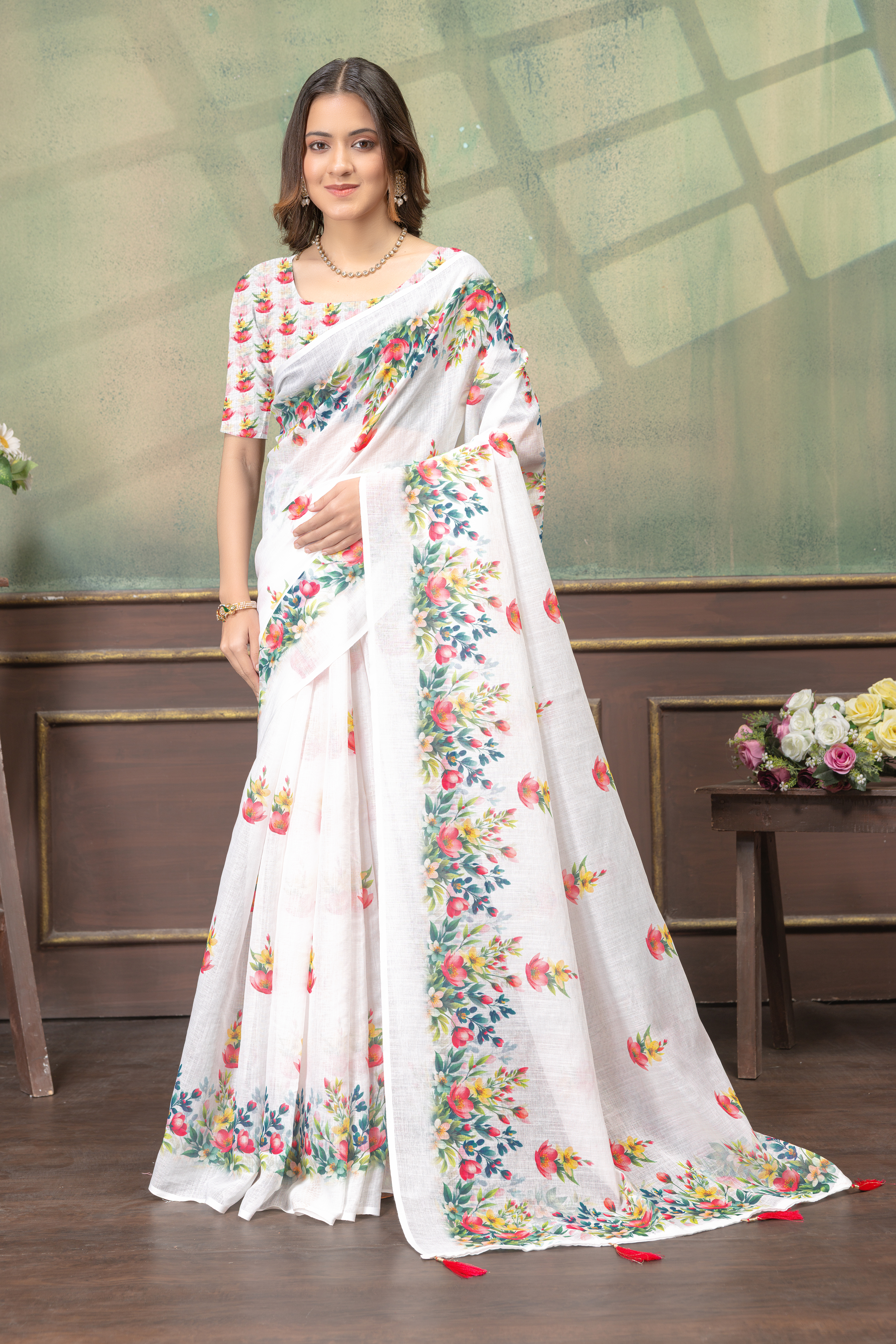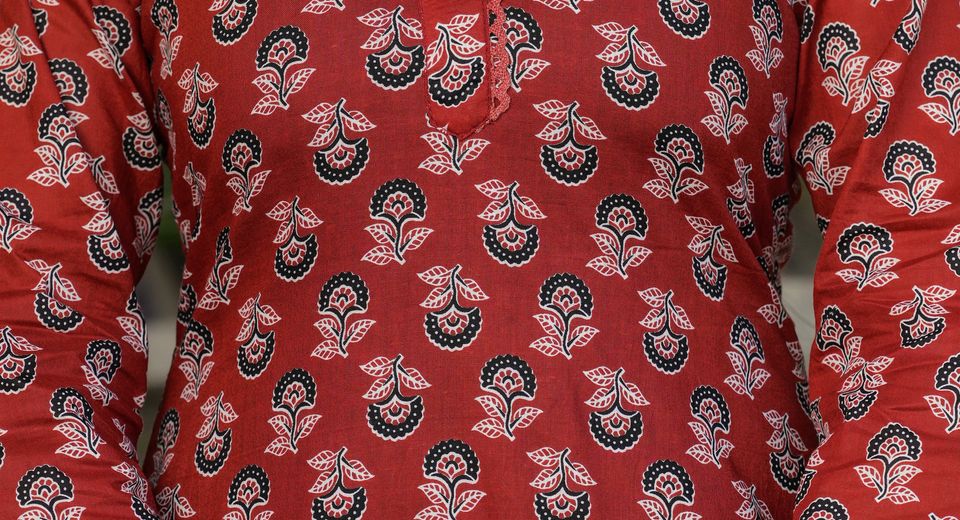
Ajrakh Kurtis That Bring Traditional Prints Into Everyday Dressing give a working wardrobe colour, history and pattern without demanding festive styling. Ajrakh is a resist-and-block printing tradition associated with Kutch in Gujarat and the Sindh region, recognised for geometric layouts, deep indigo, madder red, black, cream and carefully repeated motifs. A cotton kurti or salwar suit carrying those visual ideas can work for office-casual dressing, college, errands and ordinary family gatherings when the silhouette and accessories remain comfortable.
The useful question isn't whether Ajrakh looks traditional enough. The useful question is how to balance a detailed print with daily realities such as movement, heat, washing, commuting and repeated outfit combinations. The answer depends on fabric weight, colour contrast, print scale, neckline, trouser shape and the way a dupatta is handled.
What makes Ajrakh printing distinctive?
Ajrakh printing is distinctive because artisans combine carved wooden blocks, resist printing, mordant dyeing and repeated washing to build layered geometric textiles. The process may involve applying a resist to protect selected areas, dyeing the cloth, washing it, and printing or dyeing additional sections before the final pattern emerges.
Traditional Ajrakh often uses natural dye families that create indigo blue, madder red, iron black and undyed ivory or cream. Ajrakh motifs commonly include stars, dots, flowers, jaali-like grids, angular vines and symmetrical borders. The repeated geometry gives the cloth visual rhythm, so a relatively simple straight kurta can look considered without embroidery or heavy embellishment.
Ajrakh should not be confused with every dark red-and-blue ethnic print. A genuine design reference usually shows organised block repetition, visible registration between motifs and a thoughtful relationship between the body print, border and small filler elements. Contemporary versions may use screen printing, pigment colour or synthetic dyes, so the printing method should be checked when the distinction matters to you.
Why does cotton suit Ajrakh daily wear?
Cotton suits Ajrakh daily wear because cotton absorbs moisture, allows air movement and becomes more comfortable with regular use. Lightweight cotton is useful in warm climates, while medium-weight cotton hangs more neatly and is less transparent under bright light.
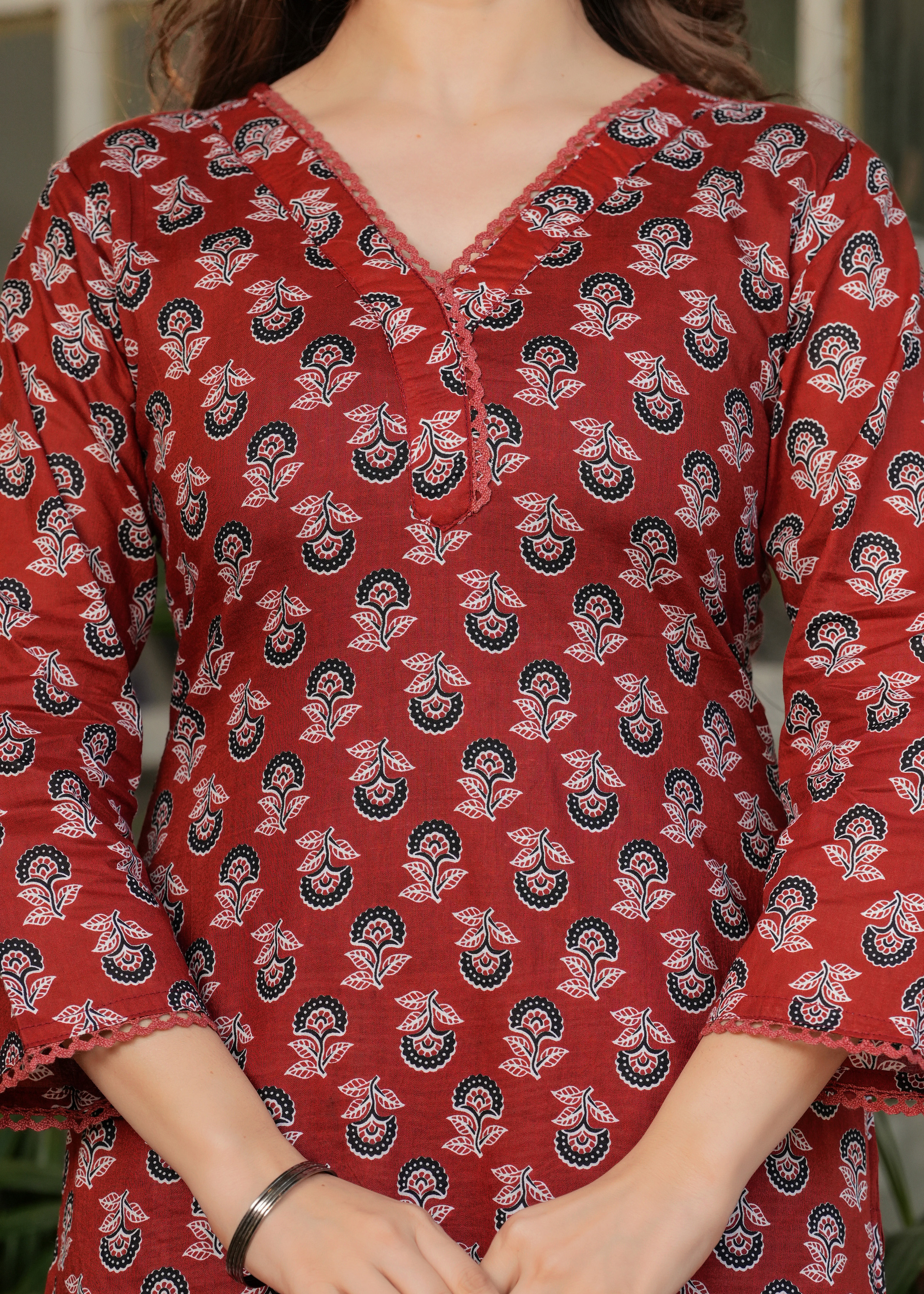
A cotton kurta set can also make a dense print easier to wear. The fabric softens the formality of strong colours, and a matching pant or a quiet solid bottom creates a dependable outfit for repeated use. Rust Printed Cotton Kurta Set with Pant and Dupatta demonstrates how a warm printed palette can remain practical when the pieces are coordinated rather than heavily decorated.
How can Ajrakh Kurtis That Bring Traditional Prints Into Everyday Dressing fit a daily wardrobe?
Ajrakh kurtis fit a daily wardrobe most successfully when one printed piece carries the visual interest and the remaining pieces support it. A printed kurta with straight cotton pants is usually easier to repeat than a fully embellished three-piece outfit.
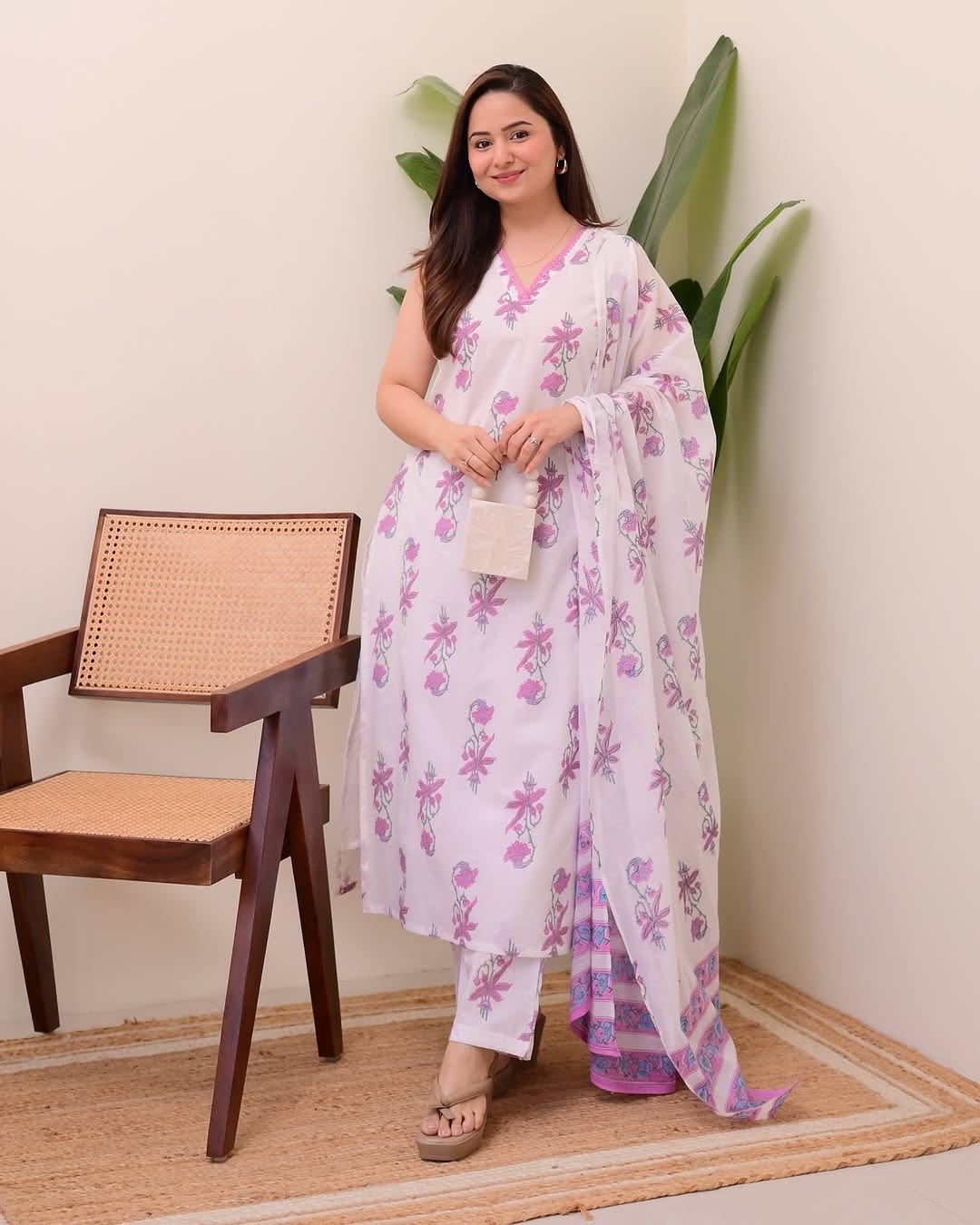
For work or daytime appointments, choose a straight or gently A-line silhouette with a moderate side slit and a hem that falls around the knee or slightly below it. Such proportions allow comfortable walking and pair neatly with cigarette pants, palazzos or ankle-length trousers. A three-quarter sleeve also offers practical coverage while keeping the arm free for writing, commuting and household tasks.
For college or casual dressing, a shorter A-line kurti can be worn with wide-leg pants, jeans or plain cotton palazzos. A more relaxed shape works especially well when the Ajrakh-inspired print is small or arranged in vertical panels. A dense, large-scale motif may need a simpler neckline and fewer accessories to avoid visual heaviness.
Colour repetition makes daily styling easier. Pick one colour from the print and repeat it in the bottom, footwear or bag. Rust Printed Cotton Kurta Set with Pant and Dupatta can take tan sandals and a brown tote, while an outfit with indigo accents can work with navy trousers and oxidised silver jewellery.
Which silhouettes are easiest to repeat?
Straight kurta sets, A-line kurti sets and relaxed pant sets are the easiest Ajrakh-inspired silhouettes to repeat because they accommodate several bottoms and accessories. Straight sets look polished, A-line sets offer more room at the hip, and relaxed pant sets provide useful movement for informal days.
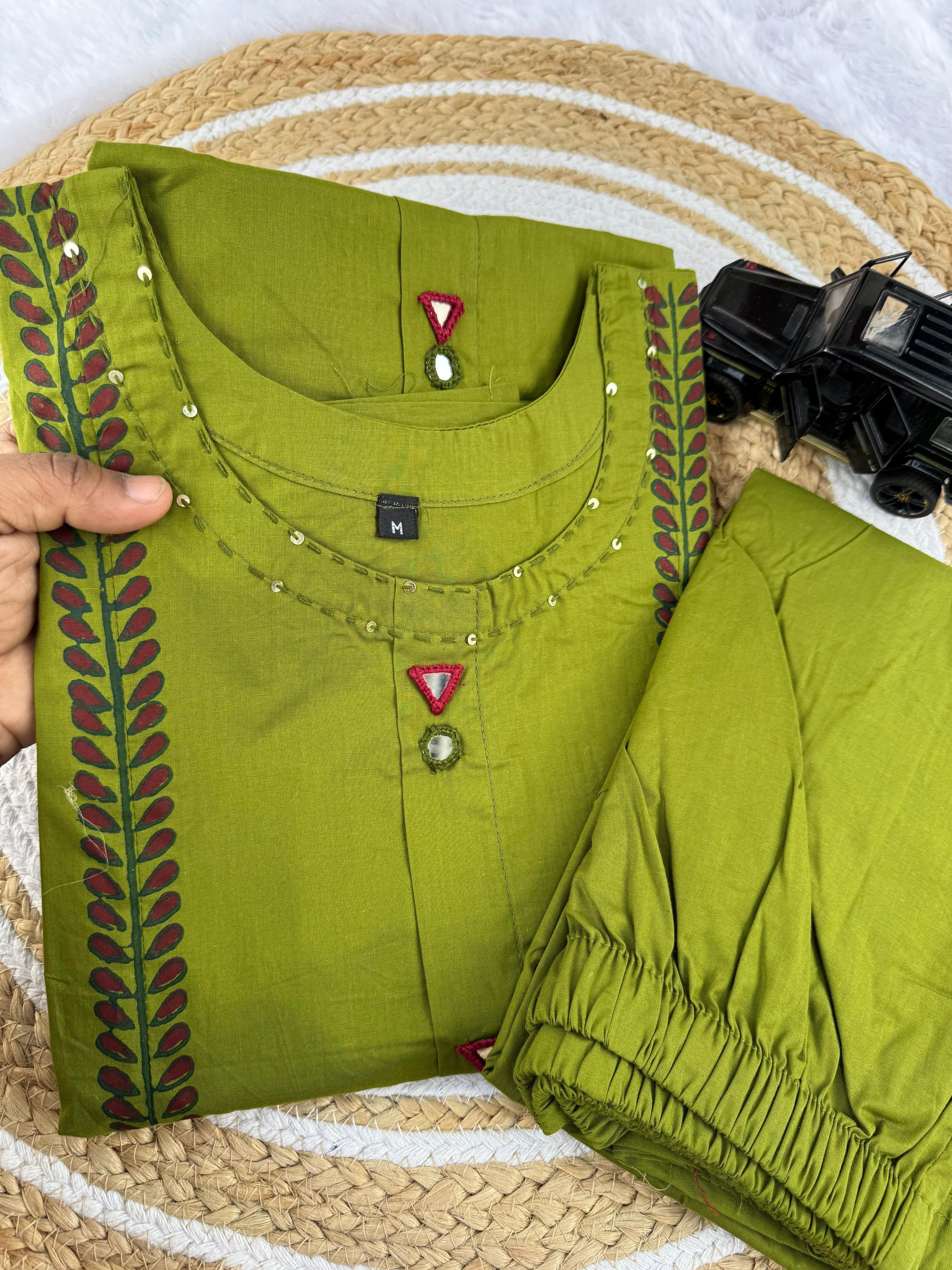
Designer Cotton A-Line Kurti Pant Set with Mirror Work introduces an useful styling lesson: small mirror-work details can work with a printed surface when the rest of the outfit stays restrained. Keep jewellery minimal if the neckline and yoke already contain reflective decoration.
For a softer, quieter interpretation, Cream Khadi Cotton Straight Kurta Set with Dupatta shows how a neutral ground can reduce the intensity of a traditional print. Cream, ecru and muted beige also make colourful Ajrakh-style motifs easier to combine with existing white, brown or indigo separates.
How should you style an Ajrakh kurti without making it look too formal?
An Ajrakh kurti looks everyday-appropriate when styling limits competing colours, sparkle and ornament to one or two deliberate accents. The print should remain the main design feature.
Choose matte accessories for ordinary daytime use. Tan leather-look sandals, juttis, canvas shoes, a woven tote or a plain shoulder bag can ground a vivid print. Oxidised silver earrings complement indigo, black and rust, while wooden bangles or a cotton scarf suit earthy palettes. Avoid adding a heavily embroidered dupatta to a kurta that already has a border, contrast yoke and dense all-over pattern.
Dupatta placement changes the proportion of the outfit. A narrow shoulder drape leaves the kurta visible and works well for commuting. A loose front drape creates more movement but may need a small pin near the shoulder. For a printed three-piece set, fold the dupatta lengthwise and wear it over one shoulder when you want less volume.
Makeup and hair can remain uncomplicated. A low bun, braid or open hair with a clean parting keeps attention on the block-print geometry. A terracotta, brick or berry lip can echo warm dye colours, but a neutral lip is equally effective when the kurta uses strong red and indigo.
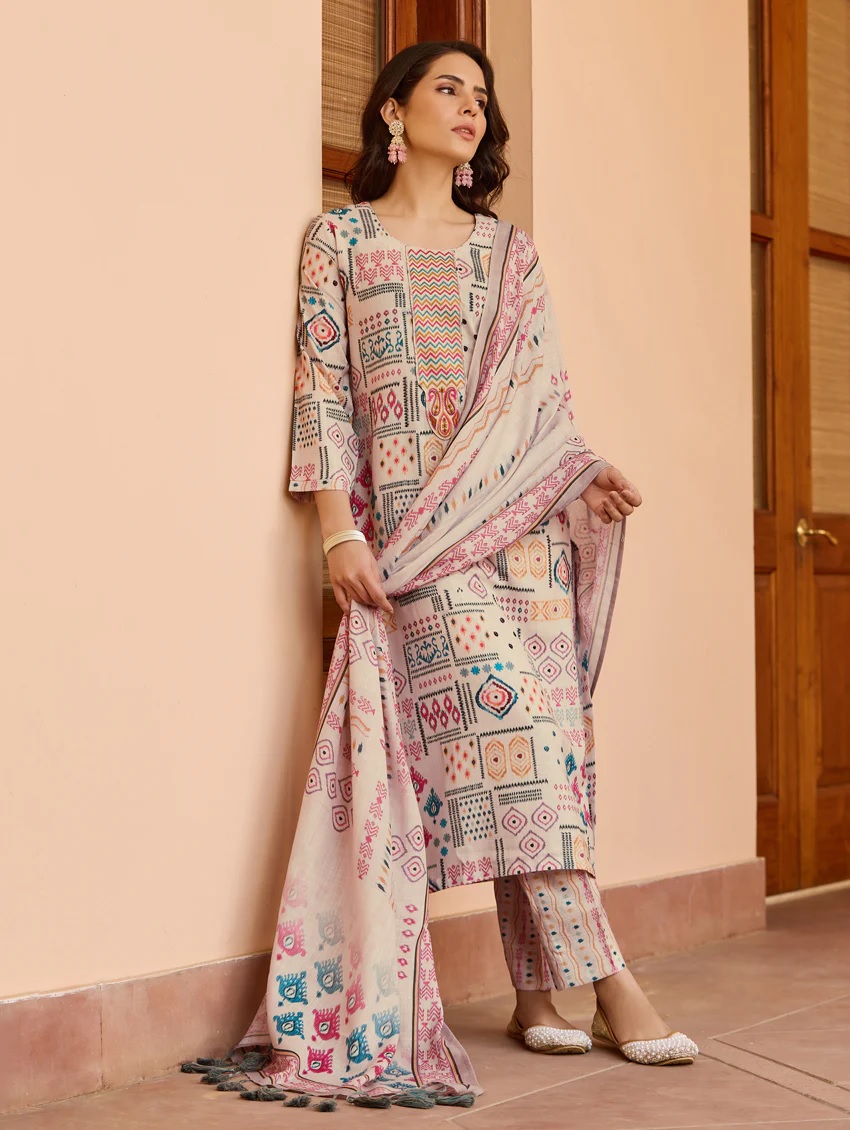
Elegant Pink Print Daily Wear Kurta Set shows how the same principle works with a lighter palette. Pink prints can be worn with white, blush, beige or denim-toned accessories rather than adding another bright colour. For a more grounded look, Black Maroon Cotton Printed Kurta Set with Dupatta can be paired with plain black pants and understated metal jewellery.
Which colours and prints are most versatile for regular use?
Indigo, cream, rust, black, maroon and muted pink are among the most flexible Ajrakh-inspired colours for regular use because they coordinate with common neutral bottoms. A medium-density print is generally more adaptable than a very large, high-contrast motif.

Indigo and cream create a calm combination with white, beige and denim. Rust and maroon sit comfortably with tan, brown and black. Black-based prints can look sharp with charcoal or solid black bottoms, while pink-based prints are useful when you already own light neutral trousers. A grey ground is particularly practical for weekday wear because it softens both warm and cool accent colours.
Grey Printed Cotton Kurti Pant Set for Women Daily Wear illustrates why a grey base can be useful in a small wardrobe. The set can be worn with silver jewellery for a cooler appearance or with tan sandals and a camel bag for warmth. When buying a print for frequent use, inspect whether the background colour matches at least three bottoms you already own.
Print scale matters as much as colour. Small repeating motifs create a quieter surface and can suit office environments. Larger motifs make a stronger style statement and may be better for casual Fridays, creative workplaces or weekend dressing. A border-only design can make the hem and sleeves look more structured without filling the entire outfit with pattern.
How does Ajrakh connect with other Indian textile traditions?
Ajrakh connects with other Indian textile traditions through shared ideas of block printing, regional colour, artisan skill and storytelling, although each tradition has its own materials, motifs and techniques. Comparing them helps shoppers recognise that ethnic print isn't one single category.
Kalamkari Print Salwar Suits (Copy) often bring hand-drawn or block-printed botanical and narrative imagery, creating a more illustrative surface than Ajrakh's strongly geometric repeat. Maharashtra Paithani Inspired Salwar Suits draw visual cues from Paithani weaving, including jewel-toned colour relationships and peacock or floral references. Punjab Phulkari Embroidered Salwar Suits use colourful embroidery traditions rather than relying primarily on resist printing.
Karnataka Silk Salwar Suits typically communicate occasion dressing through silk texture, lustre and woven structure, while Kashmir Embroidered Salwar Suits are associated with intricate embroidery and floral craftsmanship. These collections demonstrate why an Ajrakh kurti can occupy a valuable middle ground: it carries recognisable textile character but can remain lighter, simpler and more suitable for everyday rotation.
Ajrakh also belongs to a living craft history rather than a frozen museum category. Contemporary designers may simplify traditional layouts, change the base cloth or use modern colour combinations while retaining the visual language of repeated blocks. The result can be faithful in spirit without reproducing every historic process.
How should you wash and store printed cotton kurtis?
Printed cotton kurtis should be washed gently in cool water, dried away from harsh direct sunlight and stored only after the garment is completely dry. These steps reduce colour bleeding, fading and mildew risk.
Read the care label first because pigment-printed cotton, naturally dyed cotton and blended fabric can respond differently to washing. For a first wash, turn the garment inside out and wash it separately in cool water with a mild detergent. Do not soak a dark indigo, maroon or black print for long periods, because prolonged soaking can release excess surface colour.
Press excess water out gently instead of wringing the kurta. Dry the garment in shade or soft morning light, preferably inside out. Strong midday sun can fade indigo, madder red and black over repeated exposure. Iron cotton on the reverse side using a medium setting, and avoid placing a very hot iron directly over mirror work or printed borders.
Fold clean cotton kurtis along natural seams and leave a little space between heavily coloured garments. Use breathable fabric storage rather than airtight plastic for long-term storage. If the kurta won't be worn for several months, refold it occasionally to reduce permanent crease lines.
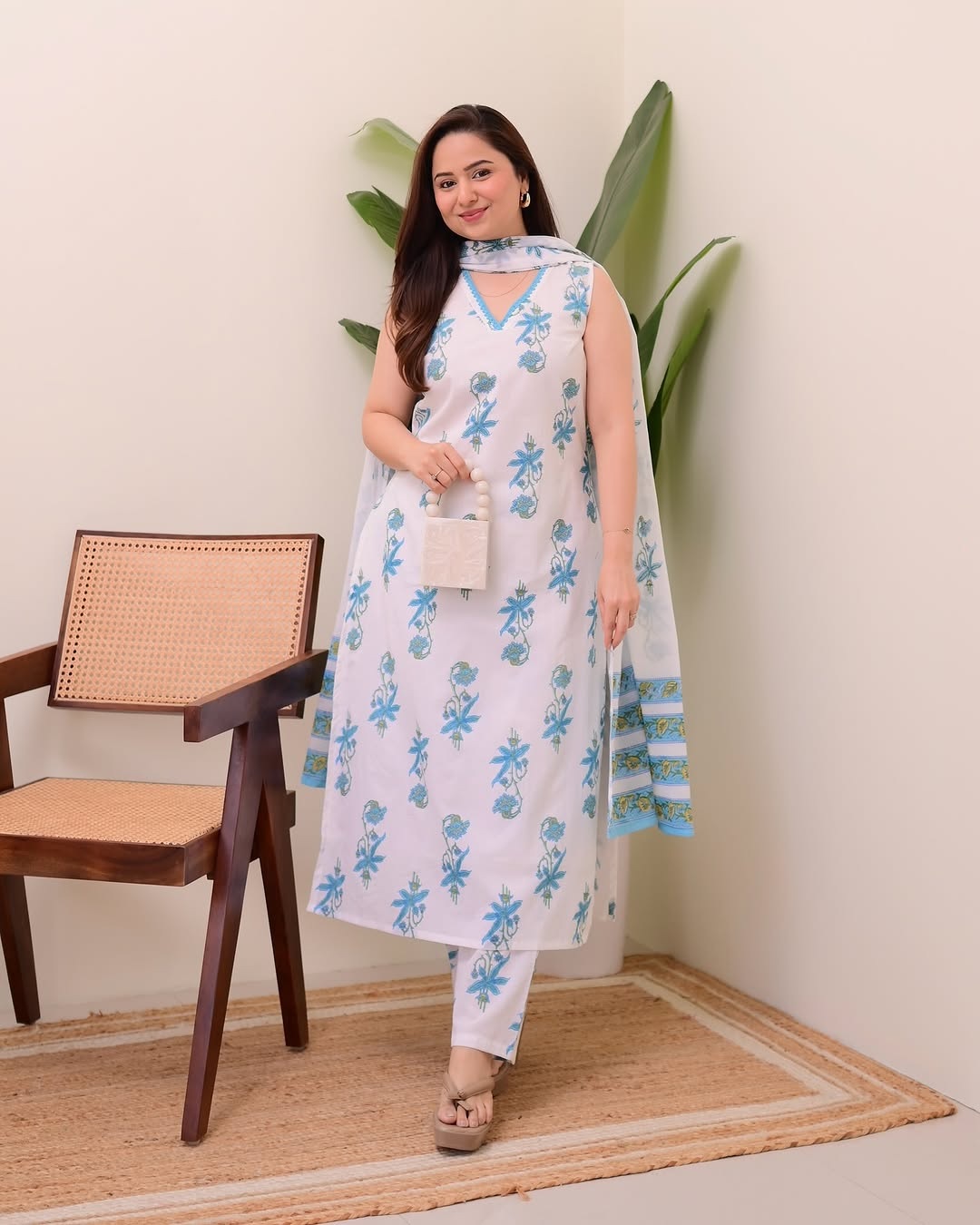
Cream Printed Cotton Kurta Pant Dupatta Set for Women and Peach Printed Cotton Kurti Pant Set for Women Casual are useful examples of lighter daily palettes that still deserve careful handling. Pale backgrounds can show detergent residue, while peach and pink tones can lose clarity when washed with dark garments.
What should you check before buying an Ajrakh-inspired kurti set?
Before buying an Ajrakh-inspired kurti set, check the fibre content, garment measurements, print placement, opacity, colour-fastness guidance and the practical usefulness of each included piece. A beautiful print can't compensate for an uncomfortable fit or difficult care routine.
Measure your bust, shoulder, waist and preferred kurta length against the size chart rather than relying only on your usual size. Check whether the trousers have an elasticated waist, drawstring or fixed waistband, and confirm the inseam if you prefer ankle-length or full-length bottoms. A dupatta measuring approximately 2 to 2.5 metres is usually easier to drape in everyday wear than a very short scarf.
Inspect the print near seams, neckline and borders. Small variations in block alignment can occur in hand-printing and may be part of the craft character, while large unexplained gaps or smudges may indicate a quality issue. Ask whether the print is hand-blocked, screen-printed or digitally reproduced if production method influences your purchase.
Daily wear also benefits from practical pockets, secure seams and a fabric weight suited to the climate. A grey or cream set may be more adaptable in a work wardrobe, while a rust, maroon or indigo set can provide stronger weekend style. Designer Cotton A-Line Kurti Pant Set with Mirror Work is better suited to days when you welcome decorative detail, whereas a plain cotton printed set may work harder for frequent rotation.
Common Questions About Wearing Ajrakh Kurtis Every Day
What is Ajrakh printing made from?
Ajrakh printing is traditionally made on cotton using carved wooden blocks, resist techniques, mordants and repeated dyeing or washing. Traditional colour families include indigo, madder red, iron black and cream, although contemporary Ajrakh-inspired garments may use synthetic dyes or other printing methods.
Are Ajrakh kurtis suitable for office wear?
Ajrakh kurtis can suit office wear when the print density, neckline and silhouette are restrained. A straight cotton kurta with plain cigarette pants, modest three-quarter sleeves and minimal jewellery usually looks more work-appropriate than a heavily embellished or very high-contrast set.
What colours go well with an Ajrakh kurti?
White, cream, beige, tan, brown, black, navy and denim coordinate well with common Ajrakh colours such as indigo, rust, maroon and muted pink. Match the bottom or accessories to one colour already present in the print rather than introducing several unrelated bright shades.
How do you wash an Ajrakh cotton kurti?
Wash an Ajrakh cotton kurti inside out in cool water with mild detergent, especially during the first few washes. Avoid prolonged soaking, wringing and harsh midday sunlight; dry the garment in shade and iron it from the reverse side.
Can an Ajrakh kurti be worn with jeans?
An Ajrakh kurti can be worn with jeans when the kurti has a simple straight or short A-line cut. Blue denim works with indigo and cream prints, while black denim creates a sharper combination for rust, maroon or black-based patterns.
How can I tell whether an Ajrakh print is versatile enough for daily wear?
A versatile Ajrakh print usually combines a manageable print scale with at least two or three colours that match your existing bottoms and accessories. Check the fabric weight, opacity, size chart and care instructions before choosing a design for frequent wear.